
15 min 11 sec
Available in: English
Prediction Machines: The Simple Economics of Artificial Intelligence
Shows that artificial intelligence is really cheap prediction, and uses basic economics to explain which tasks lose value, why human judgment gains it, and when better forecasts should change how a business works.
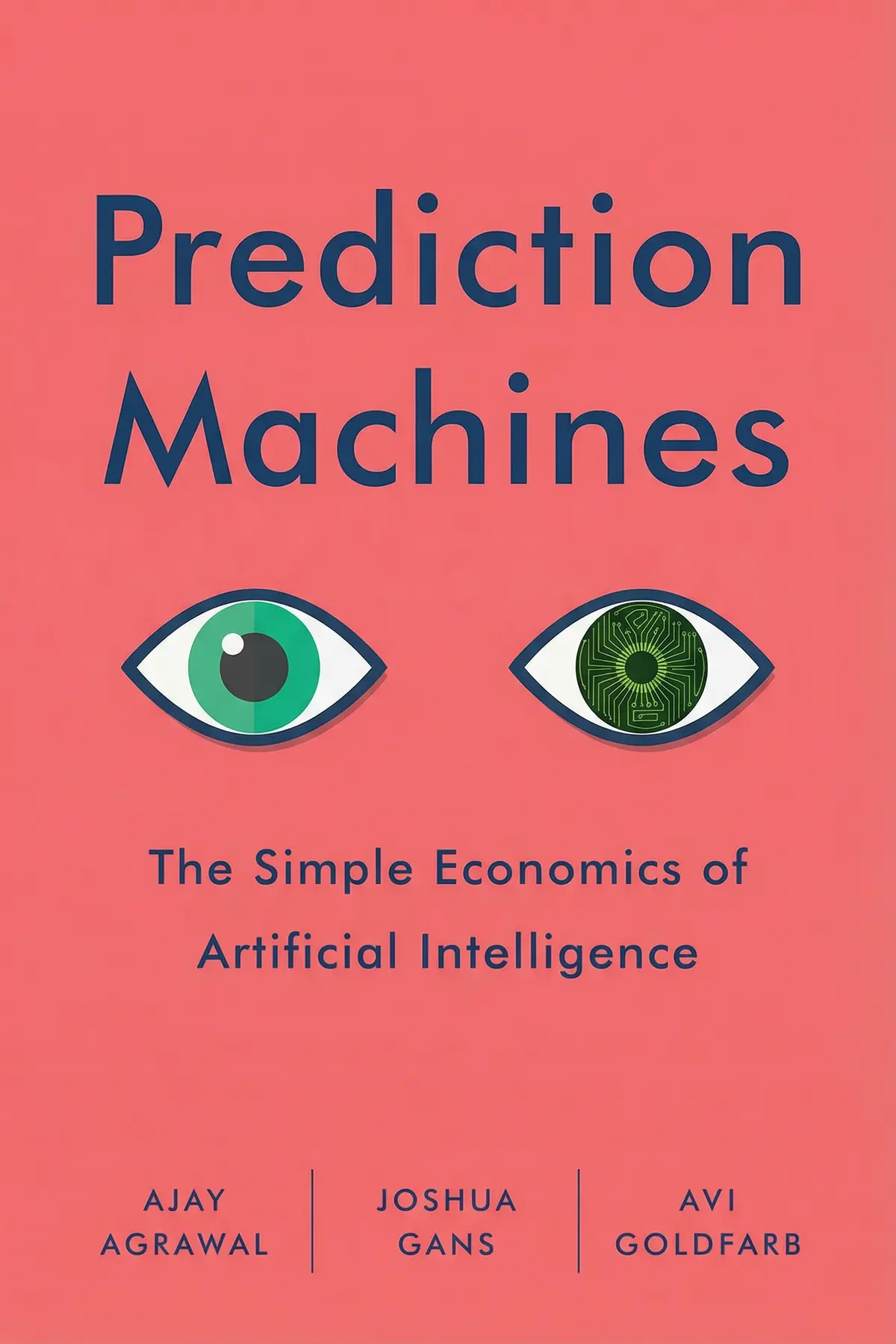
Table of Content
1. Introduction
1 min 00 sec
If artificial intelligence feels like a fog of hype you are expected to have opinions about, there is a clearer way in: treat it as one thing getting cheap. In Prediction Machines, three University of Toronto professors, Ajay Agrawal, Joshua Gans and Avi Goldfarb, argue that AI is best understood as a sharp fall in the cost of prediction, meaning the use of what we know to fill in what we don’t.
Basic economics then does the rest. When something gets cheaper, people use more of it, and the things that work alongside it become worth more. For prediction, those partners are human judgment, good data and the ability to act. That single frame explains which tasks shrink, which grow, and when a company’s strategy should change. Follow it through and you will be able to look at any task in your own work, find the prediction hidden inside it, and decide what a machine should do and what you should keep.
2. Treat AI as one thing getting cheaper
2 min 16 sec
A speaker on the shelf answers a child’s homework question before the parent can. It feels like a mind in the room, and the authors argue that this impression leads people to badly misjudge what the technology changes.
3. Find the errors worth paying to shrink
2 min 13 sec
A fraud filter that is wrong two times in a hundred sounds good enough. The book shows why squeezing that figure further changes far more than the number suggests, and why a clever machine can still copy a foolish move.
4. Judgment grows in value as prediction gets cheap
2 min 16 sec
If machines take over forecasting, the natural fear is that forecasters are finished. The authors accept part of that fear, then use a simple umbrella to show where human work actually becomes worth more.
5. Give machines the routine and people the exceptions
2 min 01 sec
Experienced experts trust their instincts, and the evidence is often unkind to them. Yet machines stumble in places people find easy, and one design lets each side take only the cases it handles best.
6. Price the trade-offs before you automate
2 min 03 sec
Many firms assume that more data and more automation are always better. The authors argue every gain from a prediction machine is paid for somewhere else, and that the right price differs from one organization to the next.
7. Cheaper prediction can rewrite your business model
2 min 05 sec
Most companies bolt AI onto what they already do. The authors set out three conditions under which better forecasts should change the plan instead, and sketch how a retailer could end up shipping goods nobody has ordered yet.
8. Conclusion
1 min 17 sec
The parent who lost the Delaware question to a smart speaker has not become useless. The forecast of the answer was the cheap part. What still belongs to the parent is deciding what the child should learn, when to step in and what a right answer is worth. Prediction Machines tells the story of AI at work in exactly those terms: prediction falls in price, and value moves to the judgment, data and action around it.
The habit worth building is to take one decision you make often and pull it apart. Write down the forecast inside it, then the judgment about what each outcome is worth, then the action that follows. Ask which pieces a machine could do well with plentiful data, and set a rule for the exceptions that should still reach a person. Before you adopt the tool, name what you would give up in privacy, accuracy or control, and decide whether that price suits you.
Irish Tech News set the book apart from earlier AI books full of sweeping forecasts, calling it a grounded view of the near term. That restraint is its strength. When a forecast costs almost nothing, the scarce person in the room is the one who knows what the forecast is for.
About this book
What is this book about?
Most talk about artificial intelligence swings between excitement and fear, and leaves managers unsure what to actually do. Ajay Agrawal, Joshua Gans and Avi Goldfarb, three professors at the University of Toronto's Rotman School of Management, cut through it with one economic idea: AI is a sharp drop in the cost of prediction, the act of using information you have to fill in information you lack. From there, ordinary economics does the work. When prediction gets cheap, people use far more of it. Human forecasting, its substitute, loses value. Its complements, such as data, judgment and the ability to act, gain value. The authors show how to separate the prediction inside a decision from the judgment about what outcomes are worth, when machines beat people and when people beat machines, and how prediction by exception lets each handle the cases it does best. Readers also get a clear view of the trade-offs AI forces, between data and privacy, speed and accuracy, autonomy and control, and of the conditions under which better prediction should change a company's strategy, its workflows and even its hierarchy.
Book Information
Who it's for
Deciding where AI belongs
Managers and founders who need a clear test for where AI belongs in their business.
Worried about automation
Professionals worried about automation who want to know which parts of their work gain value.
Redesigning team workflows
Team leads redesigning workflows so machines and people each handle the right cases.
About the Author
Ajay Agrawal
Ajay Agrawal, Joshua Gans and Avi Goldfarb are professors at the University of Toronto's Rotman School of Management and key figures at its Creative Destruction Lab, which Agrawal founded in 2012. Gans, the lab's chief economist, holds a Stanford PhD and studies how technology shapes competition and innovation. Goldfarb, the lab's chief data scientist, holds an economics doctorate from Northwestern and a chair in artificial intelligence and healthcare. The three later wrote Power and Prediction together.
Ratings & Reviews
Ratings at a glance
What people think
Listeners find that this book offers a helpful economic perspective for grasping artificial intelligence, even if perspectives on the depth of content diverge, with some listeners describing the analysis as perhaps too simplistic. Most value the writers' primary argument that AI decreases the expense of prediction, allowing organizations to better define the line between machine output and human choice. Furthermore, they commend the intuitive layout and engaging stories, with one listener observing that the authors successfully emphasize the core principles of the tech instead of dense technicalities. They also point out that the convenient chapter recaps make the strategy-focused material feel manageable and clear.
Top reviews
Oat
Finally got around to reading this after hearing several colleagues quote the "AI reduces the cost of prediction" line. It lives up to the reputation. The most valuable takeaway is the distinction between prediction and judgment. While machines can forecast outcomes with terrifying accuracy, humans are still the ones who have to decide what to do with that information. This book provides a robust economic framework that moves past the sci-fi tropes of "robots taking our jobs." Instead, it suggests a more nuanced reality where roles are redefined and the value of human intuition actually increases as data becomes cheaper. I loved the no-nonsense style. It’s a strategy book for people who actually want to understand the economics of the future without the fluff.
Show moreTern
Ever wonder why certain AI projects fail despite having great data? This book explains the "why" better than anything else I've read. Agrawal, Gans, and Goldfarb have created a masterclass in applying economic principles to modern technology. They argue that as prediction becomes ubiquitous, the "judgment" components of our jobs become more valuable, not less. This is a refreshing take compared to the usual doom-and-gloom narratives about automation. The writing is incredibly clear and the structure is logical, making it accessible even if you don't have a PhD in economics. I specifically enjoyed the discussion on how better predictions lead to entirely new business models, like Amazon shipping items before you even buy them. It’s a must-read for the digital age.
Show morePan
After hearing the authors speak on a podcast, I knew I needed the full text. This book provides the language we need to talk about AI in the boardroom. Instead of getting bogged down in the "black box" of technology, it focuses on the inputs and outputs of decision-making. The division of labor between human intuition and machine precision is handled with great nuance. I found the anecdotes about medical imaging and facial recognition particularly helpful for explaining these concepts to my team. The truth is, most AI books are either too technical or too philosophical, but this one hits the sweet spot of being actionable and grounded in reality. It’s a foundational text for anyone involved in digital transformation or corporate strategy. Highly recommended.
Show moreAnthony
As a business owner trying to cut through the AI hype, I found this framework incredibly grounding. The authors don't bother with technical jargon about neural networks; instead, they treat AI as a simple drop in the price of prediction. This shift in perspective is powerful because it helps you identify exactly where machine learning can replace human labor and where human judgment remains indispensable. To be fair, some sections felt a bit like a textbook. However, the clear summaries at the end of each chapter made it easy to digest. It is an essential strategy read. I appreciated the anecdote about the chess machine sacrificing its queen, which perfectly illustrated why machines still lack context. It's a solid, no-nonsense guide for any manager.
Show moreFilm
The chapter on trade-offs really changed my perspective on how to implement machine learning in my own workflow. It’s rare to find a book that looks at AI through the lens of economics rather than computer science. By framing AI as a tool for reducing uncertainty, the authors make the technology feel manageable rather than mystical. Personally, I found the "prediction by exception" model to be the most practical framework in the book. It highlights how humans can focus on the outliers while machines handle the routine tasks. My only gripe is that it feels a bit dated in its optimism regarding how quickly these shifts would occur. Still, for anyone in management, the insights on how prediction affects strategy are worth the price of admission alone. It's clear and concise.
Show morePrasarn
Wow, this was a lot more insightful than the dry title suggests! It’s basically a textbook for the AI age, but without the boring homework. The authors do a great job of breaking down complex economic theories into something a manager can actually use. I particularly liked how they emphasized that prediction is just one part of a decision. You still need data, judgment, and action to see results. Gotta say, the chapter summaries are a lifesaver for busy professionals who need to skim. It isn't particularly funny or entertaining, but the clarity of the arguments makes up for the lack of "fluff." It’s a solid framework that helps you see the forest for the trees in a very noisy and confusing industry.
Show moreAnong
Truth is, I was skeptical about another AI book, but the economic lens here is genuinely fresh. It isn't about the "how" of AI, but the "so what." By focusing on the falling cost of prediction, the authors help you see how the boundary between machine efficiency and human judgment is shifting in ways that will fundamentally alter our corporate hierarchies. I liked the "prediction by exception" concept, though I wish they spent more time on the difficulty of getting clean data in the real world. The book is very well-organized and easy to navigate. It does feel a little repetitive at times, and the tone is definitely academic. If you want to understand the future of work and how to stay relevant, start here.
Show moreNarumon
Is this the definitive guide to AI strategy? Maybe for a beginner, but I found it a bit repetitive after the first fifty pages. The central premise—that AI is just cheap prediction—is brilliant and it honestly changes how you look at the industry. However, the authors spend the rest of the book hammering that same point over and over again through various business scenarios that eventually start to feel like they are padding the word count. It’s organized like a textbook, complete with helpful summaries, which I appreciated, but the prose is quite dry and lacks any real humor. While the anecdotes about bank fraud were interesting, I wanted more depth on the "how-to" part of business integration. It’s a solid read that offers a good foundation but lacks a certain spark.
Show moreAkira
Picked this up hoping for some technical insights into machine learning, but it’s definitely more of a business strategy manual. Look, if you want to know about algorithms, this isn't for you. But if you want to understand why your CEO is obsessed with "data-driven decisions," then it’s a decent primer. The book is very sober and realistic, which I liked, avoiding the typical hype. However, the "spherical cow" problem is real—it simplifies the world a bit too much for my liking by ignoring the importance of learning by doing. It’s an easy read, maybe too easy, and I finished it in a single afternoon. Good for a flight or a commute, but don't expect it to change your life if you are already tech-savvy.
Show morePridi
Not what I expected given all the praise I’ve seen on LinkedIn. This book assumes a "perfectly spherical cow" version of reality where the only thing holding us back is data volume. Frankly, the authors gloss over the messy details of implementation, like feature engineering and the massive ethical hurdles that come with automated decisions. If you are a manager looking for high-level buzzwords, you might enjoy the repetition. However, for anyone actually working in the field, it feels incredibly dumbed down and lacks any original technical content. It paints a rosy picture of self-driving cars that ignores the real-world resource constraints we face every day. I felt like I wasted my time waiting for a deeper dive that never actually arrived.
Show moreQuestions about this book
What is the main idea of Prediction Machines?
Agrawal, Gans and Goldfarb argue that AI should be understood as a sharp fall in the cost of prediction, meaning the use of available information to fill in missing information. Basic economics says people use more of anything that gets cheaper. So human forecasting, the substitute, loses value, while complements such as data, judgment and action gain value. That frame explains effects on jobs, workflows and company strategy.
Will AI replace human jobs according to Prediction Machines?
The authors expect machines to take over many prediction tasks, but not the judgment and action that surround them. In their umbrella example, a machine can forecast rain, while a person decides whether getting wet matters and acts on it. Agrawal argues that cheaper prediction raises demand for judgment and so creates jobs, and that people, unlike horses after cars arrived, have general-purpose abilities.
What is prediction by exception?
It is a way of dividing work between people and machines. The machine handles routine cases where data is plentiful, and a person steps in for unusual cases outside what it has learned. The book points to Chisel’s legal document redaction system, which pairs algorithms with human oversight, and notes that diagnoses combining human and machine input often beat either one alone.
When should AI change a company's strategy?
The book sets three conditions. The business model must have a core trade-off, uncertainty must shape that trade-off, and AI must reduce the uncertainty enough to make a different strategy the best one. A reviewer describes the book’s scenario in which Amazon’s predictions become accurate enough for it to ship goods before customers order them.
How can I apply Prediction Machines at work?
Take a decision you make often and split it into the prediction, the judgment about what outcomes are worth, and the action. Give machines the routine predictions where data is rich, and keep a rule for exceptions that go to people. Weigh the trade-offs of data against privacy, speed against accuracy, and autonomy against control. Agrawal suggests starting with data scientists who already know your prediction problems.
Readers also enjoyed



AI 2041: Ten Visions for Our Future
Kai-Fu Lee





1929: Inside the Greatest Crash in Wall Street History--and How It
Andrew Ross Sorkin

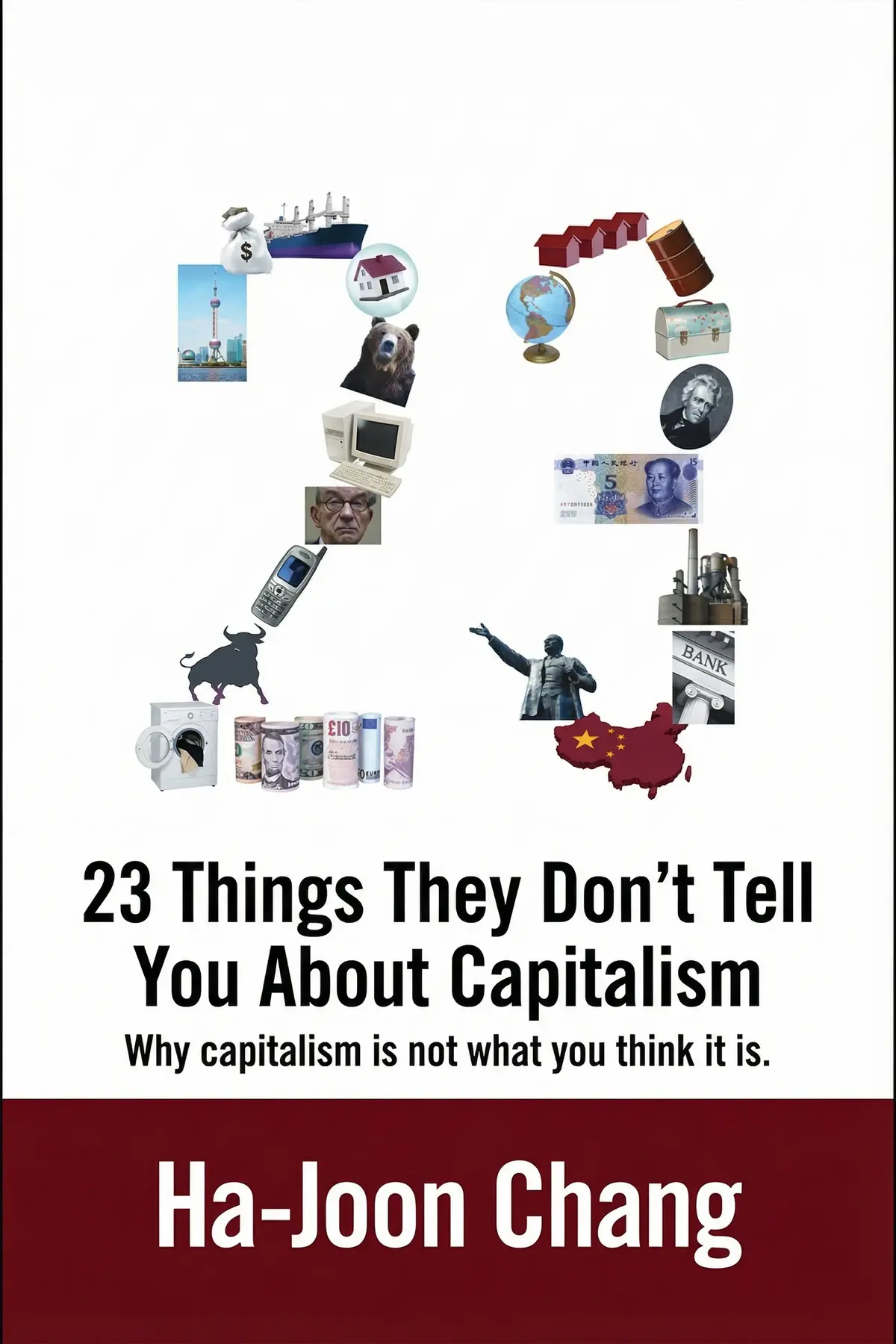
23 Things They Don’t Tell You About Capitalism
Ha-Joon Chang
AUDIO SUMMARY AVAILABLE
Listen to Prediction Machines in 15 minutes
Get the key ideas from Prediction Machines by Ajay Agrawal, plus 5,000+ more nonfiction titles.
- 5,000+ titles
- Listen as much as you want
- 7-day free trial
- Cancel anytime









