

9 min 48 sec
Available in: English
Potty Training in 3 Days: The Step-By-Step Plan for a Clean Break from Dirty Diapers
A three-day plan for potty training a toddler. It covers how to tell when your child is ready, what to prepare, what to say on the first morning, and how to keep the habit going at school and at night.
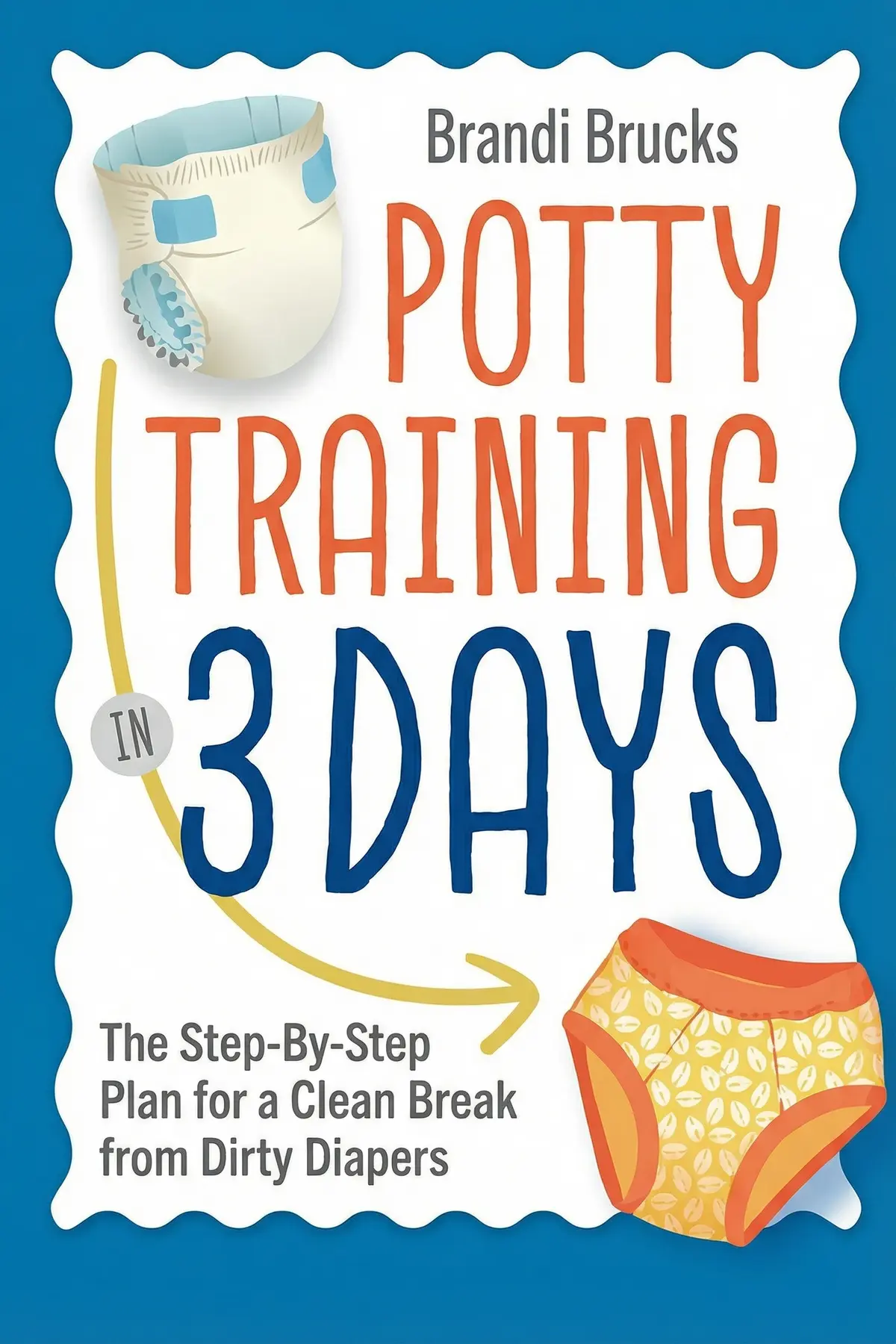
Table of Content
1. Introduction
52 sec
Most toddlers take months to swap diapers for the toilet, but Brandi Brucks says the switch can happen over a long weekend if a parent gives it three days of full attention. In Potty Training in 3 Days, Brucks, a consultant who works with children between 21 months and 4 years old, lays out a method she says has already freed thousands of children from diapers. It is simple to explain and demanding to follow. First, wait for the right moment. Next, prepare the child and the house. Then spend three days watching, reminding and rewarding, with every adult around the child repeating the same message.
What follows is that plan in the order you will use it: the readiness signs to look for, the talking and shopping to do beforehand, the exact words for the first morning, and how to keep the new habit going at school, on trips and through the night.
2. Spot the signs your toddler is ready
1 min 21 sec
Start on the wrong week and three days can stretch into three frustrating weeks. Brucks names the small behaviors that show a child is prepared, and one physical sign that should make you wait.
3. Set up the home before day one
1 min 45 sec
The three days get the attention, but Brucks also gives careful steps for the period before them. That means conversations, family agreements, a stool, a tiny treat and some surprisingly salty shopping.
4. One sentence that makes the first morning work
1 min 19 sec
Two requests that sound almost the same can decide whether a toddler cooperates or refuses. Brucks shows how the first morning should feel like a clear break, and which words to use.
5. Turn accidents and drinks into fast progress
1 min 34 sec
For three days a parent becomes a full-time shadow, and wet patches become part of the lesson. Brucks explains how drinks, double rewards and patient timing show you the plan is working.
6. Keep toddlers dry at school, outings and night
1 min 53 sec
A child who stays dry in the living room can still struggle in a classroom or at 3 a.m. Brucks covers rewards, teachers, outings, bedtime and what to check when ten days pass without success.
7. Conclusion
1 min 04 sec
Brucks’s plan clears away every obstacle around a skill the child is almost ready to learn. Waiting for the right signs avoids fear and frustration. Preparing the house removes excuses. Three days of close attention give the child dozens of chances to feel the urge, say so and get praised for it, until the loop runs by itself. Consistency from every adult keeps it running.
If a try is coming up, start this week by watching. Does your child ask to be changed, stay dry for longer and follow you into the bathroom? Then choose three free days and get the household to agree on one message. On the first morning, let your child see the diapers go, and replace any question about wanting the potty with a simple instruction to tell you when they need it.
Brucks also points to a bonus. A child who masters this often carries the new confidence into other parts of life. The diapers leave the house on day one. What remains is a small person who has learned they can do something hard.
About this book
What is this book about?
Most parents expect potty training to drag on for months of accidents, spare clothes and diaper runs. Brandi Brucks, a potty training consultant who works with toddlers, offers a much shorter route: three days in a row in which a parent does nothing except guide one child from diapers to the toilet. The plan depends on preparation and consistency. Brucks explains how to read a child's readiness, from staying dry for longer to following you into the bathroom, and why hard poop is a warning sign. She covers the setup: a seat that fits the family toilet, a step stool, a tiny reward kept in plain view and snacks that make a child thirsty. Then she walks through the three days themselves. The diapers are thrown out while the child watches, one carefully worded instruction replaces a question, and the parent keeps up constant reminders and celebrations and handles accidents calmly. Readers also get the plan for afterward, which keeps the habit going: fading out rewards, briefing teachers and relatives, bathroom stops on outings, a bedtime routine and what to check if progress stalls after ten days.
Book Information
Who it's for
Parents tired of diapers
Parents of toddlers around two and a half to three who are tired of months of diapers.
Working moms and dads
Working parents who can set aside one long weekend and want a step-by-step plan.
Family and other caregivers
Caregivers and relatives who need to keep a child's new toilet routine consistent.
About the Author
Brandi Brucks
Brandi Brucks directs Your Village Consulting, a parenting consultancy based in Austin, Texas. As a potty training consultant and behavior specialist, she works with children from 21 months to 4 years old, and she also helps families with sleep problems and healthy sleep habits. Years as a nanny caring for children of potty training age led her to make it her focus. She holds a Master's degree in Elementary Education from Simmons College in Boston.
Ratings & Reviews
Ratings at a glance

What people think
Listeners find this potty training guide highly effective, noting that many children were successfully trained in just three days. The instructions are simple and direct, providing an easy-to-follow format that listeners value for its brevity and practical tips. Many experienced zero accidents throughout the process, and one listener even highlighted reaching a 9-day streak without any mishaps. While some listeners report no trouble with urinating in the toilet, others mention that their children still struggle with pooping on it.
Top reviews
Titiluck
Finally, a method that actually delivers on its promise! After hearing so many horror stories about months of accidents, I was skeptical that seventy-two hours would be enough. Personally, I found the instructions remarkably clear and easy to implement, especially regarding the preparation steps. We stayed home, stocked up on stickers and treats, and just committed 100% to the process. My daughter had a rough first day, but by the end of the weekend, she was running to the potty herself. Not gonna lie, the author’s tone is a bit 'my way or the highway,' but the results were undeniable. It really felt like a dream to see her so proud of herself.
Show moreOn
I was at my wit's end before finding Brandi Brucks’ approach. This book turned a daunting task into a manageable weekend project. We followed every instruction to the letter, including the heavy focus on the first day of accidents. By the time Monday rolled around, my son was on a 9-day streak without a single incident! It requires total commitment, so don't try to multitask while doing this. The writing is punchy and moves fast. I appreciated that it wasn't a 300-page novel because I only had a nap time to read it. If you are a first-time parent who needs a clear plan, this is the one to get.
Show moreSombat
Stop scrolling and just buy this book if you are ready to be done with diapers forever. I honestly didn't think three days was possible for my 2.5-year-old. The guide is incredibly clear and straightforward, which took all the guesswork out of the weekend. We had zero accidents on the third day, and he has been dry through his naps ever since. I liked that the book was short and to the point. Some might find the author’s confidence annoying, but I found it reassuring. When you're cleaning pee off the floor for the fifth time on Day 1, you need someone telling you to keep going. This changed our lives!
Show moreJoseph
Ever wonder if you're the only parent who has absolutely no clue how to start the potty journey? This book was the foundation I needed to finally feel confident. I loved how it prepared me for the 'headstrong' phase and gave me tools to stay calm. We did the three-day lockdown and it worked like a charm for our toddler. No accidents at school all week! Even though the author’s ego is front and center, her method is logically sound and easy to follow. I’ve already recommended it to three other moms in my playgroup. It is definitely worth the read for the peace of mind alone.
Show moreAudrey
The best thing about this guide is that it’s concise enough for a sleep-deprived parent to actually finish. Brucks provides a very straightforward roadmap that doesn't waste time with unnecessary fluff, though her tone can come across as slightly condescending at times. She definitely thinks highly of her own methods, almost to the point of being pejorative toward parents who might choose a different path. Truth is, the potty training results were hard to argue with since my son was accident-free by the third evening. I did find the occasional use of the word 'sh*tty' a bit unnecessary for a parenting book, yet it didn't detract from the effectiveness. If you can ignore the author's ego, the core advice is pure gold.
Show morePrayoon
As a mother of three, I found the requirement to ignore my other children for seventy-two hours a bit unrealistic for the average household. The author assumes everyone has the financial ability to ship other kids off to childcare while staring at one child every waking moment. Despite that gripe, the actual mechanics of the training are sound. We didn't follow the 'no screens' rule perfectly, yet we still saw massive improvement. My son took to peeing in the potty immediately, though pooping took about a week longer to master. It’s a very aggressive method, but if you have the support system to make it happen, it works. Just be prepared for a very intense three days.
Show moreChamnong
We chose a rainy long weekend to tackle this, and the mental preparation the book provided was more intense than the actual training. My husband and I both read it in a single afternoon. The author uses some foul language which felt out of place, but her advice on using stickers and jellybeans as rewards was spot on. Our child responded well to the constant reminders, even though the book warned she might get annoyed. We did have a few accidents once we ventured back to the park, but at home, she is 100% successful. It’s a solid, practical guide that cuts through the noise of most parenting blogs. I’d recommend it to anyone who can handle a bit of a bossy tone.
Show moreBook
Look, the language is a bit coarser than I expected for a parenting book, but the results speak for themselves. I’m not a fan of the 'sh*tty' puns, but I am a fan of not buying diapers anymore. The book is essentially a presentation on how to be a drill sergeant for a weekend. If you can stomach that, your kid will likely be trained by Monday. I appreciated the specific tips on what kind of potty inserts to buy. We had a bit of a struggle with the 'tell me when you need to go' phrase as my son just ignored us. However, once we hit day three, something just clicked in his head. It’s a fast read and very effective.
Show moreDome
To be fair, while the preparation steps were solid, the rigid 'one size fits all' attitude didn't sit well with my headstrong toddler. The author suggests that if your child doesn't get it in three days, there might be developmental delays, which felt like a low blow to parents. My daughter actually loves her little potty but hated the seat insert the book recommended. We also struggled because she missed her routine of morning cartoons, and the 'no screens' rule made her incredibly irritable. Frankly, we ended up bagging up the diapers as suggested, which was a success, but we had to modify almost everything else. It’s a decent foundation if you’re clueless, but don't expect a miracle if your kid doesn't fit her specific mold.
Show moreLeo
Is it just me, or does the author spend half the book explaining why she is the only person qualified to talk about toddlers? I felt like I was being pitched an MLM rather than reading a helpful parenting guide. The most offensive part was her suggestion that a child might have developmental delays if they don't master the toilet in exactly three days. That kind of pressure is the last thing a struggling parent needs when they are already feeling like a failure. We tried to follow her rigid rules to the letter, but my daughter just became more stubborn and annoyed. It’s a very one-size-fits-all approach that ignores the unique personality of the child. Save your money and trust your own instincts.
Show moreQuestions about this book
What is the main idea of Potty Training in 3 Days?
Brandi Brucks argues that a toddler can move from diapers to the toilet in about three days. Parents first wait for signs of readiness and prepare the child, the family and the house. Then they spend three undistracted days following the child, giving a clear instruction to report the need to go, rewarding successes and treating accidents as chances to repeat the message.
How do I know if my toddler is ready for potty training?
According to Brucks, the majority of children are ready from about 2.5 to 3 years of age, although the timing differs. Look for a child who knows when they need changing, can hold pee for a while, is curious about the bathroom or flushing, and can follow simple directions. Hard poop may mean constipation, which can make the toilet frightening, so deal with that first.
What should I say to my child during the three days?
Brucks recommends an instruction rather than a question. Ask the child to tell you when they need the potty, and avoid asking whether they want to go. A question offers a choice the child can refuse, while an instruction leaves only one response. Repeat the reminder throughout the day, check the underwear is dry and celebrate every success.
How does Brucks handle nighttime potty training?
Her advice is to visit the bathroom prior to every sleep, cut off drinks two hours ahead of bedtime, and add a trip half an hour before bed plus one more right before sleep. If a child usually wakes at a set time, wake them five minutes earlier to pee. If night accidents continue, pull-ups can be used as sleeping underwear, removed before the child notices in the morning.
What if potty training takes longer than three days?
Brucks accepts that some children need longer, especially during travel, after a new sibling arrives or under stress, and allows up to ten days. Beyond that, she suggests stopping to find the cause. Check whether you or other family members have been inconsistent, whether the child is manipulating the routine and whether constipation is getting in the way.
Readers also enjoyed

Bad Therapy: Why the Kids Aren't Growing Up
Abigail Shrier

Battle Hymn of the Tiger Mother
Amy Chua



Dear Ijeawele, or A Feminist Manifesto in Fifteen Suggestions
Chimamanda Ngozi Adichie
AUDIO SUMMARY AVAILABLE
Listen to Potty Training in 3 Days in 15 minutes
Get the key ideas from Potty Training in 3 Days by Brandi Brucks, plus 5,000+ more nonfiction titles.
- 5,000+ titles
- Listen as much as you want
- 7-day free trial
- Cancel anytime









