
14 min 45 sec
Available in: English
 ไทย
EnglishไทยPermission to Feel: Unlocking the Power of Emotions to Help Our Kids, Ourselves, and Our Society Thrive
Shows how to recognize, understand, name, express and manage emotions so they inform your choices, with practical tools for parents, teachers, managers and anyone who answers fine by reflex.
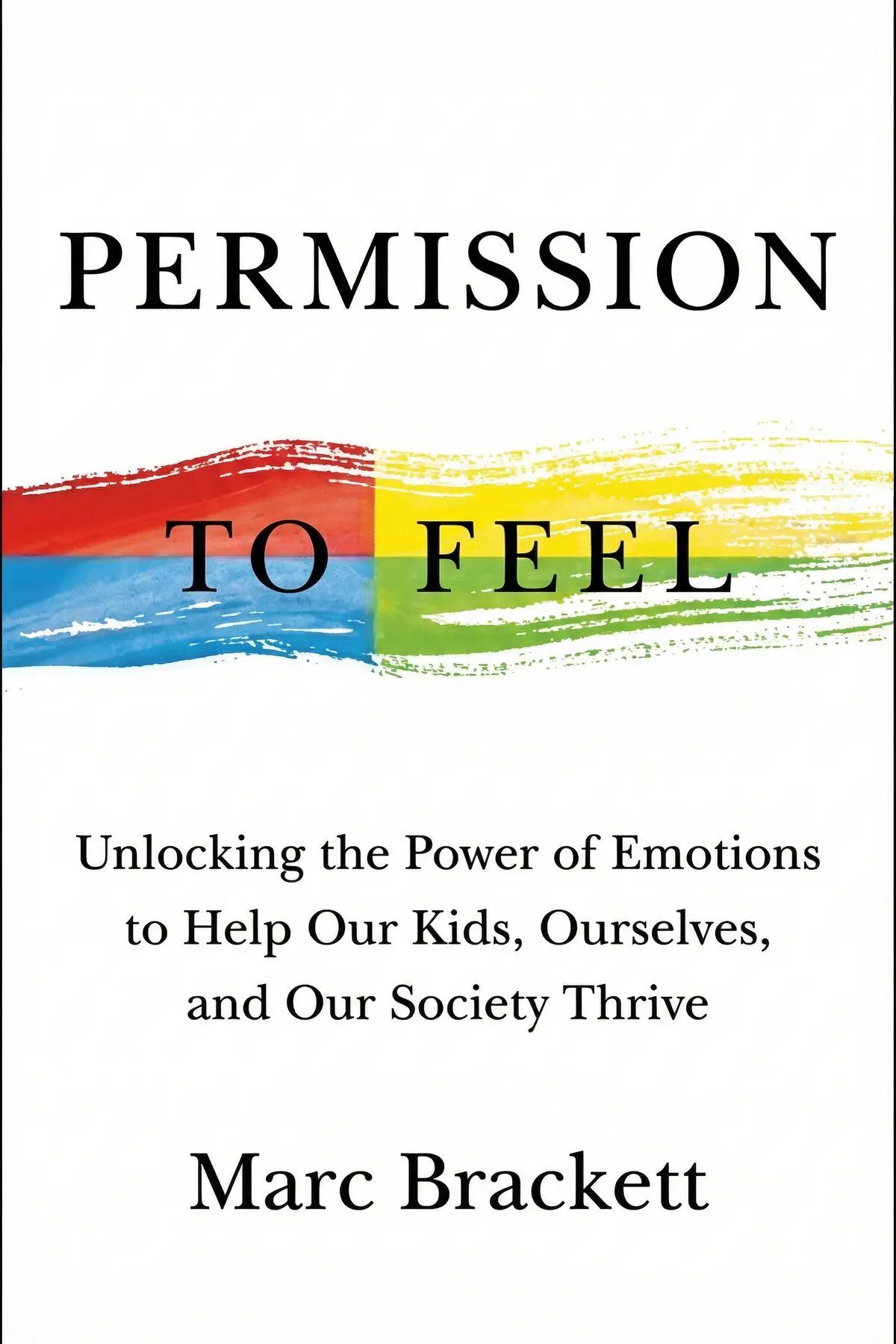
Table of Content
1. Introduction
1 min 02 sec
Most of us say we are fine many times a day while carrying feelings we never name, and those feelings keep steering how we think, choose and treat the people closest to us. In Permission to Feel, Yale professor Marc Brackett argues that pushing emotions down only makes them stronger and more harmful, while reading them carefully turns them into useful information.
His method, called RULER, breaks emotional intelligence into five skills anyone can practice: recognizing, understanding, labeling, expressing and regulating feelings. Like tennis or computer programming, Brackett says, these skills improve with training, and they change life at home, in classrooms and at work.
Along the way come a boy rescued by one question from his uncle, spider phobics who edged closer by describing their dread, and a two-minute pause that can stop you snapping at your family after a long day.
2. Ask the one question that lets feelings out
1 min 34 sec
A bullied, numb boy was punished for acting out until one adult tried something different. He took the time to listen and asked one simple question, and it changed the course of a life.
3. Your mood steers your decisions, so learn to read it
1 min 47 sec
Philosophers and psychologists spent centuries keeping feelings away from clear thinking. Research since 1990 tells a different story about how a passing mood shapes what you notice, remember and choose.
4. Put fear and anger to work for you
1 min 47 sec
Hiding hard emotions behind a smile takes a toll on the heart and the rest of the body. Yet the feelings we most want to avoid may be the ones best suited to protect us.
5. Read the feeling behind a slammed door
2 min 00 sec
A teenager yells that she hates everything and slams her bedroom door. The obvious response makes things worse, and a simple grid from psychology points toward what is really going on.
6. Name the feeling and it loses its grip
1 min 47 sec
Saying a painful feeling out loud seems likely to make it bigger. An experiment with people terrified of spiders, and a survey of thousands of teachers, suggest the opposite.
7. Stay your best self when emotions are triggered
1 min 57 sec
A mother asked whether her angry son needed a psychologist, and the answer surprised everyone. The story reveals who really has to learn self-control first, and how to start in two minutes.
8. Build teams where people can say how they feel
1 min 45 sec
Surveys of tens of thousands of students and workers found 77 percent of students tired, stressed and bored, and half of workers commonly frustrated and stressed. One factor made employees far happier and less stressed, and it sits with the person they report to.
9. Conclusion
1 min 06 sec
Brackett’s own life holds the whole argument in small form. A boy buried his pain so deeply that he felt nothing, and the pain came out anyway, in grades, fights and loneliness. What finally helped was an adult who asked a real question and waited for the answer. RULER turns that moment into skills anyone can practice, from noticing a feeling to choosing what to do with it.
The practice can start small. When someone you trust asks how you are, give one exact word, irritated or worried, in place of fine. When a familiar trigger hits, a messy kitchen or a tense meeting, breathe for two minutes and ask how your best self would act. And when a child, a colleague or a friend behaves badly, read it as a message before treating it as a problem.
Feelings arrive whether we invite them or not. The only choice is whether anyone, starting with ourselves, stops to ask what they are saying.
About this book
What is this book about?
Most people were taught to push hard feelings away, to smile, answer fine and keep going. Marc Brackett argues that this habit backfires. Suppressed emotions grow stronger and more distorted, feeding chronic stress, poor decisions and strained relationships, and they harm physical health too. Drawing on his own painful childhood and on his work as a Yale professor, Brackett treats emotions as information. He traces how feelings shape attention, memory and decisions, and why even anger and fear can serve us when we listen to them. His RULER approach turns emotional intelligence into five learnable skills: recognizing, understanding, labeling, expressing and regulating feelings, supported by tools like the mood meter and the meta moment. Readers get concrete ways to read a child's outburst as a call for help, to find precise words for what they feel, to plan for their own triggers and to calm the body with two minutes of mindful breathing. The book also makes the case for building these skills into schools and workplaces, where Brackett's surveys found widespread stress and where emotionally skilled managers made a large difference.
Book Information
Who it's for
Parents losing their temper
Parents who lose their temper at the end of the day and want calmer ways to handle a child's outbursts.
Teachers and managers
Teachers and managers watching stress and burnout spread through their classrooms or teams.
Struggling to name feelings
Adults who say they are fine by reflex and struggle to name what they actually feel.
About the Author
Marc Brackett
Marc Brackett is a professor in the Child Study Center at Yale and has published more than 100 scholarly articles on emotional intelligence. He is the lead developer of RULER, a social and emotional learning approach adopted by more than 2,000 schools, and a co-founder of Oji Life Lab, which offers businesses a digital system for learning emotional intelligence. Permission to Feel became a best seller translated into 27 languages, and he later wrote Dealing with Feeling.
Ratings & Reviews
Ratings at a glance
What people think
Listeners find the book offers significant perspective on emotional intelligence, featuring detailed descriptions and content backed by research. Furthermore, the prose is accessible and simple to follow, and listeners deem it an essential resource for educators. The book also provides hands-on advice through links for implementing the RULER tool, and listeners value its applicability, with one listener highlighting its broad use across different types of relationships. Listeners prize its impact on well-being, with one listener reporting a better quality of life at home and school.
Top reviews
Violet
As an educator, I find Dr. Brackett's RULER framework to be an absolute game-changer for the modern classroom. We spend so much time focusing on grades, but we rarely give students the actual vocabulary to express their internal struggles. Frankly, the research-backed approach here makes it feel less like "fluff" and more like a necessary life skill. While some might find the personal anecdotes a bit long, I think they illustrate his points beautifully. It’s about more than just "feeling"; it’s about regulating those feelings to be more productive and compassionate. My students are already benefiting from the Mood Meter concept. Highly recommend this for any teacher or administrator looking to change their school culture.
Show moreWatchara
After hearing Marc on Brene Brown's podcast, I knew I had to dive deeper into his work. This book provides such a necessary bridge between hard science and the messy reality of human emotions. I love how he breaks down the "Labeling" phase; using words like 'ennui' or 'discontent' instead of just 'sad' makes a world of difference. To be fair, I already considered myself pretty high in EQ, but this gave me a structured way to teach these concepts to my kids. The writing is approachable and doesn't get bogged down in academic jargon. It’s a must-read for anyone trying to navigate the complexities of modern relationships.
Show moreIsabella
Wow, I didn't realize how much I was "managing" my emotions by just stuffing them down until I read this. The distinction between suppressing a feeling and actually regulating it is a nuanced one that Brackett explains perfectly. In my experience, most people think emotional intelligence is just a "soft skill," but this book proves it's a vital health metric. The research-based content is presented in a way that’s easy to digest, which I really appreciated. It feels like a roadmap for a better quality of life. Whether you're a parent or a CEO, there is something in here that will make you rethink your daily interactions.
Show morePing
Personally, I think the book's greatest strength is how it takes Yale-level research and makes it feel approachable for the average person. While the science is definitely there, the writing style felt a little redundant at times. It’s like the author assumes the reader has never had a single self-aware thought in their life. While I appreciate the RULER system, the advice on how to handle difficult coworkers felt a bit impractical for a real-world office environment. Honestly, I think the author’s TED talk covers most of what you need to know. However, for a deep dive into how EQ impacts physical health, it's a very valuable resource.
Show moreTong
The chapter on labeling emotions completely shifted my perspective on how I process stress. It’s amazing how simply finding the right word can take the power away from a negative feeling. I’ve started using the RULER tools at home, and the atmosphere has improved significantly. Truth is, we all have "permission to feel," but many of us don't know what to do once we actually start. Dr. Brackett gives you the tools to handle that "what's next" part. It’s an essential read for anyone who wants to be a more "emotionally literate" human being. Five stars for the practical application and the heart behind the research.
Show moreSomrutai
Finally got around to reading this after seeing the Mood Meter app mentioned everywhere. I’m a sucker for a good self-help book, but this one feels more grounded in actual science than most of the stuff on the shelf. The RULER acronym—Recognize, Understand, Label, Express, Regulate—is simple enough to remember when you’re actually in the heat of a moment. Truth is, I struggled a bit with the pacing, as it gets quite repetitive in the middle sections. However, the insight into how our emotional health impacts our physical well-being was eye-opening. It's a solid 4-star read that offers practical tools for anyone looking to understand their own brain better.
Show moreSeksan
Ever wonder why we feel the way we do but can't quite put a finger on the name for it? Dr. Brackett’s exploration of "labeling" was the highlight of this book for me. He introduces cultural terms like 'hygge' and 'litost' that really expand how you view your own internal landscape. Personally, I think the section on emotional intelligence in the workplace is worth the price of admission alone. It’s not just about being "nice"; it's about being effective and avoiding burnout. The tone is mostly encouraging, though it occasionally feels like he’s trying to sell his program a bit too hard. Definitely a solid addition to any professional’s library.
Show moreWatcharee
Picked this up because my child’s school is starting to implement SEL programs, and I wanted to be on the same page. I’m so glad I did. It’s heartbreaking to realize how much we’ve ignored the emotional lives of children in the pursuit of test scores. The author’s vulnerability about his own childhood trauma adds a layer of authenticity that many self-help books lack. I will say, the book is a bit repetitive, and I found myself skimming some of the later chapters. But the fundamental idea that we need "permission" to even acknowledge our feelings is powerful. It's already helped me change the way I talk to my son after a bad day.
Show moreNattapong
To be fair, the core message of this book is fantastic, even if the execution is a little clunky. Dr. Brackett is clearly passionate about his Yale research, but the book oscillates between being a memoir and a textbook. I found the RULER method helpful, but some of the regulation tips—like "take a walk"—felt a little too basic for a book of this length. I think this works best for someone who is just starting their journey into emotional awareness. If you’ve read Goleman or other EQ staples, much of this will feel like a retread. Still, the Mood Meter is a great visual tool that I've started using daily.
Show moreSamuel
This title is a bit much, isn't it? I felt like I had to hide the cover while reading it on my commute because it sounds so incredibly soft. Not gonna lie, I was expecting a technical manual on emotional intelligence, but it felt more like the author's personal therapy journal. He spends a lot of time talking about being "triggered" by things that most adults just need to develop a thicker skin for. The RULER system is okay, but it really could have been a PDF or a short blog post instead of a full-length book. If you're looking for something with more "grit" and less "hand-holding," you might want to look elsewhere. It just wasn't for me.
Show moreQuestions about this book
What is the main idea of Permission to Feel?
Marc Brackett argues that emotions are information, not obstacles to clear thinking. Pushing feelings down makes them stronger and more harmful, feeding chronic stress, poor decisions and health problems. Emotional intelligence is not inborn, he says, but it can be learned through five skills he calls RULER, so that feelings start working for us at home, in schools and at work.
What does RULER stand for in Permission to Feel?
The acronym RULER covers five skills for working with emotions: recognizing them, understanding them, labeling them, expressing them and regulating them. The first three skills help you identify what you or someone else is feeling and why. The last two help you share that feeling honestly and manage it, for example by anticipating your triggers and pausing to breathe before you react. Brackett developed RULER as a curriculum used in thousands of schools.
What is the mood meter in Permission to Feel?
The mood meter is a grid created by psychologist James Russell that Brackett uses to identify emotions more accurately. It sorts moods by two qualities, energy and pleasantness, into four quadrants. Anger and panic sit in the high energy, unpleasant quadrant, while depressed feelings sit in the low energy, unpleasant one. Once a feeling is placed, the next step is finding its precise name.
How can parents use the ideas in Permission to Feel?
Brackett tells parents to manage their own emotions first, because young children cannot regulate themselves and rely on adults to calm them with a hug or a distraction. Identify what sets you off at home, take a few deep breaths, and use a meta moment to ask how your best self would act. Plan ahead too, for example by releasing stress on the commute home.
Why does emotional intelligence matter at work, according to Brackett?
In a survey of 16,000 American workers, half said they regularly felt frustrated and stressed. According to Brackett’s research, workers with supervisors who had strong emotion skills described roughly 50 percent more inspiration and happiness, plus 30 to 40 percent less frustration, anger and stress. He argues that people who feel valued and free to speak openly are more creative, more productive and less likely to burn out.

Readers also enjoyed


Age of Propaganda: The Everyday Use and Abuse of Persuasion
Anthony Pratkanis




59 Seconds: Change Your Life in Under a Minute
Richard Wiseman




AUDIO SUMMARY AVAILABLE
Listen to Permission to Feel in 15 minutes
Get the key ideas from Permission to Feel by Marc Brackett, plus 5,000+ more nonfiction titles.
- 5,000+ titles
- Listen as much as you want
- 7-day free trial
- Cancel anytime









