

12 min 45 sec
Available in: English
Party of One: Be Your Own Best Life Partner
By Meghan Keane
Shows single people how to ease the pressure to couple up and build a full life now, through calmer thinking, steadier emotions, values-led choices about time and money, and friendships treated as central.
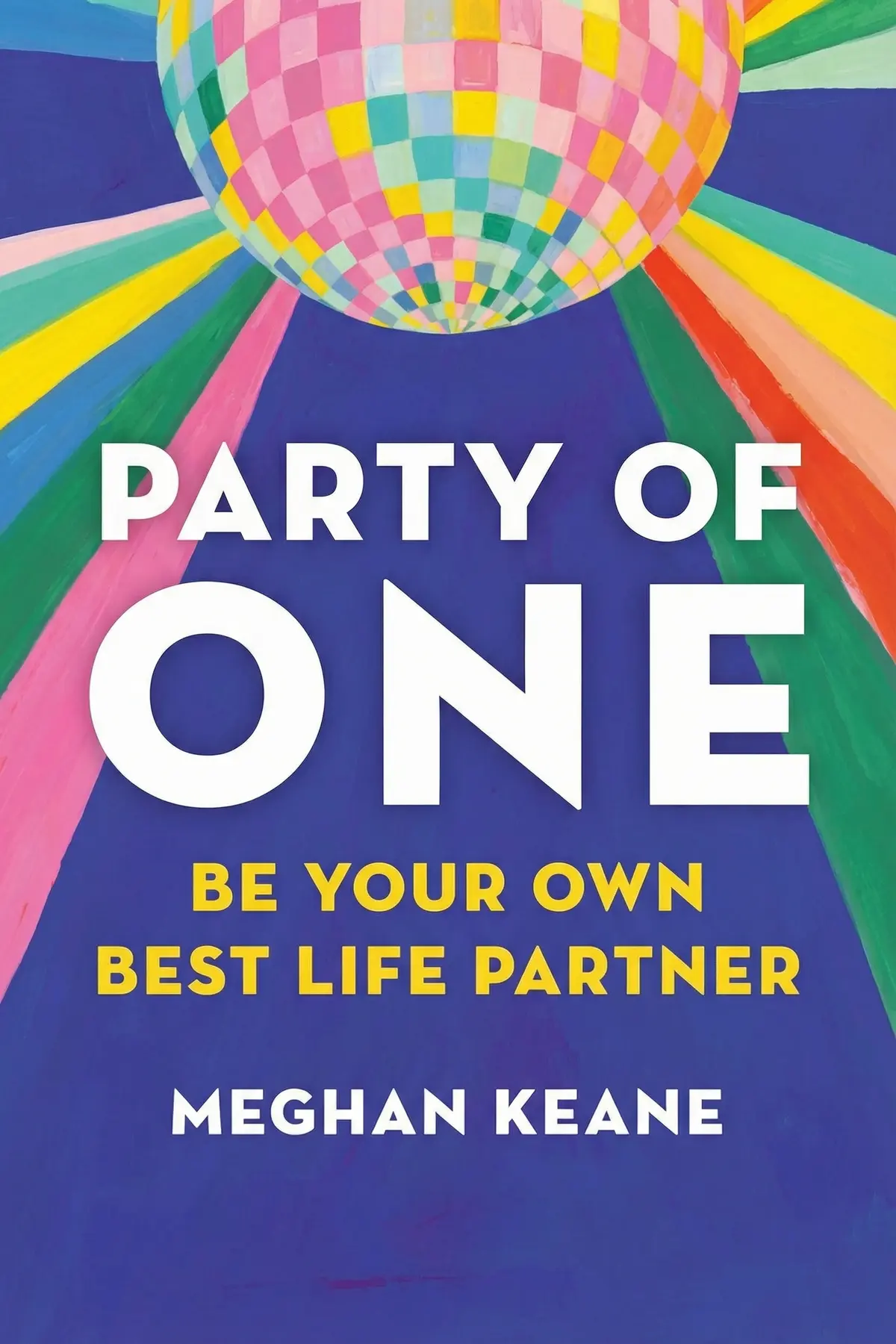
Table of Content
1. Introduction
59 sec
Being single can start to feel like a problem to solve, even when the rest of your life is going well. In Party of One, Meghan Keane, who founded the public radio advice show Life Kit, argues that the trouble lies mostly in the story we are told about single life. The belief that marriage is the ancient key to happiness, she shows, is fairly new, and it asks one partner to do the work of a whole community.
Keane calls the steady pressure to couple up a haze. She writes from her own position as a straight white woman, aware that culture and identity shape that pressure differently for everyone. Her case is that a good life does not wait for a partner. You can build it now, through clearer thinking, honest feelings, small deliberate choices and friendships you invest in on purpose.
Ahead are ways to quiet overthinking, calm hard emotions, organize your days and money around your own values, and treat friends as the central relationships they can be.
2. Spot the marriage script as a recent invention
1 min 56 sec
Many people assume marrying for love is as old as humanity. Its real history is far shorter and more practical, and knowing it changes how heavy those questions from relatives feel.
3. Stop chasing a prize you never wanted
1 min 41 sec
A frightening pandemic spring, her mother’s kitchen and one flying colander forced Keane to rethink years of dating. What she saw next reframes the whole pursuit of a partner.
4. Quiet overthinking by asking one better question
1 min 46 sec
Replaying a bad date or an unanswered message can feel like problem-solving. Keane explains why it usually works the other way, and which small question breaks the loop.
5. Let hard feelings speak, then let them settle
1 min 42 sec
Pushing away sadness rarely makes it leave. Keane offers a different stance toward hard feelings, plus a few surprisingly physical tools for the moments when they run hottest.
6. A full life built from small daily rituals
1 min 51 sec
Grand plans can wait. Keane builds a satisfying single life from modest rituals, time alone that feels full instead of empty, and one area many people avoid looking at.
7. Put friendships at the center of your life
1 min 43 sec
Friends are often what people fall back on between romances. Keane makes a case for giving them far more weight, including living arrangements that stretch the meaning of family.
8. Conclusion
1 min 07 sec
Party of One adds up to a change of direction. Keane has nothing against love or marriage. What she questions is waiting: treating the years before a partner as a waiting room, and asking one person to be everything. Once you see that the romantic script is young and narrow, the pressure behind it loosens, and the parts of a good life come into view. They were there all along, in your own thinking, your feelings, your daily routines, your money and your friends. Friendship and romance can both bring deep fulfillment, and neither has to come first.
The practical steps are small. When a thought loop starts, swap the why question for the smallest next step you can take. When a feeling surges, name it without judging it and give it a minute of your senses and your breath. Put one artist date and one dinner with a friend on the calendar, with real dates attached.
Keane’s own turn began with a colander flying across a kitchen. Yours can begin more gently, with the decision that the life you have is already the one worth building.
About this book
What is this book about?
Many single people feel a steady push to find a partner, from films, from relatives and from their own heads. Meghan Keane calls it a haze. It starts as a gentle suggestion that love is the key to happiness and grows until single life feels unfinished. Keane, who founded the public radio advice show Life Kit, takes the pressure apart. She shows that marrying for love is a fairly recent idea, that the breadwinner and homemaker family belongs to the mid-twentieth century, and that modern culture ranks romance above every other bond. Then she turns to practice. She offers ways to interrupt overthinking, to sit with hard feelings without being swept away, to build daily rituals and money habits around your own values, and to give friendships real time, structure and weight. Readers get a clearer view of where relationship pressure comes from and a set of small, concrete habits for a life that already feels complete, with or without a partner.
Book Information
Who it's for
Tired of dating questions
Single people tired of questions about their dating life who want to feel complete now.
Stuck replaying dates
Anyone stuck replaying dates or worrying about being alone who wants practical ways to calm the mind.
Friends and roommates
Friends and roommates curious about making friendship a real center of support and care.
About the Author
Meghan Keane
Meghan Keane founded Life Kit, the National Public Radio podcast and radio show that gives practical advice on subjects such as personal finance and relationships, and she is its supervising editor. She has also produced for Invisibilia, an award-winning NPR podcast, and helped launch TED Radio Hour, one of NPR's most popular podcasts. Years of shaping practical, usable advice for a wide audience inform the hands-on approach of Party of One.
Ratings & Reviews
Ratings at a glance
What people think
Listeners characterize Party of One as a supportive and encouraging resource that provides necessary validation for those navigating singlehood in a couple-centric society. While some listeners feel the content lacks complexity and offers few fresh ideas for those well-versed in personal growth literature, many value its friendly style and practical suggestions for developing self-kindness. Furthermore, they highlight its success in debunking cultural myths about fulfillment, with one listener remarking that the book feels like a "meaningful conversation with that one person who gets you." Additionally, listeners point to the author’s relatable outlook as the creator of NPR’s Life Kit and appreciate the lovely illustrations featured throughout the pages.
Top reviews
Elena
Meghan Keane brings the same empathetic, practical energy to this book that she brings to the Life Kit podcast. I’ve been single for most of my adult life, and I’m so tired of self-help books that treat being single as a problem to be solved with better dating apps. This book is the complete opposite of that; it’s an invitation to stop waiting for your life to start and just start living it now. The chapter on building 'intentional' friendships was a huge lightbulb moment for me because I often deprioritize my friends when they get married. Not gonna lie, I teared up a little reading about the history of the nuclear family and how our current expectations of partners are actually quite modern and unnatural. It’s affirming, witty, and filled with little gems of wisdom that make you feel seen rather than pitied. This is definitely going to be my go-to gift for my single girlfriends from now on.
Show moreJai
This book feels like a warm hug from a friend who truly understands the quiet anxiety of being the only single person at a dinner party. Keane does a brilliant job of naming the 'haze'—that weird, invisible pressure that makes you feel like you're failing just because you don't have a plus-one. I loved the emphasis on 'Party of One' not as a consolation prize, but as a deliberate and joyful way to inhabit the world. The advice on handling nosy relatives was particularly funny and practical, giving me actual scripts to use for the next holiday season. Personally, the most moving part was the discussion on how our culture infantalizes single people, treating us like we're just waiting for 'real life' to begin. The illustrations add a lovely, whimsical touch that keeps the tone light even when discussing heavier topics like grief or isolation. It’s a beautiful, affirming guide that helped me reframe my solitude as a space for creativity and growth.
Show moreAnna
As someone who has spent her thirties navigating the 'uncoupled' life, this book felt like the first time someone was actually speaking my language. Keane doesn't just say 'you're fine as you are,' she explains the historical and social reasons why we feel like we aren't, which is much more helpful. The concept of the 'all-or-nothing' marriage model was a huge relief to read about because it explains why so many of my married friends are actually quite lonely. I’ve started implementing the 'morning pages' routine she suggested, and it has helped clear out a lot of the mental clutter and dating-related overthinking. To be fair, she does acknowledge her specific perspective early on, which I appreciated even if it didn't perfectly match my own life. This isn't a book about how to find a partner; it's a book about how to find yourself, and I think that's a much more important journey. I finished this feeling empowered and, for the first time in a long time, excited about my future.
Show moreAnawin
What a refreshing take on the 'lonely single' trope that we see in movies all the time! I picked this up on a whim at the library and ended up buying a copy for myself because I wanted to highlight so many passages. The way Keane talks about 'solitude' vs 'loneliness' is a distinction I really needed to hear articulated so clearly. It’s not just about being okay with being alone; it’s about thriving and building a life that is full of meaning on your own terms. I loved the practical tips for handling awkward social questions and the focus on financial independence as a form of self-care. The book is short, but it’s packed with warmth and empathy that makes you feel like you’re having a long coffee date with a very wise friend. If you’re feeling a bit lost in the 'couple-driven' world we live in, this is the perfect antidote. It’s light, vibrant, and genuinely life-affirming.
Show moreMaria
Finally got around to reading this after hearing Keane on NPR, and it was exactly the kind of gentle validation I needed this week. The way she deconstructs the 'haze' of societal pressure to couple up is both enlightening and incredibly soothing for anyone feeling 'behind.' I especially loved the sections on amatonormativity—it’s a clunky word but such a vital concept to understand if you want to value your friendships properly. To be fair, if you’ve spent years reading feminist theory or deep psychology, the history of marriage here might feel a bit like a SparkNotes version. However, the conversational tone and the charming illustrations by LA Johnson make it a very accessible entry point for the average reader. It doesn't provide a radical new roadmap, but it functions beautifully as a reminder that you aren't broken just because you're solo. It's a quick, punchy read that I’d recommend to any friend going through a tough breakup.
Show moreWanida
Ever wonder why we're so obsessed with finding 'The One' when most of us have perfectly good friends and family right in front of us? This book takes a hard look at that question and offers some really compelling answers by digging into the history of romantic ideals. I found the section on how the 19th-century changed our view of marriage to be genuinely fascinating, even if it was a bit brief. Meghan Keane writes with a lot of heart, and her transition from dating-anxiety to self-celebration felt very grounded and real. My only real gripe is that it feels a bit short; I wanted her to spend more time on the 'artist dates' and the practicalities of building a community. The illustrations by LA Johnson are a highlight, giving the book a unique personality that sets it apart from typical, dry self-help texts. It’s a solid, encouraging read for anyone feeling burnt out by dating apps and societal expectations.
Show moreRuangrat
Look, I appreciated the sentiment behind this book, but it felt like a highlights reel of better, deeper books I’ve already finished. Keane summarizes works by Taitz and DePaulo so heavily that I wonder if a newcomer shouldn't just go straight to the source material. The writing is snappy and the anecdotes are relatable enough, but there isn't a lot of 'how-to' in this guide beyond basic self-compassion exercises. In my experience, the history of Jane Austen-era marriage was interesting, yet it felt a bit like a history 101 lecture dropped into the middle of a memoir. I did enjoy the focus on 'artist dates' and morning pages, which felt practical even if they aren't original concepts. It’s a solid 3-star read—perfect for the beach or a long flight—but don't expect it to change your entire worldview if you’re already comfortable being alone. It’s a nice, breezy companion, but it lacked the 'teeth' I was looking for.
Show moreHemp
If you’re new to the world of self-care and haven't spent much time thinking about amatonormativity, this book will be a fantastic eye-opener. For those of us who have been in the trenches of singlehood for a decade and have read every column out there, it’s a bit basic. The author's voice is undeniably charming and the layout of the book is very user-friendly, making it easy to digest in just a couple of sittings. I did find the 'Life Kit' style of advice to be a bit too structured at times, occasionally bordering on the repetitive side. There were moments where the privilege of the author's perspective felt a bit loud, making it harder to relate to the advice on finances or travel. Still, there’s value in having all these reminders in one place, especially the bits about breaking the cycle of rumination and overthinking. It’s a 'gentle nudge' kind of book rather than a deep-dive manifesto, which is fine as long as you know that going in.
Show moreAnchalee
While the illustrations are cute and the author’s voice is pleasant, I found this to be incredibly superficial compared to other books on the market. It felt like a collection of Instagram infographics expanded into chapters without adding much actual substance or psychological rigor. Truth is, if you’ve already read ‘It’s Not You’ or ‘Singled Out,’ you won't find a single new insight or revolutionary idea here. The perspective felt very limited to a specific demographic—straight, white, middle-class—and didn't really touch on the deeper systemic or economic struggles many single women face today. I kept waiting for the narrative to dive into the messy, agonizing parts of loneliness, but it stayed firmly in the 'self-care' shallow end. It’s a very quick read, but ultimately, it left me feeling more hungry for depth than I was when I started. It might work for a teenager, but for a well-read adult, it’s just too lightweight.
Show moreHenry
Frankly, I expected more from the head of Life Kit than a summary of existing pop-psychology books and some nice drawings. The book stays remarkably surface-level, never really grappling with the actual pain or the complex societal structures that make single life difficult for many. It felt a bit like reading a long-form magazine article that had been stretched out to fill a book-length format. While the tone is very kind and affirming, it lacks the 'meat' that would make it truly useful for someone looking for deep change. I also found the audiobook narration a bit distracting with its upbeat, almost questioning intonation, though that's a personal preference. If you want a quick hit of validation and you haven't read anything else on the topic, you might enjoy this. However, if you're looking for something that challenges you or offers new psychological insights, you should probably look elsewhere. It just felt a bit too 'TikTok psychology' for my taste.
Show moreQuestions about this book
What is the main idea of Party of One by Meghan Keane?
Keane argues that a good life does not have to wait for a partner. She shows that the romantic marriage ideal is fairly recent and that culture ranks romance above other bonds. Once that pressure loosens, she offers tools for building fulfillment now: interrupting overthinking, accepting hard feelings, creating small daily rituals, taking charge of your money and investing in friendships with intention.
What is amatonormativity?
Amatonormativity is the term scholars use, as Keane explains, for the way society places monogamous romantic relationships above every other kind of bond. It shows up in fairy tales, romantic comedies and family expectations that suggest your worth depends on being chosen. Keane argues that friendships, family ties and community bonds can bring equally deep meaning, and naming the bias helps you choose the relationships that actually improve your life.
How does Party of One suggest you stop overthinking?
Keane starts with noticing the moment your mind replays the same scene, then gently interrupting it with a walk, a creative project or physical activity. She suggests swapping questions about why things always go wrong for a question about the next small step. Writing thoughts down, talking with a listener who validates you, and meeting spirals with curiosity in place of judgment all help.
What are morning pages and artist dates?
Morning pages are three pages of unfiltered, stream-of-consciousness writing done right after you wake up, which Keane says clear mental space and bring up new insights. An artist date is time you schedule for something that sparks joy and curiosity, such as wandering a park, browsing vintage shops or visiting a museum. Together they make time alone feel full and creative.
Who should read Party of One?
It suits single people who feel a steady push to find a partner and want to build a satisfying life now. It also helps anyone prone to overthinking or overwhelmed by strong emotions, and readers interested in giving friendship a bigger role, from book clubs and dinner traditions to friends who share a home or help raise children together.
Readers also enjoyed

A High-Performing Mind: Strengthen Your Mind and Live Your Best Life
Andrew D. Thompson


Abundance: The Inner Path to Wealth
Deepak Chopra


59 Seconds: Change Your Life in Under a Minute
Richard Wiseman



All About Love: New Visions
bell hooks

AUDIO SUMMARY AVAILABLE
Listen to Party of One in 15 minutes
Get the key ideas from Party of One by Meghan Keane, plus 5,000+ more nonfiction titles.
- 5,000+ titles
- Listen as much as you want
- 7-day free trial
- Cancel anytime









