

14 min 06 sec
Available in: English
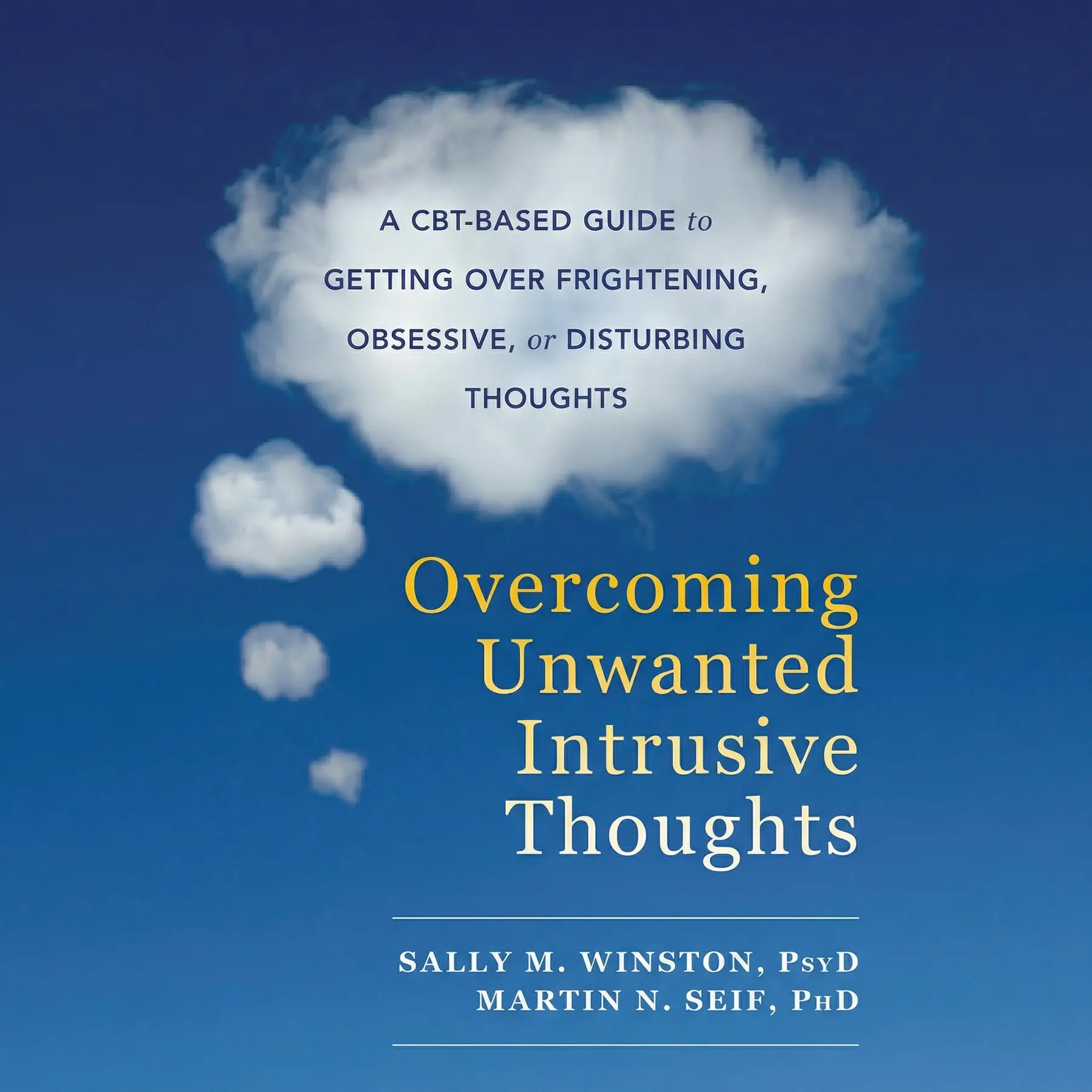
Overcoming Unwanted Intrusive Thoughts: A CBT-Based Guide to Getting Over Frightening, Obsessive, or Disturbing Thoughts
Explains why disturbing, unwanted thoughts come back harder when you battle them, and offers a six-step acceptance routine plus playful exposure exercises that let those thoughts weaken, then dissolve into the background hum.
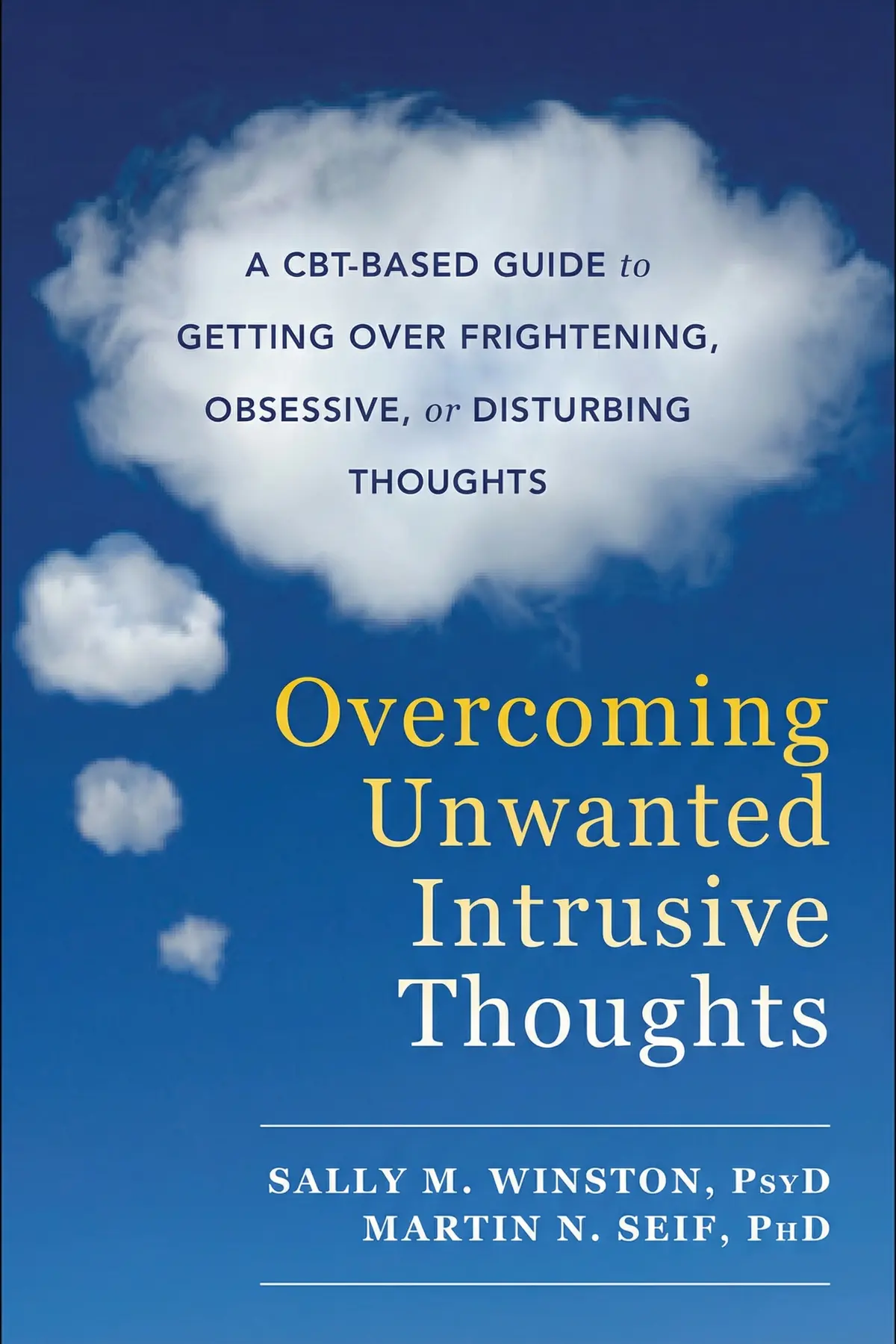
Table of Content
1. Introduction
58 sec
If a disturbing thought keeps coming back and makes you wonder what kind of person you are, start here: almost everyone has such thoughts, and they rarely mean anything. In Overcoming Unwanted Intrusive Thoughts, psychologists Sally M. Winston and Martin N. Seif argue that these thoughts return for one main reason, the alarm and effort we spend fighting them. The brain reads that struggle as proof the thought matters, so it serves it up again.
Their way out, built on cognitive behavioral therapy, runs against instinct. Stop trying to get rid of the thought and change how you relate to it instead. Treated as noise, it fades. Ahead are the reasons a mind turns sticky, the myths that keep it that way, a six-step routine for letting a frightening thought drift past, and a few surprisingly playful exercises that can drain a thought of its power before bedtime.
2. Know which thoughts say nothing about you
1 min 42 sec
A carrot in the supermarket and a kitten in your arms can both set off thoughts that leave you ashamed. The authors explain what those moments actually reveal about you, and the answer may surprise anyone who has lost sleep over one.
3. Drop the myths that make thoughts feel dangerous
1 min 38 sec
Most people carry a few unexamined beliefs about their own minds, and each one makes an ugly thought feel heavier. Seeing them clearly changes what you do the next time a film or headline sets you off.
4. Stop arguing with a thought and let it fade
1 min 50 sec
Reassuring yourself feels like the sensible response to a frightening thought. The authors show why that inner conversation can run all day without settling anything, and which voice needs to speak up instead.
5. Retrain the alarm that mistakes thoughts for danger
1 min 45 sec
The part of your brain built to spot predators is now busy guarding you against your own imagination. The authors explain how a single overreaction teaches it the wrong lesson, and how it can be taught again.
6. Six steps from resisting a thought to moving on
1 min 48 sec
Most people either argue with a frightening thought or run from it, and both keep it close. The authors offer a short sequence that gives your mind something better to do in the moment the thought strikes.
7. Bore a frightening thought out of its power
1 min 36 sec
A woman kept awake all night by one terrible thought found sleep within twenty minutes, using a children’s tune. Her method sounds like a joke, and that is exactly why it works.
8. Treat setbacks as practice and know when to get help
1 min 47 sec
Just when the thoughts seem gone, a stressful week or a lazy vacation can bring them back. The authors explain what that return means, and where self-help ends and professional care should begin.
9. Conclusion
1 min 02 sec
What Winston and Seif offer is a reversal of instinct. Every reflex says a terrible thought must be pushed out, answered or proven false. Their argument is that the pushing is what keeps it in. The brain learns what to fear from how we react, and it can learn just as well that a thought is harmless, through acceptance, awareness and a steady refusal to engage. Over time, the thought moves from threat to ordinary passing event.
That gives you a few things to try this week. When a disturbing thought arrives, name it as an intrusive thought and let it stay without arguing. Notice when your mind slips into the back-and-forth between worry and reassurance, and stop supplying answers. Stop steering around harmless triggers. And for a thought that keeps returning, borrow from the sleepless client: give it a silly tune and repeat it until it bores you.
The thought may still knock. You simply no longer have to open the door.
About this book
What is this book about?
A violent image while holding a kitten, a sexual thought in the grocery aisle, a sudden doubt about someone you love. Thoughts like these can make decent, healthy people question their character and even their sanity. Psychologists Sally M. Winston and Martin N. Seif argue that such thoughts are universal and mean nothing. They keep coming back because of the alarm and effort we spend trying to get rid of them. Drawing on cognitive behavioral therapy, the authors explain how the brain's threat system misfires on harmless thoughts and how fighting them creates what they call a sticky mind. They take apart the myths that give thoughts their power, from magical thinking to the idea that a thought reveals your true self, and they describe the inner tug of war between a Worried Voice, False Comfort and the calm Wise Mind. Readers get a six-step routine for letting a thought pass, exposure exercises that use writing, repetition, humor and even song, advice on handling setbacks, and clear guidance on when professional help is needed.
Book Information
Who it's for
Frightened by recurring thoughts
People who are ashamed or frightened by violent, sexual or absurd thoughts that keep coming back.
Stuck in worry loops
Anyone stuck in loops of worry and self-reassurance who wants a calm, practical routine to break them.
Supporting someone who struggles
Partners, parents and helpers of someone with a sticky mind who want to understand what is going on.
About the Author
Sally M. Winston
Sally M. Winston and Martin N. Seif both run psychotherapy practices, and together they write the Psychology Today blog Living with a Sticky Mind. Seif, who practices in Greenwich, Connecticut, is on the faculty of New York-Presbyterian Hospital, helped found the Anxiety and Depression Association of America and is board certified in cognitive behavioral therapy. Winston, born in Montreal, worked for 18 years at SheppardPratt Hospital in Baltimore before the institute that treats phobias, panic, OCD and worry opened in 1992, and was the first recipient of the Jerilyn Ross Award. She leads workshops around the world.
Ratings & Reviews
Ratings at a glance
What people think
Listeners find this work to be a hands-on manual that offers a strategy for conquering unwanted intrusive thoughts, with one listener highlighting its grounded perspective on handling irrational thinking. The text also clarifies mental operations and integrates repetitive concepts with new data, which keeps the material accessible and the directions straightforward. Furthermore, listeners claim the book can be a lifesaver and works well to deconstruct anxiety, including one listener who reported feeling noticeable relief after reading the first chapter.
Top reviews
Book
Wow. This was exactly what I needed to dismantle the constant noise in my head. For years, I believed my disturbing mental flashes defined my character, but this guide helped me realize that thoughts are not facts. The authors utilize a very specific CBT-informed approach that focuses on the 'stuckness' of the mind rather than the content of the thoughts themselves. It is incredibly freeing to learn that I don't have to argue with my brain or solve every irrational impulse that pops up. Instead of the usual self-help fluff, you get a scientific roadmap that actually makes sense. My only slight gripe is that it can feel a bit repetitive, but frankly, that repetition is probably necessary to drill the message into an anxious mind. It’s a must-read for anyone who feels like a 'terrible person' because of their internal dialogue.
Show moreChanida
Picked this up during a particularly bad flare-up of anxiety, and the relief was almost instantaneous. Most books try to teach you how to 'fix' your thinking, but Winston and Seif argue that the real solution is to stop trying to fix it at all. The concept of 'Neither thoughts nor feelings are facts' has become my daily mantra whenever I feel a panic attack coming on. I especially appreciated how they addressed very dark, sexual, or violent intrusive thoughts without judgment. It’s affirming to know that being a conscientious person is actually why these thoughts are so bothersome in the first place. The scientific explanation of how the amygdala works was clear and easy to understand. I've already recommended this to several friends who struggle with similar 'stuck' loops.
Show moreAisha
Finally got around to reading this after hearing it mentioned in an anxiety support group, and it’s truly a game-changer. The authors explain the mechanics of 'sticky' thoughts in a way that feels both scientific and accessible to the average reader. I loved the emphasis on not rushing the process; letting the feeling be there until it dissipates on its own is a hard but necessary skill. It’s amazing how much relief I felt just by learning that I wasn't the only one experiencing these terrifying mental images. This book focuses on the 'O' of OCD, which is exactly what I needed. It’s not just about coping; it’s about dismantling the fear response entirely. If you’ve ever felt like a prisoner to your own mind, please give this a chance. It really can save lives.
Show moreChatri
The chapter on the different 'voices' of anxiety was a massive breakthrough for me. I’ve read a lot of books on panic disorders, but this one captures the specific nuance of intrusive thoughts better than any other. It’s incredibly affirming to hear experts say that these thoughts are okay and don't make you a bad person. The authors build on repetition with new information in each chapter, which actually helped me internalize the lessons better. I stopped trying to solve my thoughts and started just letting them 'be,' and the difference in my stress levels is night and day. It’s a short, easy read but packed with enough scientific insight to satisfy a skeptical mind. This is a book every artist or conscientious person who overthinks should have on their shelf.
Show moreSudarat
After hearing about this book on a podcast, I decided to give it a try for my nagging anxieties. It outlines wonderful tools for dealing with intrusive thoughts that are dark, shocking, or just plain annoying. The key phrase for me was: 'Neither thoughts nor feelings are facts.' Let that one sink in for a second. It is a completely freeing concept that changed how I interact with my own mind. The authors explain how we get tangled up in our own logic and how to simply step out of the trap. It’s a very easy read and feels like having a conversation with a very smart, very kind therapist. This book doesn't just offer temporary relief; it offers a whole new way of existing with your brain. Truly life-changing stuff.
Show moreIsabella
Ever wonder why your brain decides to present you with the absolute worst-case scenario at three in the morning? This book doesn’t just tell you to 'think positive,' which is a refreshing change from the typical self-help genre. Instead, it provides a practical guide on how to allow these thoughts to exist without giving them power. I found the 'voices' analogy very helpful for externalizing the anxiety. By treating the intrusive thought as a separate, annoying entity, it becomes much easier to let time pass and return to what I was doing. While it isn't specifically focused on the compulsive side of OCD, it does a masterful job with the obsessional part. It’s a very quick read, though some parts felt a bit like they were padding the page count with similar examples.
Show moreChan
As someone who tends to over-analyze every single emotion, this book was a much-needed reality check. The truth is, we give our thoughts too much credit by assuming they have some deep, hidden meaning. Winston and Seif do an excellent job of stripping away that power by using CBT techniques. I liked the clear steps provided for when a 'sticky' thought takes hold. You learn to accept it, allow it, and wait for it to pass without engaging in a mental argument. To be fair, the writing style is a bit dry at times, and it lacks the emotional warmth of some other mental health books. However, the practical roadmap it provides for overcoming irrational fears is worth the price of admission alone. It’s a solid resource for anyone doing self-work.
Show moreJirapat
Not what I expected, but in a good way. I thought this would be another 'positive thinking' manual, but it’s actually a very rigorous CBT-informed discussion. It focuses purely on the obsessions—the 'O' in OCD—which is a distinction many other books fail to make clearly. The personification of thoughts works fantastically for a lay audience like myself. I did find some of the theories a bit odd at first, especially the idea of not fighting back against the thoughts. However, once you put the steps into practice, you realize how effective they are at dismantling anxiety. It’s a great companion for anyone currently in therapy or looking to do some self-work before starting. It is a bit repetitive, but the clarity and affirmation provided make it well worth the time.
Show moreJulian
Look, the core message here is undeniably strong, but the delivery felt a bit redundant after the halfway mark. I was searching for a way to deal with my catastrophizing, and while the book identifies 'sticky' thoughts well, I found myself skimming through much of the later chapters. It’s definitely an 'eat the meat and spit out the bones' situation where you take the 6-step process and move on. The personification of thoughts as different voices didn't quite click for me personally, though I can see why others might find it useful. It’s a decent introductory text for those who are new to CBT, but if you’ve already done a lot of therapy, you might find the advice a bit elementary. It provides a realistic approach to coping, but I was hoping for something slightly more profound.
Show moreNarongrit
Personally, I found the first three chapters to be the most impactful part of the whole experience, but then it stalled. Within the first hour of reading, I already felt a noticeable shift in how I perceived my internal anxiety, which was fantastic. However, the middle section of the book gets incredibly repetitive, and I found the writing style to be quite dry for a self-help title. I suppose the repetition is the point when you're trying to re-train a brain, but it made for a tedious read. I also would have liked a bit more discussion on the physical symptoms of anxiety rather than just the 'sticky' thoughts. It is a practical guide with clear steps, but it lacked the 'Ah HAH!' moments I was expecting based on the reviews. It’s a decent resource, but certainly not the page-turner I had hoped for.
Show moreQuestions about this book
What is the main idea of Overcoming Unwanted Intrusive Thoughts?
Sally M. Winston and Martin N. Seif argue that intrusive thoughts are a normal part of every mind and carry no meaning about who you are. They keep returning because we react to them with alarm and try to fight them off, which signals to the brain that they matter. The way out is to change how you relate to the thoughts, accepting them and letting them pass, rather than trying to eliminate them.
What are the six steps for handling intrusive thoughts?
The authors’ routine runs: recognize the thought and label it; remind yourself these are just thoughts, involuntary and harmless; accept and allow the thought without fighting, reasoning or distracting; float and feel, grounding yourself through your senses in the present; let time pass without checking whether it is working; and proceed with your day even while the thought lingers in the background.
Should I avoid things that trigger my intrusive thoughts?
No, according to the authors. Calling certain movies or articles poisonous just strengthens the belief that your thoughts are dangerous. They recommend not going out of your way to avoid harmless triggers, and even seeking them out deliberately as exposure work, at your own pace. Writing the thought down, saying it aloud, using humor or turning it into a song can all make it less sticky.
What is a sticky mind?
Winston and Seif use the term for a mind that clings to thoughts and clings harder the more it tries to suppress them. The brain’s alarm system, centered on the amygdala, can misfire and treat a harmless thought as a threat, creating a fear pathway. Their remedy is to stop resisting: treat the thought like spam email, leave it unopened, and over time the brain learns there is no danger.
When do intrusive thoughts need professional help?
The authors advise getting support right away when thoughts become plans or behaviors that might cause harm. Thoughts linked to conditions like depression or bipolar disorder may also need treatment. Warning signs they mention include finding thoughts of death comforting, hopelessness, agitation and racing thoughts. Therapy, medication or both can make a real difference, and they urge readers not to be ashamed to reach out.
Featured in
Readers also enjoyed





Alcoholics Anonymous
Alcoholics Anonymous World Services

A Liberated Mind: How to Pivot Toward What Matters
Steven C. Hayes


AUDIO SUMMARY AVAILABLE
Listen to Overcoming Unwanted Intrusive Thoughts in 15 minutes
Get the key ideas from Overcoming Unwanted Intrusive Thoughts by Sally M. Winston, plus 5,000+ more nonfiction titles.
- 5,000+ titles
- Listen as much as you want
- 7-day free trial
- Cancel anytime









