All About Love: New Visions
bell hooks
 English
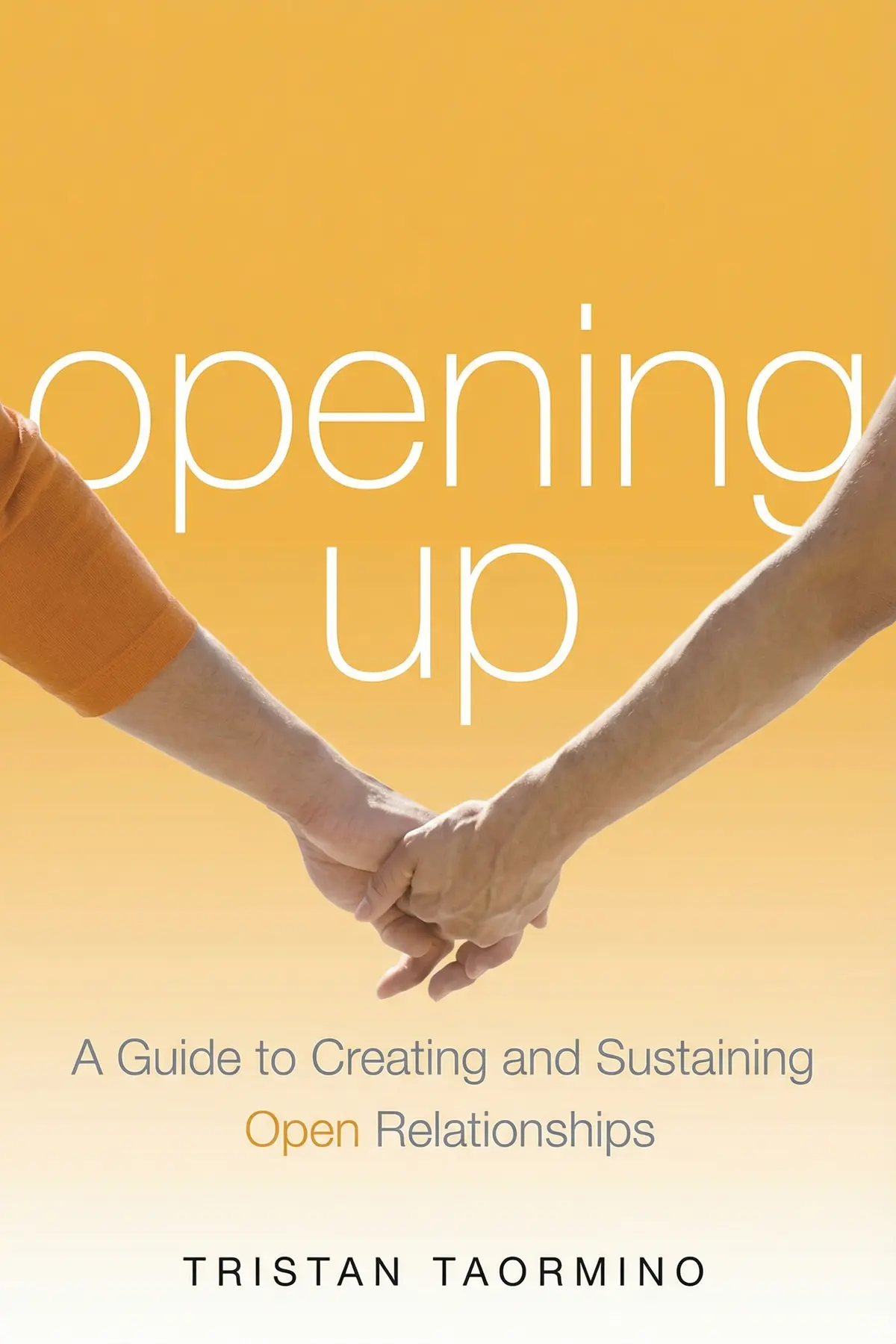
A practical guide to open relationships and polyamory. It explains why one partner cannot meet every need, and how honest talk, precise agreements and a new way of handling jealousy make nonmonogamy work.
1 min 02 sec
If you expect one partner to be your lover, best friend, co-parent and ally all at once, the strain is built in from the first day. In Opening Up, sex educator Tristan Taormino argues that no single person can meet all of anyone’s needs, and that pretending otherwise pushes couples toward silence or cheating. Her first surprise for anyone curious about open relationships is how unglamorous they are: they run on conversation far more than on sex.
That idea carries the whole book. Nonmonogamy succeeds only when people trade the soulmate fairy tale for honest talk, precise agreements and a direct look at their own insecurity, and the same discipline strengthens any relationship. Along the way come a San Francisco commune, a lunch that one partner calls a date, and a plan for telling family and protecting children. Open or monogamous, the choice stops being a script and becomes yours.
1 min 33 sec
We are raised to believe the right person will make every other desire disappear. Taormino traces what that belief does to couples who stay silent, and why a poll of 70,000 people suggests the silence rarely holds.
1 min 38 sec
Open relationships range from a single night at a club to a commune of thirty lovers. Picking the wrong form can sink a couple, so the first task is knowing what you actually want.
1 min 38 sec
People who imagine open relationships as endless parties are often disappointed by what they find. The reality looks more like a household meeting, and Taormino argues that is exactly what makes the freedom possible.
1 min 40 sec
A broken rule in an open relationship can wound as deeply as an affair. Some breaches are deliberate, but many start with two people quietly meaning different things by the same word.
1 min 43 sec
Agreeing to openness in theory does nothing to stop the sting when your partner heads out on a date. Taormino traces that sting to its root and offers a way to use it.
1 min 44 sec
There is a feeling that turns a partner’s date from a threat into a source of delight. It rarely comes naturally in a competitive culture, yet Taormino insists it can be practiced.
1 min 37 sec
Hiding important relationships protects your job and custody rights, but it can cost you closeness and self-respect. Taormino weighs both risks and lays out a careful way to come out if you choose to.
1 min 40 sec
Critics fear that multiple partners will confuse children and break the family apart. Taormino argues the opposite can happen, as long as parents prepare their kids for the outside world and get their paperwork in order.
1 min 08 sec
Opening Up is written for people leaving monogamy, yet its claim reaches every couple. The soulmate story asks one person to be everything, and Taormino reads widespread cheating and divorce as signs of that strain. Her answer asks a lot: know what you want, say it, pin it down in precise agreements, revisit them often, and face the insecurity that makes a partner’s freedom feel like a threat. People who do that work, she argues, gain self-awareness, sharper communication and room to explore parts of their sexuality they had kept hidden.
If you are weighing this path, start with one honest conversation about what each of you wants, and make any agreement specific enough that a lunch cannot be mistaken for a date. When jealousy arrives, feel it, find support, then ask what it says you need. If your family grows, protect it with a will and a living will before you need them.
Open or monogamous by choice, the relationship you keep will be one you designed together, held by trust rather than by fear of losing each other.
Most people grow up expecting one soulmate to be their lover, best friend, co-parent and ally for life. Tristan Taormino argues that this expectation puts more weight on a relationship than it can carry, and that the result shows up in hidden attraction, cheating and divorce. Her guide sets out the alternatives. She describes the many forms nonmonogamy can take, from casual sex and swinging to committed polyamorous triads, quads and communes. Then she turns to the less glamorous truth: open relationships run on conversation. They need ground rules agreed in detail, check-ins at every change and agreements treated as seriously as wedding vows. Taormino gives practical steps for the hardest parts. She shows how to work through jealousy by tracing it to insecurity, how compersion, joy in a partner's happiness with someone else, can be learned, and how to decide whom to tell, from parents to schools. She closes with advice on raising children in larger families and protecting partners through a will and a living will. Readers who open up and readers who choose monogamy both come out with clearer expectations and better tools for talking.
Couples who feel restless in monogamy and want to explore opening up without wrecking their trust.
People already in open or polyamorous relationships struggling with jealousy, broken agreements or coming out.
Parents in multipartner families deciding what to tell children, schools and relatives.
Tristan Taormino is an American feminist author, sex educator and film director. She has written seven books and edited more than 25 anthologies, including the Best Lesbian Erotica series, and her work has won a Lambda Literary Award and a Firecracker Award. She edited the magazine On Our Backs, wrote a column for The Village Voice for nine and a half years, hosted the weekly radio show Sex Out Loud, speaks at universities, and teaches workshops on sex and relationships.

Listeners consider this guide informative and well-documented, full of practical tips and simple to navigate. Furthermore, they like its deep dive into various relationship styles and the advice on communicating these concepts to others. The narrative style is also compelling; listeners label it eye-opening and empowering, helping them solidify their decisions. They also appreciate its accessibility, with one listener calling it a must-read for anyone exploring non-monogamy.
Finally got around to reading this staple of the ENM community, and it definitely lived up to the hype. Taormino provides an incredibly thorough roadmap for anyone looking to dismantle traditional relationship structures without losing their mind in the process. While some modern readers might find the primary/secondary hierarchy a bit rigid, the sheer breadth of relationship styles covered—from swinging to polyfidelity—is impressive. The writing is accessible and devoid of the preachy tone you sometimes find in older lifestyle manuals. I particularly appreciated the focus on practical logistics, like how to navigate scheduling and boundaries. It’s an empowering read that makes the daunting prospect of opening up feel manageable. Even if you don't end up changing your relationship status, the communication tools offered here are gold for any couple. This is a must-read for the curious.
Show moreThis book is basically the updated, more readable version of The Ethical Slut that I’ve been craving. Taormino manages to be instructive without being preachy, which is a rare feat in the self-help genre. I loved how she integrated so many diverse voices through the case studies; seeing how real people negotiate their closet status or handle parenting was eye-opening. The tone is engaging and moves quickly, making it a great pick for a partner who might be intimidated by denser academic texts. Look, it’s not perfect, and the total absence of any mention of asexuality is a glaring hole. However, the foundational advice on negotiation and self-reflection is top-tier. It helped us solidify our decision to explore non-monogamy by giving us the vocabulary to talk about our fears. Truly an empowering resource.
Show morePicked this up after a friend recommended it as the gold standard for new couples, and I totally see why. It’s exceptionally well-researched and avoids the hippie-dippie vibe that turns some people off from this subject. The layout is easy to follow, with checklists and sidebars that make it feel like a workbook rather than just a lecture. In my experience, the biggest hurdle to non-monogamy is just not knowing what the actual options are, and this book lays them all out clearly. Whether you're interested in casual swinging or long-term polyamory, Taormino treats every model with respect and kindness. It’s an empowering resource that gave my partner and me the confidence to start having the hard conversations. If you want to move beyond the basic 'slut' branding and get into the nitty-gritty, read this.
Show moreAfter hearing about this book on several podcasts, I finally dove in and was blown away by how comprehensive it is. It covers topics I hadn't even considered, like the legal and practical implications of having multiple partners in a society built for two. The chapter on parenting was particularly enlightening, providing real-world examples of how to handle transparency with kids in an age-appropriate way. Gotta say, Taormino's background as a sex educator really shines through in the way she de-stigmatizes diverse desires and kinks. It’s an easy-to-read, engaging manual that makes the whole concept of opening up feel less like a crisis and more like an opportunity for personal growth. If you’re even slightly curious about non-monogamy, this belongs on your shelf. It is a definitive, eye-opening resource for the modern era.
Show moreAs someone navigating a mono-poly dynamic, I found the specific sections on that configuration to be a total lifesaver. Tristan explores the emotional friction of these setups with a level of nuance that's often missing from online forums. To be fair, the book shows its age in places; the language around the trans community and the use of the word 'transgendered' is definitely a relic of the late 2000s. However, the breakdown of New Relationship Energy (NRE) is still one of the best I’ve read. It helped me recognize my own patterns before they spiraled into messy territory. The advice is grounded in real-world case studies that make the theories feel tangible and easy to follow. It's a solid, informative guide that prioritizes honesty over idealism, even if the 'one partner can't meet all needs' mantra feels a little oversimplified at times.
Show moreWow, I didn't realize how much of my 'monogamous' thinking was actually just fear of communication until I picked this up. The exercises on designing your own relationship are incredibly helpful for stripping away societal expectations and building something custom. My only real gripe is the terminology; calling a V-structure a 'V Triad' is confusing and technically incorrect in modern poly circles. Still, the core message about personal agency and radical honesty resonates deeply. It’s packed with useful advice that applies even to monogamous couples who just want to be better partners. The writing style is breezy and conversational, which helped me digest the more challenging emotional topics like jealousy. Not gonna lie, some of the hierarchy stuff is a bit dated, but the practical tips for finding community are excellent.
Show moreEver wonder how to tell your family you're non-monogamous without it becoming a total disaster? The chapter on coming out is worth the price of the book alone. It’s more detailed than almost any other guide I’ve found, offering scripts for common questions and pushback you might receive. The truth is, opening up is a logistical nightmare if you don't have a plan, and Taormino is great at providing that structure. I did find the rules vs. boundaries distinction a bit blurry here, and some of the contract-style agreements she suggests feel a little too controlling of others' agency. But for someone who needs a clear, well-researched starting point that covers everything from legal issues to safe sex, this is excellent. It’s engaging and empowering stuff for beginners.
Show morePersonally, I appreciated that this book doesn't try to sugarcoat the bad and the ugly parts of opening up. It’s an honest look at how messy jealousy and scheduling can get. The chapter on jealousy was a bit hit-or-miss—the idea that some people just don't feel it is a dangerous precedent to set for beginners—but the practical tips for managing emotional spikes were still useful. The writing is clear and incisive, though it does occasionally slip into ciscentric assumptions. I found the section on polyfidelity especially interesting, as it's often ignored in other books. It’s a comprehensive guide that works best if you read it with a critical eye. Great for sparking deep discussions with a partner before you make any big life changes.
Show moreThe chapter on STI safety is where this book really starts to show its flaws, unfortunately. Frankly, the medical information regarding HSV and HPV was inaccurate even for its time, and it’s a bit dangerous to leave uncorrected in newer printings. Beyond that, the book is a decent training-wheels manual for couples, but it feels ethically pedestrian compared to more modern texts like More Than Two. Taormino focuses heavily on the erotic side of things—which makes sense given her background—but the emotional complexities of deep polyamory sometimes get sidelined for playing and kinks. I also struggled with the suggestion that you can just give up a partner to honor a primary relationship; it treats human beings like interchangeable parts. It’s a functional starting point, but don't let it be your only resource if you're looking for an ethical foundation.
Show moreNot what I expected, as it leans way too heavily into the erotic side of non-monogamy for my personal taste. Taormino seems to view these relationships primarily as a way to fulfill sexual fantasies that a main partner won't indulge, rather than focusing on the deep emotional bonds of romantic polyamory. There’s also a weird trend of only mentioning a person's race when they aren't white, which felt jarring and irrelevant to the anecdotes. In my experience, the book supports a very couple-centric model where secondary partners are treated as disposable objects to be 'given up' if the primary relationship gets rocky. While the section on coming out to children was well-written, the rest felt like a relic of a different era that lacks the ethical depth of newer relationship guides. It's too sex-focused to be a definitive guide on love.
Show moreIt is a practical guide to open relationships and polyamory. Taormino argues that no single partner can meet all of a person’s needs, and that the soulmate myth pushes people toward hidden feelings or cheating. She describes the forms nonmonogamy can take, then covers what makes it work: constant communication, precise agreements, handling jealousy, learning compersion, coming out, and raising children in larger families.
Taormino traces jealousy to insecurity, a doubt about your own worth or the strength of the relationship. Her approach has three steps. Let yourself feel the emotion without blame and find its trigger, such as feeling left out or undervalued. Seek support from friends or a therapist. Then decide whether action is needed, like self-care or a conversation with your partner. Jealousy, she says, points to your needs and boundaries.
Compersion is joy felt on behalf of a partner who is happy with someone else. For some people it is erotic, sparked by watching or imagining a partner with another person. It can also be gratitude that someone else is enriching your partner’s life. Taormino says it does not come naturally in a competitive culture, but that it can be learned, and that it grows from love where jealousy grows from fear.
No. Taormino’s main demand is realistic expectations. Once you accept that you will be attracted to others and sometimes dissatisfied, you can choose monogamy deliberately or discuss opening up. She also offers a test: if the constant talking, checking in and renegotiating that nonmonogamy requires sounds like too much work, an open relationship may not be right for you.
Start with an honest conversation about what each of you wants, including whether only casual sex or full relationships are allowed. Make agreements as specific as possible, since partners can define a date differently. Check in at every change and renegotiate as needed. Plan carefully before telling family or employers, and protect partners with a will and a living will.
AUDIO SUMMARY AVAILABLE
Get the key ideas from Opening Up by Tristan Taormino, plus 5,000+ more nonfiction titles.