

15 min 27 sec
Available in: English
 ไทย
EnglishไทยOpen: An Autobiography
By Andre Agassi
Andre Agassi's autobiography shows how a champion who hated tennis, pushed by a forceful father, found the people and the purpose that finally let him play and live on his own terms.
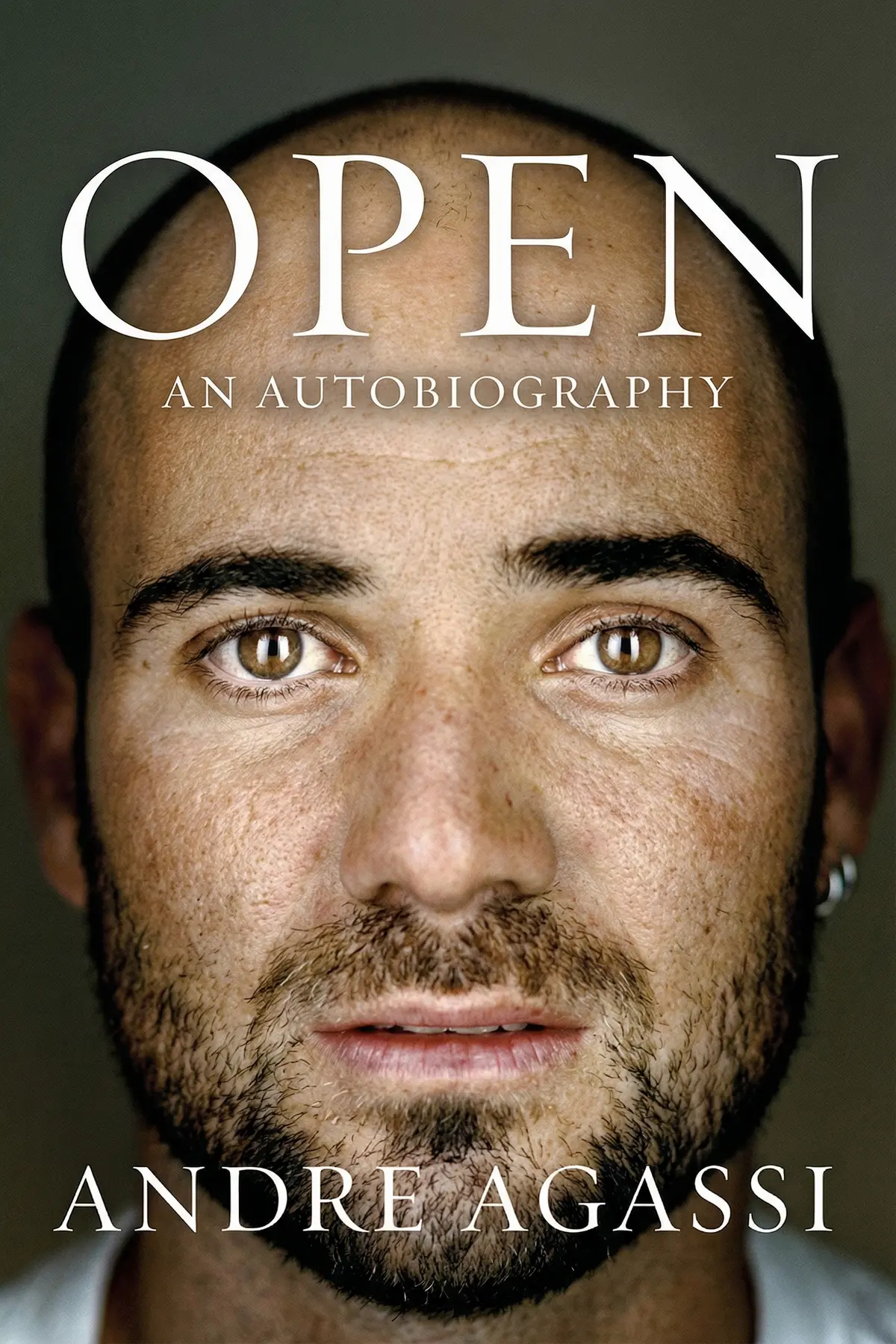
Table of Content
1. Introduction
54 sec
Being excellent at work you never chose can leave you successful and empty at the same time. In Open, Andre Agassi admits that he hated tennis, the sport that made him one of the biggest stars of the 1990s, from the day his father put him in front of a ball machine at seven. That confession overturns the idea that champions run on love of their game.
Agassi’s account points to a harder truth: a life built on someone else’s dream starts to work only when you find the people and the purpose that let you live it on your own terms. His path runs from a Las Vegas backyard through a hairpiece, a failed drug test and a ranking of 141 to a school for at-risk children and a late return to number one. Along the way it offers a clear way to read pressure, rebellion and image in your own life.
2. Spot the borrowed dream behind the pressure
1 min 30 sec
A seven-year-old faced thousands of balls a day from a smoking machine in a Las Vegas backyard. The man shouting behind him had his own reasons, rooted in a childhood far from any tennis court.
3. Read rebellion as a request for control
1 min 40 sec
A gifted teenager in a tennis camp that felt like a barracks dyed his hair pink and broke every rule. One angry outburst finally changed his life, and it was not the one anyone expected.
4. A loud image can hide a missing self
1 min 34 sec
Denim shorts, a frosted mullet and early wins over famous players made Agassi impossible to ignore. Yet each victory left him feeling hollow, and one rival’s insult cut deeper than any defeat.
5. Choose the people who make you stronger
1 min 45 sec
A loss in Paris exposed a weakness that talent could not fix. The answer came from two unlikely men in Las Vegas, one with enormous hands and one who preached in jeans.
6. A coach who trains the mind wins titles
1 min 27 sec
Agassi finally won a major on the surface he liked least, while ranked lower than he had been in years. The victory also showed him who had been holding him back.
7. Drop a secret and free your game
1 min 45 sec
Twenty bobby pins, a famous actress and a confession on a third date. Letting go of one hidden fear lifted Agassi to a major title, yet it could not stop the slide that followed.
8. Play for something bigger than your own record
1 min 57 sec
Ranked 141 and newly divorced, Agassi looked finished. A building site in West Las Vegas and a practice court booked on purpose in Paris changed what every match meant to him.
9. Treat yourself as a permanent work in progress
1 min 42 sec
With a failing back and two young children, Agassi kept winning into his thirties, until two new stars arrived. A reporter’s compliment near the end drew his most revealing answer.
10. Conclusion
1 min 13 sec
Open is an odd sports story because its hero spends much of it wishing he were somewhere else. Agassi’s father built the champion, and the academy and the advertisements built the image. What Agassi had to build himself was a reason to keep playing, and it arrived late, from unlikely places: a trainer’s dinner table, a pastor in jeans, a school rising in West Las Vegas, a partner whose father had pushed her the same way.
You do not have to hate your job for this to apply. It fits anyone whose path was set by someone else’s hopes. Ask whose dream sits behind the pressure you feel. Notice where your image is doing work that an identity should do, and stop guarding the hairpiece. Find someone who strengthens your skills and someone who helps you understand yourself. Then tie your effort to people who gain from it, so a bad result stops passing judgment on your worth.
The boy in the backyard faced 2,500 balls a day from a machine he never chose. The man who left the court for the last time in 2006 had finally chosen what he was playing for.
About this book
What is this book about?
Andre Agassi was one of the most famous athletes of the 1990s, known for denim shorts, a frosted mullet and a big forehand. In his autobiography he makes a startling admission: he hated tennis. His father, a former Olympic boxer for Iran, set him against a homemade ball machine at seven and sent him to a harsh Florida academy at 14. Agassi traces what that upbringing cost him and how he recovered. He describes an image that hid a shy, uncertain young man, a hairpiece he feared would be discovered, a hollow first marriage to Brooke Shields, crystal meth and a failed drug test that sent his ranking down to 141. He also describes the people who helped him: trainer Gil Reyes, pastor J.P., coach Brad Gilbert and Steffi Graf. The turning point was purpose. Building a college preparatory school for at-risk children in Las Vegas gave him a reason to compete, and he climbed back to number one. Readers get a candid story about pressure, identity and turning a life chosen for you into one you choose.
Book Information
Who it's for
Professionals feeling empty
Professionals who are good at a career they never really chose and feel empty at the top.
Feeling pushed to perform
Young athletes, students and parents caught in the pressure of a demanding coach or family.
Into honest sports memoirs
Readers who want an honest sports memoir about image, addiction, recovery and finding purpose.
About the Author
Andre Agassi
Andre Agassi was born in Las Vegas on April 29, 1970, and played professional tennis until retiring after the 2006 US Open. He won eight major titles and an Olympic gold medal at the 1996 Atlanta Games, and his 1999 French Open win completed the career Golden Slam. Through the Andre Agassi Charitable Foundation he backs at-risk children in Southern Nevada; its public K-12 charter school, the Andre Agassi College Preparatory Academy, opened in Las Vegas in 2001. He and tennis player Steffi Graf have been married since 2001.
Ratings & Reviews
Ratings at a glance

What people think
Listeners find this work to be a fast, engaging experience featuring an accessible prose style, specifically highlighting the use of present-tense storytelling. This autobiography also offers deep perspectives on the human psyche and professional tennis, delivering a gripping, authentic narrative that keeps the audience fully engrossed. Listeners value the writer's sincerity and find the account deeply moving, evoking a wide range of feelings. Furthermore, the volume is packed with life lessons, making it both motivating and intellectually stimulating.
Top reviews
Prim
"Open" is a masterclass in the sports memoir genre, proving that you don't even have to like tennis to be absolutely captivated by Agassi’s internal struggle. The revelation that he spent his entire legendary career hating the game he was forced into by his father is nothing short of tragic. Moehringer’s influence is evident; the prose is crisp, leaning heavily into a present-tense narrative that makes every match feel like a life-or-death situation. I was struck by the raw vulnerability regarding his early insecurities and that ridiculous toupee. It’s rare to find an athlete so willing to look foolish in their own book just to tell the truth. While the constant tennis match play-by-plays might drag for some, they serve to illustrate the physical toll and the mental chess match of his life. To be fair, his growth from a rebellious 'image is everything' kid to a philanthropist is the real victory here.
Show moreSienna
Picked this up on a whim and couldn't put it down for three days straight. The way Agassi describes his physical pain—the morning ritual of checking if his back will even allow him to stand—is visceral and haunting. You really feel the claustrophobia of his childhood, trapped on a court in the Vegas heat with a father who saw him as a meal ticket. The book excels because it focuses on the people around him, like Gil and Philly, who provided the support he never got at home. It’s a true story that reads like high-stakes fiction. I loved the honesty about his drug use and the pressure to maintain an image that wasn't even his. This isn't just a sports book; it’s a manual on how to survive your own success.
Show moreOrawan
The chapter on his retirement match at the US Open had me in tears. "Open" is less a biography and more a confessional. Agassi’s voice is so distinct—vulnerable, angry, and eventually, wise. He captures the loneliness of individual sports better than anyone I’ve ever read. His rivalry with Sampras is depicted with such raw jealousy and admiration that it feels totally authentic. Truth is, most celebrity memoirs are polished garbage, but this feels like he’s actually opening up his veins on the page. The present-tense narration keeps the adrenaline high even when he’s just sitting in a hotel room feeling miserable. It’s an inspiring tale of a man who finally decided to own his life instead of just letting it happen to him.
Show moreKaen
Direct and devastating. Agassi’s memoir is a gut-punch that stays with you long after the final page. I loved how he dismantled the 'Image is Everything' myth piece by piece. The book is filled with heart and a surprising amount of humor, especially when he's dealing with his eccentric father. It's a quick read despite the page count because the story is so compelling. Gotta say, his pursuit of Steffi Graf is one of the most charming things I've read in a long time. It’s a refreshing change from the usual ego-trips you get from famous athletes.
Show moreGung
After hearing so many people recommend this, I finally understood the appeal. This is a profound study of what it means to be successful but miserable. Agassi’s honesty about his lack of education and his struggle to find meaning is truly moving. The way he transformed his hatred for tennis into a tool to help children through his charter academy is the most inspiring part of the book. It’s a beautifully written, easy-going narrative that makes you feel like you're sitting in a room with him. Personally, I think this should be required reading for any parent of a young athlete. It’s a powerful reminder that there is more to life than winning.
Show moreApichat
Ever wonder what’s actually happening behind the neon headbands and the 'rebel' marketing? This book strips away the commercial gloss of the 90s to reveal a man who felt like a prisoner of his own talent. The descriptions of his father’s homemade ball machine, 'The Dragon,' are terrifying and explain so much about his later burnout. I found the pacing to be excellent, though some of the sections regarding his first marriage to Brooke Shields felt a bit one-sided. He’s incredibly hard on himself, which makes his eventual peace with Steffi Graf feel earned rather than cliché. It's an easy-going read but carries a surprising amount of emotional weight. If you're looking for a standard highlight reel, look elsewhere; this is a deep dive into a fractured psyche trying to mend itself through a sport it despises.
Show moreParichat
Finally got around to reading this after years of hearing the hype. It’s an insightful look into the human psyche that transcends the tennis court. I appreciated how Agassi didn't sugarcoat his failures or his legendary temper. The chapters on his fall to the bottom of the rankings were more interesting to me than his Grand Slam wins. Seeing him rebuild his life and find a true partner in Steffi Graf provided a very heartful ending to a chaotic journey. My only gripe is that it feels a bit too long in the middle sections where the matches blend together. Still, the easy-flowing style makes it a quick read. It’s a thought-provoking look at what happens when your identity is forced upon you before you're old enough to choose it.
Show moreRungrat
As someone who grew up watching Agassi, this was a real eye-opener. I had no idea the 'image' I admired was such a source of torture for him. The book does a great job of showing the contrast between his public persona and his private misery. I especially enjoyed the scenes with his coach, Brad Gilbert, and the way they simplified the game to save his career. However, I did find some of his comments about his peers to be a bit mean-spirited, even if they were 'honest.' To be fair, he doesn't spare himself from that same harsh judgment. The ending, focusing on his school and his kids, shows a man who finally found a purpose beyond hitting a yellow ball. It’s a solid 4-star read that offers plenty of life lessons.
Show morePor
Not what I expected from a global superstar. While the writing is objectively fantastic—Moehringer really is the king of ghostwriters—I struggled to actually like Agassi as a narrator. He is brutally honest, yes, but that honesty often manifests as pettiness toward his rivals like Pete Sampras or a dismissive attitude toward Brooke Shields. It’s hard to reconcile his 'Code of Respect' at his charter school with some of the vitriol he spews about people in his past. Frankly, the 'I hate tennis' mantra started to feel like a shield he used to deflect responsibility for his own behavior. The book is definitely a page-turner and the insight into the pro tour is fascinating, but I left it feeling a bit cold. It’s a compelling story, but not necessarily an inspiring one for me personally.
Show morePierre
Wow. I really don't see why everyone raves about this. If you aren't a die-hard tennis fan, the endless descriptions of specific sets and tie-breakers are incredibly tedious. I wanted more about his life and less about his cross-court forehands. Agassi comes across as quite self-absorbed, blaming his father for everything well into his thirties. While I'm sure his childhood was difficult, the constant complaining becomes exhausting after 200 pages. I also found the ghostwriting a bit too 'literary'—it didn't always feel like a professional athlete’s voice. It was well-written in parts, but I found myself skimming large chunks just to get to the end. It didn't capture my imagination at all.
Show moreQuestions about this book
What is Open by Andre Agassi about?
Open is Andre Agassi’s autobiography. He reveals that he hated tennis from childhood, when his father made him hit up to 2,500 balls a day from a homemade machine. The book follows his rebellious teenage years, an image critics mocked as all style, a hollow first marriage, crystal meth and a failed drug test, then his recovery through trusted mentors, a school for at-risk children, Steffi Graf and a return to number one.
Why did Andre Agassi hate tennis?
Agassi never chose the sport. His father, who had fetched balls for soldiers in Tehran and later boxed for Iran at two Olympics, wanted his son to be the best in the world. He drilled Agassi relentlessly and sent him at 14 to a harsh academy in Florida. Agassi missed a real education and an interest in writing, and tennis felt like the only thing he knew.
Who helped Andre Agassi turn his life around?
Trainer Gil Reyes rebuilt his body and became a second father. Pastor John Parenti, known as J.P., helped him see that his contradictions came from his upbringing and that he need not be perfect. Coach Brad Gilbert taught him to play smarter. Steffi Graf, whose father had also pushed her into tennis, understood his turmoil, and his school for at-risk children gave him a purpose to play for.
What lessons can you take from Open?
Agassi’s story suggests asking whose dream lies behind the pressure you feel, and noticing when an image is hiding an identity you have not built. Dropping his hairpiece freed his game, but only a larger purpose, his school, ended the emptiness. He also insisted that no player is ever a finished product, so progress matters more than any final verdict on who you are.
Readers also enjoyed

Ali: A Life
Jonathan Eig

A Life Decoded: My Genome: My Life
J. Craig Venter


A Long Way Gone: Memoirs of a Boy Soldier
Ishmael Beah

All Creatures Great and Small
James Herriot


A Promised Land
Barack Obama


A River in Darkness: One Man’s Escape from North Korea
Masaji Ishikawa
AUDIO SUMMARY AVAILABLE
Listen to Open in 15 minutes
Get the key ideas from Open by Andre Agassi, plus 5,000+ more nonfiction titles.
- 5,000+ titles
- Listen as much as you want
- 7-day free trial
- Cancel anytime









