
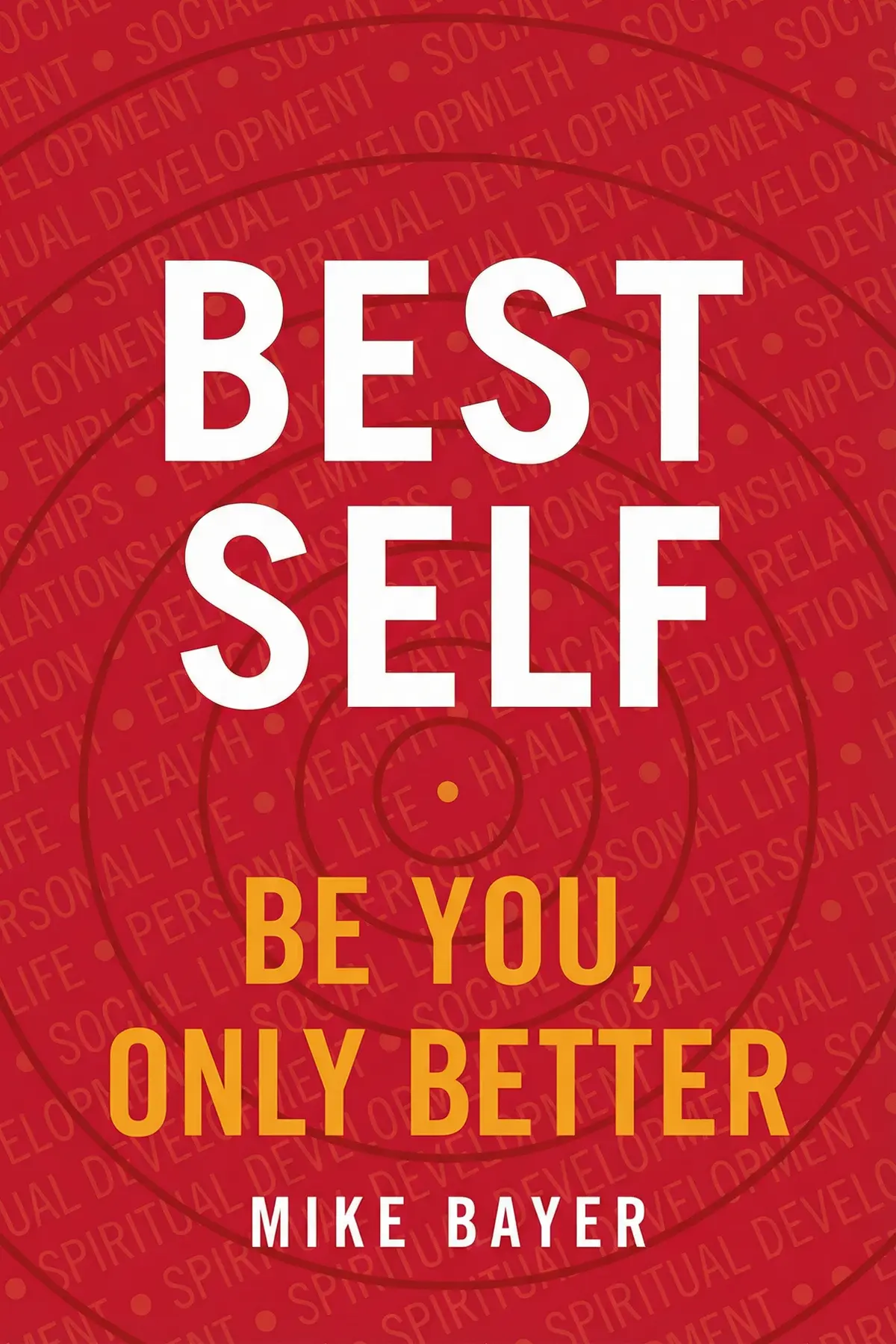
Best Self: Be You, Only Better
Mike Bayer
 English
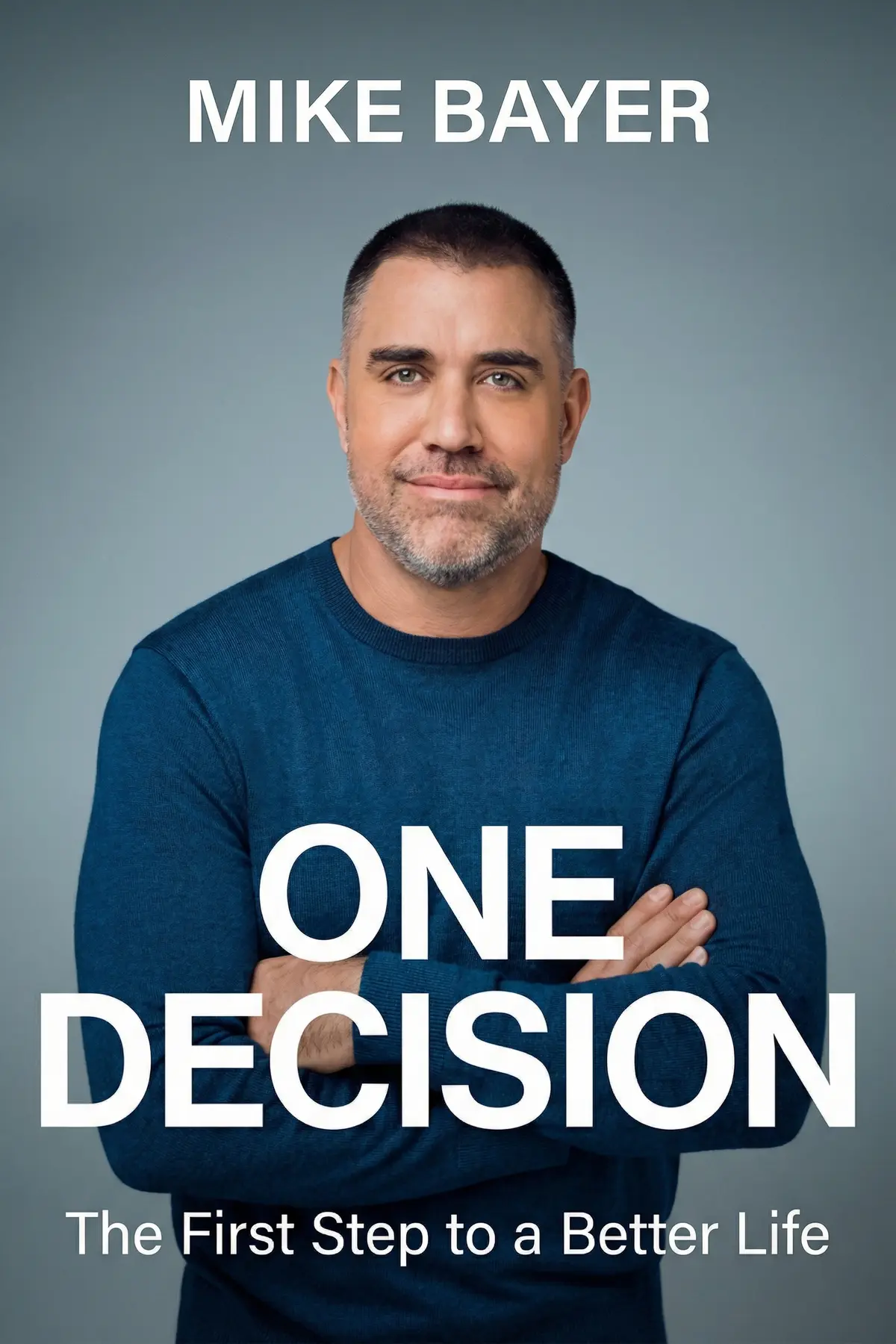
Shows how fear, snap judgments, rigidity, confusion and strong feelings hide the openings in hard situations, and gives short exercises and a personal support team to help you decide with clearer eyes.
1 min 03 sec
If you keep talking yourself out of chances or circling the same choice for weeks, the choice itself may not be the real problem. In One Decision, personal development coach Mike Bayer argues that fear, overwhelming emotion and negative thinking shape most decisions long before anyone weighs the pros and cons. His remedy starts with one conscious choice: to look for opportunities instead of obstacles. Every situation holds some opening, he says, however bad it looks.
What hides that opening are a few thinking patterns Bayer calls negative forces. Each has a positive counterpart that brings the opening back into view. Spot the force that is bending your judgment, switch on its opposite and bring in people you trust, and better decisions follow. Along the way you will meet an employee who talks herself out of a raise, a mother weighing homeschooling and an oak tree that loses to the wind. Each comes with a short exercise you can try on a decision waiting for you right now.
1 min 53 sec
Of the many thousands of choices you make each day, Bayer singles out one that decides how all the others turn out. A retired man short of money shows how the same facts can trap you or free you.
1 min 42 sec
An employee who deserves a raise never asks for one, and her manager never says a word. Bayer shows how a habit that feels like caution steals chances, and what to do instead.
1 min 56 sec
One mistake in a new job, one sharp comment from a colleague, and a whole story about yourself snaps into place. Bayer explains why the brain does this and how to take the story apart.
1 min 56 sec
A strong old oak and a thin palm face the same storm, and only one is still standing at the end. The difference points to a mental habit many capable people mistake for strength.
1 min 47 sec
You finally make up your mind, and then a stray remark sends you back to the start. A mother stuck for weeks on a schooling decision found the way out in a single question.
1 min 44 sec
Bayer once turned down invitation after invitation because speaking in public felt wrong. When he finally checked his own record, it told a very different story from the one his nerves had been telling him.
1 min 41 sec
Award winners always thank someone on stage, and Bayer thinks your hardest choices deserve the same kind of backing. He has a clear rule for who belongs on the team and who does not.
1 min 19 sec
One Decision comes down to a habit of attention. Fortune-telling, overgeneralizing, rigidity, confusion and emotional reasoning look like different problems, but in Bayer’s account they do the same damage: they cover the opening that every situation holds. Each has a partner that uncovers it again, whether that is facts, a fairer view, calm, a clear purpose or plain evidence. You do not have to stop feeling fear. You only have to stop handing it the final vote.
The book also treats decisions as something you share and then release. A good choice draws on people who know you, and once you have made it, the outcome is no longer yours to manage. Bayer adds that a regular spiritual practice can bring clearer decisions and more peace with how they turn out. That practice might rest on a faith, on meditation, or on a connection with your body or with nature.
A sensible place to start is the decision you have been avoiding. Name the force behind the avoidance and gather the evidence its partner would ask for. Then ask one trusted person what they see. Keia’s manager never actually rejected her request for a raise. She gave up her chance the moment she talked herself out of asking.
Most people assume they decide by weighing pros and cons. Personal development coach Mike Bayer argues that fear, overwhelming emotion and a negative mindset often settle the matter first. They lead people to skip the raise request, quit dating or turn down a chance to speak. The first and most important decision, he says, is to look for opportunities rather than obstacles, because every situation contains some. Bayer names five thinking patterns that block that view: fortune-telling, overgeneralizing, rigidity, confusion and emotional reasoning. He pairs each with a positive force that clears it: fact-finding, objective thinking, relaxation, purpose and evidence-based reasoning. Examples and scenarios show each one at work, from a client mother weighing homeschooling to his own discomfort with public speaking. Readers get a short exercise for each pattern and a plan for building a decision-making team of trusted people. Bayer also offers a way to make peace with outcomes once a choice is made.
Professionals who talk themselves out of raises, promotions or speaking chances before anyone says no.
People stuck for weeks on a job, school or relationship decision who keep reopening it.
Anyone whose fears or bad past experiences keep steering choices they know deserve a clearer look.
Mike Bayer, widely known as Coach Mike, is a personal development coach. He founded CAST Centers and serves as its CEO, working with artists, athletes, executives and others who want to live more authentic lives. He also created the CAST Foundation, which works to reduce the stigma around mental health. He sits on Dr. Phil McGraw's advisory board and has appeared regularly on the Dr. Phil Show. He is also the author of Best Self.
Mike Bayer

Listeners find the material accessible and clear, highlighting the reflective prose of this well-known author. Furthermore, they value the practical guidance provided, as one listener points out that it includes effective activities for implementing strategies. The book also earns praise for its focus on mental frameworks, with one review stating that it aids in shifting outlooks via actual examples. On the other hand, opinions on the narrative speed are varied, as several listeners mention it fails to be engaging.
Wow, what a fantastic read that actually provides the tools to change your perspective through relatable real-life scenarios. I had several 'Aha' moments while working through the exercises, particularly when identifying the positive and negative forces that drive my daily actions. The book is incredibly thoughtful and you can tell Mike really cares about helping people reach their 'Best Self' potential without being overly preachy. It’s a resource I plan to keep on my nightstand to revisit whenever I feel like I'm drifting away from my authentic goals. If you want a book that is both motivating and actionable, this is the one for you.
Show moreEver wonder why you keep making the same mistakes even when you know better? This book dives deep into the psychology of our choices and provides a roadmap for breaking those cycles once and for all. Coach Mike’s writing is fresh, honest, and remarkably easy to understand, making it accessible for anyone regardless of where they are on their personal journey. Frankly, the distinction between emotional and evidence-based reasoning changed how I approach my work conflicts and my family dynamics. This is a must-read for anyone who feels paralyzed by indecision or regret. It’s simple, powerful, and truly life-changing if you apply the FORCE method.
Show moreCoach Mike’s approach to self-help is refreshingly direct and packed with actionable steps that you can start using the very same day. I loved the emphasis on making decisions as your 'Best Self' and how he provides a clear framework to distinguish that version of you from your ego. The book is filled with great advice on how to put your feet on the right path toward a more successful and happy life. It’s one of the few books that actually motivated me to get up and change my routine immediately. For anyone who loved his first book, this is the perfect companion to help you stay on track with your goals.
Show morePicked this up after seeing a few interviews, and I have to say the practical exercises really set it apart from other generic advice books. Specifically, the 'decision team' illustrations and the concept of our 35,000 daily choices made the abstract ideas feel much more tangible and manageable. Not gonna lie, some of the analogies are a bit cheesy, but the core message about authenticity is something I really needed to hear right now. It helps you stop trying to 'balance' every single thing and instead focus on what each facet of your life actually deserves. You have to be willing to do the work, though, or the pages won't help you.
Show moreLook, I’ve read a lot of coaching books, and what I appreciate most about 'One Decision' is how it simplifies the path to change. Instead of overwhelming you with a massive life overhaul, Coach Mike emphasizes that we can change our trajectory by making just one better choice at a time. The way he describes the 'Anti-Self' really resonated with me because it gave a name to that inner critic that usually sabotages my progress. The book is easy to read and the real-life scenarios he shares make the tactics feel much more applicable to my own messy life. It's a great mindset shift for anyone feeling stuck in a rut.
Show moreFinally got around to reading this and the mindset shift it encourages is definitely worth the price of admission. It focuses on the importance of focus itself—taking life one decision at a time rather than getting lost in the overwhelming big picture of everything at once. While the reading pace was a bit uneven at times, the underlying message about living authentically is powerful and handled with genuine care. I especially liked the sections on health and career, as they provided clear steps to move from feeling stuck to taking action. It’s a very grounded approach to self-improvement that doesn't rely on toxic positivity.
Show moreAs someone who is always looking to improve my daily habits, I found the framework presented here to be quite logical and easy to digest. Mike uses the FORCE acronym to break down obstacles, which helps clarify why we often get stuck in negative patterns of behavior. However, the tone of the book is occasionally a bit too celebratory of his own successes, which can feel slightly alienating for a regular reader. It is a solid read that offers some decent tools for self-reflection, even if it doesn't reinvent the wheel. The exercises are the best part because they force you to actually look at your own data rather than just your feelings.
Show moreThe chapter on evidence-based reasoning versus emotional reasoning was the absolute highlight of this entire book for me. It perfectly explains why so many of us make rash decisions based on temporary feelings rather than looking at the actual, verifiable facts in front of us. Aside from that specific section, the rest of the content felt somewhat repetitive and didn't offer many new insights beyond standard 'best self' advice. In my experience, the writing style is simple enough for anyone to follow, but it lacks the depth needed for a truly transformative experience. It’s worth a skim if you can find it at the library or a used bookstore.
Show moreI tried to like this book, but I found the narration of his voice incredibly off-putting and monotonous throughout the entire experience. While there is definitely some practical advice buried in these pages, it never felt like a truly motivating or clarifying guide for my specific situation. Truth is, the pace was quite slow and many of the concepts felt like things I had already heard in dozens of other self-help podcasts. It was just so blah and failed to capture my interest for more than a few minutes at a time. I was looking for a spark, but everything here felt very routine and uninspired.
Show moreAfter hearing Mike Bayer on Dr. Phil, I was hesitant because his approach felt a bit abrasive and dismissive toward the guests. To be fair, I wanted to give the book a chance, but it just feels like more of the same 'tough love' that borders on being a bully. The advice to 'grow up' isn't exactly groundbreaking or helpful when you are struggling with deep-seated issues. I made the one decision to stop reading halfway through because the tone just didn't sit right with me. Life coaches should inspire growth, not belittle those who are already down. There is a lack of empathy here that makes the advice hard to swallow.
Show moreBayer argues that the first and most important decision is to look for opportunities rather than obstacles, because every situation holds some. Negative thinking patterns hide those openings: fortune-telling, overgeneralizing, rigidity, confusion and emotional reasoning. Each has a positive opposite, such as fact-finding or evidence-based reasoning, that brings the opportunity back into view. He adds that a trusted decision-making team makes good choices easier.
Fortune-telling is Bayer’s term for predicting the future with no facts behind the prediction, then acting on it. His example is Keia, who convinces herself her manager will refuse a raise and never asks. He sees it as a form of fear. The fix is fact-finding: gather the real evidence, and talk to people instead of guessing what they will say.
Bayer traces endless overanalyzing to an unclear purpose. Name what you want from this particular situation, then test each option against that aim. One of his clients spent weeks researching homeschooling for her son. She decided quickly once she remembered that her goal was for him to love learning, because the right choice was whichever option best served that goal.
Pick a choice you are avoiding and name the negative force behind it. Then use its partner exercise. List the emotions tied to a project alongside the evidence for and against them. Note rigid beliefs you are holding on to. Look objectively at a pattern instead of one bad incident. Finally, list the roles you want on your decision-making team and the trusted people who could fill them.


Andrew D. Thompson


Deepak Chopra

Richard Wiseman




AUDIO SUMMARY AVAILABLE
Get the key ideas from One Decision by Mike Bayer, plus 5,000+ more nonfiction titles.









