

12 min 54 sec
Available in: English
Nobody Cares About Your Career: Why Failure Is Good and Other Hard Truths
A blunt, practical case for owning your own career. It shows how to create value without being asked, pick work that stretches you, treat failure as learning and keep moving when your workplace changes.
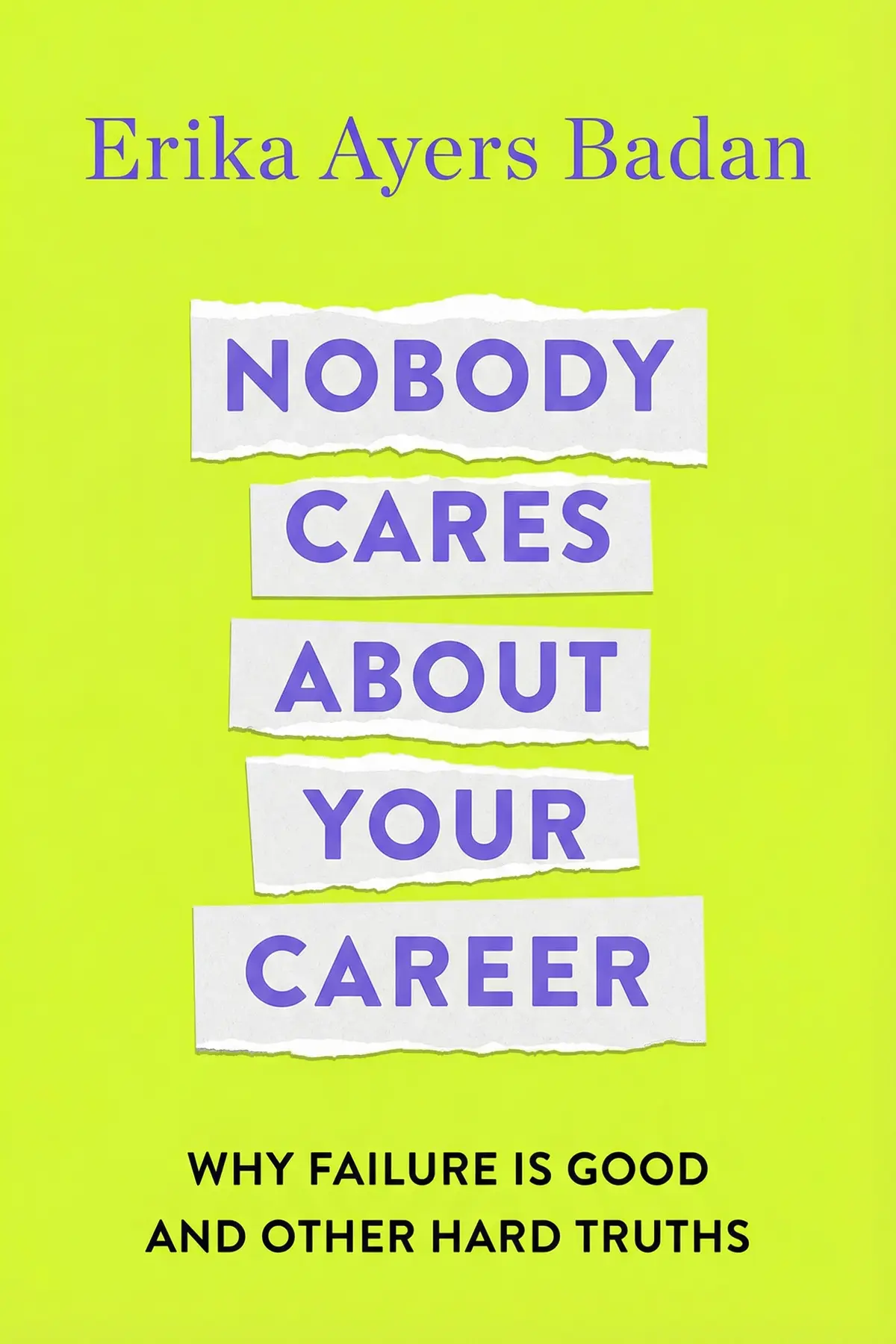
Table of Content
1. Introduction
56 sec
The person most likely to move your career forward is the one checking job ads late at night: you. In Nobody Cares About Your Career, Erika Ayers Badan, who led Barstool Sports as CEO, starts from a truth that stings at first. Your career matters more to you than to anyone else, including your manager, HR and the mentor you hope will spot you.
Badan argues that this is good news. Once you stop waiting to be noticed, you can start doing the things that actually get noticed: solving problems nobody assigned to you, choosing work that stretches you, failing openly and learning faster for it. Her throughline is simple. Careers move when their owners take charge of them, through value, vision, honest failure and steady motion when things change. What follows is a set of habits for the desk you sit at tomorrow, from the question to ask after a rejected pitch to the move to make when your department is merged.
2. Stop waiting to be rescued and start adding value
1 min 51 sec
Waiting for someone to notice your hard work often ends in disappointment and a sense of powerlessness. One junior employee, frustrated by few chances to network, stood out as a proactive leader without waiting for HR to act.
3. Pick the job that will stretch you most
1 min 51 sec
A new graduate turned down a prestigious offer for a messy, uncertain workplace. The startup was chaotic, with long hours and shifting priorities, yet within a year she had gained more experience than many peers at larger companies.
4. A simple vision that keeps you going
1 min 34 sec
A stuck mid-level manager did not need a new employer or a bigger salary to get moving again. He settled on a vision of where he wanted to go, and it began to guide his decisions.
5. Turn a rejected idea into your best work
1 min 52 sec
A marketer proposed a bold campaign, and it fell flat. What he did over the following three months, and what a founder said on a conference stage, shows how to make failure pay.
6. Be the colleague people want on their project
1 min 59 sec
Talent gets you hired, but a few unglamorous behaviors decide whether people trust you with the next big project. Watch a new hire handle a tense team, an embarrassing client error and a risky choice.
7. Turn a reorganization into your next opportunity
1 min 43 sec
A merger, a new platform, a project going badly: most people freeze when work shifts under them. Three professionals in the book did something else, and each came out more valuable than before.
8. Conclusion
1 min 08 sec
Badan’s title sounds harsh, but the book behind it is hopeful. If your career matters most to you, then nobody else is in charge of holding it back either. The junior employee with her lunch series, Sarah in her chaotic startup, Alex with his rejected campaign and Salwa in her merged department shared one advantage: they stopped waiting.
What links them is ownership. Each one treated a problem as theirs to fix, a failure as information and a change as an opening. None of it needed a title or permission.
You can start small. This week, fix one thing near you that everyone complains about, and do it without asking for credit. Write one sentence about where you want your work to lead, knowing it may change next year. After your next setback, spend a few minutes on what you would do differently, honestly and without punishing yourself. And when something at work shifts under you, move toward it while others hold still.
Your manager may be kind and your company may be generous, yet neither one is steering your career. You are, and that is the best news in the book.
About this book
What is this book about?
Many people end up waiting: waiting for a manager to notice how hard they work, or for HR to provide the right training. Erika Ayers Badan, who led Barstool Sports as CEO, argues that this waiting is the real obstacle. Your career matters more to you than to anyone else, and once you accept that, you are free to act. Her book turns that hard truth into habits. Stop asking what the company can do for you and look for problems you can solve. Choose the role that will stretch you over the one that only looks safe, and give yourself a simple personal vision to steer by. Treat a rejected idea or a failed project as information, and talk about it openly. Be easy to work with, respond calmly when things go wrong and own your mistakes. When a merger, a new boss or a new system arrives, move toward it. Readers get a short, direct set of behaviors for the job they have today, illustrated with people like a junior employee who started her own lunch series and a marketer whose rejected campaign came back as a hit.
Book Information
Who it's for
Waiting to be noticed
Early-career professionals waiting for a manager to notice their hard work.
Feeling stuck mid-career
Mid-level employees who feel stuck and want a clear direction again.
Facing upheaval at work
Anyone facing a merger, a new boss or a failed project who wants to come out stronger.
About the Author
Erika Ayers Badan
Erika Ayers Badan has built a long career in digital media and technology. As CEO of Barstool Sports, she grew it from a regional blog into a national company, and Forbes named her one of the Most Powerful Women in US Sports. Before that, she held leadership roles at Microsoft, AOL and Yahoo!, as part of a long career in digital media and technology.
Ratings & Reviews
Ratings at a glance
What people think
Listeners find the work to be an excellent book offering stellar guidance and powerful narratives. They value the author’s candid approach and believe the material is well worth the investment.
Top reviews
Isabelle
Wow. This was exactly the kick in the pants I needed as I navigate a mid-career slump. Erika Ayers Badan doesn’t sugarcoat the reality of the corporate world, which is refreshing in a sea of toxic positivity and "manifesting" your dream job. The central idea—that you are the only one truly responsible for your trajectory—is empowering once you get past the initial sting of the title. I especially loved the section on how failure is actually a prerequisite for growth, rather than something to be avoided at all costs. Her stories from her time at Barstool and AOL add a layer of credibility that most career coaches just don’t have. To be fair, her writing style is very punchy and uses a lot of parentheticals, which might not be for everyone, but I found it made the book feel like a real conversation. It’s an honest, high-energy guide for anyone tired of waiting for a promotion to just fall into their lap.
Show moreZoe
As someone who has struggled with being a people-pleaser in corporate environments, Badan’s approach felt like a breath of fresh air. She reminds us that our worth isn’t determined by a title but by the impact we make on the organization. The book is full of the kind of career advice I wish I had received right out of college. Stop waiting for permission and start adding value! I loved the honesty regarding her own mistakes and her reluctance to share her pregnancy with her boss; it made her feel human. Frankly, it’s rare to find a business book that is this readable and genuinely funny. I’ve already started using the 4-6 month check-in questions she suggests. This is a must-read if you feel stuck or invisible at your current job.
Show moreNew
Look, if you're looking for a hand-holding, "you're special" kind of career guide, this isn't it. Erika is blunt, loud, and incredibly smart. She understands that the modern workplace is a competitive market where you have to prove your worth every single day. I found the section on "embracing disruption" to be the most helpful part of the entire book. It’s not just about startups; it’s about having the mindset to innovate wherever you are. Her storytelling is compelling and kept me engaged through the whole weekend. I’ve read a lot of these types of books, and this is the first one in years that actually motivated me to change my daily habits. Own your career, or someone else will own it for you.
Show moreEarn
In my experience, most business books are 300 pages of what could have been a blog post, but this felt different. It’s a raw, honest look at the workforce that doesn't care about your feelings as much as it cares about your results. Erika Badan has written a manifesto for anyone who wants to be indispensable. I loved the emphasis on "common sense" and simply being easy to work with. It sounds basic, but you’d be surprised how many people fail at it! The book is a bit of a chaotic mix of topics, but her voice is so strong that it works. If you're willing to hear some hard truths about your own work ethic, you'll gain a lot from this. It’s easily one of the most practical career books on my shelf now.
Show moreLek
The title is a bit of a gut punch, but the actual content is surprisingly empathetic toward anyone who actually wants to work hard. Badan presents a "no-nonsense" framework that focuses on creating value rather than just collecting a paycheck. I found her advice on asking yourself specific career questions every few months to be incredibly practical for staying on track. Truth is, some of the advice is stuff we should already know—like not being an asshole to your coworkers—but seeing it laid out so clearly makes you realize how often people fail at the basics. My only gripe is that the book feels a bit disorganized at times, jumping between memoir and tactical advice. Still, the compelling storytelling makes it worth the investment for young professionals. It’s a solid 4-star read that I’ll likely gift to a few mentees this year.
Show moreSuvannee
Finally got around to reading this after seeing it all over my LinkedIn feed recently. As someone who has navigated the corporate ladder for a decade, I appreciated the "hard truths" about how the great ones "play hurt." Badan’s perspective as a female CEO in a male-dominated space like Barstool provides a unique lens on leadership and resilience. The chapters on how to handle difficult conversations and when to actually quit were highlights for me. Personally, I think the book could have been about 50% shorter if she cut out some of the repetitive Gen-Z slang and the constant parenthetical asides. However, the core message about taking ownership of your own value is something every worker needs to hear. It’s a great reminder that your boss isn't your parent; they are your partner in a value exchange.
Show moreDivya
After hearing Erika on a podcast, I decided to grab a copy to help with my current job hunt. The advice to look for roles where you only know 60% of the job is genius. It’s a great way to ensure you’re always growing and not just coasting. Got some really good thinking points regarding how to focus on the "vision" rather than just the daily grind. I do think the author's "Gen-Z writing style" with the snide comments was a bit of a put-off occasionally. However, her self-awareness regarding her own weaknesses makes the advice feel grounded in reality. It’s an authentic look at what it takes to succeed in high-pressure environments. Definitely worth the price for the chapter on salary negotiation alone.
Show moreSuda
To be fair, there are some decent nuggets of wisdom hidden in here, but you really have to dig through the fluff. The advice is very directly presented, which I like, but it often feels too specific to the author’s very niche career path. If you aren't trying to be a CEO or work in high-growth digital media, some of this won't apply to you. I also struggled with the audiobook narration; it didn't quite capture the tone I think she was going for. Look, the message of "get your shit done" is great, but did we need 300 pages to say it? It’s a decent college graduation gift, but seasoned professionals might find it a bit cliché. Not a bad book, but certainly not the revolutionary manual the marketing suggested.
Show moreSven
Not what I expected from a CEO of such high-profile companies like AOL and Food52. First off, the title is extremely misleading—it's more of a memoir than a tactical guide. I didn’t learn anything particularly new or groundbreaking here. It’s full of clichés about hustle culture and "leaning in" that felt a bit dated, honestly. In my experience, telling people they shouldn't cry at work isn't helpful advice; it's just dismissive of human emotion. The lack of connection to her personal life until the very end made the first half feel cold and robotic. Also, why include a playlist at the end but not a link to it? It just felt like the editing should have been much stronger to keep the narrative focused.
Show moreMarasri
I really wanted to like this because I follow Erika on social media, but the writing style was incredibly grating. The author sounds quite pretentious for someone writing a book about excluding pretentious people. Telling readers that they should already have the motivation to grow before they even open the book feels redundant and strangely exclusionary to people who might just be struggling. Also, some of the advice is just bizarre; why is there a section telling me not to throw up in public? It felt like a waste of time. Not gonna lie, the "This Book is Not for You If..." section came across as very unforgiving toward anyone who isn't a natural-born hustler. If you have a learning disability or are neurodivergent, this book might make you feel pretty discouraged. It’s a pass for me.
Show moreQuestions about this book
What is the main idea of Nobody Cares About Your Career?
Erika Ayers Badan argues that your career matters more to you than to anyone else, so waiting for a manager or HR to advance it leads to disappointment. Instead, she says, take ownership: create value without being asked, choose work that stretches you, keep a personal vision, treat failure as learning and stay in motion when your workplace changes.
Who should read Nobody Cares About Your Career?
It suits early-career professionals who feel overlooked, mid-level people who feel stuck, and anyone facing upheaval such as a merger or a new technology platform. The advice is behavioral and works in a startup or a large company: solving problems nearby, owning mistakes, responding calmly under pressure and volunteering for work that teaches something new.
What does Erika Ayers Badan say about failure?
She treats failure as learning. Her example is Alex, a marketer whose campaign pitch was rejected; he gathered feedback, fixed the weak points and returned three months later with a version that became a major success. She urges readers to drop the myth of perfection, talk openly about failures, as entrepreneur Jamie did at a conference, and review every setback honestly but kindly.
How can I apply Nobody Cares About Your Career at work?
Start by fixing one problem nearby without waiting for permission, as the junior employee did by launching a cross-department lunch series. Write a one-sentence vision for where your work should lead. After a setback, ask what you would do differently. In tense moments, respond instead of reacting. When change arrives, volunteer for the projects it creates.
Readers also enjoyed

60 Seconds & You’re Hired!
Robin Ryan



Be A Free Range Human: Escape the 9 to 5, Create a Life You Love,
Marianne Cantwell
Be the Unicorn: 12 Data-Driven Habits That Separate the Best Leaders from the
William Vanderbloemen
AUDIO SUMMARY AVAILABLE
Listen to Nobody Cares About Your Career in 15 minutes
Get the key ideas from Nobody Cares About Your Career by Erika Ayers Badan, plus 5,000+ more nonfiction titles.
- 5,000+ titles
- Listen as much as you want
- 7-day free trial
- Cancel anytime









