
13 min 55 sec
Available in: English
 ไทย
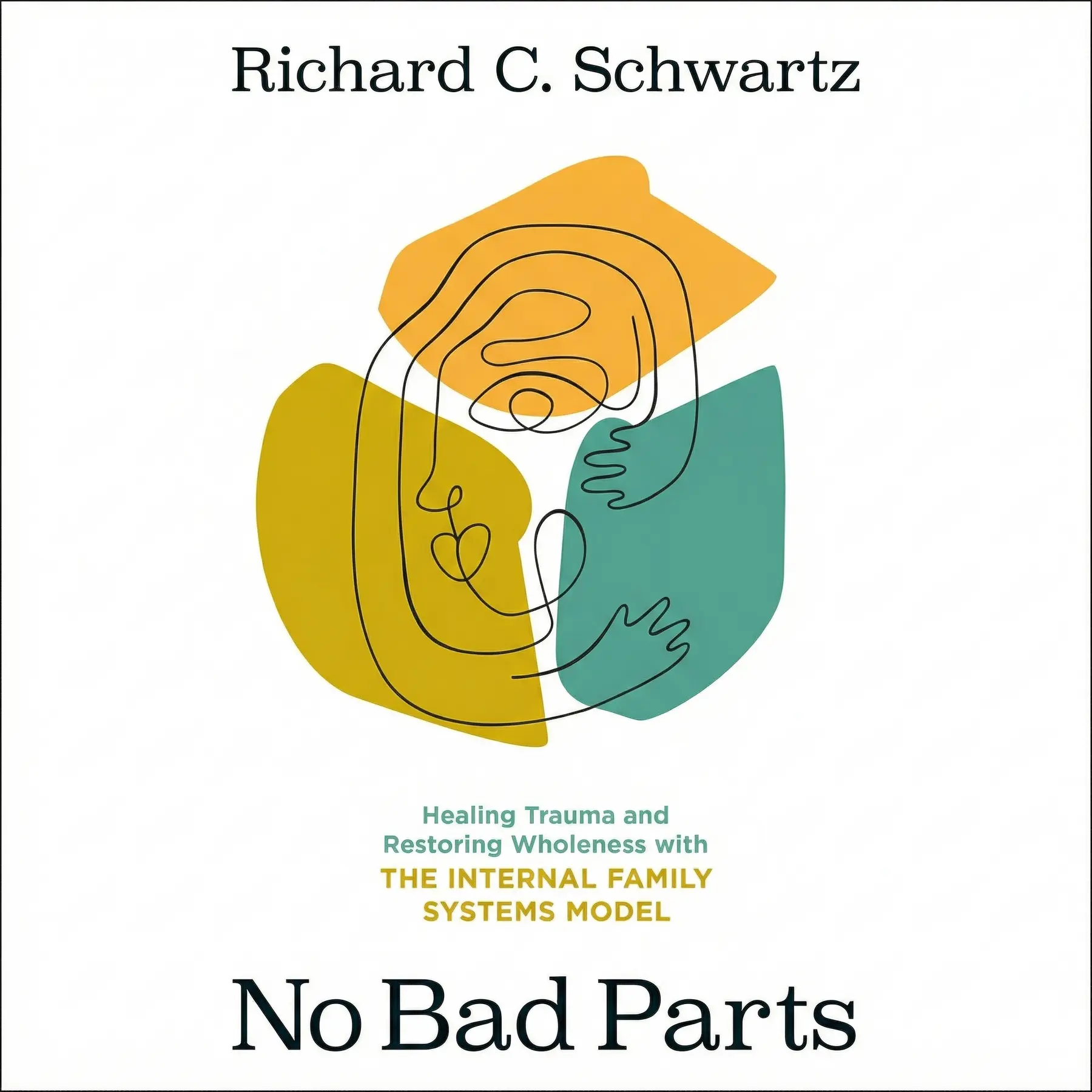
EnglishไทยNo Bad Parts: Healing Trauma and Restoring Wholeness with the Internal Family Systems Model
Shows why the inner critic, the people-pleaser and the urge to numb out are protective parts. It also shows how to calm them by getting curious about them and letting a steady core Self lead.
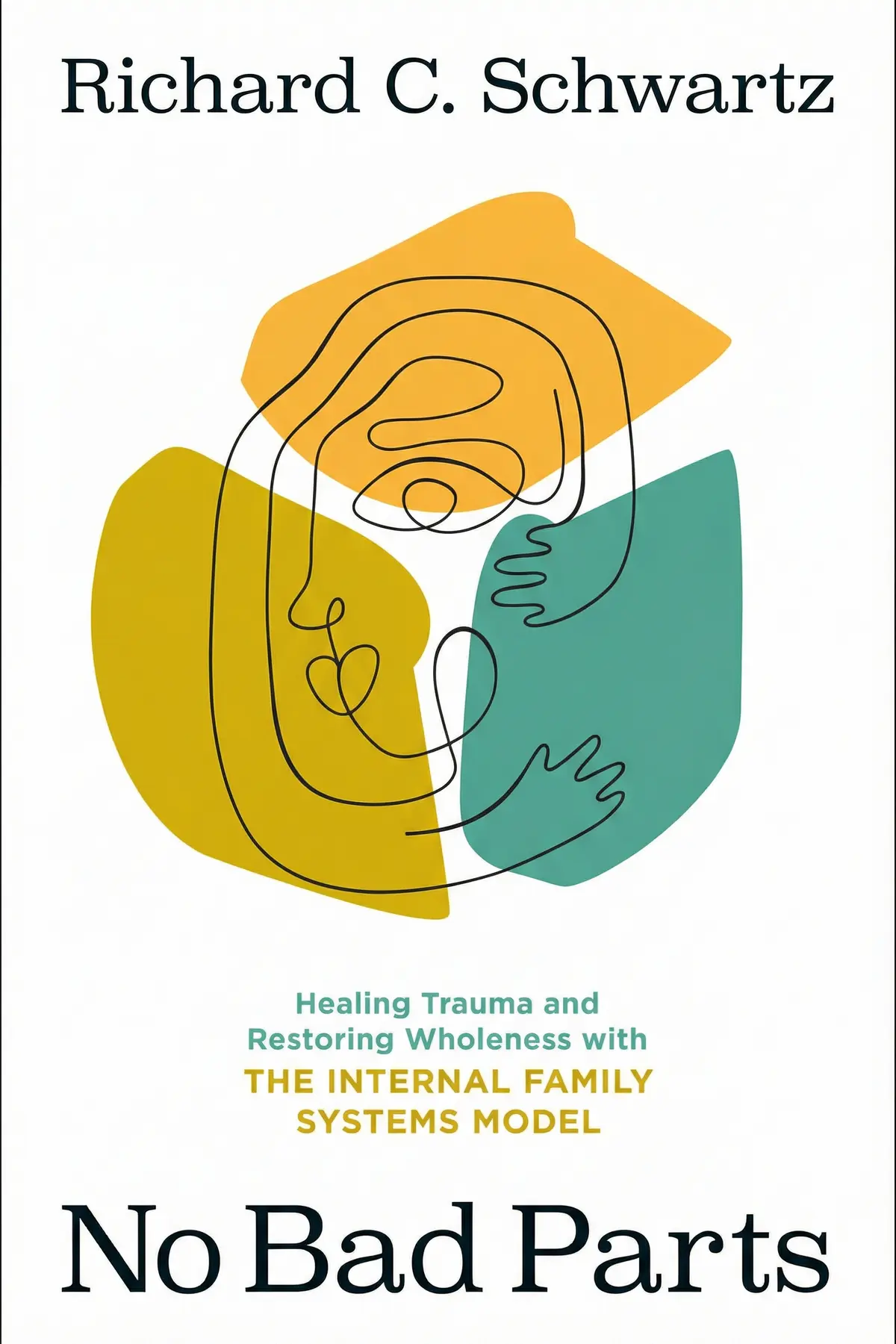
Table of Content
1. Introduction
57 sec
If one part of you wants to quit your job and another is terrified of leaving, nothing is wrong with you. In No Bad Parts, family therapist Richard C. Schwartz argues that every mind is made of several distinct parts, each with its own personality, and that our inner arguments are conversations between them. His model, Internal Family Systems, rests on a hopeful claim: none of these parts is bad. Even the critic that shames you or the urge that sends you to the fridge at midnight is trying to protect you, usually from a pain you buried as a child.
The method follows from that. Healing comes from meeting your parts with curiosity, letting a calm core Self lead them and reaching the wounded ones they guard, instead of trying to crush them. Along the way there is an angry activist, a football player who stopped feeling his body, and a short daily exercise that can turn an inner war into an inner family.
2. Stop fighting the inner voices that pull you apart
1 min 43 sec
Therapists, priests and meditation teachers have long agreed that unruly inner voices should be silenced. One family therapist followed that advice with his clients for years, and watched it make their worst urges grow stronger.
3. Your worst habits are trying to protect you
1 min 45 sec
The inner critic, the endless people-pleasing and the late-night binge seem like enemies. Schwartz sees them as loyal guards, and once you know what they are guarding, they look very different.
4. Find the calm Self beneath every reaction
1 min 44 sec
If you lose your temper in traffic or cry at every rejection, it is tempting to decide that is simply who you are. Schwartz believes something steadier sits underneath, and eight words help you tell when it is present.
5. Comfort the wounded child your protectors guard
1 min 51 sec
An environmental activist did inspiring work, yet his self-righteousness alienated people and he treated his family harshly. One guided conversation with his angriest part led somewhere he did not expect, and changed how he treated people.
6. Calmer inside, kinder to people who provoke you
1 min 38 sec
Everyone knows someone who can ruin a good mood with a single sentence. Schwartz suggests the problem may lie less in that person than in who inside you is doing the looking.
7. Let your body speak so old pain can ease
1 min 39 sec
A boy who took his father’s rage onto the football field learned to feel almost nothing. Years later his body was still paying for it, and the way back did not involve tougher discipline.
8. Map your inner family in a daily check-in
1 min 35 sec
Parts that have guarded old pain for decades will not trust you after one conversation. Schwartz offers a short sitting practice and a pen-and-paper exercise that build that trust over time.
9. Conclusion
1 min 03 sec
No Bad Parts turns the usual advice about self-control upside down. The voices people spend years fighting, the critic, the binge, the rage in traffic, turn out to be loyal guards stuck at old posts, still defending a child who grew up long ago. Schwartz’s case, drawn from his clients and his own life, is that they soften when they are understood, and when a calm Self takes on the caring they were never meant to carry alone.
That changes what the next hard moment can look like. When you feel pulled two ways, give each side a hearing before you decide. When a habit you dislike takes over, ask what it is protecting you from, and thank it before asking it to step back. And for a few minutes each day, sit still, find the sensation that wants attention and follow it, adding to your map of parts as you go.
The activist kept his fire. What he lost was the need to burn the people near him. Nothing in you has to be thrown away; it only has to be welcomed home.
About this book
What is this book about?
Most people treat their inner conflicts as flaws: a harsh critic to silence, a binge to stop, a temper to control. Richard C. Schwartz spent years as a family therapist trying exactly that with his clients, and found that the harder they fought their urges, the stronger those urges grew. His Internal Family Systems model starts from a different premise. Every mind holds several parts, and none of them is bad. Wounded young parts, which he calls exiles, carry old pain. Protectors called managers and firefighters work to keep that pain out of reach, sometimes at great cost. Beneath them all is a calm, compassionate Self that can lead the whole inner family. The book offers a clear map of how these parts behave, along with stories of clients and of Schwartz's own childhood. It ends with simple daily exercises for meeting your parts, comforting the hurt ones and drawing a map of your inner world, so that both your body and your relationships can settle.
Book Information
Who it's for
Stuck in inner conflict
People stuck in inner conflict who keep fighting a harsh critic or a habit they hate.
Adults feeling childhood's effects
Adults who sense childhood pain still shapes their reactions, relationships or physical health.
Curious about therapy
Anyone curious about therapy who wants a clear, practical map of how the mind protects itself.
About the Author
Richard C. Schwartz
Richard C. Schwartz began as a family therapist and academic at the University of Illinois at Chicago. When family therapy alone did not fully relieve his clients' symptoms, they described inner parts that related to each other like family members, and in the early 1980s he developed Internal Family Systems from those accounts. He founded the IFS Institute, which trains and certifies practitioners worldwide, and has been a teaching associate in psychiatry at Cambridge Health Alliance, linked to Harvard Medical School.
Ratings & Reviews
Ratings at a glance
What people think
Listeners find this work to be transformative and accessible, noting that it provides a clear explanation of IFS alongside practical exercises. They value its therapeutic focus, with one listener pointing out its effectiveness for trauma recovery, while others emphasize how it encourages empathy for oneself and those around them. The prose is frequently praised for being well-written and succinct, although some find the content difficult to navigate.
Top reviews
Kung
Finally got around to reading Schwartz’s seminal work, and it’s shifted my entire internal dialogue. Instead of yelling at my anxiety, I’m now asking what it’s trying to protect me from. The 8 Cs—like compassion and curiosity—aren't just words here; they’re actually accessible states of being. Frankly, I was surprised by how much the 'Firefighter' concept resonated with my own history of binging when stressed. It’s a very gentle, affirming read that doesn't make you feel broken for having coping mechanisms. Some parts are a little 'new age' for my taste, but the results speak for themselves. If you’ve ever felt like you’re at war with yourself, this is the peace treaty you need to read.
Show moreNarongrit
As a long-time therapy seeker, I’ve found CBT and DBT to be helpful but often too clinical. This book fills that gap by offering a deeply emotional and compassionate framework for trauma work. Schwartz breaks down our internal world into Managers, Firefighters, and Exiles, which helped me identify why I revert to certain destructive behaviors. It’s about 'unburdening' those younger versions of ourselves rather than just trying to suppress them. My only gripe is that it makes the process look almost too easy in the transcripts; real-life healing is usually much messier and slower than what’s depicted here. Still, the message that there are 'no bad parts' is revolutionary for self-worth. It’s a must-read if you’re ready to stop being your own worst critic.
Show moreMethinee
Wow. Just wow. I didn’t realize how much I was judging my own protective parts until I read the chapter on 'Self' energy. The realization that every part of me—even the ones I hate—is actually trying to help is a complete game-changer for my mental health. Richard Schwartz has a very warm, personable writing style that makes complex psychological concepts feel like a conversation with a friend. The practical exercises at the end of the chapters are gold, though I’d recommend doing them in a quiet space where you won't be interrupted. I’ve started treating my 'Manager' parts with more gratitude, and the internal tension has noticeably dropped. This is the first 'self-help' book that didn't make me feel like I needed to change, but rather that I needed to listen.
Show moreRosa
This book completely reframed how I view my anxiety and my past. I used to think I was just a 'naturally anxious' person, but Schwartz helped me see that anxiety as a Part that has a job to do. The writing is clear, concise, and remarkably compassionate toward the reader. I found the 8 Cs of Self-leadership—things like Calm, Clarity, and Courage—to be a great roadmap for how I want to show up in the world. It’s not just about healing old wounds; it’s about learning to lead your own life from a place of wisdom rather than fear. Not gonna lie, I cried through several of the meditations because they hit so close to home. Truly a healing experience for anyone who has felt broken.
Show moreArthit
Schwartz has a way of making you feel seen without ever meeting you. His Internal Family Systems model is the first thing that’s helped me understand my self-sabotaging behaviors without falling into a pit of shame. By identifying my 'Exiles' and listening to their pain, I’ve felt a sense of internal peace I didn’t think was possible. The book is well-written and avoids being too dry or academic, though it definitely leans into the spiritual side of healing toward the end. Personally, I found the connection between IFS and 'unburdening' to be the most profound part of the journey. It’s not a quick fix, but it provides a very clear path toward becoming a more integrated, whole human being. It's a beautiful, life-changing book.
Show moreTong
Look, the core idea here is brilliant. Viewing your personality as a family system rather than a single entity explains so much about our contradictory impulses. I especially liked the section on how our 'Firefighters' jump in to extinguish emotional pain with things like addiction or anger. It’s an incredibly non-shaming approach to mental health that feels very different from traditional psychiatry. However, some of the transcripts felt a bit performative and stylized, like we’re only seeing the highlights of a session. Is it really that easy to get a 'Manager' to step aside? In my experience, it takes months of work, not a five-minute dialogue. Still, as a framework for self-compassion, it’s one of the best books I’ve read this year.
Show moreJoy
Picked this up on a whim because I was feeling stuck in my current therapy, and I’m so glad I did. The concept of 'no bad parts' is so simple yet so hard to actually believe until you see it laid out like this. Schwartz explains that our most annoying traits are often just over-worked protectors who haven't realized we’re adults now. The exercises are easy to follow and didn't feel as 'clinical' as I expected, which I appreciated. Got to say, it’s a bit repetitive in the middle, but the core message is so vital that I didn't mind the reinforcement. It’s definitely helped me find more patience for my own 'Manager' parts that never seem to let me rest. Highly recommend for anyone dealing with burnout.
Show moreAlejandra
After hearing several podcasts mention IFS, I wanted to love this, but I struggled with the author’s ego. Dr. Schwartz seems to believe his model is the answer to everything from chronic pain to global politics. While the 'parts' analogy is useful for understanding inner conflict, the book is structured poorly and moves into the 'spiritual' realm way too quickly. He makes some massive claims without much scientific backing, basically saying if it doesn't work, you just aren't believing in it enough. To be fair, the concept of the 'Exile' is a powerful way to look at childhood trauma. However, the rambling anecdotes and the high-horse tone made it a chore to finish. It’s a decent introduction to the system, but be prepared to roll your eyes at the 'universal truth' vibes.
Show moreLena
The chapter on political leaders and systemic issues was a bit of a stretch for me. While I appreciate the radical empathy Schwartz advocates for, claiming that even the most heinous people are just 'led by bad parts' felt somewhat dismissive of real-world harm. It’s a very privileged perspective that ignores how systemic oppression actually functions in favor of an individualistic 'we all have a Good Self' narrative. On the other hand, the individual therapy techniques are genuinely fascinating and have helped me navigate my own inner critics. I find myself somewhere in the middle—I’ll take the therapeutic tools but leave the grand sociopolitical theories. A solid three stars for the psychology, even if the philosophy is a bit shaky and overly idealistic.
Show morePick
Not what I expected, and frankly, a bit of a letdown. I love the idea of parts in theory, but Schwartz’s delivery feels oddly cult-like and self-congratulatory. He constantly refers to himself as a leader and includes these bizarre transcripts that read more like exorcisms than modern clinical therapy. Everything is wrapped in this mystical packaging that assumes you’ll just 'hear' your parts if you try hard enough. Truth is, for those of us who don't visualize things easily, these exercises are frustrating and alienating. It feels more like a rigid belief system than science-backed psychology. I’m sure it helps some, but the 'Big Self' stuff just felt like repackaged spirituality I didn't sign up for.
Show moreQuestions about this book
What is the main idea of No Bad Parts?
Richard C. Schwartz argues that every mind contains several distinct parts with their own personalities, and that none of them is bad. Trauma can trap some parts in harmful roles, but even destructive ones are trying to protect you. Beneath them is a calm, compassionate core Self. Healing comes from meeting your parts with curiosity and letting that Self lead, instead of trying to suppress or eliminate them.
What are exiles, managers and firefighters in Internal Family Systems?
Exiles are young, wounded parts that carry painful beliefs from childhood, such as feeling worthless or unloved. Managers try to keep that pain from surfacing, often as inner critics, people-pleasers or overthinkers. Firefighters jump in when an exile is triggered anyway, numbing the hurt with things like alcohol, sex or binge-watching. Schwartz sees all of them as protective, even when their methods cause harm.
What are the eight Cs of Self?
Schwartz noticed that people describing their core Self kept naming the same qualities: calm, clarity, curiosity, compassion, confidence, courage, creativity and connectedness. He suggests using them as a daily check. The more of these qualities you feel, especially when facing your own fears or difficult people, the more your Self is leading rather than one of your protective parts.
How can I start practicing Internal Family Systems on my own?
Schwartz describes a simple sitting exercise. Breathe deeply, scan your body and mind, and pick the sensation that most wants attention. Ask other parts to step back, then ask that sensation what it wants you to know and what it fears would happen without it. Thank it and ask what it needs. You can also sketch every part that appears on paper to map your inner family.
Does No Bad Parts connect emotional pain with physical symptoms?
Yes. Schwartz describes how his protectors kept him numb after a violent childhood, and how he later developed chronic migraines and asthma. He also tells of a woman whose back pain from an accident lasted 17 years and eased only after she faced the rage and helplessness the accident left behind. In his model, body and mind heal together.

Readers also enjoyed



Acting with Power: Why We Are More Powerful Than We Believe
Deborah Gruenfeld




Age of Propaganda: The Everyday Use and Abuse of Persuasion
Anthony Pratkanis



Alcoholics Anonymous
Alcoholics Anonymous World Services
AUDIO SUMMARY AVAILABLE
Listen to No Bad Parts in 15 minutes
Get the key ideas from No Bad Parts by Richard C. Schwartz, plus 5,000+ more nonfiction titles.
- 5,000+ titles
- Listen as much as you want
- 7-day free trial
- Cancel anytime









