
14 min 45 sec
Available in: English
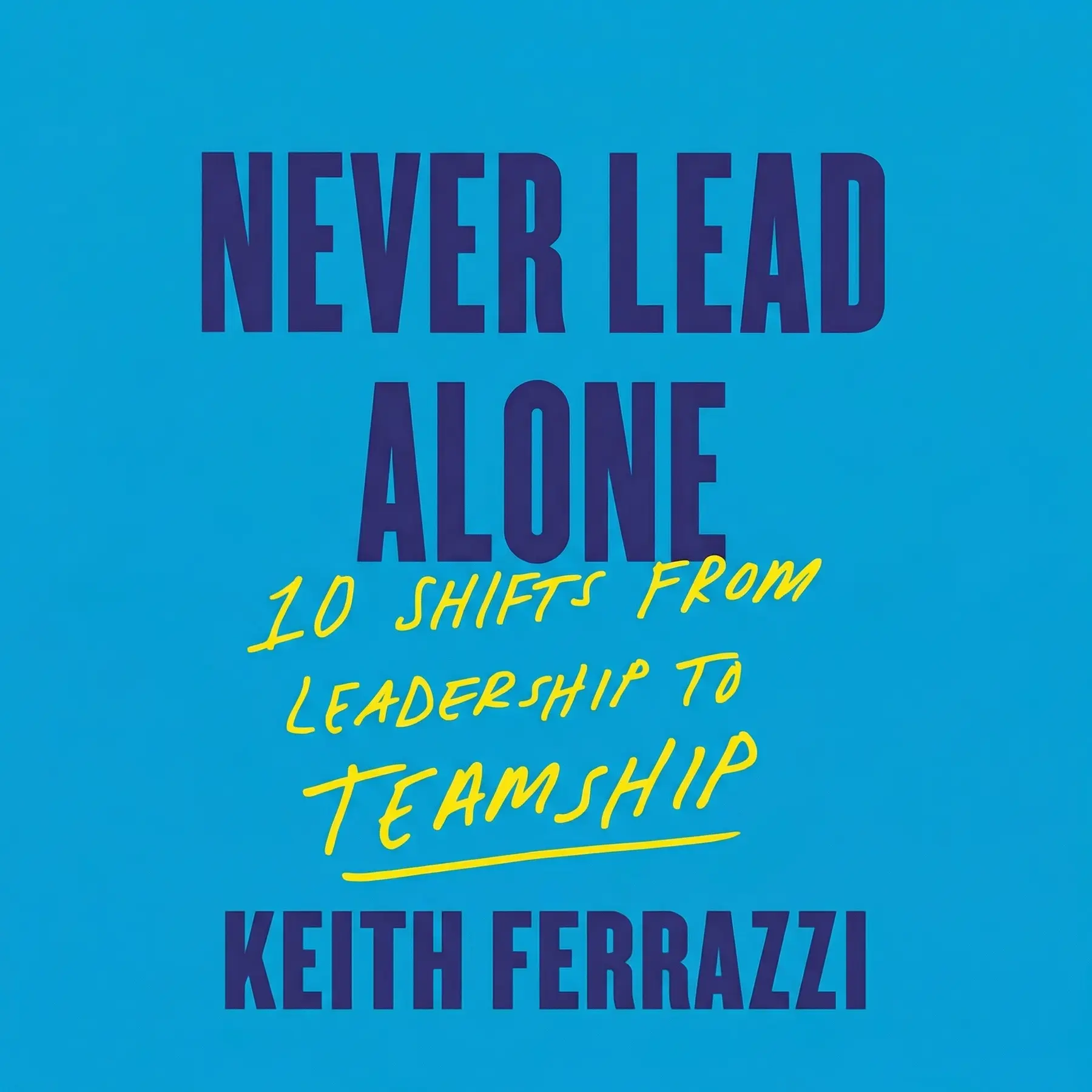
Never Lead Alone: 10 Shifts from Leadership to Teamship
Shows how teams can stop orbiting one leader and share leadership instead, with peers who build trust on purpose, speak candidly, give each other feedback and hold each other accountable through small, repeatable practices.
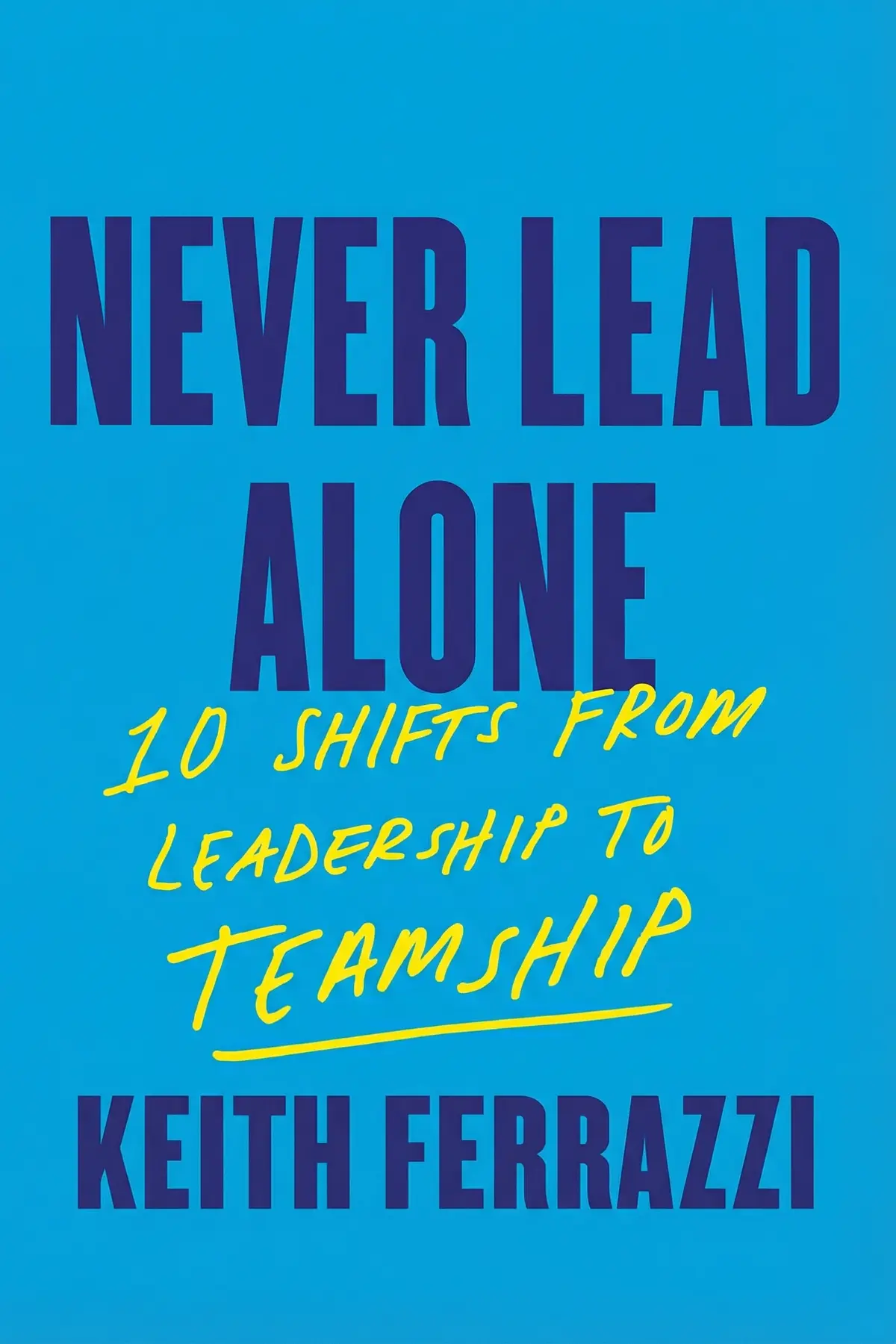
Table of Content
1. Introduction
58 sec
Most managers try to rescue a struggling team by working harder at the center of it, and that is exactly the habit Keith Ferrazzi wants to break. In Never Lead Alone, the team coach and founder of Ferrazzi Greenlight reports that of roughly 3,000 teams his firm studied, only 15 percent reached high performance. What set them apart was where leadership lived: their members took on that work themselves, lifting each other, challenging each other and holding each other to account.
Ferrazzi calls this teamship. His argument is that even very gifted leaders cannot succeed alone in a fast and volatile business world, and that the way forward is a handful of simple team practices, tried and measured. Along the way you will meet the two-minute candor break, the one-page stress test and the written decision board, and see how each one moves a team from circling its leader to owning results together.
2. Share leadership so the whole team steps up
2 min 01 sec
Picture everyone dancing around one person in the middle. Ferrazzi argues this familiar arrangement wastes billions, and that fixing it means asking far more of your peers than leadership training ever suggests.
3. Build team trust on purpose, even when remote
2 min 13 sec
Chance meetings by the coffee machine feel like the glue of a team, yet they leave some people out entirely. Ferrazzi’s numbers from the pandemic years suggest a better source of closeness.
4. Get the unsaid things said in meetings
2 min 05 sec
Most teams score poorly on one simple question about challenging each other. A two-minute break near the end of a meeting changes that, and the reason it works says a lot about how groups stay silent.
5. Turn peer feedback into a gift your team expects
2 min 01 sec
A long slide deck, half the room mocking the presenter and the other half checked out. Ferrazzi watched this happen at Starwood, and what he built in response changes how updates work.
6. Get better ideas from far fewer meetings
2 min 04 sec
Fifty executives, one stalled strategy and no meeting at all. What they wrote down on their own time revealed problems a conference room would have kept hidden, and it points to a different way of working.
7. Change culture one small team habit at a time
2 min 02 sec
Companies love to launch values statements and culture campaigns. Ferrazzi believes they start at the wrong end, and a fast-growing beauty company shows what happens when a team begins somewhere else.
8. Conclusion
1 min 21 sec
Ferrazzi ties this book to his earlier Never Eat Alone. After two decades of coaching teams, he sees one thread running through his research: purposeful relationships that power networked teams. Never Lead Alone points that thread at the people you work with every day. Its claim is that the distance between an ordinary team and the top 15 percent is mostly a set of habits, and habits can be learned.
That changes what a leader’s job looks like. You stop being the pole everyone dances around. Your work becomes asking the team to share the load: to say when things drift, to offer each other feedback as a gift, and to hold each other to what they promised.
The first moves are modest. Find out how often your team pushes back on each other when it feels risky. Add a two-minute candor break near the end of one meeting this week. Swap one slide-deck update for a single page and written responses from peers, and ask your colleagues to agree, out loud, that pushing each other is how you keep each other from failing.
Ferrazzi admits that writing the book exposed gaps in his own leadership, and he wishes he had always led this way. His research suggests a team can get there with the leader it already has, by repeating new practices until they become simply how it works.
About this book
What is this book about?
Most teams still orbit their leader. Updates flow up, decisions flow down, and teammates rarely challenge or coach each other. Keith Ferrazzi argues that this model cannot keep up with a fast, volatile business world, however talented the person at the center. He draws on his firm's work with about 3,000 teams, of which only 15 percent reached high performance, and sets out what the best ones do differently. His answer is teamship. Teammates commit to the mission and to each other's success, a stance he calls co-elevation, and they share the work of leadership. The book organizes this into ten shifts: from conflict avoidance to candor, from chance relationships to purposeful bonding, from scarce praise to peer celebration, and from meeting-heavy work to written, asynchronous collaboration. Each shift comes with simple practices, such as the two-minute candor break, the one-page stress test, energy check-ins and decision boards. Readers get a way to diagnose their team, a few habits to try next week, and a reason to expect more from their peers than from any single boss.
Book Information
Who it's for
Leaders feeling like bottlenecks
Team leads and executives who feel every decision and update still runs through them.
Building candid leadership teams
Founders and operators building a leadership team that can challenge itself.
Remote and hybrid teammates
Members of hybrid or remote teams whose trust and candor have worn thin.
About the Author
Keith Ferrazzi
Keith Ferrazzi founded Ferrazzi Greenlight, a team coaching and consulting firm based in Los Angeles, and leads its research institute. He coaches senior leadership teams on collaboration, redesigning how work gets done, and teaming between people and AI. Earlier he was Chief Marketing Officer at Starwood Hotels and at Deloitte Consulting. He studied at Yale University and earned his MBA at Harvard Business School. His books include the New York Times bestsellers Never Eat Alone and Who's Got Your Back?, as well as Leading Without Authority, where he coined the term co-elevation in 2017. Thinkers50 named him one of its top 50 management thinkers in 2025.
Ratings & Reviews
Ratings at a glance
What people think
Listeners find this work outstanding for its focus on teamship, as it delivers hands-on techniques to encourage cooperation and boost group results. The text provides excellent real-world cases and helps shift perspectives on successful leadership, with one listener mentioning its potential to spark significant shifts in team dynamics. They value its readability as a must-have for those in charge and admire its capacity for building trust, while one review emphasizes its practical methods tailored for contemporary groups.
Top reviews
Milk
This book is a game-changer for anyone drowning in a 'hub-and-spoke' management style where everything bottlenecks at the top. Ferrazzi breaks down how the complexity of the modern market has basically outgrown the individual leader. I love the focus on transparency and vulnerability—admitting you don't have all the answers is actually a strength here. The ten essential shifts provide a clear, though challenging, roadmap for transforming organizational culture. We’ve already started experimenting with the peer-to-peer appreciation model and the energy in the office has noticeably shifted. It takes patience to let go of old command-and-control habits, but the results in our collective intelligence are worth the effort. Truly, this is essential reading for leaders.
Show moreGai
Ever wonder why your team hits a wall despite having smart people? Ferrazzi argues it’s because we’re still using outdated, hierarchical leadership models that stifle diverse perspectives. This book is a masterclass in building a culture of mutual celebration and radical transparency. I especially loved the idea of 'mentorship circles' where junior staff share digital expertise while learning strategy from the veterans. It’s a two-way street that breaks down those annoying silos that plague most large companies. The focus on 'architecting' solutions rather than just providing them is a vital mental shift. It’s a long journey, but these ten shifts are the perfect starting point for any modern organization. Definitely a 5-star resource for driving transformative change.
Show moreZoe
Finally got around to reading this, and the concept of 'co-elevation' really stuck with me. In today’s complex landscape, the idea of a single, all-knowing leader is just a fantasy. We need to move toward a model where every team member feels empowered to make decisions and hold each other accountable. This book provides a fantastic blueprint for that transformation, starting with small, meaningful changes that build momentum. The emphasis on 'radical humility' was exactly what I needed to hear. It’s about creating an environment where constructive disagreement becomes a tool for better outcomes rather than something to be avoided. Exceptional focus on teamship and highly recommended for any growth-minded manager.
Show moreSuthinee
After hearing Ferrazzi on a podcast, I was eager to dive into the full 'teamship' framework. The shift from a lone-wolf leader to an architect of collective problem-solving is exactly what my department needs right now. I particularly appreciated the section on radical humility; it’s a refreshing take on how to build psychological safety without sounding too 'fluffy.' However, some of the charts are a bit dense, and I found myself re-reading certain sections just to grasp the implementation steps. It’s not just a checklist, it’s a total behavioral overhaul. While it is heavily corporate-focused, the core message about co-elevation is universal. I’ll definitely be trying the fifteen-minute feedback sessions next week to see if we can spark better peer-to-peer accountability.
Show moreChamp
The transition from top-down command to actual collective intelligence isn't easy, but this book makes a compelling case for why it’s necessary. I’ve been implementing the 'agile' ways of working mentioned in chapter five, and the daily stand-ups have already reduced our email volume significantly. Ferrazzi is right—resistance usually comes from uncertainty, not malice, so creating those safe spaces for team members to express concerns is key. Not gonna lie, some of the shifts felt a bit redundant, but the emphasis on co-elevation is a powerful mindset change. It’s a practical handbook for any manager looking to foster a more resilient and self-leading team in a high-pressure environment. It provides excellent real-life examples that make the theory feel attainable.
Show moreOscar
Picked this up because I’m a fan of his earlier networking work, but the transition to 'teamship' felt a bit repetitive in places. The core idea is solid: leaders can't handle the current volume of decisions alone and need to empower their teams to operate semi-independently. I found the '10 shifts' framework useful, especially the bits about moving from sporadic feedback to a continuous culture of growth. Truth is, though, it feels geared exclusively toward high-level corporate executives. If you work in the nonprofit sector or a very small startup, some of these strategies might feel too bureaucratic. It's a solid 3-star read with some actionable advice if you can filter out the self-promotion and corporate jargon.
Show moreVimolwan
Frankly, I expected more substance and fewer references to his previous bestseller 'Never Eat Alone.' The first half of the book is semi-intriguing and offers some good descriptions of the benefits of a team-based management model. However, the author spends so much time talking about his past 'best-selling' status that it gets distracting. The second half, which dives into DEI and cultural evolution, felt a bit lacking in concrete tools compared to the earlier chapters on behavioral shifts. I think the concept of 'teamship' is brilliant, but the book itself could have been about fifty pages shorter. It’s a useful tool for modern teams, just be prepared to skim through some of the repetitive fluff.
Show moreNew
As someone who usually listens to business books during my commute, this was a mixed bag. The narration is decent, and the stories about factory supervisors and software divisions are engaging enough to keep you listening. But I realized halfway through that I really needed the hardback version to see the actual charts and assessments he keeps mentioning. The concepts of personal trust and shared feedback are great, but implementing them requires more than just listening to the theory. Personally, I found the section on 'red flag rules' a bit confusing without the visual aids. It’s worth a read for the core 'teamship' philosophy, but get the physical copy if you’re serious about doing the exercises.
Show moreFon
To be fair, I really wanted to like this after how much 'Never Eat Alone' helped my career years ago. But this felt like a massive ego trip where the author constantly reminds us of his past successes rather than focusing on the new material. The 'Red Flag Rule' is a strangely named concept that didn't quite land for me, and the hard shift into DEI felt tacked on and lacked the depth seen in the earlier chapters. It’s a bit of a disappointment compared to something like 'Radical Candor.' There are a few nuggets of wisdom regarding peer-to-peer accountability, but you're better off just listening to his book tour interviews. The writing is often repetitive and lacks the punch I expected from someone of his tenure.
Show moreFinn
Honestly, I struggled to get through even the first few chapters because of the writing style. It feels like an author trying to squeeze more profit out of a previous winning title by rebranding common sense as a revolutionary 'transformational journey.' The suggestion that sitting around discussing privilege is the most effective use of a team's time felt out of touch with my daily operational realities. Look, there are some decent points about psychological safety and removing silos, but the execution is poorly written and often wanders off-track. If you want real advice on feedback and communication, stick to 'Crucial Conversations.' I didn't find much here that I couldn't have found in a long-form blog post or a quick podcast episode.
Show moreQuestions about this book
What is the main idea of Never Lead Alone?
Keith Ferrazzi argues that no leader, however talented, can succeed alone in a fast and volatile business world. High-performing teams share leadership. Teammates commit to the mission and to each other’s success, which he calls co-elevation, and they give each other feedback and hold each other accountable. He sets this out as ten shifts, each with simple practices, drawn from his firm’s work with about 3,000 teams.
What is a candor break in Never Lead Alone?
It is a short meeting protocol. About three-quarters of the way through a meeting, the team splits into pairs or small groups for two minutes and names what needs to be said but has not been. Ferrazzi reports that psychological safety in those pairs rises 85 percent, and that teams using his candor practices regularly can move from around two out of five on his candor measure to the high threes or low fours within six months.
Who should read Never Lead Alone?
It suits team leads and executives who feel every decision runs through them, founders building a leadership team, and members of hybrid or remote teams whose relationships have thinned out. It works best for readers who want practices they can try in the next meeting, such as energy check-ins, candor breaks or one-page stress tests, more than theory about leadership style.
How do you apply teamship to your own team?
Ferrazzi’s method is to diagnose, practice and diagnose again. Score your team on a question such as whether people challenge each other when it feels risky. Pick a couple of practices, for example a candor break or replacing slide-deck updates with one-page summaries and written peer responses. Agree openly on the new behaviors, which he calls re-contracting. Then measure again a few months later to see what moved.
Readers also enjoyed





A Year with Peter Drucker: 52 Weeks of Coaching for Leadership Effectiveness
Joseph A. Maciariello



Acting with Power: Why We Are More Powerful Than We Believe
Deborah Gruenfeld

All In: How Great Leaders Build Unstoppable Teams
Mike Michalowicz

AUDIO SUMMARY AVAILABLE
Listen to Never Lead Alone in 15 minutes
Get the key ideas from Never Lead Alone by Keith Ferrazzi, plus 5,000+ more nonfiction titles.
- 5,000+ titles
- Listen as much as you want
- 7-day free trial
- Cancel anytime









