

13 min 29 sec
Available in: English
Never Enough: When Achievement Culture Becomes Toxic-and What We Can Do About It
Shows why today's intense achievement culture is making young people anxious and depressed, where the pressure really comes from, and how feeling that they matter for who they are helps children thrive.
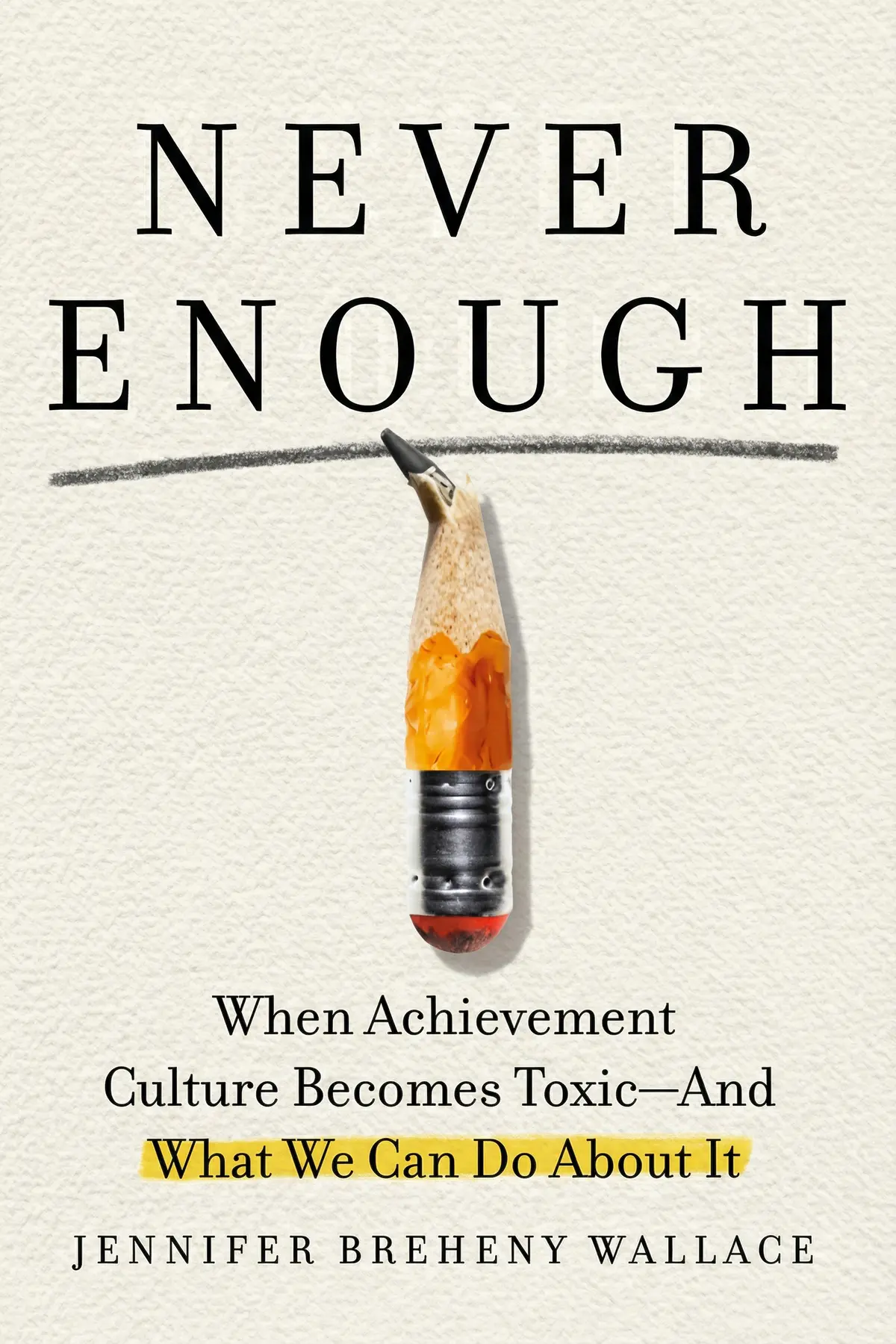
Table of Content
1. Introduction
1 min 04 sec
If your child’s week looks like an executive’s, or your own childhood felt that way, the cost may run deeper than tiredness. In Never Enough, journalist Jennifer Breheny Wallace reports that researchers now count students at high-achieving schools among at-risk youth, a label long tied to hardships such as poverty or violence. Her diagnosis is that childhood has been turned into a profession, and young people are paying for an adult idea of success that measures them by results.
Her central claim is simple to say and hard to live by: children, and the adults raising them, recover when they feel they matter for who they are, whatever they achieve. Wallace traces the pressure back to parents’ fears about a shrinking economy, then to the feeling psychologists call mattering. What she offers is a set of small daily habits, from how you greet someone at the door to how you react to a friend’s good news. These habits change what a child believes they are worth, and often what you believe about yourself.
2. Spot the warning signs of a professionalized childhood
2 min 10 sec
A high school athlete admits she sometimes runs her practice laps with her eyes closed. Her confession points to a hidden risk: recent research counts students at high-achieving schools as at-risk, with a third of American students under heavy pressure.
3. Understand what makes parents push harder than ever
2 min 29 sec
Pushy parenting looks like a personal flaw, but a few numbers about income and opportunity tell a different story. Seeing the fear underneath changes how you respond to it.
4. Separate a child's worth from their results
2 min 13 sec
Many young adults believe their parents love them more when they succeed. Psychologists have a name for what protects children from that belief, and it shows up in moments as ordinary as a bowl of soup.
5. Values that last longer than any trophy
2 min 14 sec
Three decades of surveys found that people who chase money and status pay for it in their mental health. A simple playground image explains why, and what children learn from watching adults.
6. Turn other people's wins into shared joy
2 min 06 sec
Envy feels unavoidable in a world that keeps score. A Sanskrit word and one graduate’s urge to thank the people who helped him suggest another way to react when someone near you succeeds.
7. Conclusion
1 min 13 sec
Never Enough begins with a girl running laps with her eyes shut and ends with a word for being glad at someone else’s good fortune. The distance between those two images is the book’s argument. Children did not invent the race. Adults built it out of economic fear, and children learned from it that love has to be earned. Wallace’s answer keeps ambition but changes what it rests on: a steady, daily signal that a person is enough before they achieve anything.
The practice is small enough to start today. Greet the people you live with as if you are glad they exist, and leave the questions about grades or targets for later. Notice which way your own conversations lean, toward prestige and money or toward people and community, because children copy the side you lean on. When someone close to you wins, reach for mudita before comparison.
None of this needs a new school, a new job or a new economy. It needs the soup brought to the door, the joyful hello and the thanks Jack Cook felt he owed. A child who knows they matter can still run hard, and this time with their eyes open.
About this book
What is this book about?
Packed schedules, late-night studying and nonstop competition have become normal for many teenagers. Jennifer Breheny Wallace argues that the costs are serious. Researchers now count students at high-achieving schools among at-risk youth, and stress, anxiety and depression are climbing among the young. Wallace traces the pressure to its source. As the odds of out-earning one's parents have fallen and the pay gap for college graduates has grown, parents have fallen back on a scarcity mindset. They spend more time and money than ever on their children's success, and the children learn that their worth depends on what they achieve. Her remedy is mattering, the sense of being valued by the people who count in your life. Drawing on research by Thomas Curran and Andrew Hill on perfectionism and by Tim Kasser on materialistic goals, she shows how small daily habits can separate a child's worth from their results. Those habits include a joyful greeting, time spent away from screens, and celebrating other people's success. Readers get a clear explanation of why the pressure exists and practical ways to ease it at home.
Book Information
Who it's for
Parents of overscheduled teens
Parents of teenagers caught in late nights, test prep and packed schedules.
Teachers and coaches
Teachers and coaches who see high-achieving students burning out.
Wanting worth beyond achievement
Adults who still measure their own worth by grades, titles or pay and want another way.
About the Author
Jennifer Breheny Wallace
Jennifer Breheny Wallace is an award-winning journalist and a graduate of Harvard College. She started her career at CBS 60 Minutes, on a team that won a Robert F. Kennedy Award for Excellence in Journalism. She has written often for The Wall Street Journal and The Washington Post and has appeared on national television. She has also been a Journalism Fellow at the Center for Parent and Teen Communication at the Children's Hospital of Philadelphia.
Ratings & Reviews
Ratings at a glance
What people think
Listeners find the work highly insightful, with one listener noting its scientific basis, and many regarding it as essential for parents and educators. It effectively tackles achievement culture, with one listener highlighting the focus on preserving high achievement without compromising physical or mental health. Listeners value the writing style and find the content actionable, with one review specifically pointing out its call to action for modern parents.
Top reviews
Mia
As a teacher in a high-pressure school district, this was a gut punch in the best way. Wallace nails the concept of 'mattering'—the idea that kids need to feel valued for who they are, not just their GPA or their college list. The research feels compelling, even if the target audience is clearly the upper-middle class. I especially appreciated the emphasis on parental resilience. We simply cannot help our kids if we are drowning in the same toxic achievement culture ourselves. It is a sobering, necessary call to action for any adult who feels like life has become an endless race for a status-symbol sweatshirt. To be fair, the book is a bit repetitive, but the core message is too important to ignore.
Show morePraepimon
This book should be mandatory reading for every parent before their kid hits middle school. Truth is, we are all contributing to this hypercompetitive mess without even realizing it. Wallace does not just point out the flaws in our social structure; she gives actual, actionable steps to help our children find a sense of purpose beyond the next exam. I loved the section on finding balance and encouraging interests that aren't just for a resume. It’s about preserving their mental health while they still have it. Not a perfect book, but the scientific basis for her claims about anxiety and mattering is hard to argue with. A truly essential guide for the modern parent.
Show moreBee
I honestly expected another preachy parenting book, but this was surprisingly grounded in the real-world struggles of modern families. It captures that claustrophobic feeling of being trapped in a community where everyone is chasing the same five 'prestige' colleges. The writing is smooth and the anecdotes feel authentic, even when the experts seem a bit one-sided. I especially liked the discussion on how purpose and service can alleviate the pressure of individualistic goal-setting. It is a quick read that packs a punch, especially if you are currently navigating the college application process. It reminded me that my child is not an extension of my ego. That realization alone was worth every penny.
Show moreJob
Finally got around to reading this and I am so glad I did. It is one of those rare books that makes you want to sit down and change your entire parenting philosophy overnight. The distinction between 'mattering' and 'mattering only for what you do' is a total game changer for me. To be fair, some of the social science felt a bit 'p-hacked' and light on actual citations in the notes page, but the emotional truth of the narrative is undeniable. Our kids are more than their test scores and resume padders. If you are worried about the toll achievement culture is taking on your family’s health, buy this book immediately.
Show moreKoi
Picked this up because I was feeling the pressure of the 'sweatshirt' race with my own eighth grader. It is refreshing to see someone call out the macroeconomic forces that make us feel like our kids are failing if they aren't 'elite.' The chapter on envy really struck a chord with me, especially how it manifests in affluent suburban communities. While the author's own background is clearly privileged, the emotional core of the book feels universal. We have to stop treating our children like extensions of our own social status. It is time to prioritize their internal well-being over their external accolades. In my experience, this is the wake-up call most parents in my zip code desperately need.
Show moreJoy
The chapter on 'mattering' alone makes this worth the purchase. Wallace argues that kids often do not realize how much we value them outside of their achievements, and that gap is where clinical anxiety grows. I found the interviews with students particularly heartbreaking and eye-opening. It is a loud wake-up call to be more explicit with our support. I did roll my eyes at the irony of her using her own Ivy League pedigree to sell a book about why those things don't matter. Still, the overall focus on preserving high achievement without sacrificing mental health is a necessary perspective. The writing is accessible and the call to action is very clear for modern educators.
Show moreThongchai
After hearing Wallace speak at a conference, I knew I needed the full book. As a stay-at-home dad, I often feel like these parenting books are written strictly for the 'overworked mom' demographic, and this one is no exception. However, the insights into clinical anxiety and substance abuse among high-achievers are genuinely alarming. It is not just about the kids; it is about the primary caregiver’s resilience too. If we are burnt out and obsessed with status, our kids will be too. It’s a cycle we have to break intentionally. Look, the advice isn't revolutionary—listen to your kids, set boundaries—but having the scientific backing helps make the case to skeptical partners.
Show morePlernpiriya
Never Enough is an incisive look at the pressures of American exceptionalism and the 'selective' nature of our current society. We all want our kids to succeed, but at what cost? Wallace highlights how the fear of an uncertain future drives us to push for every possible advantage, often at the expense of our children's souls. The book is very actionable, providing a framework for helping kids discover their natural strengths rather than forcing them into a narrow band of excellence. It is a little repetitive toward the end, but the central point—that mattering is the antidote to burnout—is something I will be thinking about for a long time. Definitely a must-read for parents of tweens.
Show moreFord
Ever wonder why our kids are more stressed than ever despite having every advantage? Jennifer Breheny Wallace takes a deep dive into the 'toxic bog' of achievement culture, though I found her reliance on Ivy League experts a bit ironic. She argues that elite schools aren't everything, yet almost every authority cited has a Harvard or Stanford pedigree. Frankly, the book feels like a conclusion in search of a hypothesis. While the core message about 'mattering' is powerful, the advice to 'just volunteer' felt shallow and targeted strictly at the affluent. It’s a bit of a mixed bag with some weak pop-science, but the underlying reminder to let kids be kids is still worth the read.
Show moreWillow
Wow, I really wanted to love this, but it felt like a series of anecdotes strung together by loose threads. The author makes huge claims about 'toxic culture' without really digging into the structural 'why' or the history of secondary education. Some of the citations are incredibly thin—like referencing a DFW speech just for a metaphor about fish without actually engaging with the text. Not gonna lie, those Phoenix fish tacos mentioned early on were a red flag for the author's judgment! It is basically a long-form essay telling wealthy moms to relax and self-care. It lacks the intellectual rigor I expected from a book with such a provocative and important title.
Show moreQuestions about this book
What is the main idea of Never Enough by Jennifer Breheny Wallace?
Wallace argues that childhood has been professionalized. Constant competition and high-stakes goals are making young people anxious and depressed, to the point that students at high-achieving schools now count as at-risk youth. The pressure comes largely from parents reacting to economic insecurity. Her remedy is mattering, which means making children feel valued for who they are rather than for what they achieve.
Why are parents putting so much pressure on their children?
Wallace links it to a scarcity mindset. For a middle-class white child born in the 1940s, the odds of earning more than the parents were 90 percent, but the figure dropped to 50 percent for a child born in the 1980s. The earnings gap between college graduates and everyone else has doubled since the 1970s. Anxious parents respond by spending twice as much time on academics and more money on tutors and activities.
What does mattering mean in Never Enough?
Mattering is the feeling of being valued by the important people in your life. Young people who feel they matter to their parents tend to have higher self-esteem and fewer depressive symptoms. Wallace says it shows up in small acts, like a friend bringing soup when you are sick or a joyful greeting when a child comes home. It also tends to spread, because people who feel they matter show others that they matter too.
How can I apply Never Enough at home?
Start with micro-practices: greet your child warmly and show interest in them before asking about grades. Watch what you praise, since children copy parents who stress money, possessions or prestigious schools. Make room for family time, hours without screens, nature outings and community service. Practice mudita, the Sanskrit idea of taking joy in other people’s success, so that another person’s win stops feeling like your loss.
Readers also enjoyed




AUDIO SUMMARY AVAILABLE
Listen to Never Enough in 15 minutes
Get the key ideas from Never Enough by Jennifer Breheny Wallace, plus 5,000+ more nonfiction titles.
- 5,000+ titles
- Listen as much as you want
- 7-day free trial
- Cancel anytime









