Table of Content
1. Introduction
58 sec
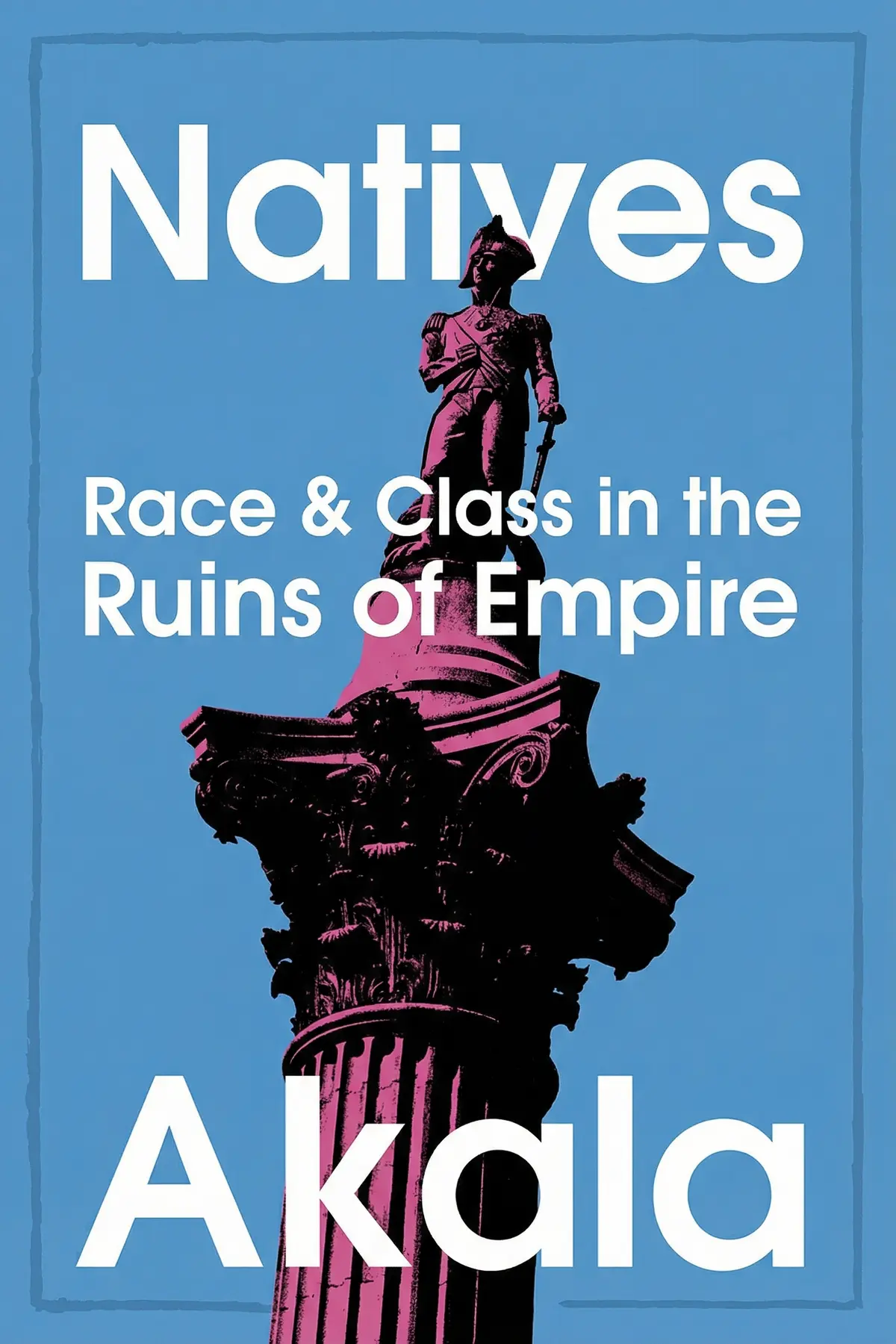
Most of us carry a flattering version of our country’s past, and that version quietly decides who counts as a full citizen today. In Natives, the London rapper, writer and activist Akala makes this case about Britain, starting from a fact many Britons never learned: the Caribbean families who arrived after the Second World War held British passports and had every legal right to be there.
Blending memoir with history, Akala argues that anti-Black racism in Britain rests on convenient myths about empire, slavery and crime, and that once those myths meet the record, class and poverty come into view. He moves from his grandparents’ arrival to his first police search at 13, then through sport, the end of slavery, the memory of Mandela and the shifting meaning of Blackness around the world. Each stop leaves a test worth carrying into any argument about race: which facts has this confident story left out?
2. Understand why Britain's colonial citizens met open hostility
1 min 50 sec
They arrived with British passports, invited by the government, expecting to be thanked for rebuilding a damaged country. Within days they were treated as freeloaders. Akala traces the welcome that never came to one missing piece of knowledge.
3. See how racism reaches children before they can name it
1 min 48 sec
A five-year-old comes home upset about a white classmate and suddenly stops mid-sentence. His mother’s quick answer, not quite true, says a great deal about growing up mixed in a country that sees only one color.
4. See how knife crime tracks poverty, not race
1 min 41 sec
Newspapers describe a capital overrun by knife-carrying Black teenagers, and police searches follow that picture. A national study ranks the city very differently, and the places that top the list share something other than skin color.
5. Spot the double standard in explaining Black success
1 min 45 sec
A small Dutch soccer club beats rich rivals and everyone praises its coaching. Black sprinters dominate the 100 meters and a television panel reaches for slave ships and Darwin. Akala asks why the explanations differ so sharply.
6. Correct the story Britain tells about ending slavery
2 min 05 sec
Britain remembers itself as the nation that gave up great profits to end slavery first. Akala sets that memory beside Denmark, a slave colony in revolt, 50,000 dead British soldiers and a bailout that took generations to repay.
7. Read national heroes and villains with a longer memory
2 min 04 sec
Britain mourned one leader as a hero and told readers to forget the other’s policies. The hero himself saw the two men very differently, and the reason lies in a battle few British readers have heard of.
8. Understand how Blackness changes meaning across borders
1 min 56 sec
The same man is Black in London, colored in South Africa and a local in Algeria. In Australia he met white-looking people who call themselves blackfellas, and their story reveals what racial labels are really made of.
9. Conclusion
1 min 10 sec
Natives begins with a family who were told they were coming home and were treated as strangers. Akala’s larger point is that the treatment and the story are bound together. A Britain that forgets its colonies helped fund its welfare state, remembers itself as slavery’s first abolisher and recalls Mandela only as a hero finds it easier to treat Black citizens as a problem for the police. Clear the myths away and class comes into focus: the violent neighborhoods of Glasgow and London share poverty.
He also sees the ground moving. Black Britons are more visible in public life than in his childhood, and a changing population will ask new questions of the national past.
The habit the book supports is checking. When crime is explained by race, look at where poverty sits. When a country praises its own moral firsts, look for who came earlier and who was compensated. When a champion’s speed is put down to genes, imagine the same claim about a German soccer team.
A five-year-old once needed his mother to pretend she was German before he could tell her what happened at school. Akala wants a country where no child needs that cover.
About this book
What is this book about?
Many Britons grow up with a proud version of their past: the nation that ended slavery, welcomed its colonial subjects and stood against apartheid. Akala, a rapper, writer and activist raised in a working-class, multi-ethnic part of London, argues that this version leaves out the facts that matter most, and that the gaps still shape how Black citizens are treated. He builds his case from two directions. One is memoir: his grandparents' arrival with the Windrush generation, racist abuse at five, and his first police stop and search at 13. The other is history and evidence: crime figures showing that violence follows poverty, a BBC panel that reached for genes to explain Black sprinters, Britain's real record on abolition and Haiti, and the long memory of Mandela and Castro. Readers get a clearer picture of race and class in modern Britain and a set of habits for testing any national story: who paid, who came first, and what the poverty map says.
Book Information
Who it's for
Raised on national pride
Readers who grew up with a proud national story and want to test it against the record.
Wanting evidence over headlines
Teachers, managers and journalists who discuss race, crime or migration and want evidence rather than headlines.
Black and mixed-race
Mixed-race and Black readers looking for their own experience set inside history.
About the Author
Akala
Akala, born Kingslee James McLean Daley in 1983, is a rapper, writer and activist from London. He won Best Hip Hop Act at the MOBO Awards in 2006 and has been named on the Powerlist of influential Black British people. He founded the Hip-Hop Shakespeare Company, which explores links between rap and Shakespeare, and received an honorary doctorate from the University of Brighton in 2018. He has lectured at universities and spoken at the Oxford Union.
Ratings & Reviews
Ratings at a glance

What people think
Listeners find the book educational, highlighting its thorough research and the way it blends personal stories with historical evidence. They consider it an excellent and skillfully authored piece of writing.
Top reviews
Tawee
The chapter on Akala's school years left me fuming. Seeing how a child reading Lord of the Rings can be relegated to a special needs group simply due to institutional bias is heartbreaking. This isn't just a memoir; it's a rigorous exploration of how class and race are weaponized in the UK. I loved the balance between his personal anecdotes and the broader historical facts about the British Empire that we aren't taught in school. The writing is sharp, witty, and deeply informed. It makes you question every comfortable myth you’ve ever been told about British 'fairness.' Essential reading for everyone living in the UK today.
Show moreJoy
Akala manages to weave personal history with global geopolitical analysis in a way that feels incredibly urgent. The section on the Haitian Revolution was a particular eye-opener for me, as was the discussion on the ANC and the betrayal of the Truth and Reconciliation Commission. It is quite rare to find an author who can jump from the micro-level of being stopped by police at twelve to the macro-level of international debt systems. His brain is clearly massive. The book feels like a deep conversation with a very smart, very angry friend who has done all the homework you were too lazy to do. My only gripe is that it's so dense I had to keep stopping to process everything.
Show moreSelin
After hearing about this book for months, I finally dived in and was struck by how little has changed since the 90s. The parallels between the treatment of Linford Christie and modern athletes like Raheem Sterling are depressing but necessary to highlight. Akala doesn't pull any punches when describing the casual cruelty of the British press or the education system. His writing is erudite and clear, making complex historiography accessible to a general reader. I particularly appreciated the focus on the Caribbean and the legacy of slavery that still underpins modern banking. It is a heavy read, emotionally speaking, but the humor and sardonic tone make it go down easier. A masterpiece of non-fiction.
Show moreAmara
This isn't just a book; it's a necessary wake-up call for anyone who thinks Britain is a post-racial utopia. Akala’s personal account of growing up in London is both visceral and intellectually stimulating. He debunks the myths of the British Empire with surgical precision, showing how modern institutions are built on colonial profits. I found the discussion on stereotype threat in schools particularly moving. It’s a stark reminder that we often create the very 'monsters' we claim to fear through our own low expectations. The research is extensive, and the bibliography alone is worth the price of admission. If you want to understand the modern world, start here.
Show moreViolet
Wow. I wasn't prepared for how much this book would make me re-evaluate my own education. Akala’s breakdown of the white savior myth around abolition was a massive 'mic drop' moment for me. The personal stories about his mother and the Pan-African Saturday schools he attended add a layer of warmth and humanity to what could have been a very dry academic text. His writing style is punchy and direct, avoiding the flowery language often found in these types of books. It’s a brilliant, gut-wrenching, and ultimately empowering look at what it means to be native in a country that doesn't always want you.
Show morePrayoon
Looking back at my own education, I realize how much was missing until I read this. The way Akala explains the collective amnesia of the UK regarding the atrocities committed in Kenya and elsewhere is staggering. It’s not just about race; it’s about power, class, and how history is written by the victors. The book is incredibly readable despite the heavy themes. I loved the Interlude sections where he tackles common criticisms—even if he is a bit cheeky with how he handles them! It’s the kind of book that you’ll want to buy for all your friends just so you have someone to talk about it with.
Show moreChanon
Picked this up because I wanted to understand the intersection of class and race better in a UK context. It's an incredibly informative book that challenges the 'colorblind' narrative many of us grew up with. The way he describes the psychological hurdle of being told you're inferior is something that stayed with me long after I finished the last page. Truth is, it’s a bit of a marathon to get through because there is just so much data and history packed into every chapter. I would have liked to see more perspective on the experiences of Black women, as it leans heavily into the masculine experience. Still, it’s a vital contribution to British literature.
Show moreChloe
Rarely do you find a memoir that is so deeply researched and historically grounded. Akala’s transition from a kid carrying a knife to a Shakespeare-quoting intellectual is an incredible journey. The book does a great job of explaining why 'working twice as hard for half as much' is a lived reality for many. Personally, I found some of the sections on Marxism a bit dense and perhaps slightly utopian, but his critique of capitalism’s failures in marginalized communities is hard to argue with. It’s a long read, and the tone can get quite cynical at times, but the truth usually is. Highly recommended for those who aren't afraid to have their worldview challenged.
Show moreTern
To be fair, I expected a polemic, but what I got was a surgical dissection of the British Empire. Akala is a gifted storyteller who knows how to use his own life as a lens for larger societal issues. The contrast between his life and the cocaine parties of his more privileged peers is a vivid illustration of the hidden injuries of class. While I felt the book was slightly repetitive in its later chapters, the core message is undeniable. It’s a great read for anyone looking for facts over feelings, even though the feelings it evokes are powerful. A solid four stars for an eye-opening experience.
Show moreJob
While I respect the hustle and the success story, I found the arguments here a bit one-sided. Akala is clearly a brilliant performer, but at times the book feels like it's talking to an echo chamber. He dismisses opposing views with quick one-liners rather than engaging in a truly balanced debate. I found his definitions of things like 'political correctness' and 'multiculturalism' to be a bit narrow compared to how they are actually used in political theory. That said, the biographical sections are fascinating and his critique of the white savior narrative regarding Wilberforce is well-argued. It’s a provocative read, even if I didn’t agree with his socialist-leaning conclusions.
Show moreQuestions about this book
What is the main idea of Natives by Akala?
Akala argues that anti-Black racism in Britain is sustained by convenient myths about the nation’s past, such as being the first to abolish slavery or welcoming its colonial subjects. Mixing memoir with history, he shows how those myths shape policing, media and memory, and how checking them against the record reveals class and poverty underneath problems that Britain often blames on race.
What does Natives say about knife crime and stop and search?
Akala was first searched at 13 with no adult present and no explanation of his rights, and his Black friends were searched while his white friends were not. He accepts knife crime is real but cites a 2015 national study placing the highest teenage knife crime rates in mostly white cities like Durham. Glasgow was the most violent city overall and London eighth. The common thread is poverty.
Was Britain the first country to abolish slavery, according to Akala?
No. Akala points out that Denmark abolished slavery in 1792 and France followed two years later, after its own upheaval. Britain sent troops to Saint-Domingue to restore slavery, losing around 50,000 soldiers, then refused to recognize Haiti, which in 1804 became the first free Black republic. Britain kept trading with slave societies, and British slave traders received a huge public bailout repaid only 182 years later.
Who should read Natives?
It suits readers who want to understand race and class in modern Britain through one person’s life and the history behind it. Teachers, journalists and managers who discuss crime, migration or national history will find evidence that challenges familiar headlines. Mixed-race readers may recognize Akala’s account of being labeled differently in Britain, Jamaica, South Africa and Algeria.
How can I apply the ideas in Natives?
Akala’s examples suggest a few tests. When crime is described in racial terms, look at the poverty map, as his comparison of London, Glasgow and Durham shows. When a nation celebrates a moral first, check who came earlier and who was paid. When Black success is put down to genes, ask whether the same explanation would ever be offered for white winners.
Readers also enjoyed
Alexander the Great
Philip Freeman




A History of Iran: Empire of the Mind
Michael Axworthy

Afropean: Notes From Black Europe
Johny Pitts

A History of the World in 6 Glasses
Tom Standage


A Long Way Gone: Memoirs of a Boy Soldier
Ishmael Beah
AUDIO SUMMARY AVAILABLE
Listen to Natives in 15 minutes
Get the key ideas from Natives by Akala, plus 5,000+ more nonfiction titles.
- 5,000+ titles
- Listen as much as you want
- 7-day free trial
- Cancel anytime