

15 min 42 sec
Available in: English
 ไทย
EnglishไทยNarconomics: How to Run a Drug Cartel
Shows how drug cartels hire, advertise, offshore, franchise and diversify like ordinary companies, and why economic pressure such as legal competition can weaken them more than destroying crops in poor countries.
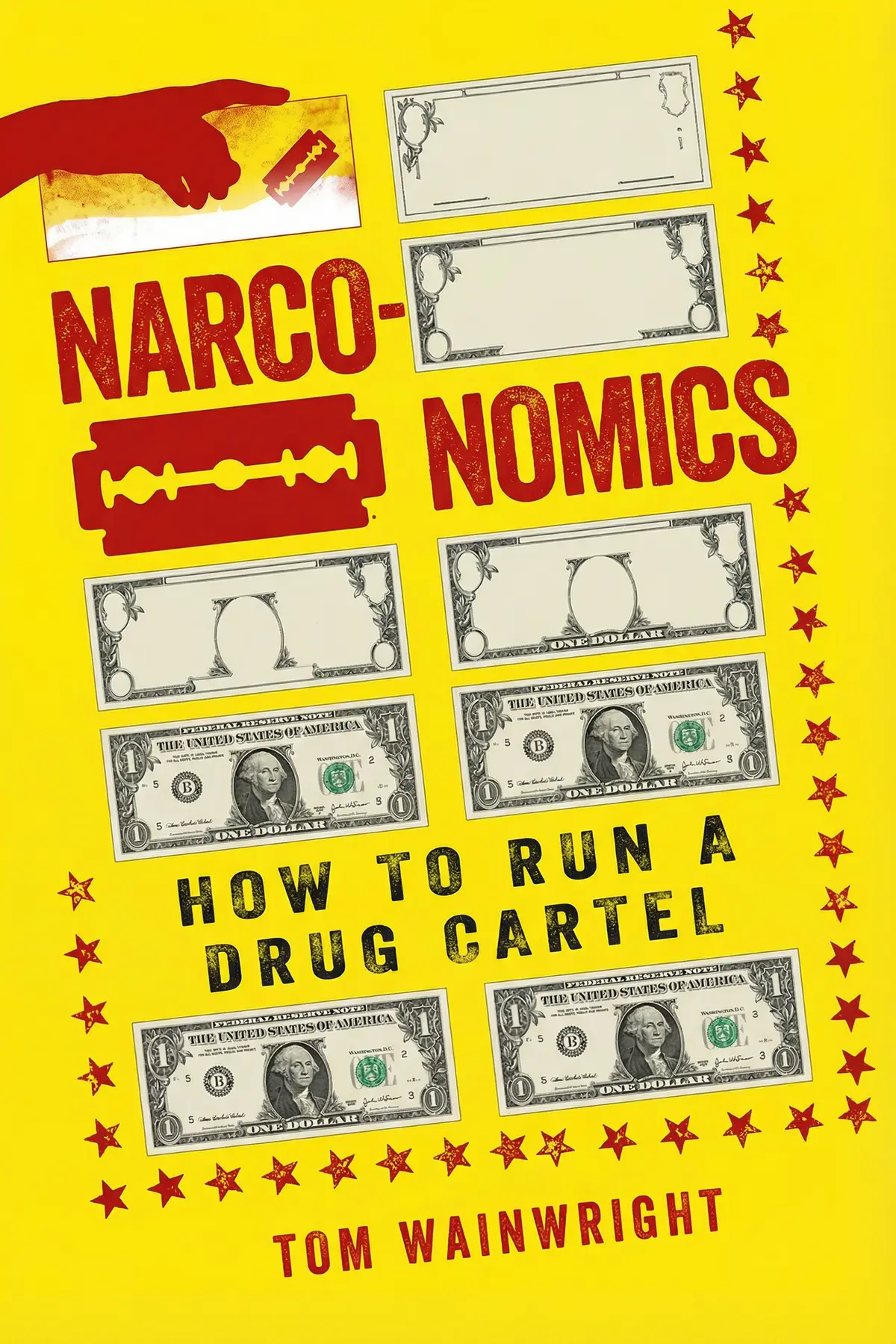
Table of Content
1. Introduction
1 min 01 sec
If the drug war reaches you only as body counts and slogans, there is a sharper way to understand it. In Narconomics, Tom Wainwright, who ran The Economist’s bureau in Mexico City, treats cartels as companies and finds that they recruit, advertise, offshore, franchise and diversify much as ordinary firms do. That lens explains a stubborn puzzle. Mexico’s government estimates that more than 164,000 people died in its fight against the cartels between 2007 and 2014, yet the groups kept growing.
Wainwright’s case is that because cartels behave like businesses, they are best weakened the way a business is: by competing with them, raising their costs and closing the gaps they exploit, instead of burning the crops of poor farmers. Follow his reasoning and a chaotic, violent trade becomes a market with a logic you can read, along with a clearer sense of which policies are likely to hurt it.
2. Learn that cutting drug supply can make cartels richer
1 min 54 sec
Planes spray pesticide over coca fields, farmers lose their harvests, and yet the money in the drug trade keeps climbing. An everyday party object explains why the most visible part of the drug war misses its target.
3. Beat a cartel by selling a better product
1 min 49 sec
Smugglers have guns, money and decades of experience. The rival that worries them most has none of those things, just good soil, a license and a menu that tells customers exactly what they are getting.
4. What gang truces teach about violence and markets
2 min 01 sec
Two countries, two very different ways for criminal groups to deal with rivals. In one, the bodies pile up on highways. In the other, murders fall by half, and the reason is not one that police would welcome.
5. Spot the HR logic that keeps gangs loyal
1 min 56 sec
A cartel cannot post a job ad or call references, and its staff have every reason to steal. One California gang solved the problem with a set of rules any frustrated employee might envy.
6. See through charity used as a brand weapon
1 min 43 sec
Billboards condemning murder, money for the poor, new chapels in the village. These sound like the work of a civic group, yet they are paid for by the same people the police are chasing.
7. See how weak states and franchises spread the trade
2 min 03 sec
Cartels pick new locations much as clothing brands pick factories, and they expand the way burger chains do. Both moves bring fast growth, and one of them carries a risk that can bring the whole operation down.
8. Follow cartels as they invent and diversify
2 min 05 sec
A cattle medicine from the 1940s became a party drug, and a smuggling network built for cocaine found a cargo that pays in advance. Both stories show how fast this industry moves when the law closes a door.
9. Conclusion
1 min 10 sec
Wainwright’s book works like a new pair of glasses. Look at the drug trade as a battlefield and the answer is always more force: more spraying, more arrests, more raids. Look at it as an industry and other levers come into view. Cartels hire from prisons, write rules that keep bosses honest, buy goodwill with chapels, settle where police are cheap, sign up franchise partners and switch products when the old one becomes risky. Each of those is a business decision, and business decisions respond to costs and competition.
That is why, in his account, a licensed shop in Colorado threatens cartels in a way crop spraying in South America never did, and why a gang truce in El Salvador cut murders by more than half. The next time a drug policy makes the news, ask which part of the market it touches: whether it squeezes poor farmers and lifts prices, or takes customers away. Notice, too, where a state leaves a gap in policing or public services, because someone will fill it.
A balloon does not shrink when you squeeze it. It shrinks when something else takes up the space.
About this book
What is this book about?
Decades after the war on drugs began, the global drug market holds more money than ever, and Mexico's government estimates more than 164,000 deaths in its fight against the cartels between 2007 and 2014. Tom Wainwright, who reported on the region as The Economist's Mexico City bureau chief, asks a simple question: what happens if we study cartels the way we study any other industry? His answer is that cartels behave much like corporations. They recruit staff and design rules to keep bosses honest. They polish their brands with charity, move operations to countries with weak governments, sign up franchise partners, invent new products and branch into new markets such as people smuggling. Seen this way, many policies look badly aimed. Spraying coca fields mostly pushes farming elsewhere and can even raise prices, while legal competition and pressure on corrupt states hit cartels where a business hurts most. Readers get a clear economic lens on a confusing, violent subject, from Colorado's legal marijuana shops to El Salvador's gang truce, and a sharper way to judge which drug policies might actually work.
Book Information
Who it's for
Following the drug war
Readers who follow the drug war in the news and want to understand why it keeps failing.
Economics or policy students
Students of economics or policy looking for a vivid case of markets at work.
Curious managers and founders
Managers and founders curious how hiring, branding and franchising look in the most extreme business there is.
About the Author
Tom Wainwright
Tom Wainwright is a journalist at The Economist, which he joined in 2007 to cover crime and justice, migration and social affairs in Britain. In 2010 he became its Mexico City bureau chief, reporting on Mexico, Central America and the Caribbean, before returning to London and becoming Britain Editor in 2015. He studied philosophy, politics and economics at Oxford University.
Ratings & Reviews
Ratings at a glance

What people think
Listeners find this work to be extensively researched and expertly composed, offering an elegant clarification of the economics behind drug trafficking. The storytelling is highly engaging; one listener remarks on how it is vividly depicted through in-depth anecdotes, while another portrays it as an intriguing look at the cost drivers of illicit narcotics. Listeners appreciate the book’s entertainment factor and find it maintains their interest from start to finish.
Top reviews
Tanyaporn
Tom Wainwright describes himself as a "not very brave" journalist, but he certainly did his homework in some incredibly dangerous places to bring this story to life. This book is an eye-opening journey that stretches from the coca fields of the Andes to the retail markets on American street corners. The way he breaks down the "cockroach effect" of drug enforcement explains exactly why current policies are failing so miserably across the globe. It turns out that burning crops only shifts the problem elsewhere without actually hurting the cartel’s bottom line or reducing the total supply. Personally, I found the chapter on PR and the use of social media by cartels to be the most chilling part of the entire work. The writing is snappy and engaging, even when he's diving into complex business theories that would usually be dry. It is a must-read for anyone who wants to understand the real mechanics of the global drug trade.
Show moreAey
Wow. This book absolutely shattered my preconceptions about how the illegal drug trade actually functions in the modern world. I’ve always viewed the cartels as chaotic groups of thugs, but Wainwright shows they are actually masters of corporate strategy and risk management. Seeing the parallels between a cartel’s supply chain and a legitimate multinational corporation is both fascinating and deeply disturbing, especially when you realize how effectively they manage their branding through social media and violence. The author’s moderate bravery takes us into the heart of the operation without being overly sensationalist or leaning on tired tropes. I particularly liked the section on "legal highs" and how the industry adapts to new legislation faster than governments can react. It’s a beautiful explanation of why the war on drugs is so ineffective when it ignores basic market forces. Every policy maker should be required to read this immediately.
Show moreThongchai
Having lived in a border-state for years, I’ve seen the news reports of violence in places like Juarez, but I never understood the financial "why" behind it. This book provides a coherent picture of the dynamics at play, showing how cartels use violence as a calculated PR tool rather than just engaging in random acts of cruelty. It’s not just random cruelty; it’s a way of managing their brand, protecting their territory, and deterring competition from encroaching on their margins. Wainwright’s analytical tone is a refreshing change from the usual hysteria surrounding the drug war that we see on the news every night. He makes a compelling case for regulatory reform, specifically targeting the demand side of the business to actually hurt the bottom line. While some of the business theory is a bit abstract, the real-world examples are vivid, memorable, and frankly terrifying.
Show moreTang
As someone who usually finds non-fiction a bit dry, I was impressed by how Wainwright kept me interested throughout the entire journey. The chapter on the "cockroach effect" was a revelation, explaining why the billions spent on crop eradication have basically zero impact on the street price of cocaine in London or New York. He uses economic jargon sparingly and always backs it up with a practical, often shocking, real-world example from his interviews. The way he explores the diversification of cartels into human trafficking and kidnapping shows just how adaptable these organizations are when their primary revenue streams are threatened. It’s a thoroughly researched piece of work that manages to be both educational and genuinely entertaining in a dark sort of way. Not many authors can make you think about a drug kingpin as a CEO, but Wainwright pulls it off brilliantly and with a great deal of wit.
Show moreCherry
Ever wonder why the drug war is such a dumpster fire? Wainwright treats the cartels like Fortune 500 companies, and frankly, it makes way more sense than the moralizing we usually get from politicians. He looks at supply chains, brand building, and even human resources within the Zetas and other brutal groups. It’s fascinating to see how they mirror companies like Walmart or McDonald's in their pursuit of efficiency and market dominance. While the economic jargon can get a bit thick sometimes, the anecdotes from his travels in Latin America keep the narrative grounded in reality. I appreciated the shift in focus from seeing these people as mere villains to analyzing them as rational actors trying to maximize profit. It’s a cold, hard look at a brutal reality that feels more authentic than most crime thrillers. This perspective adds a much-needed layer of logic to a conversation usually dominated by emotion.
Show moreAmara
Finally got around to reading this, and it’s easily one of the most logical books on the narcotics industry I’ve encountered in years. Wainwright treats the cartels as sophisticated franchises, analyzing everything from their offshoring tactics to their employee retention strategies while demonstrating how they adapt to market pressures much like any legitimate global corporation would. Who would have thought that full-body tattoos could be viewed as a clever way to keep staff from jumping ship to a rival? The book is vividly illustrated through detailed stories that move beyond the typical headlines of violence to show the boardrooms behind the blood. My only minor gripe is that it feels a little too academic in the middle chapters where the formulas outweigh the storytelling. Still, the breakdown of how legalization affects the business model of Mexican cartels is worth the price of admission alone. It’s a smart, thoroughly researched piece of journalism that challenges your world view.
Show moreAubrey
After hearing so much about this title, I was glad to find it’s just as insightful as everyone says it is. Wainwright’s writing style is clear and engaging, making complex topics like "monopsony" easy to understand for a layperson without an economics degree. He doesn't just stay in his office; he actually visits the coca farms and speaks with the people on the front lines of production. This grounded approach makes the economic arguments feel much more urgent and real than a simple research paper. The comparison between cartels and tech startups in terms of "disruptive" online marketplaces was a standout for me. Truth is, we can’t fix the drug problem until we stop treating it solely as a criminal issue and start treating it as a market issue. It’s a fascinating, well-written book that kept me hooked from start to finish despite the grim subject matter.
Show moreBun
Picked this up on a whim and was pleasantly surprised by how much I learned about the hidden side of the trade. It’s not just another true crime book; it’s a serious look at the cost drivers of illegal drugs and why they remain so profitable despite billions in enforcement. Wainwright is a fantastic storyteller who manages to weave economic principles into a narrative that feels like a dangerous travelogue through the Americas. I especially appreciated the discussion on how the prison system acts as a networking event for criminals, essentially providing free training for the next generation of cartel members. It’s a cynical but incredibly accurate way to view the current situation we find ourselves in. My only minor criticism is that the author’s perspective can feel a bit one-sided regarding policy. Regardless, the research is top-notch and the insights are valuable for anyone interested in global economics.
Show moreNong
This book definitely provides a unique perspective, but I’ve got to say it occasionally drags when the economic theory takes over the narrative. I picked this up expecting something a bit more visceral, yet it often reads more like an extended feature from The Economist than a deep dive into the underworld. The statistics are well-researched, and the insights into how prisons serve as job fairs for recruits are genuinely brilliant. However, if you aren't into supply-side economics or market diversification, large sections might feel like a chore to get through. To be fair, Wainwright’s argument about focusing on the demand side rather than the supply side is incredibly persuasive and backed by solid data. It’s an informative read that offers plenty of "aha!" moments, though it lacks the fast-paced energy I usually want from true crime. Good for enlightenment, less so for pure entertainment.
Show moreIsabelle
Not what I expected at all, and unfortunately, it didn't quite hit the mark for me despite the interesting premise. While the idea of applying business principles to drug cartels is clever, the execution feels repetitive and a bit forced after the first few chapters. It seems like the author is trying too hard to fit every brutal act into a tidy economic box that doesn't always fit. Look, I get that they have "HR problems," but comparing mass murderers to corporate middle managers feels a bit reductive and insensitive at times. The writing is technically fine, yet it lacks the emotional weight you'd expect when discussing such a devastating global issue. I was hoping for more investigative depth and fewer analogies to big-box retailers like Walmart. If you love spreadsheets and market theory, you might enjoy it, but I found it somewhat dry and detached from the human cost.
Show moreQuestions about this book
What is the main idea of Narconomics?
Tom Wainwright argues that drug cartels operate like ordinary businesses. They recruit staff, manage loyalty, use charity as public relations, offshore to weak states, franchise and diversify into new markets. Because of this, he suggests they can be weakened the way companies are, through competition and higher costs, rather than through supply-side attacks such as spraying coca fields, which mostly move the trade elsewhere.
What is the balloon effect in the drug war?
The balloon effect describes what happens when governments destroy drug crops in one place. Like air in a squeezed balloon, production simply shifts to another area or country without shrinking overall. Wainwright adds that scarcity can push prices up, so a crackdown on supply may leave cartel revenue flat or even higher, while poor farmers bear most of the cost.
Does legalizing marijuana hurt drug cartels?
Wainwright believes it does. Legal growers can produce better marijuana on large, fertile fields, forcing cartels to cut prices and lose profit. Colorado legalized the drug in 2014, and a year later licensed shops had sold $996 million worth, with $135 million going to the state in taxes. Regulation also protects users from contaminated batches and gives them clear product information.
Why did murders fall in El Salvador according to Narconomics?
In El Salvador, the 18th Street Gang and Mara Salvatrucha stopped fighting and divided the country into sectors, each controlling the business in its own zone. Drug sales did not drop, but the murder rate fell from 71 per 100,000 people in 2009 to 33 per 100,000 by 2012. Wainwright uses this to show that collusion between cartels can be far less violent than rivalry.
Who should read Narconomics?
It suits readers who want to understand why the war on drugs has not shrunk the drug market, students of economics who like real-world cases, and business readers curious about how recruitment, branding, offshoring and franchising work in a criminal industry. Its examples range from Mexico and Honduras to Colorado and New Zealand.
Readers also enjoyed









AUDIO SUMMARY AVAILABLE
Listen to Narconomics in 15 minutes
Get the key ideas from Narconomics by Tom Wainwright, plus 5,000+ more nonfiction titles.
- 5,000+ titles
- Listen as much as you want
- 7-day free trial
- Cancel anytime









