

11 min 38 sec
Available in: English
More, Please: On Food, Fat, Bingeing, Longing, and the Lust for Enough
By Emma Specter
A memoir of binge eating and diet culture. It traces where food shame starts, from a mother's glance to a childhood diet plan, and shows the small, kind practices that helped one woman make peace with eating.
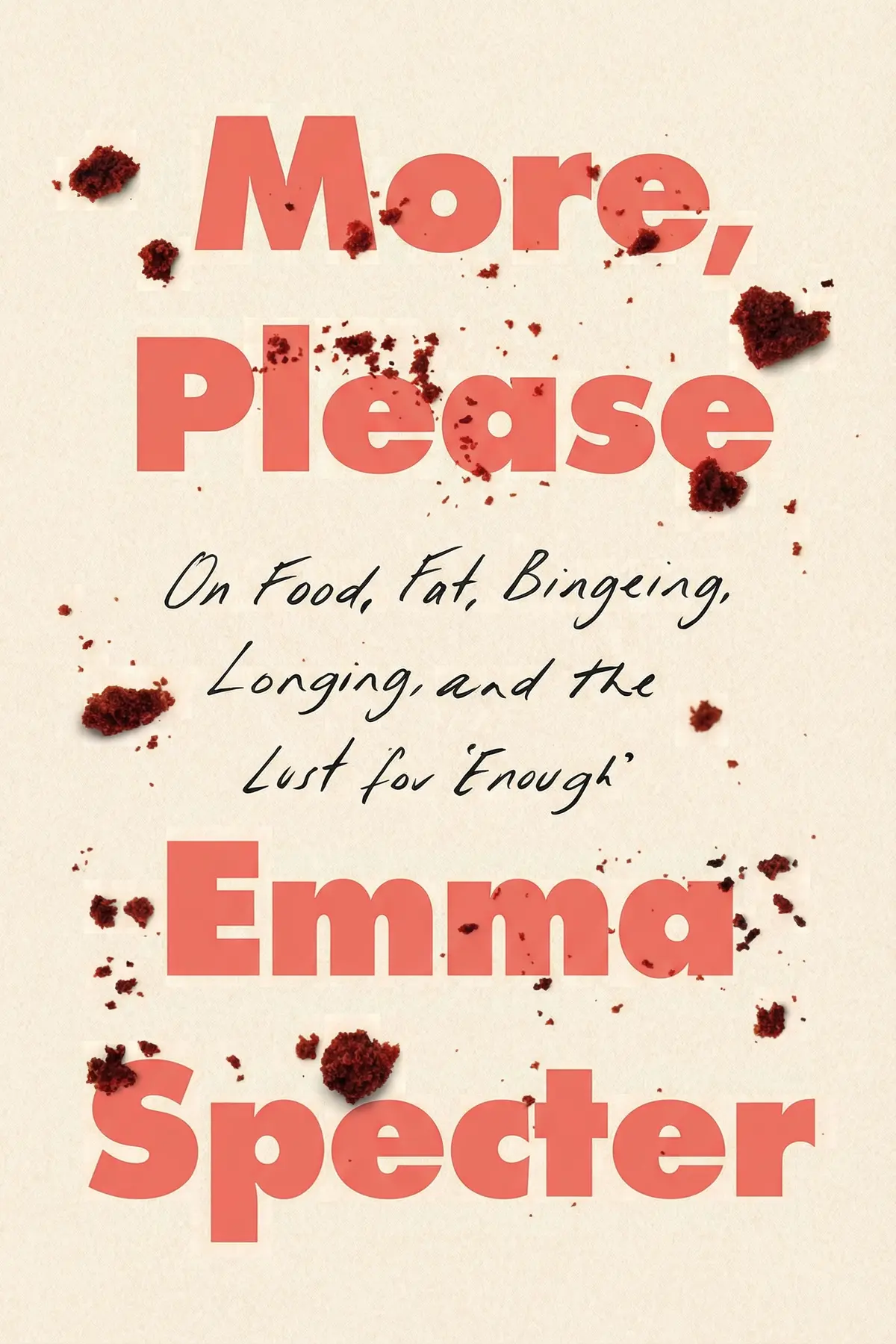
Table of Content
1. Introduction
59 sec
Plenty of people spend years treating food as a test they keep failing, and their body as the proof. In More, Please, Vogue culture writer Emma Specter tells how she went from joining Weight Watchers at twelve, through years of binge eating, to a life where food is neither enemy nor obsession. She blends memoir, reporting and interviews, and her first insight is uncomfortable: much of what we believe about our bodies is handed to us at the family dinner table, long before we choose anything.
Her throughline is easy to say and hard to live. Measuring your worth by your size keeps the cycle of restriction and bingeing turning. The way out begins with understanding where those rules came from. Then punishment gets replaced with pleasure, movement you enjoy and people who understand. Along the way Specter offers words for naming diet culture’s grip and a handful of small practices she used to loosen it.
2. Trace your food rules back to the family table
2 min 01 sec
Her mother never once told her to lose weight. Yet a teenager searching a drawer for batteries found something that made her feel she was failing an inheritance, and the feeling followed her for years.
3. Learn why a lower weight never fixes self-worth
1 min 56 sec
She counted points for years, lost the weight and started getting the attention she had wanted. Something should have been fixed. Instead, the target kept moving, and the reason says a lot about how diets work on identity.
4. Spot the rooms that feed your body anxiety
1 min 53 sec
A dream job at a famous magazine and a new sense of who she was should have felt like freedom. Instead, the pressure followed her into new spaces. What finally began to ease it came from somewhere modest.
5. Count every walk and swim as real movement
1 min 48 sec
Exercise used to be something she endured to bring a number down. One trainer and an unusual exercise log changed what counted, and why moving felt good again.
6. A list of happy meals that guides recovery
1 min 50 sec
During a lonely stretch of 2020, she began typing something into her phone that had nothing to do with calories or rules. That modest note became the tool she relied on for years afterward.
7. Conclusion
1 min 11 sec
More, Please is the story of a woman who spent years trying to earn her place at the table. She found peace once she stopped treating that table as a courtroom. Specter traces the judgment back to her mother, who came of age in the era of cabbage soup and SlimFast. Then she shows it surviving weight loss, a job at Vogue and a new identity. What finally changed things was modest: honest reflection, kindness toward herself and a few people who understood.
The practices she leaves you with are small enough to start this week. Pick one food rule you live by and ask where you first learned it, without blaming whoever taught it to you. Log the movement you enjoyed, even a walk home, and let it count. On a hard day, open a list of meals that once made you happy, the way Specter went back in her mind to Rockaway hot dogs and her mother’s shepherd’s pie.
By the end, the title reads differently. Food is no longer an enemy or an obsession for her, because she has found a middle ground where eating brings joy.
About this book
What is this book about?
Emma Specter joined Weight Watchers at twelve, paying with her babysitting money. As the years passed she cycled through point counts, keto and gluten-free plans, while her struggle with food followed her from her mother's home to Brooklyn and into her work at Vogue. Losing weight brought attention and dates, but the shame stayed. It only changed shape. In More, Please, Specter combines memoir, journalism and interviews to trace that struggle to its roots. She looks at the unspoken messages a mother raised on yo-yo diets passed to her daughter. She shows how a career in fashion media and a new queer identity left the old beauty standards in place. She also follows how she slowly found a calmer relationship with food and with her body. Readers get a language for naming what diet culture does to self-worth, along with practices Specter actually used. She traced her food rules back without blaming anyone and logged every kind of movement, from a short walk to an ocean swim. She also kept a list of happy food memories to turn to on hard days.
Book Information
Who it's for
Stuck dieting and bingeing
People caught in cycles of dieting and bingeing who want words for what they live through.
Daughters inheriting body worries
Daughters who picked up their mother's body worries and want to understand them without blame.
Professionals anxious about looks
Professionals in image-driven workplaces whose job leaves them anxious about how they look.
About the Author
Emma Specter
Emma Specter is an author and journalist based in Los Angeles. As a culture writer at Vogue, she covers film, TV, books, politics, news and queer culture. Before that she worked at Garage and LAist, and her freelance writing has appeared in the Hairpin, Bon Appétit, them and the Hollywood Reporter. Her years inside fashion media, which she describes in this book, give her an insider's view of how beauty standards press on the people who cover them.
Ratings & Reviews
Ratings at a glance

What people think
Listeners view this memoir as a candid and courageous exploration of binge eating disorder and the intricate nature of body image. Although perspectives on the academic organization differ—with some listeners suggesting the combination of journalism and personal history feels like a school assignment—many value the author’s "real and raw" openness. Furthermore, they appreciate how the book addresses social challenges such as anti-fat bias. They also highlight the utility of the integrated studies and interviews, as one listener remarks that the prose is "piercing, witty, and insightful."
Top reviews
Ott
Specter writes with a kind of vulnerability that makes you want to reach through the pages and give her a hug. This isn't your typical story about losing weight and finding happiness; it's a messy, ongoing struggle with binge eating disorder that feels incredibly authentic. I found the wit she injected into such heavy subject matter to be a lifesaver, keeping the tone from becoming overly depressing. Her insights into the fashion industry’s role in perpetuating body dysmorphia are sharp and damning. Frankly, it’s about time someone spoke up about the specific shame associated with BED. The inclusion of outside research actually strengthened the book for me, grounding her personal pain in a broader systemic issue. It’s a piercing, beautiful, and deeply necessary piece of work.
Show moreWit
This is easily one of the most important books I’ve read this year regarding body image and self-acceptance. Specter manages to be hilarious and heartbreaking in the same breath, which is no small feat given the subject matter. The way she dismantles the health-at-any-size debate while being honest about her own health struggles is incredibly brave. I found the reporting elements—the interviews and the research—to be the highlight, as they provided a framework for her own experiences. It felt like having a very smart, very tired friend explain exactly why the world is so obsessed with weight. Look, if you’ve ever felt like your body was a problem to be solved, you need to read this. It’s a witty, piercing, and ultimately healing journey.
Show moreHenry
Emma Specter offers a brutally candid look at binge eating disorder that feels refreshing in a sea of memoirs focused primarily on restriction. Her background in fashion adds a fascinating, albeit painful, layer to the narrative, showcasing the sharp dissonance between her professional world and her internal struggles. Truth is, the blend of personal storytelling and investigative reporting works quite well for the most part. It provides a necessary societal context that moves the conversation beyond mere willpower or individual failure. Some sections move a bit slowly when she leans too heavily into the academic citations, yet the emotional core remains intact. I appreciated her willingness to discuss anti-fat bias without sugarcoating how deeply it permeates our daily lives. It’s a dense read but an essential one for understanding the complexities of body image today.
Show moreNutnicha
Finally, a book that doesn't treat binge eating like a shameful secret to be hidden away! Specter does a phenomenal job of exposing the raw nerves of disordered eating while simultaneously tackling the systemic roots of anti-fat bias. I loved how she wove together her own experiences with the history of how society treats larger bodies. Some might find the journalistic elements distracting, but I felt they added much-needed weight to her personal anecdotes. It’s a bit harrowing to realize how much she is still struggling even as she writes this, yet that’s exactly what makes it so authentic. She doesn't offer easy answers or a magic pill solution. Instead, she gives us a seat at the table for a very difficult, very honest conversation about what it means to take up space.
Show moreRania
Not many authors are willing to be this unvarnished about the realities of binge eating, and for that alone, Specter deserves immense credit. She avoids the typical tropes of the genre, opting instead for a narrative that is both intellectual and deeply visceral. The way she describes the physical and emotional toll of the disorder is gut-wrenching. I appreciated the deep dive into how anti-fat bias intersects with other forms of oppression, showing that this isn't just a personal failing. My only real gripe is that the sentences can get incredibly long and complex, requiring a bit of extra focus to parse. Overall, it’s an insightful look at a topic that is too often ignored or mocked in mainstream media.
Show moreFelix
After hearing so much about this book, I went in with high expectations, and for the most part, they were met. Specter’s voice is distinct and modern, capturing the specific anxieties of a woman navigating her 30s in a world that still values thinness above all else. The blend of memoir and investigative journalism is an interesting choice; it makes the book feel more like a comprehensive study than a simple autobiography. To be fair, there are sections where the academic tone takes over, making it feel slightly less personal. However, her honesty about the stop-and-start nature of recovery is something that will resonate with many. It’s a raw, unflinching look at a very difficult topic that manages to stay insightful throughout.
Show moreThongchai
As a long-time reader of Vogue, I was curious to see how Specter would reconcile her career with her personal relationship with food. There are moments of absolute brilliance here where she dissects the absurdity of the thin-obsessed world she inhabits. However, the book struggles with its identity, oscillating wildly between a raw diary and a sociological study. Personally, I would have preferred more of her own voice and fewer interruptions from the experts she interviewed. It’s a solid 3-star read because the subject matter is vital, but the pacing is just a bit off. She captures the exhaustion of the diet cycle perfectly, though the conclusion feels a bit unfinished. Perhaps that’s just the reality of living with a chronic disorder—there are no easy endings.
Show moreWorawit
While the personal anecdotes were compelling and often quite funny, the structure of this book didn't quite land for me. It’s a loose mix of memoir and reporting that frequently feels disjointed, as if two different books were mashed together. In my experience, the best memoirs have a clear emotional arc, but this felt more like a series of essays that occasionally looped back to the same themes. I did find the references to other literature on nutrition and addiction helpful for further reading. Specter is clearly a talented writer with a sharp eye for detail, especially when describing her time in the fashion industry. Still, I left the book feeling like I wanted more of her personal story and less of the term paper style analysis.
Show moreBun
I really wanted to love this book because the topic is so underrepresented, but the execution left me cold. To be fair, Specter’s vulnerability is admirable, yet the prose often feels like a B-plus college thesis rather than a cohesive memoir. The narrative momentum frequently grinds to a halt to accommodate lengthy interviews and data points that didn't always feel integrated. It felt like she was trying to prove a point rather than tell a story, which made it difficult to connect with her journey on an emotional level. The long, winding sentences were also a bit of a chore to navigate after a while. I think people looking for a more traditional, heart-tugging memoir might find this approach frustrating. It’s definitely informative, but it lacks the spark I was expecting from someone with her writing pedigree.
Show moreWipawan
This felt more like a research project than a memoir, and I eventually just gave up. Not gonna lie, I was expecting a deeply personal narrative, but instead, I got a dry collection of interviews and book reviews masquerading as a life story. The Hannah Horvath vibes were strong here, and not in a way that I found particularly engaging or relatable. It reads like a term paper that was padded out to meet a word count requirement. While the author's struggle is valid, the writing style was just too academic and detached for my taste. I didn't find the wit that other reviewers mentioned; to me, it just felt self-indulgent and structurally messy. Definitely not what I was looking for in a memoir about such a visceral topic.
Show moreQuestions about this book
What is More, Please by Emma Specter about?
It is a memoir mixed with journalism and interviews. It follows Specter’s struggle with binge eating disorder, from joining Weight Watchers at twelve to working at Vogue. Along the way it looks at the culture of dieting and the pressure to be thin. Specter traces her food shame to unspoken family messages and shows how she slowly built a calmer, more pleasurable relationship with food and her body.
Does More, Please blame mothers for body image problems?
No. Specter describes an unspoken bond of judgment with her mother, carried by glances and diet foods at home. But she refuses to blame her. Her mother was born in 1955 and grew up through decades of yo-yo diets and harsh beauty standards. Specter’s aim is understanding where the patterns came from so they can be healed, not finding someone at fault.
Why didn't losing weight make Emma Specter happy?
Weight loss brought more dates and attention, but the shame only changed form. Each goal weight became a number she feared seeing again. She came to see that for people with disordered eating, weight becomes part of who they are. Being thin did not prepare her for love or solve her problems, because her sense of worth was still tied to her size.
What practical tools does More, Please offer for binge eating recovery?
Specter used several. She kept a phone list of happy food memories that had nothing to do with bingeing and returned to it on hard days. She logged every kind of movement, including short walks and swims, so that exercise stopped being punishment. She also leaned on friends and professionals who understood, and she treated setbacks as part of recovery.
Who should read More, Please?
It suits people who cycle between restriction and bingeing, daughters who absorbed a parent’s worries about weight, and anyone in an appearance-focused workplace who feels judged on their looks. Readers who want a personal, honest account more than a diet plan will find language for their own experience and a few gentle practices to try.
Readers also enjoyed

Ali: A Life
Jonathan Eig


A Life Decoded: My Genome: My Life
J. Craig Venter


Alcoholics Anonymous
Alcoholics Anonymous World Services

A Long Way Gone: Memoirs of a Boy Soldier
Ishmael Beah

All Creatures Great and Small
James Herriot


A Promised Land
Barack Obama
AUDIO SUMMARY AVAILABLE
Listen to More, Please in 15 minutes
Get the key ideas from More, Please by Emma Specter, plus 5,000+ more nonfiction titles.
- 5,000+ titles
- Listen as much as you want
- 7-day free trial
- Cancel anytime









