

14 min 49 sec
Available in: English
Money: A User’s Guide
A plain guide to the money decisions that shape adult life: clearing debt, budgeting without misery, getting a mortgage, investing, saving for a pension and handling the feelings and arguments money brings.
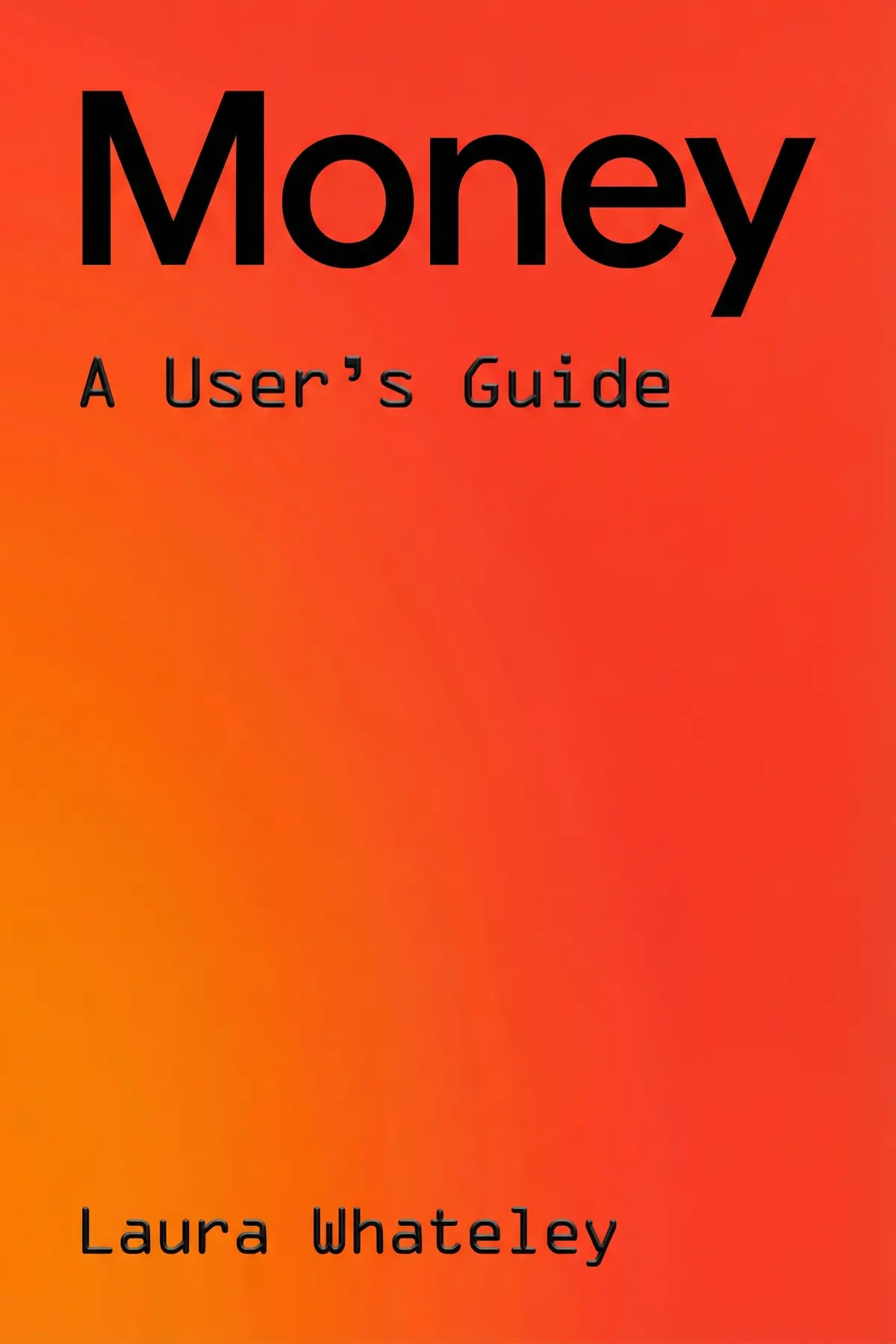
Table of Content
1. Introduction
1 min 05 sec
If you avoid opening your bank statements and watch each paycheck vanish before the month ends, that avoidance costs more than it feels. A credit card balance of 3,000 pounds at 19 percent interest, paid only at the minimum, takes 27 years to clear and costs more than twice the original debt. In Money: A User’s Guide, Laura Whateley, a consumer finance journalist who answers readers’ money problems in The Times, a British newspaper, sets out to end that kind of looking away.
Her argument is that getting on top of money takes two kinds of work at once. One is practical: knowing how debt, credit scores, mortgages, funds and pensions really behave, so they serve you rather than the lender. The other is personal: understanding how money makes you feel and act, alone and with a partner. What follows is a working set of habits for spending, borrowing, saving and talking about money, drawn from her British examples, that turns a dreaded subject into a calmer routine.
2. Pay off card debt in years, not decades
1 min 48 sec
Two people owe the same amount on the same card at the same rate. One is free in three years, the other is still paying a generation later. The difference each month is smaller than a restaurant meal.
3. A budget that cuts waste, not pleasure
1 min 48 sec
Budgeting sounds like giving up everything you enjoy, so most people never start. A Japanese household habit suggests the opposite, and a single daily lunch shows how much money hides in purchases you barely notice.
4. Notice the moods that drain your account
1 min 42 sec
Money worries and low moods tend to feed each other until both get worse. A simple note written beside each purchase can reveal the hour of the day when your spending stops being a choice.
5. Look like a safe bet to lenders
1 min 56 sec
Having no borrowing history can count against you more than a bad one. Lenders read your past like a stranger deciding whether to lend you money, and a few simple moves change what they see.
6. Make your savings outpace inflation
1 min 36 sec
Money sitting safely in the bank can be losing value every month. The alternative sounds like something for wealthy traders, yet Whateley says it needs little more than one free evening after work.
7. Start your pension early and choose its values
2 min 03 sec
The amount you need for retirement is probably far larger than you think, and your workplace pension may already be backing industries you oppose. Both problems have fixes that take an afternoon.
8. Talk about money before it becomes a fight
1 min 42 sec
A reader moved in with her boyfriend to save money, and then he asked her for rent. Was that fair? Whateley’s answer explains why couples who split everything equally can still end up resenting each other.
9. Conclusion
1 min 09 sec
Whateley’s guide takes some of the mystery out of money by showing that the products and the person can never really be separated. A credit card balance grows because of interest, and also because looking at it feels bad. A pension stays empty partly because old age seems so far away. A couple’s rent arrangement turns sour over what each partner believes money says about them. The tools she describes, from Kakeibo pots to fund supermarkets, work best once you have looked honestly at your own values and habits.
The ledger is the place to begin. This payday, move your income into separate accounts, roughly 50 percent for essentials, 20 for debt or savings and 30 for everything else, and write a short mood note beside each purchase so you can see when you spend to feel better. Pay more than the minimum on any card, and run a pension calculator to see the number your future self will need. If you share a home, put one money rule in writing together.
None of this needs a high income or special expertise. It starts with the bank statement you have been avoiding, opened and read.
About this book
What is this book about?
Many people feel they never have enough money, and the natural reaction is to look away: leave statements unopened, pay the minimum, hope next month is better. Laura Whateley, a consumer finance journalist who answers readers' money problems in a newspaper column, argues that looking away is what makes things worse. Her guide covers both sides of the problem. The practical side explains how the products work: why paying only the minimum on a credit card can keep you in debt for decades, what lenders look for in a credit score and a deposit, why a fund can protect savings from inflation, and how much a pension really needs. The personal side looks at behavior: the Japanese Kakeibo method of mindful spending, a mood diary that reveals when you shop to feel better, and the written money rules some couples counselors use to rebuild trust. Readers get clear numbers, simple systems such as the 50/20/30 split, and a calmer way to face the subject most of us avoid. Whateley also shows how a pension can back ethical companies instead of industries you oppose.
Book Information
Who it's for
Young earners avoiding statements
Young earners who avoid their bank statements and feel money disappears each month.
Renters and first-time buyers
First-time buyers and renters wondering how to get a mortgage, fix a credit score or start a pension.
Couples arguing about money
Couples who argue about bills, rent or spending and want a fairer way to share money.
About the Author
Laura Whateley
Laura Whateley is an award-winning journalist who specializes in consumer finance. She is best known for a money advice column in The Times, which she writes under the name The Troubleshooter, answering readers' real problems with banks, debts and bills. She has also written about personal finance for The Guardian, The Observer, Dow Jones and Moneywise magazine.
Ratings & Reviews
Ratings at a glance

What people think
Listeners find this to be an all-encompassing and approachable manual for personal finance, providing a functional "adulting" path for those starting out and young adults. They value the author's lively, clear writing style, with one listener remarking that it feels like "sitting next to her in a coffee shop" during discussions about mortgages and pensions. Furthermore, they appreciate the detailed exploration of subjects such as renting, investing, and taxes, with another listener characterizing it as the "most comprehensive overview" they have ever read. While some find the guidance to be significantly UK-centric or too elementary for people with prior financial expertise, the majority agree it serves as a vital foundation for gaining control over money management.
Top reviews
Kek
Wow. I never thought I’d actually enjoy reading about pensions and taxes, but Laura Whateley makes it feel like you're just chatting with a smart friend over lattes. To be fair, most financial guides are incredibly dry and full of gatekeeping language that makes me want to close the book immediately. This was the opposite—it felt like a warm, jargon-free invitation into the world of "adulting" that I desperately needed. While it’s definitely aimed at a UK audience, the core principles of saving and mindset shift are universal. I’ve already flagged half a dozen pages on investing because the explanations were just that clear. If you’re a millennial feeling lost in the woods of personal finance, this is your roadmap.
Show moreDavid
This book is essentially the "manual for life" that the school system completely forgot to give us before kicking us out into the real world. I’ve spent years googling random financial terms and feeling more confused than when I started, but this book consolidates everything into one accessible place. From the logistics of renting well to the terrifying prospect of future-proofing your finances, Whateley covers the whole spectrum with grace and wit. In my experience, most money books are written by men in suits who don't understand the struggle of the modern rental market, so her perspective as a journalist was incredibly refreshing. It’s the most thorough breakdown I’ve read to date. Truly an essential purchase for any British millennial.
Show morePrapaiwan
Picked this up after realizing I was approaching thirty with absolutely no idea how a mortgage actually works or what a pension fund does. It’s a comprehensive roadmap that took the "scary" out of personal finance by breaking things down into manageable, jargon-free steps. Not gonna lie, I felt a bit of regret that I didn't find this at eighteen, as it would have saved me a lot of costly errors and late-night googling. The author has a way of making even the driest topics feel relevant to your daily life and future goals. Whether you’re freelancing or working a 9-to-5, there is something in here that will help you gain more control over your cash flow.
Show moreCherry
The chapter on investing was easily the highlight for me, providing a much-needed breakdown of stocks and crowdfunds without the usual intimidating fluff. Frankly, I wish I’d had this in my hands at eighteen before making some of my more questionable spending choices in my early twenties. The writing style is refreshingly conversational, though it occasionally veers into being a bit too "chatty" when I just wanted the hard facts. It covers everything from the nuances of renting to the complexities of buying your first home in a way that feels achievable rather than impossible. I did find some sections on tax to be a bit repetitive, but the overall depth makes it a solid resource. It's a comprehensive guide that actually lives up to its name.
Show moreIff
Finally got around to reading this during my "new year, new me" phase, and I must admit it was far less painful than I anticipated. Handling money is usually one of those tasks I avoid at all costs, yet the author manages to keep things engaging even when discussing mortgages and student loans. I appreciated the section on the emotional side of spending, which most financial advisors seem to ignore entirely in favor of spreadsheets. My only real gripe is that the tone can be almost too colloquial at times, which occasionally makes the serious advice feel a bit buried in "relatable" filler text. Still, for a comprehensive overview of how to survive as a young adult in today's economy, it’s a very strong contender.
Show moreRod
Gotta say, I was skeptical about how much a journalist could actually teach me about money, but the practical tips here are surprisingly robust. The focus on "adulting" feels very current, especially the advice on how to navigate the property market when everything feels stacked against our generation. While I found the section on car buying a bit brief compared to the depth of the pension chapters, the trade-off was worth it for the clarity she provides elsewhere. Personally, I think the book could have been about fifty pages shorter if she cut back on some of the anecdotal padding. However, the core advice is solid gold and delivered in a way that doesn't make you feel like an idiot for not knowing it already.
Show moreSamira
Ever wonder why we weren't taught how to manage a credit card or understand a payslip in high school? This book fills those massive gaps in our education without making the reader feel judged for their past financial mistakes. The author writes as if she’s sitting right next to you in a coffee shop, explaining complex terms like you're actually a human being. I particularly liked the chapter on taxes—it turned a topic that usually gives me a headache into something I actually feel confident discussing now. It’s not a magic fix for your bank account, but it provides the tools to start making better decisions immediately. A few parts felt a bit basic, but the overall value is undeniable.
Show morePear
After hearing so many people rave about this on social media, I finally dove in and I’m glad I did. It’s a very practical, relatable guide that manages to bridge the gap between "I have no money" and "I want to invest for the future." I found the sections on renting particularly insightful, as most books tend to jump straight into buying property without acknowledging the reality many of us face. Frankly, it can be a bit repetitive in its "you can do this!" messaging, which might grate on some readers' nerves. But if you can look past the occasionally chirpy tone, you’ll find a wealth of information that is easy to digest. Definitely worth a read for anyone under forty.
Show moreSamuel
As someone who has been managing their own budget for a decade, I found that a large portion of this book covered things I’d already learned through simple trial and error. The truth is, if you already understand the basics of credit scores and ISA accounts, you might find yourself skimming quite a bit of the introductory material. It is undoubtedly a fantastic resource for a university leaver or someone who is genuinely terrified of their bank balance, but it felt a bit elementary for my specific needs. Not gonna lie, the UK-centric focus is very heavy, so if you aren't living in Britain, half of the specific advice on property and taxes won't apply to you at all. It's a decent enough primer, just maybe not for the financially literate.
Show moreFon
Look, the advice in here is clearly well-researched, but I struggled with the fact that it is so specifically tailored to the UK legal and financial system. Reading this from Portugal, I felt like I was watching a documentary about a foreign land rather than reading a guide I could actually implement in my own life. The sections on ISAs and British property law are extensive, which is great for Londoners but leaves the rest of us skipping large chunks of the text. To be fair, the general philosophy on investing and tracking spending is helpful regardless of where you live. It just wasn't the universal guide I was hoping for when I picked it up. Good for British readers, mediocre for everyone else.
Show moreQuestions about this book
What is the main idea of Money: A User's Guide by Laura Whateley?
Whateley argues that getting on top of your finances means working on two sides at once. The practical side is understanding how debt, credit scores, mortgages, funds and pensions work so you can use them well. The personal side is understanding how money makes you feel and behave, including the moods that trigger spending and the expectations partners bring to shared finances.
What is the Kakeibo budgeting method?
Kakeibo is a Japanese household ledger and a philosophy of mindful money management. You subtract fixed costs and a savings goal, perhaps 20 percent, from your monthly income, then divide the rest by four to get a weekly spending allowance. On payday you move money into separate accounts for savings, essentials and spending, so decisions are made in advance rather than at the checkout.
How much should I save for my pension according to Whateley?
She points to experts who suggest that, for each year of retirement, you should have roughly two-thirds of what you earn now, and plan for at least 20 years. On a 30,000 pound salary, that means a pot of 400,000 pounds, which realistically takes saving around 750 pounds a month. She recommends starting early so compound interest has more time to work, and using an online pension calculator.
How can I improve my credit score to get a better mortgage?
Whateley advises paying every bill on time, since defaults stay on your record for six years, and not applying for many financial products in a short period, because even rejected applications count. If you have no history, borrow small amounts, for example with a credit card you pay off in full every month. You can also ask the agency to investigate anything unfair on your report.
How should couples split money fairly?
Whateley says there is no single correct split; each couple must agree on what works for them. Since money is a leading cause of conflict in couples counseling, she recommends regular, open conversations and contracting: writing down shared money rules you both sign. Fairness does not have to mean equal amounts, because partners rarely earn the same income throughout their lives together.
Readers also enjoyed



AUDIO SUMMARY AVAILABLE
Listen to Money in 15 minutes
Get the key ideas from Money by Laura Whateley, plus 5,000+ more nonfiction titles.
- 5,000+ titles
- Listen as much as you want
- 7-day free trial
- Cancel anytime









