
12 min 36 sec
Available in: English
Money for Couples: No More Stress. No More Fights. Just a 10-Step Plan to Create Your Rich Life Together.
By Ramit Sethi
A practical method for couples to stop avoiding money. It shows how to talk about it regularly, learn where you stand from four numbers and replace the budget with a plan that funds what you both love.
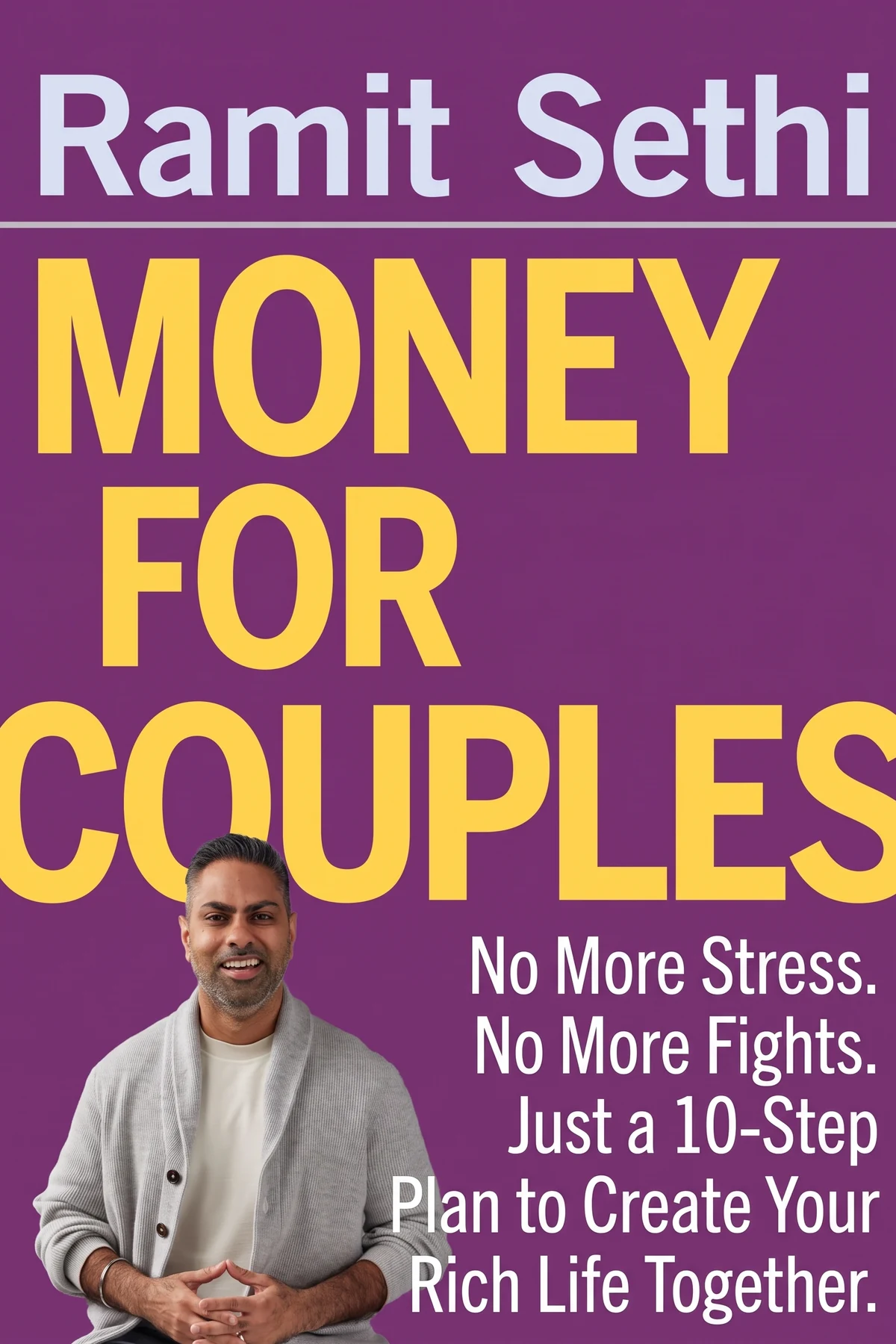
Table of Content
1. Introduction
1 min 03 sec
Many couples handle money by not handling it. They avoid the subject until a strange charge or a missed payment turns it into a fight. In Money for Couples, personal finance advisor Ramit Sethi argues that the avoidance does the damage, and that partners who talk about money often can turn it into something they enjoy together. The stakes are real: studies cited in the book show that fights about money bring more anger, stress and withdrawal than arguments over children, chores or communication.
Sethi’s answer is neither a stricter budget nor a longer list of cuts. It is a run of regular, honest conversations that build a shared picture of the life you want, then point your money at it. The method moves from learning how to talk, to naming what you love spending on, to knowing four numbers, to a spending plan that replaces the budget. Follow it and the topic you both dread becomes a routine, with a clear view of where you stand and permission to spend freely on what matters to you both.
2. Turn the dreaded money talk into a routine
2 min 08 sec
Most couples picture one tense evening where every money question must be settled at once. That picture may be the very reason they never begin, and the fix starts with a surprisingly small first question.
3. Spend generously on what you both love
2 min 00 sec
Most money advice is a list of things to give up. Sethi starts from the opposite end, and a quick look through your phone’s photo gallery may reveal where your money should be going.
4. See where you stand with four numbers
2 min 08 sec
Sorting out shared finances can feel like a puzzle with a thousand pieces and no picture. Sethi reduces it to a single sheet of paper, a pot of tea and a few questions most couples never ask each other.
5. Swap the budget for a plan you'll keep
2 min 06 sec
Most people give up on budgeting within weeks, and the reason may have little to do with discipline. One couple’s overspent dinner shows how a different kind of plan absorbs mistakes without a single argument.
6. Build your spending plan in three conversations
2 min 04 sec
A spending plan sounds like a lost weekend of spreadsheets. Sethi breaks it into three talks with very different moods, ending in a slow, almost painless cut that can free hundreds every month.
7. Conclusion
1 min 07 sec
Sethi’s book reframes the money fight. The arguments that leave one partner silent and the other defensive usually grow out of silence, from couples who avoided the subject until something broke. His cure is talk that is frequent, a little awkward and aimed at a future both partners want. The dials, the four numbers and the spending plan all serve those conversations. They give a couple something concrete to look at together and plan around.
The first step can happen this week. Brew the tea, write rough figures for your assets, investments, savings and debt, and work out your net worth without judging it. On another evening, each of you name the one thing you love spending on, using your photo galleries if you get stuck, then pick two areas to trim by about 10 percent a month and send the savings somewhere you both care about. After that, let the guilt-free share be exactly what its name says.
Couples do not need to agree on everything. They need to keep talking, and to know that one dinner too many is fixed by skipping a meal out next week, not by a fight.
About this book
What is this book about?
Many couples don't fight about money so much as avoid it, until something goes wrong and the silence gives way to anger, defensiveness and resentment. Ramit Sethi argues that the cure is more talk, of the right kind. Money conversations should never be one tense showdown. They work best as an ongoing habit, aimed at a shared picture of the life both partners want. His approach skips guilt and restriction. Couples identify their Money Dials, the spending each partner truly loves and the spending they barely care about. They get a snapshot of their finances from four numbers: assets, investments, savings and debt. Then they replace the conventional budget with a Conscious Spending Plan, which splits take-home pay across four buckets: fixed costs, savings for the near term, investments for the long haul and spending without guilt. Readers get a sequence of concrete conversations to have, from an honest opening line to a six-month plan that halves spending in two chosen areas. They also get permission to spend generously, without guilt, on what matters most to them both.
Book Information
Who it's for
Couples avoiding money talk
Couples who avoid talking about money until it turns into an argument.
Savers paired with spenders
Partners with different money habits, one a saver and one a spender, looking for common ground.
Wanting a simple plan
Newly combined households who want a simple plan instead of tracking every purchase.
About the Author
Ramit Sethi
Ramit Sethi is an American author, entrepreneur and personal finance advisor who studied technology and psychology at Stanford. His 2009 book I Will Teach You To Be Rich became a New York Times bestseller, and he hosts a podcast of the same name. He also hosted the 2023 Netflix series How to Get Rich and earlier co-founded PBworks, a commercial wiki website.
Ratings & Reviews
Ratings at a glance

What people think
Listeners find the book simple to digest and follow, highlighting its clear, actionable instructions. Furthermore, they value its transformative nature, as one listener points out how the material fosters sincere discussions regarding future objectives. The financial tips also earn praise, especially the strategies for debt reduction, and one listener highlights the useful checklists included to help progress toward a debt-free life. Finally, the presence of humor throughout the text is highly appreciated.
Top reviews
Por
Finally got around to finishing this, and frankly, it's the kick in the pants my partner and I needed. We’ve always been decent with savings, but we never actually sat down to define what our "Rich Life" looks like together. Ramit has this uncanny ability to cut through the boring financial jargon and get straight to the psychology of why we fight about a four-dollar latte. The writing is incredibly straightforward, filled with that signature humor that makes you feel like you’re getting advice from a smart, slightly blunt friend. It’s less about a restrictive budget and more about creating a vision for your future that actually feels exciting. We’ve already started our monthly money dates, and for the first time, they don't end in an argument.
Show moreDivya
Wow. I never thought I’d say a finance book was a page-turner, but Ramit Sethi managed to pull it off. The most revolutionary concept for me was the idea that we don’t actually need a traditional budget to be successful. Instead of tracking every single cent, he encourages us to focus on the big wins and automate the rest so we can enjoy our lives. My husband and I used to feel so much guilt over small purchases, but now we have a clear system that makes money feel fun rather than a source of stress. The audiobook version is especially great because you can hear the infectious energy in his voice. This isn't just about numbers; it's about building a partnership based on shared goals and total honesty.
Show moreNong
The chapter on prenups and the sections on teaching kids about money were worth the price of the book alone. As a woman from a culture where talking about money is often considered taboo, I found Ramit’s "brown uncle" energy strangely comforting and necessary. He doesn't sugarcoat the reality that you need to be on the same page before you sign a marriage license. To be fair, some of his views on things like tipping can be a bit controversial, but you don't have to agree with every single point to get value here. The book provides a clear roadmap for moving from financial friction to total collaboration. It’s gruesome at times to look at your own mistakes, but it’s a necessary process for growth.
Show moreGiulia
Ever wonder why you and your partner keep having the same argument about the credit card bill every month? This book explains the deep-seated money psychology behind those fights and, more importantly, how to break the cycle. Ramit’s approach is refreshing because he makes money feel like something to be celebrated rather than a problem to be solved. We loved the "worry-free number" idea, which has basically eliminated all the nagging in our household. The book is easy to read, humorous, and filled with straightforward steps that anyone can follow. It’s a must-read for anyone looking to strengthen their bond and actually enjoy the money they’re working so hard to earn.
Show moreSamroeng
Picked this up on a whim after seeing the Netflix show, and it’s honestly one of the best investments I’ve made for my relationship. The way Ramit breaks down the "Rich Life" concept for two people with different backgrounds is brilliant. I especially loved the focus on eliminating debt without feeling like you're being punished for your past mistakes. It’s not just about the math; it’s about the emotions and the power dynamics that money creates between two people. The writing is snappy and the advice is actionable, making it feel like a project you can actually finish. If you want to stop fighting about money and start building a future, get this book.
Show moreHemp
As someone who has followed Ramit for years, I found this to be a solid evolution of his previous work. It focuses heavily on the joint dynamics of a relationship, providing specific talk tracks for those uncomfortable conversations we usually avoid. To be fair, some of the advice feels geared toward couples who already have a decent income floor, as the "worry-free number" concept requires some wiggle room. If you’re drowning in high-interest debt, the focus on "dreaming big" might feel a bit premature, though he does include helpful checklists for debt management. The tone is encouraging but firm, pushing you to stop being a victim to your finances and start acting like a team. It's a great resource, even if it feels a bit repetitive for podcast listeners.
Show moreIsaiah
Look, I love the I Will Teach You to be Rich philosophy, but I have to admit I was a little skeptical about a whole book just for couples. I was pleasantly surprised by how much new ground he covers regarding money psychology and the scripts he provides for difficult talks. My only real gripe is that if you’re a frequent listener of his podcast, you’ve definitely heard several of these case studies and anecdotes before. Regardless, having everything organized into actionable steps and checklists makes it much easier to implement than just listening to episodes sporadically. Not gonna lie, the section on how to handle family expectations was particularly helpful for us. It’s a very practical guide that moves beyond simple math.
Show morePracha
After hearing Ramit on various podcasts, I knew his style would be direct, but the level of detail in this book still impressed me. It’s packed with specific activities and talk tracks that take the guesswork out of financial planning. Instead of just telling you to talk, he gives you the exact words to say so you don't sound like you're interrogating your spouse. Personally, I appreciated the focus on the "Rich Life" rather than the typical live-on-beans-and-rice advice you get from other gurus. It’s a refreshing take that prioritizes spending on what you love while being ruthless about cutting costs elsewhere. A few parts felt a bit repetitive, but the overall impact on our marriage has been incredibly positive.
Show moreCharlotte
To be fair, I was really apprehensive about reading this because I thought it would just be another boring lecture on spreadsheets. I was wrong. The focus is entirely on the relationship side of money, which is where most of us actually struggle. Ramit focuses on shifting the conversation from "what can't we afford?" to "what do we want our life to look like?" This shift in perspective is life-altering because it turns a chore into a shared dream. I did find the focus on high-income scenarios a little alienating at points, but the core principles of communication are universal. The checklists at the end of the chapters make it very easy for any couple to stay on track.
Show moreRung
This book wasn't quite what I expected, and I ended up feeling a bit underwhelmed by the end. In my experience, it seems mostly geared toward couples who have zero communication skills or those who are already quite wealthy. If you and your partner already talk openly about your goals and expenses, a lot of this will feel like common sense or fluff. I also struggled with how much he brushes off the reality of living on a tight income where every dollar actually does need to be tracked. The "Uncle Ramit" persona can also lean a bit too much into being condescending at times, which made it hard to stay engaged. Not for me, though I can see how it might help someone just starting out.
Show moreQuestions about this book
What is the main idea of Money for Couples by Ramit Sethi?
Sethi argues that many couples avoid money talk until something goes wrong, and that the fix is regular, honest conversation aimed at a shared vision of a rich life. Instead of restrictive budgets, couples identify what they love spending on, check four key numbers to see where they stand, and build a Conscious Spending Plan that covers essentials, savings and investments while leaving room for guilt-free spending.
What are Money Dials in Money for Couples?
Money Dials are spending categories you can turn up or down like a radio’s volume knob. Your Yes Dial is what you love spending on, such as travel or fine dining. Less Dials are areas you barely care about, where cuts feel painless. Each partner lists their Yes Dials and marks the top one. Sethi suggests checking your phone’s photo gallery if you cannot find yours.
What is a Conscious Spending Plan?
It is Sethi’s replacement for a traditional budget. Take-home pay is split into four parts: fixed costs at about half, short-term savings at roughly 5 to 10 percent, long-term investments at around 10 percent, and guilt-free spending, usually 20 to 25 percent. As long as the first three are covered, the last part is meant to be enjoyed without guilt.
How do couples start talking about money, according to Sethi?
Treat it as a series of talks, not one big conversation. Open honestly by admitting it feels awkward and that you want to solve it together. Write down everything on your mind beforehand, but begin with the widest question, how you will start talking about money, rather than small charges. Then understand that each of you grew up with a different money story.
Which four numbers does Money for Couples say to track?
Assets, investments, savings and debt. Couples first write rough estimates, then log in to their accounts together, slowly, asking how each number makes them feel. Adding assets, investments and savings and subtracting debt gives net worth. Sethi stresses that a negative result is common at the start and is simply a picture of today, not a judgment.
Readers also enjoyed









AUDIO SUMMARY AVAILABLE
Listen to Money for Couples in 15 minutes
Get the key ideas from Money for Couples by Ramit Sethi, plus 5,000+ more nonfiction titles.
- 5,000+ titles
- Listen as much as you want
- 7-day free trial
- Cancel anytime









