

11 min 24 sec
Available in: English
Mindful Self-Discipline: Living with Purpose and Achieving Your Goals in a World of Distractions
Shows how to build self-discipline that feels like strength: trace each goal to the need beneath it, face slips honestly and without shame, and anchor new habits to cues that make them automatic.
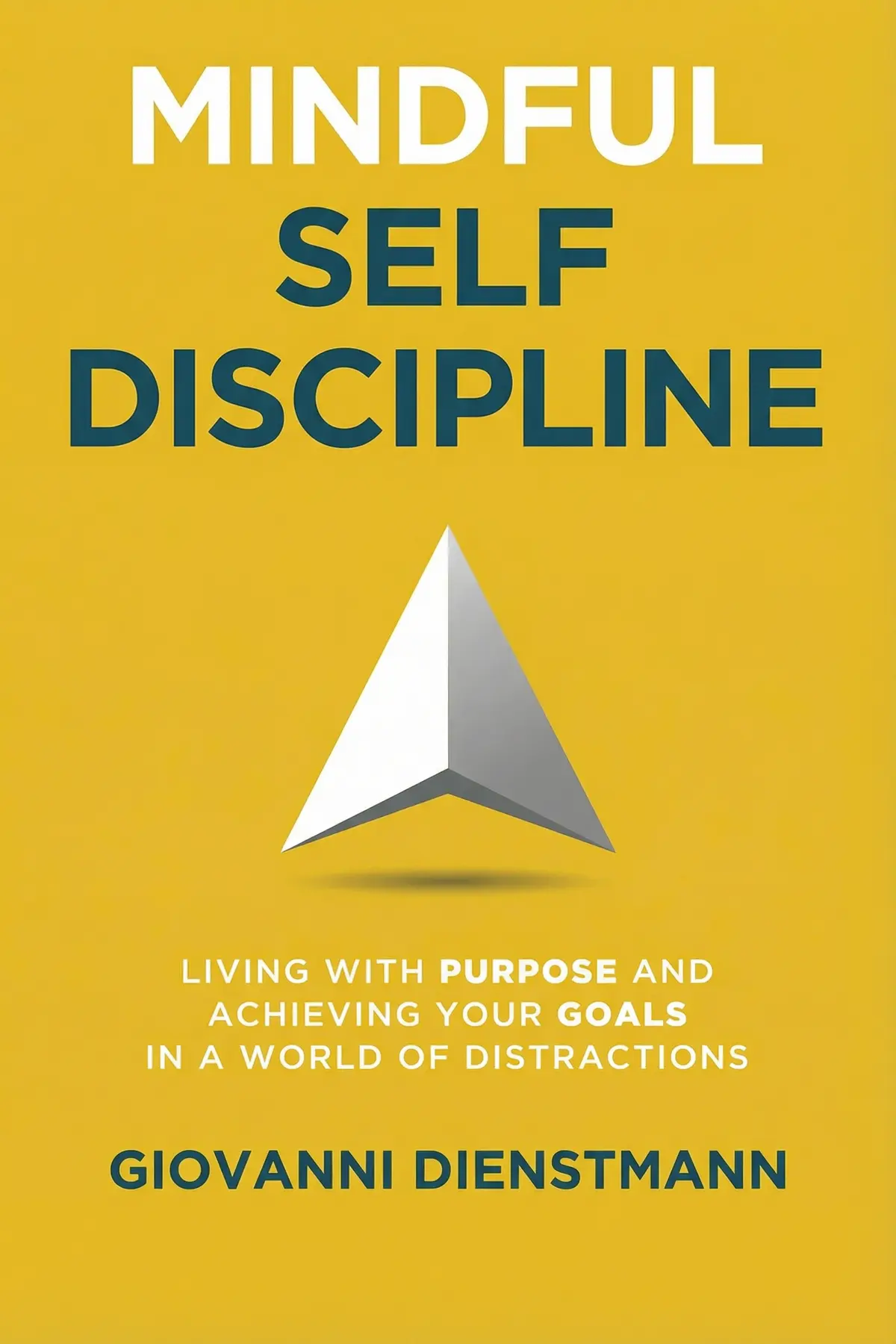
Table of Content
1. Introduction
55 sec
Most people treat self-discipline as a punishment they deserve, and that is exactly why it keeps failing them. In Mindful Self-Discipline, coach and meditation writer Giovanni Dienstmann argues that discipline is a form of personal power, and he points out that the ancient Greek word for it, enkrateia, has the root for power inside it.
Dienstmann has coached executives, entrepreneurs, artists and athletes who fight distraction and procrastination, and his book rests on one claim. Discipline lasts when three things support each other: a reason worth working for, an honest and calm view of what you are actually doing, and habits that carry the load when willpower runs low.
Each idea that follows adds one of those supports. By the end, you will have a way to trace any goal to the need behind it, a steadier response to slipping, and one simple sentence for building routines that run on their own.
2. Treat discipline as power, not punishment
1 min 47 sec
You may believe you have no self-control at all. Your own evening routine says otherwise, and a household object explains what discipline is really supposed to feel like when it works.
3. Dig under any goal to find its fuel
1 min 57 sec
Goals that look clear on paper often run out of energy by the second week. A plain question, asked several times in a row, can expose what you were really chasing all along.
4. An honest inner voice that stops excuses
1 min 53 sec
Most broken promises to ourselves happen without anyone admitting a decision was made. Dienstmann describes a moment at a party that shows how simply naming the truth changes what happens next.
5. Drop shame and suppression to loosen your urges
1 min 50 sec
After one slip, many people abandon a goal completely. Two lines of research suggest that the usual responses, beating yourself up and forcing the thought away, make the problem worse.
6. Routines that keep going when willpower fades
1 min 54 sec
Building a habit gets all the attention, yet many routines collapse months later for reasons that have nothing to do with laziness. A single sentence, and a plan for upkeep, change the odds.
7. Conclusion
1 min 08 sec
Dienstmann opens his book with a pebble skimming across a lake, each skip sending ripples outward. Small actions, he suggests, travel further than we think, and each one draws on self-discipline. What the book adds up to is a kinder idea of that discipline. It is the power to keep promises to yourself, held up by three supports. A why gives it direction. Honest, neutral attention keeps it steady when you slip. Habits carry it on the days when willpower is thin.
That changes what you do on a bad day. After a lapse, skip the self-punishment and describe what happened plainly, as if reporting someone else’s experiment, then choose again. Before pushing harder on a goal, ask why until you reach the need underneath it, and look for other ways to meet that need. For the behavior you most want to keep, write a single when and then sentence, anchor it to something you already do daily, and place it right after something you enjoy.
The aim is the remote that works: you decide what you want, you press the button, and your actions follow.
About this book
What is this book about?
Many people think of self-discipline as punishment: strict rules, denial and guilt whenever they fall short. That picture makes discipline something to dread, and it often collapses after the first slip. Giovanni Dienstmann, a coach who works with people struggling with distraction, procrastination and self-doubt, offers a different picture. He presents discipline as personal power, the ability to keep the promises you make to yourself. His approach rests on three pillars. Aspiration supplies the reason to act, found by asking why a goal matters until the deeper need appears. Self-awareness keeps you on course through radical honesty and a calm, neutral view of your own lapses, since shame and suppression tend to make urges stronger. Self-discipline then turns these into action through habits linked to clear cues. Readers get a practical way to connect daily routines with what they truly want, a gentler response to failure that keeps them committed, and a simple method for building habits that run with less willpower and keep running after life changes.
Book Information
Who it's for
Professionals who drop goals
Professionals who keep setting goals and abandoning them after the first slip or busy week.
Stuck in self-criticism
People caught in cycles of guilt and self-criticism who want a calmer way to stay committed.
Building routines to last
Anyone building new routines, such as exercise or healthier eating, who wants them to survive life changes.
About the Author
Giovanni Dienstmann
Giovanni Dienstmann was born in Brazil and has coached executives, entrepreneurs, artists and professional athletes since 2014, helping them find focus and purpose. His coaching deals directly with distraction, procrastination, fear and self-doubt. He runs the meditation blog LiveAndDare, has consulted for meditation apps, and wrote Practical Meditation before Mindful Self-Discipline. More of his work appears at HigherMind.
Ratings & Reviews
Ratings at a glance

What people think
Listeners find this work successful in charting the science behind self-discipline, providing useful exercises for inspiration and functional tools from start to finish. Furthermore, the information is deeply researched and comprehensive, including valuable summaries at the conclusion of every chapter, and listeners appreciate the attention given to the spiritual aspects of living. Additionally, the well-organized writing makes it easy to follow, while simultaneously aiding listeners in staying focused and managing distractions in their everyday lives.
Top reviews
Woravit
Finally, a self-help book that doesn't just bark orders. Dienstmann’s approach to mindful self-discipline is a breath of fresh air compared to the usual "hustle culture" nonsense. The book is incredibly well-structured, moving logically from the philosophical "why" to the practical "how" of building habits. I found the end-of-chapter summaries particularly helpful for reinforcing the concepts without having to re-read fifty pages. While some sections on ancient philosophy might feel a bit dense, the way he maps the science of willpower onto these traditions is masterful. It feels like a textbook for life that actually respects your intelligence and your humanity. I've already started implementing the "habit stacking" techniques, and the difference in my focus is palpable.
Show moreLuke
After months of feeling like I was stuck in a hamster wheel of procrastination, this guide actually gave me a ladder. The author really digs into the emotional roots of why we fail to follow through on our intentions. It isn’t about being a drill sergeant; it’s about finding a deep sense of aspiration that makes the hard work feel worth it. The exercises for uncovering your "core values" were quite emotional for me, revealing that I was chasing goals that weren't even mine. Frankly, the writing style is very accessible, even when he’s discussing complex neurological processes. This isn't just a list of tips; it’s a total mindset shift that makes you feel empowered rather than restricted. Truly grateful I stumbled upon this.
Show moreMalee
Giovanni Dienstmann bridges the gap between cold, hard science and the often-neglected spiritual dimensions of willpower. Most productivity books focus solely on the mechanics of the brain, but this one acknowledges that discipline is a soul-level commitment. The way he breaks down the "Three Pillars" provides a comprehensive framework that I haven’t seen elsewhere in the genre. Not gonna lie, I was skeptical of the spiritual angle at first, but it’s handled with such intellectual rigor that it won me over. The practical tools for overcoming the "what-the-hell effect" have already saved me from several late-night snacking binges. It’s a dense read, but every page feels like it’s contributing to a larger, more meaningful picture of personal growth and daily satisfaction.
Show moreNarut
Ever wonder why those ‘Alpha’ discipline books leave you feeling burnt out and miserable? It’s because they treat you like a machine rather than a human being with complex emotions and needs. Dienstmann’s "Mindful Self-Discipline" flips the script by making self-awareness the foundation of every action you take. The distinction between "martial self-discipline" and his mindful approach is brilliant and immediately clicked for me. I’ve been following his work on Insight Timer for a while, and this book perfectly encapsulates his teachings in a permanent, organized format. It’s effective because it doesn't rely on brute force; it relies on clarity and intention. It is, without a doubt, the ultimate manual for anyone tired of failing at their resolutions.
Show moreDream
Mindful Self-Discipline isn't just about grit; it’s about the three pillars of aspiration, awareness, and action. I’ve always had plenty of grit, but I lacked the awareness to see when I was just spinning my wheels on the wrong tasks. This book helped me realize that discipline without a clear "why" is just a form of self-torture. The writing is incredibly detailed and well-researched, citing a wide range of psychological studies and philosophical texts. It feels like a complete curriculum for anyone serious about mastering their own mind. Unlike many books that are just one good idea stretched thin, this one is packed with unique insights in every chapter. It truly empowers you to stay in the driver's seat of your own life.
Show moreFort
The chapter on ‘habit stacking’ was exactly what I needed to stop overthinking my morning routine. I’ve read other works on behavior change before, and while this covers similar ground, Giovanni adds a layer of mindfulness that makes the habits stick more naturally. He uses the concept of the “gap” between stimulus and response, which is a game-changer for someone with an impulsive streak like me. To be honest, I think some of the personal anecdotes about 2 AM wake-up calls are a bit extreme for the average person with a 9-to-5. However, the core tools for managing distractions and building consistency are universally applicable. The book is well-researched and grounded in reality, offering a roadmap that feels both ambitious and attainable for the long term.
Show moreLucas
Picked this up on a whim after seeing the high ratings, and I’m pleasantly surprised by how actionable the summaries are. Often, I finish a chapter and immediately forget what the takeaway was, but the structure here prevents that. The science of self-discipline is mapped out clearly, showing how our base instincts often hijack our higher aspirations. Truth is, the "2 AM cold shower" vibe from the author’s personal life can be a bit off-putting if you aren't an extreme optimizer. But you don't have to live like a monk to benefit from his strategies for controlling distractions. It’s a well-structured guide that offers enough flexibility for you to find your own rhythm while staying firm on your long-term goals.
Show moreCherry
As someone who struggles with constant digital distractions, the ‘radical honesty’ section hit me like a ton of bricks. We spend so much time lying to ourselves about why we aren’t working or why we "need" to check social media. Giovanni’s framework forces you to stare those excuses in the face without the usual layer of self-shame. Personally, I found the section on building new habits to be the most useful part of the entire 400 pages. It provides a technocratic, almost managerial way to look at your own behavior that removes the drama from failing. My only gripe is that the tone can occasionally skew a bit egocentric when discussing his own achievements. Still, the practical value outweighs the minor stylistic annoyances.
Show moreIsabella
To be fair, the research here is top-notch, but the book feels about a hundred pages too long for the average reader. There is a lot of repetition, and I felt like I was reading the same advice on awareness in several different chapters. The "marshmallow experiment" references felt a bit dated, as anyone in this space has heard about them a thousand times already. On the plus side, the formatting is excellent with clear headings and summaries that make it easy to skim if you are in a rush. If you are brand new to self-help, this might be a 5-star book for you because it covers everything under the sun. For those of us who have already read the classics, it feels like a very long retread with a few new labels.
Show moreHenry
Look, the core concepts regarding ‘The Why’ and Nietzsche-inspired goals are solid, but I struggled with the author’s tone. There’s a certain "look how disciplined I am" energy that permeates the text and can be a bit grating after a few chapters. I’m happy for his 2 AM wake-ups, but it doesn’t always translate to the reality of a working parent or someone with a chaotic schedule. That said, the actual "Mindful Self-Discipline" model is better than most of the generic advice you find online. The focus on neutrality—observing your failures without self-criticism—is a very powerful tool that I’ve started using with some success. It's a decent book, but I think it could have used a much more aggressive editor to trim the fat.
Show moreQuestions about this book
What is the main idea of Mindful Self-Discipline?
Giovanni Dienstmann argues that self-discipline is personal power rather than punishment. He notes that the Greek word enkrateia contains the root for power. Discipline, in his view, rests on three pillars: aspiration, which gives you a reason to act; self-awareness, which keeps you honest and calm about your behavior; and self-discipline itself, expressed through habits linked to reliable cues.
How do you find your why according to Dienstmann?
Start with a goal and keep asking why it matters to you until a deeper need appears. In his weight loss example, the chain runs from being fit to feeling good about your body, to confidence, to feeling empowered. That final answer is the real motivation, and it also suggests other ways to meet the same need. He says this matters most for goals about money, fame, looks or power.
What is the what-the-hell effect?
Researchers Janet Polivy and C. Peter Herman named the pattern in which breaking a rule triggers shame and guilt, and the person then abandons the goal entirely for quick pleasure. Dienstmann’s remedy is neutrality: observe the slip like a scientist, credit yourself for noticing it, and then choose whether to recommit. He argues a clear aspiration provides enough motivation without self-criticism.
How does Mindful Self-Discipline suggest building habits?
Use a cue and a simple plan: when X happens, I will do Y. Cues can be times, like a 10 p.m. alarm, or situations, places, people and feelings. They should be dependable and closely linked to the habit, and an existing habit makes the best anchor. Put hard habits right after something you enjoy, and keep maintaining them, since even solid habits fade when life changes.
Who should read Mindful Self-Discipline?
It suits people who struggle with distraction, procrastination or self-doubt and who find that strict, guilt-driven willpower keeps failing them. It fits those who want to link daily routines to deeper values, respond to lapses without shame, and design habits that run with less effort. Its tools are simple: asking why repeatedly, honest self-talk, and when and then cues.
Featured in
Readers also enjoyed

A High-Performing Mind: Strengthen Your Mind and Live Your Best Life
Andrew D. Thompson


Abundance: The Inner Path to Wealth
Deepak Chopra


59 Seconds: Change Your Life in Under a Minute
Richard Wiseman




AUDIO SUMMARY AVAILABLE
Listen to Mindful Self-Discipline in 15 minutes
Get the key ideas from Mindful Self-Discipline by Giovanni Dienstmann, plus 5,000+ more nonfiction titles.
- 5,000+ titles
- Listen as much as you want
- 7-day free trial
- Cancel anytime









