
13 min 30 sec
Available in: English
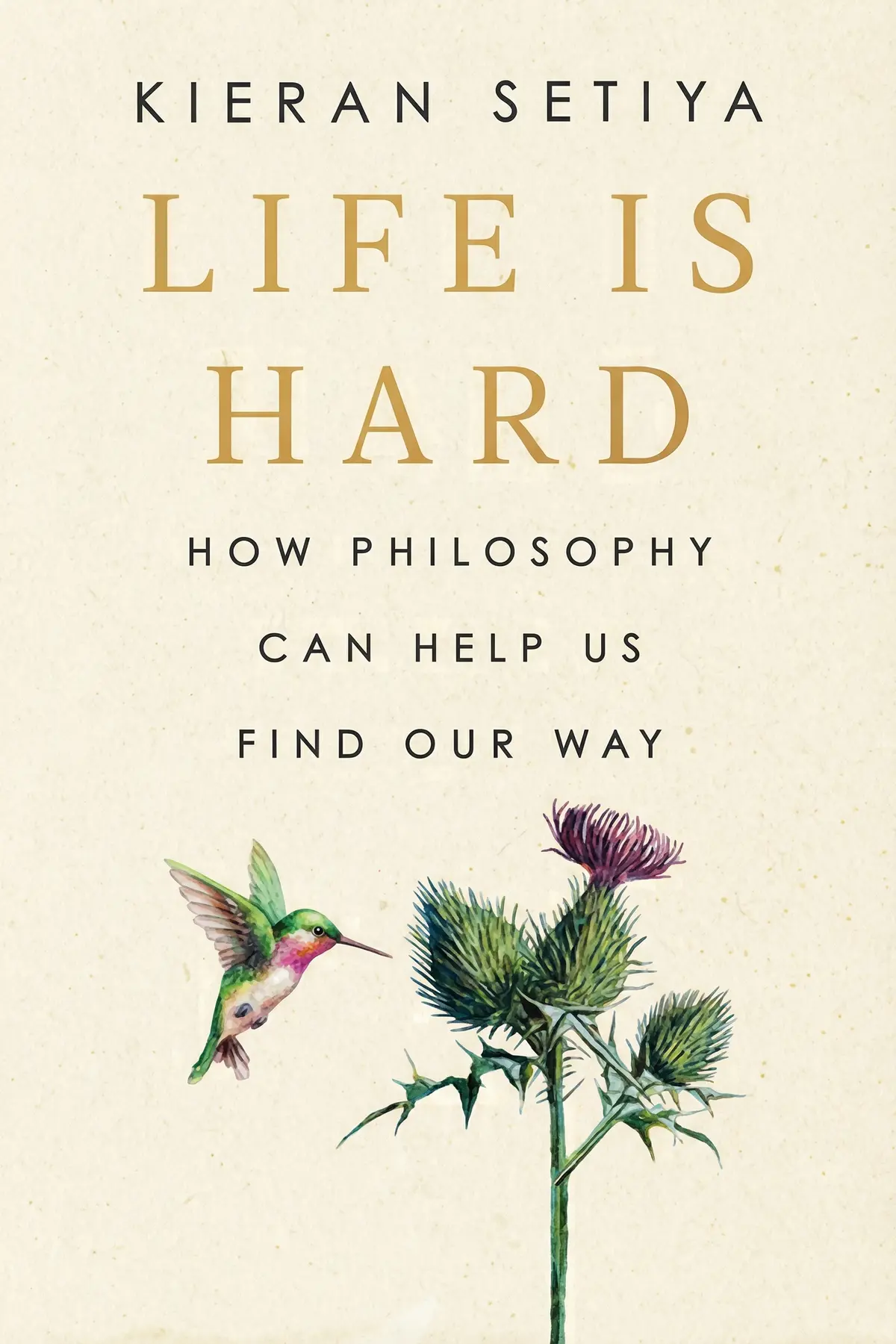
Midlife: A Philosophical Guide
Philosopher Kieran Setiya uses ideas from Mill, Lucretius and Schopenhauer to ease the midlife slump: why chasing happiness backfires, how to live with roads not taken, how to answer regret and how to face death.
Table of Content
1. Introduction
1 min 04 sec
Around forty, many people look ahead and see the rest of their lives laid out with uncomfortable clarity. Then they look back and count the dreams that will never come true. In Midlife: A Philosophical Guide, MIT philosopher Kieran Setiya argues that this ache is real but not a sentence. Economists have found that happiness tends to dip in the middle of life and rise again later, and philosophy has tools for the dip.
Setiya’s case is that the midlife slump comes from how we think about happiness, choices, regret, death and goals, and that seeing each one differently can carry you through without a crisis. He draws on thinkers from Lucretius to John Stuart Mill and Arthur Schopenhauer, and their lessons turn out to be practical. They explain why aiming straight at happiness misses it and why longing for other lives reflects a rich world. They also show how to cut a regret down to its honest size, and how to move your days away from ticking boxes.
2. Your midlife slump has a predictable shape
1 min 57 sec
A psychoanalyst noticed that famous artists and ordinary patients kept stumbling in the same decade. Decades later, economists measured the pattern across whole lifetimes, and the curve they found carries some unexpected good news.
3. Find happiness by aiming at something else
1 min 45 sec
A boy who read Plato at seven became a young man in despair, and the cause was the very thing he was chasing. His recovery began with a book of poems.
4. Make peace with the lives you didn't live
1 min 57 sec
The novel never written and the house in France never bought can sting even in a good life. Setiya argues the ache is not proof of a mistake, and his reason changes how it feels.
5. Cut a regret down to its honest size
1 min 39 sec
Some decisions still feel plainly wrong years later. Two simple lines of reasoning can loosen their grip, and one of them may be sitting at your dinner table.
6. A calmer way to face your own death
1 min 56 sec
A Roman poet thought death should frighten us no more than the time before birth. Modern philosophers found a flaw in his reasoning, and Setiya offers a simpler comfort in its place.
7. Trade box-ticking for activities without a finish line
2 min 05 sec
You finally got the promotion or the dream holiday, and within weeks the old restlessness was back. A pessimist explained why, and Setiya finds a gentler way out than giving up desire.
8. Conclusion
1 min 07 sec
Setiya never claims that middle age is easy. His claim is that much of what makes it hard comes from habits of mind that philosophy can loosen. Aiming straight at happiness, treating life as a list of problems, picturing the road not taken at its best, fearing a death no one escapes and living from one finished goal to the next all deepen the dip at the bottom of the U. Each can be rethought.
What ties his advice together is attention to the life you actually have. The alternatives you imagine are only outlines; your real life is full of detail. Setiya’s closing counsel is to savor that detail, because a life seen up close makes imagined substitutes look thin. When a regret returns, fill in the path you skipped with its dull and painful versions, and look at what your choice made possible. And give part of each week to things that never end, a conversation, a walk, a piece of music, where there is nothing to finish and nothing to miss.
Dante was lost in a dark wood at 35. The Divine Comedy came next.
About this book
What is this book about?
Around forty, many people notice two things at once. The future starts to look predictable, a row of birthdays and deadlines ending in retirement, and many youthful dreams quietly drop out of reach. Add the aches and health scares that make mortality feel real, and it is easy to see why economists find happiness dipping in the middle of life. Kieran Setiya, a philosopher at MIT, treats that dip as a set of thinking problems that philosophy has worked on for 2,500 years. He borrows from John Stuart Mill on why aiming straight at happiness fails, from Lucretius and Derek Parfit on the fear of death, and from Schopenhauer on the emptiness that follows getting what you wanted. Readers get a calm, practical way to handle the classic midlife pains: the pull of lives not lived, the sting of past decisions, the dread of time running out and the sense that achievement has stopped satisfying. Setiya's central tool is a distinction between activities that aim at an end and activities that never finish. Learning to value the second kind is his answer to the question so many people ask in middle age: is this it?
Book Information
Who it's for
Restless around forty
People around forty who feel flat, restless or haunted by choices they did not make.
High achievers
High achievers who keep hitting goals and wonder why the satisfaction fades so fast.
Newly aware of mortality
Anyone newly aware of their own mortality who wants calm, practical philosophy instead of a crisis.
About the Author
Kieran Setiya
Kieran Setiya, born in Hull in the UK, teaches philosophy at MIT, where his academic work covers ethics, epistemology and the philosophy of mind. He is also a co-editor of Philosophers' Imprint. Setiya also writes philosophy for a general audience, with work in the London Review of Books, the New York Times and Aeon, and he hosts the podcast Five Questions, where contemporary philosophers answer five questions about themselves. Besides Midlife, he is the author of Life Is Hard.
Ratings & Reviews
Ratings at a glance
What people think
Listeners find the work thought-provoking, describing it as an introductory resource on philosophical inquiry that provides a wide range of examination. They also appreciate its readability, high-quality prose, and wit, with one listener mentioning it is especially appropriate for retirees. Furthermore, the work receives praise for its utility, as one listener notes it acts as a manual for navigating mid-life crises. Listeners find the tempo soothing, while one review emphasizes its relatable way of addressing personal struggles.
Top reviews
Sam
Finally got around to reading this as I approach sixty, and I found it immensely comforting. Setiya’s writing has a soothing pacing that mirrors the atelic lifestyle he encourages throughout the chapters. Unlike most self-help books, this doesn't promise a new you; it simply offers a better way to inhabit the 'you' that already exists. The way he navigates the fear of death and the regret of roads not taken felt deeply relatable to my own experience. I particularly enjoyed the sections on why having too many options leads to inevitable regret, which is a surprisingly liberating realization. The book functions as a gentle philosophical primer that is especially suitable for retirees or those nearing the end of their careers. It’s rare to find a book about aging that manages to be both intellectually rigorous and genuinely kind. This stayed with me long after I finished the final page.
Show moreIvan
After hearing Setiya on a podcast, I knew I needed the full text to help navigate my own career transition. The book shares a beautiful epigraph from the Talmud that set the tone for the entire reading experience. It’s a phenomenal examination of why we feel inadequacy despite having 'checked all the boxes' of a successful adult life. I loved the careful, analytical style he uses to dismantle the fear of mortality and the sting of past mistakes. It feels less like a lecture and more like a therapeutic conversation with a very wise, very human friend. The way he discusses the plurality of values in a human life helped me stop mourning the careers I didn't choose. For anyone who feels like they are just 'doing more of the same,' this book is a godsend. It provides a map through the fog of middle age that is both practical and profound.
Show morePlernpiriya
The truth is that aging feels like a slow-motion car crash until you find the right perspective to frame it. Kieran Setiya has written a brilliant, relatable guide that avoids the cheesy tropes of typical midlife self-help. His exploration of the 'telic' treadmill—the idea that our goals are essentially suicidal because we want to finish them—is worth the price of the book alone. I found his approach to personal crises to be incredibly humane and grounded in common sense. The book is short, dense, and packed with insights that I have already started applying to my own hobbies and work. It’s a phenomenal coincidence that I found this right when I needed it most. Even if you aren't a fan of philosophy, the humor and clarity here make it accessible to anyone. This is the kind of book you buy in bulk to give to your friends when they turn forty.
Show moreDream
This book provides a much-needed intellectual framework for that nagging sense of emptiness that often hits in our forties. Setiya explores the 'telic' versus 'atelic' distinction with great clarity, helping us understand why checking off life goals can leave us feeling surprisingly hollow. I appreciated how he draws on Schopenhauer without making the text feel like a dense, dusty lecture. The writing is approachable and frequently humorous, which balances the weightier discussions about mortality and missed opportunities. Personally, the concept of process-oriented living changed how I view my daily routine and professional achievements. While some arguments felt a bit repetitive toward the end, the core message is incredibly grounding for anyone feeling the 'downward slope.' It is a soothing, thoughtful primer that treats the reader like an adult rather than someone looking for quick-fix mantras. Definitely a worthwhile read if you enjoy philosophy applied to real-world anxieties.
Show moreAdam
Gotta say, the distinction between living for a result and living for the process changed my morning commute entirely. Setiya argues that we spend our lives chasing 'telic' goals that vanish once we achieve them, leaving us in a state of constant pursuit. By shifting focus to 'atelic' activities—things we do for their own sake—we can find a more sustainable kind of peace. The humor scattered throughout keeps the mood from getting too dark, even when he’s discussing Schopenhauer’s gloomy outlook on human desire. I did feel that the chapter on FOMO and 'lives not lived' could have been expanded, as that’s a huge part of the crisis. Still, the writing quality is top-notch and the arguments are easy to follow without a degree in ethics. It’s a smart, readable guide for anyone who feels like they’re just running on a treadmill. Well worth the time.
Show moreMo
As someone who recently quit a high-pressure job to seek a more atelic life, this book resonated with me. Setiya captures that 'hollow' feeling of achievement perfectly, describing it as a treadmill of lacking and extinguishing our own goals. I found the section on 'maintenance' as a valuable activity particularly insightful, as it counters the constant drive to build and produce. The writing is thoughtful and the pacing is just right for a book meant to be pondered over slowly. My only gripe is that it proceeds on almost entirely atheistic grounds, which might leave some readers looking for more spiritual depth feeling a bit left out. Nevertheless, it’s a brilliant modern take on Stoicism and how to live well in the face of inevitable decay. It helped me realize that my desire for change wasn't a 'crisis,' but a rational shift in perspective.
Show moreBook
Ever wonder why philosophers ignored the midlife crisis for so long? Setiya answers this well in the opening, but the rest of the book was a bit hit-or-miss for me. To be fair, the distinction between goals and processes is a powerful tool for re-evaluating one's career and hobbies. However, the pacing felt uneven, and some chapters lacked the punch of the original essay that inspired the book. It’s an excellent modern philosophy work, but it occasionally dips into territory that feels a bit too academic for a casual weekend read. I found myself skimming the parts about Aristotle to get back to the more personal, relatable anecdotes. It is a solid 3-star read—decent enough to recommend to friends, but not life-changing. If you want a quick summary, just listen to his podcast interviews instead of buying the whole volume.
Show moreTern
Look, this is a fine book if you are already into philosophy, but it isn't particularly amigable for a total novice. While the writing is clear, the density of references to various philosophers can feel a bit overwhelming at times. I appreciated the breadth of examination regarding regret and the 'succession of projects' that dominates our younger years. But honestly, I was looking for something a bit more practical and less theoretical in its approach to daily life. Some of the sections felt a bit padded, as if an excellent long-form essay was stretched to meet a book's word count. To be fair, the humor and the relatable personal anecdotes do help move things along. It’s a decent primer, but maybe not the definitive guide I was hoping for when I picked it up. A mixed bag that works better in parts than as a whole.
Show moreSoontorn
Picked this up hoping for a deep societal analysis of why my generation feels so burnt out, but it fell short. Truth is, Setiya largely ignores the material and social conditions that actually cause modern midlife distress. He mentions the history of the crisis, yet fails to address how job precarity or predatory consumerism shape our mental state. Instead, he offers what feels like 'philosophy-lite'—a mix of mindfulness and atelic activity that sounds nice but feels a bit out of touch. If you are struggling with rent or healthcare, being told to enjoy the 'process' of life feels like a bit of a slap in the face. The prose is elegant and the author is clearly brilliant, but the scope is too narrow for my taste. It felt more like a personal essay for the academic elite than a guide for the rest of us. It is okay as a thought experiment, but not as a practical tool for survival.
Show moreFang
Not what I expected from an MIT professor, frankly. This book ended up being a profound disappointment because it feels like a high-brow version of 'new-age' fluff. The author spends too much time recommending meditation and vague mindfulness as the cure for deep existential dread. Where is the critique of the industrial society that exploits us and then tells us to do yoga to fix it? He treats the midlife crisis as a purely internal, mental glitch rather than a rational response to a crumbling social contract. The lack of any mention regarding economic inequality or labor issues makes his advice feel incredibly hollow and privileged. If you want to read someone quote Epictetus while ignoring the real world, this is for you. Otherwise, save your money and look for something with more backbone. It’s just another piece of the 'coaching' industrial complex wrapped in a philosophy degree.
Show moreQuestions about this book
What is the main idea of Midlife by Kieran Setiya?
Setiya argues that the midlife slump is real, since economists Blanchflower and Oswald found happiness follows a U shape across life, but that it is not inevitable. Much of the pain comes from how we think about happiness, missed chances, regret, death and goals. Drawing on philosophers such as Mill, Lucretius, Parfit and Schopenhauer, he offers ways to see each of these differently and pass through middle age without a crisis.
What are telic and atelic activities?
Telic activities, from the Greek telos meaning end, aim at a finished state: writing a book, getting a promotion, getting married. Each success removes the desire behind it, and constant box-ticking can feel deadening. Atelic activities have no end point, like talking with friends, sailing, listening to music or taking long walks. Setiya suggests spending more time on these and paying attention to the process of telic work, not only its completion.
How does Setiya suggest dealing with regret?
He offers two reasons not to wish a past decision undone. If you have children, they exist only because of the exact choices you made, so undoing a so-called wrong career might erase them. And regret tends to imagine the rejected option at its best, ignoring risks like dull work, a stalled career or a bad employer. Picturing the other path in full usually shrinks the regret.
Why does chasing happiness not work, according to Midlife?
Setiya draws on John Stuart Mill, who suffered a crisis at around twenty and found that focusing on his own happiness had made him miserable. Mill concluded that happy people keep their minds on something else and find happiness along the way. The something else can be any absorbing interest, from cooking to stamp collecting. Mill also learned, through Wordsworth’s poetry, that not every good thing in life is about solving problems.
Who should read Midlife: A Philosophical Guide?
It suits people in or near middle age who feel dissatisfied, regretful or newly aware of mortality, and who prefer reasoned reflection to quick fixes. It also helps achievers who find that reaching goals no longer satisfies them. Readers curious about philosophy get an accessible tour of thinkers including Mill, Lucretius, Montaigne, Parfit and Schopenhauer, each applied to a concrete midlife problem.
Readers also enjoyed

A Theory of Justice
John Rawls

59 Seconds: Change Your Life in Under a Minute
Richard Wiseman






A Guide to the Good Life: The Ancient Art of Stoic Joy
William B. Irvine

AUDIO SUMMARY AVAILABLE
Listen to Midlife in 15 minutes
Get the key ideas from Midlife by Kieran Setiya, plus 5,000+ more nonfiction titles.
- 5,000+ titles
- Listen as much as you want
- 7-day free trial
- Cancel anytime









