
Midlife: A Philosophical Guide
Kieran Setiya
 English
Shows how philosophy can help with pain, loneliness, grief, failure, injustice, doubts about meaning and fading hope. It trades the dream of an ideal life for an honest look at the one you actually have.
1 min 05 sec
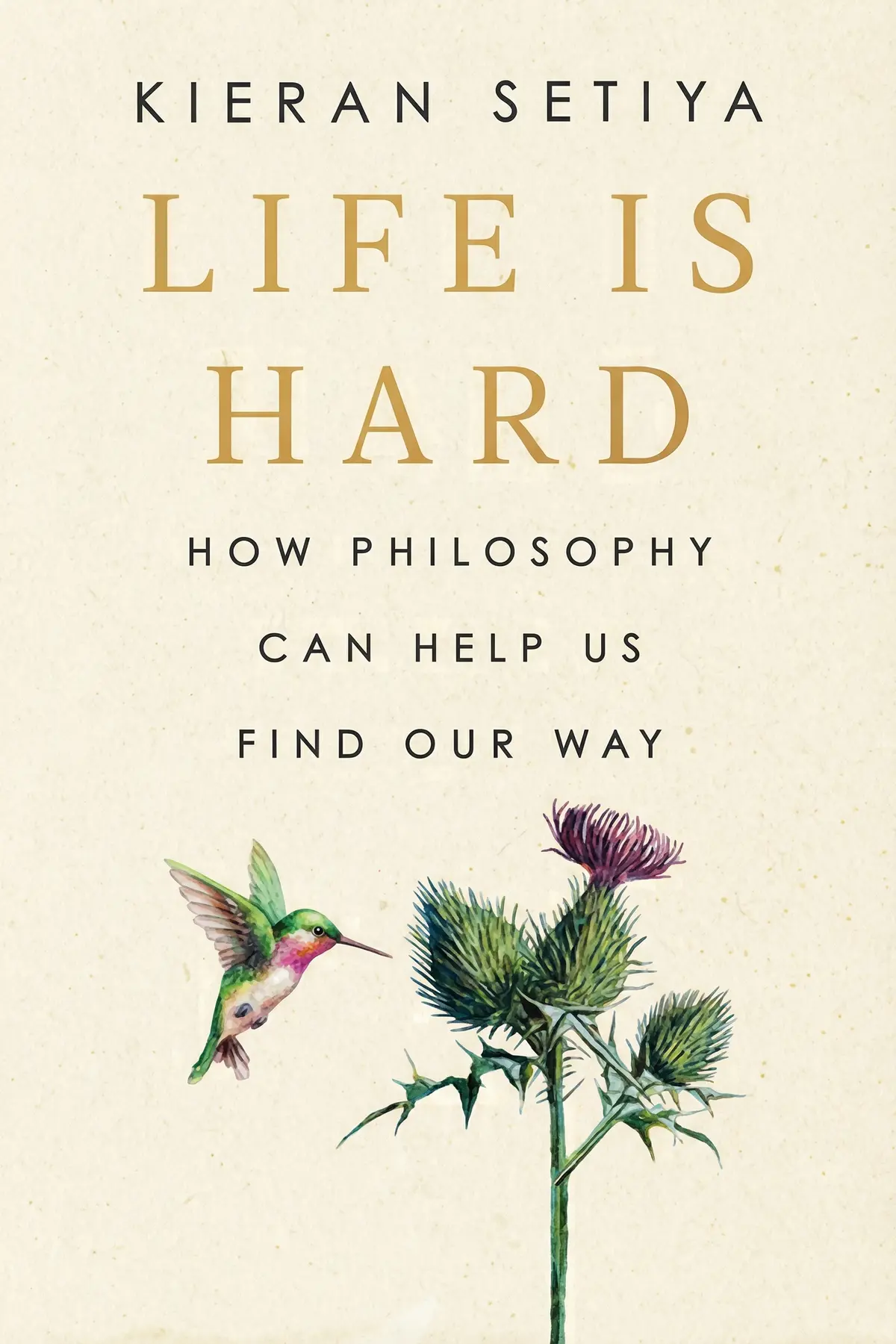
When life goes wrong, most advice points you toward your best life, and the gap between that picture and your real one only grows. In Life Is Hard, MIT philosopher Kieran Setiya argues that feeling happy and living well are different things, and that the second is the one worth aiming for. Someone could feel content inside a pleasant simulation without truly living. Living well, in his account, means coping with real hardship while still finding enough in your life that is worth wanting.
After twenty years of teaching moral philosophy, Setiya does not claim to cure the human condition. He believes philosophy can still lift some of its weight. He works through seven hardships: pain, loneliness, grief, failure, injustice, the worry that life is absurd, and the struggle to keep hoping. In each, an honest look at the trouble reveals a good bound up with it. The practical yield includes a way to reach out when you feel unseen, a fairer way to judge a bad year, and a kind of hope that leads somewhere.
1 min 43 sec
A moment of envy toward strangers on the street set this book in motion. It led Setiya to question a habit of thought as old as Plato, one that makes every bad day feel heavier than it needs to.
1 min 54 sec
A night on a bathroom floor in Pittsburgh began thirteen years of pain with no cure. What Setiya built during those years, and what the pain taught him, changes how a long illness can be carried.
1 min 47 sec
Aristotle and Kant disagree about why we love our friends, and the winner explains why being alone hurts like an injury. It also points to a remedy that most lonely people go about the wrong way.
1 min 45 sec
If the loss that causes grief never goes away, something has to explain why mourning ever eases. A novel sold in a box and mourning customs from around the world help answer the puzzle.
2 min 01 sec
One home run in 1951 got a baseball player branded a failure. Setiya uses it, along with a word borrowed from linguistics, to show why the story you tell about your life may be setting you up to lose.
1 min 51 sec
Even committed activists feel they are never doing enough. Setiya asks what an ordinary person owes a deeply unfair world, and what to do with the guilt that refuses to go away.
2 min 07 sec
Suppose humans turned out to be food for aliens. Setiya uses that strange thought to ask whether life needs a grand meaning, and then rebuilds hope into something you can actually use.
1 min 04 sec
One reviewer read the book, written during the Covid-19 pandemic, as a tour of Pandora’s Box that saves hope for the last chapter. The image fits. Setiya never pretends the box is empty, and he never asks you to look away from what came out of it. His claim is that each trouble, faced squarely, arrives tied to something worth having: pain to compassion, loneliness to the dignity of other people, grief to love, failure to the processes that fill an ordinary day.
That gives you somewhere to start. When something goes wrong, put it into accurate words before you reach for comfort, as Murdoch would advise. When you feel unseen, give someone else your full attention and let the connection grow from there. Judge a hard season by the walks, meals and conversations you kept up, along with the goals you missed. And when the outcome you wanted is gone, hope for the next best one and act toward it.
Nothing here makes life easy. It makes a hard life one you can still live well.
Pain that will not go away, friends who drift, a death in the family, a career that stalls, news about the world that leaves you feeling helpless. Most self-help treats these as obstacles on the way to your best life. Kieran Setiya, a philosopher at MIT, starts from the view that the best is often out of reach, and that measuring yourself against an ideal mostly adds punishment to hardship. His alternative rests on a distinction between feeling happy and living well. Living well means responding to the world as it actually is, coping with its troubles while still finding enough worth wanting. Setiya draws on Aristotle, Kant, Iris Murdoch and Simone Weil, as well as novels, baseball, memoir and his own chronic pain. With them he works through seven hardships: infirmity, loneliness, grief, failure, injustice, absurdity and hope. Readers get new ways to describe their situation and tools to match. These include the difference between projects and processes, a clear starting point for real connection, a reason grief need not be cured, and a form of hope that keeps action possible.
People living with chronic pain, illness or loss who are tired of being told to cheer up.
Professionals who measure themselves against big goals and fear their life is falling behind.
Curious readers who want to see how philosophy, from Aristotle to Simone Weil, applies to ordinary trouble.
Kieran Setiya was born in Hull in the UK and teaches philosophy at MIT. His academic work covers ethics, epistemology and the philosophy of mind, and he is a co-editor of Philosophers' Imprint. He is also active in public philosophy. He hosts Five Questions, a podcast in which contemporary philosophers answer five questions about themselves, and his writing has appeared in the London Review of Books, the New York Times and Aeon. He is also the author of Midlife.
Kieran Setiya
Listeners find value in the book's sincere perspective, with one person sharing that the chapter on grief transformed their life. The material is praised for its accessibility; one listener remarks that it is primarily composed of excerpts from excellent sources. They appreciate the provided insights, with one individual highlighting the way it weaves together wisdom from the annals of philosophy.
Look, life is messy and often unfair, and Setiya is one of the few philosophers who says it out loud. This isn't a book about fixing your life; it's a book about living the life you actually have. The writing is accessible without being 'dumbed down,' which is a hard balance for an academic to strike. I found the insights into how we perceive our own failures to be life-changing. He manages to synthesize centuries of wisdom into something that feels urgent and relevant. It’s a beautiful, heartfelt piece of work that I’ll be recommending to everyone I know.
Show moreThis book found me at exactly the right moment. Dealing with personal loss is a lonely experience, but reading Setiya’s reflections on grief felt like sitting down with a very wise friend. He draws from so many great sources—Dostoevsky, Woolf, even film—to show that our suffering doesn't isolate us; it connects us to the human condition. It's a masterful blend of memoir and moral philosophy. While some readers might find his political leanings distracting, I felt they were a necessary part of acknowledging the external realities that make life hard. Truly a transformative read that provides comfort without being cloying.
Show moreThe chapter on grief alone makes this worth the price of admission. Setiya doesn't offer platitudes or tell you that 'everything happens for a reason,' which is incredibly refreshing. He treats the reader like an adult who knows that life can be genuinely terrible. I loved how he integrated literature and history into his arguments about chronic pain and adversity. The prose is direct and sincere, though I'll admit some of the political detours felt a bit out of place given the intimate tone of the earlier chapters. Still, it’s a rare book that feels both intellectually rigorous and deeply empathetic.
Show moreFinally got around to finishing this, and I’m glad I did. It’s not your typical 'stay positive' manual. Setiya argues that being happy isn't the same as living well, which is a distinction we often ignore in our productivity-obsessed culture. His vulnerability about his own physical struggles makes the philosophy feel less like an abstract puzzle and more like a lifeline. I did find the pacing a bit uneven toward the end, especially the sections on climate change. Truth is, those parts felt a bit more like a checklist of modern anxieties than a cohesive philosophical conclusion. Nonetheless, it’s a thoughtful, grounded guide.
Show moreAs someone who usually avoids the self-help aisle, I found this surprisingly palatable. Setiya doesn’t pretend he has all the answers, but he offers a lucid companionship through the dark parts of life. The way he weaves together the thoughts of Iris Murdoch and Simone Weil is masterly. It’s a book for people who find the 'good vibes only' movement repulsive. My only real gripe is that he sometimes holds back right when the discussion gets interesting, likely to keep it accessible for a mainstream audience. I would have loved to see him dive deeper into the technical ethics.
Show moreNot what I expected, but in a good way. This book is a meditation on how to keep your feet when the storm is raging. Setiya moves through topics like infirmity, loneliness, and failure with a quiet grace. He emphasizes the importance of relationships and service over the pursuit of some individualistic perfection. It's honest, occasionally bleak, but ultimately consoling. I found the discussion of 'telic' versus 'atelic' activities from his previous work making a welcome return here. A few chapters felt a bit like they were preaching to the choir, but the core message is deeply resonant.
Show morePicked this up because the subtitle promised a way through the mess of existence. Setiya has a companionable tone, and his background with chronic pain gives him real credibility. However, the book feels a bit like a 'Philosophy 101' highlights reel at times. He skips over major objections to his points, preferring to stay on the surface of complex issues like hope and justice. While the chapters on failure and loss were insightful, the pivot to global crises felt rushed and disconnected from the personal narrative. It's a decent read for a Sunday afternoon, though it won't necessarily solve your existential dread.
Show moreAfter hearing so much about this, I finally sat down with it. It’s a strange mix of profound insights and irritating jargon. I really resonated with the idea that we should stop chasing 'ideal' happiness and just focus on living decently. That’s a powerful, grounding message. But the writing style is hit-or-miss—sometimes eloquent, other times surprisingly monotonous. The author draws on Virginia Woolf and Aristotle, which is great, but he often argues with them in a way that feels a bit dismissive. It’s worth a look if you’re into moral philosophy, but keep your expectations in check regarding the self-help aspect.
Show moreIs it possible for a book about the hardest parts of life to be... boring? I found myself nodding off as the author drifted into long-winded tangents that frequently missed the point. He tries to bridge the gap between high-level theory and memoir, but it feels clunky. One moment we're talking about his chronic pain, and the next we're lost in some esoteric academic debate. The prose is quite dry, almost like lecture notes that haven't been edited for a general audience. I did appreciate the bits about Simone Weil, but they were buried under layers of lackluster presentation. It simply didn't hit the mark for me.
Show moreStarted with the Wittgenstein quote and high hopes, but things went downhill fast. I wanted philosophy, not a repetitive lecture on climate change and radical politics. The author uses terms like 'marginalized people' and 'fascism' so loosely it loses all meaning. To be fair, Setiya is an MIT professor, but the writing feels like a collection of campus slogans rather than timeless wisdom. If I wanted to read Karl Marx or Ta-Nehisi Coates, I would have bought their books instead. It’s a shame because the opening promise of lifting the weight of suffering was exactly what I needed. Instead, I got a monotonous drone about how capitalism is the root of all evil. It's pretentious and narrow-minded. Pass.
Show moreSetiya argues that feeling happy and living well are different, and that living well means responding to the world as it is: coping with hardship while still finding enough worth wanting. Instead of chasing an ideal life, he examines seven hardships, from chronic pain and grief to injustice and hope. He shows how looking at each one honestly reveals goods tied to it, such as compassion, love and a richer view of success.
Setiya warns against seeing your life as a single quest that gets judged a success or failure at the end. He separates telic activities, which aim at a finish line, from atelic ones like walking, which have no end point. Valuing processes such as running, meals and time with loved ones means less of life can fail. He still insists results matter, as when a doctor saves a life.
Following Kant, Setiya holds that every person has unconditional worth, which Kant called dignity, and loneliness hurts because it cuts us off from that worth. His advice is to stop searching for people with shared interests and to pay close attention to others and acknowledge them. Small acts count: greeting a neighbor, holding a door, helping at a soup kitchen. Even if they never produce a close friend, they reconnect you with the world.
Following Aquinas, he shifts the question from whether to hope to what to hope for. Hope can become wishful thinking or passivity, he admits, yet action is impossible without it. Hoping well means being realistic about the odds and keeping your ability to act. On climate change, if 1.5 degrees of warming is out of reach, he suggests hoping for 1.6, then 1.7, and following each hope with action.
It suits anyone facing pain, illness, loneliness, bereavement or a sense of falling behind, especially readers tired of advice to live their best life. It also works for those curious how philosophy, from Aristotle and Kant to Iris Murdoch and Simone Weil, applies to ordinary trouble. The New York Times Book Review likened reading it to a conversation with a thoughtful friend who makes you feel better without urging you to cheer up.


William B. Irvine

Nigel Warburton

John Rawls
Colin Ward
AUDIO SUMMARY AVAILABLE
Get the key ideas from Life Is Hard by Kieran Setiya, plus 5,000+ more nonfiction titles.









