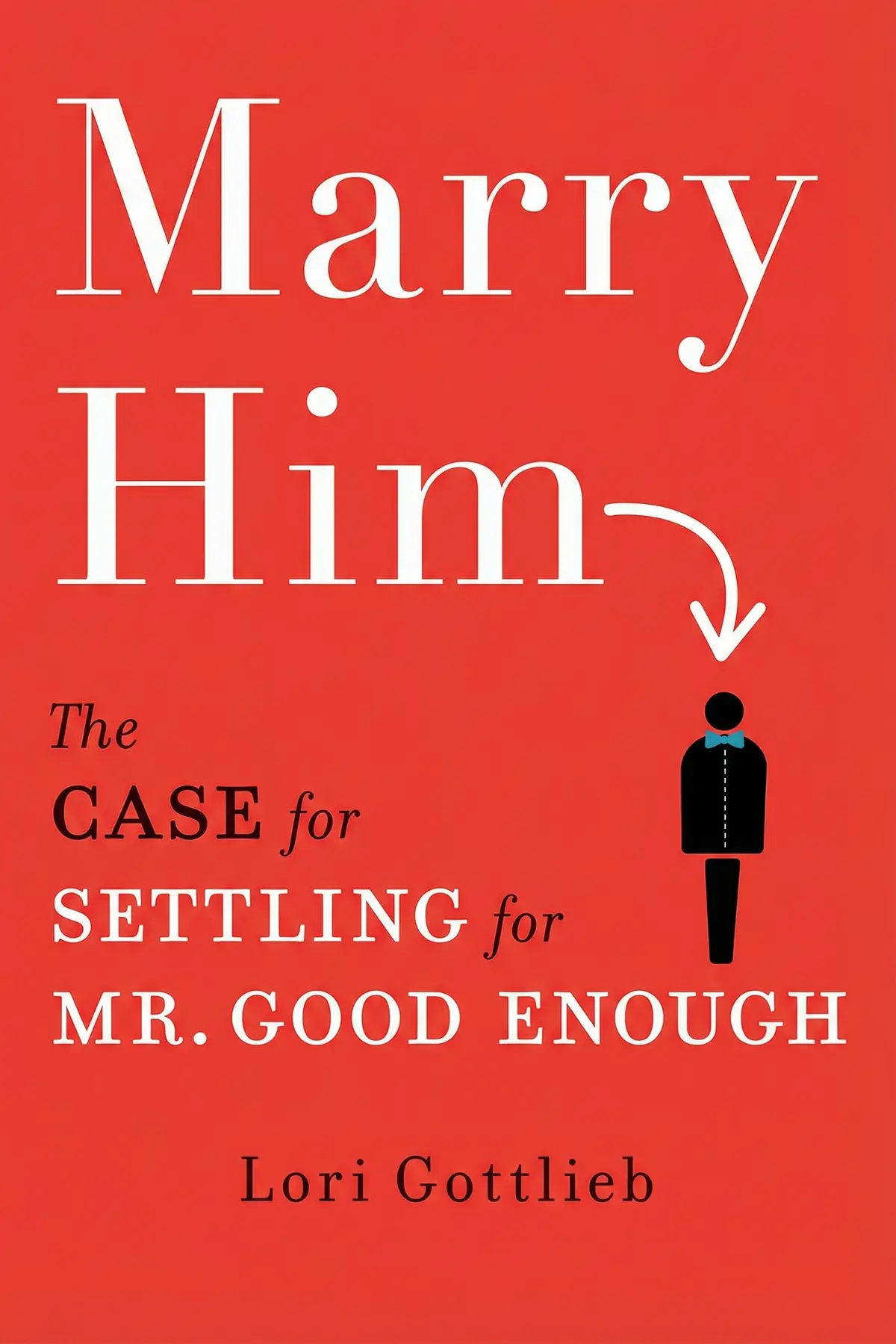
Marry Him: The Case for Settling for Mr. Good Enough
Lori Gottlieb
 English
 ไทย
A psychotherapist who became a patient herself shows why the problems we complain about usually hide deeper fears, and how naming the feelings behind them opens the way to change.
55 sec
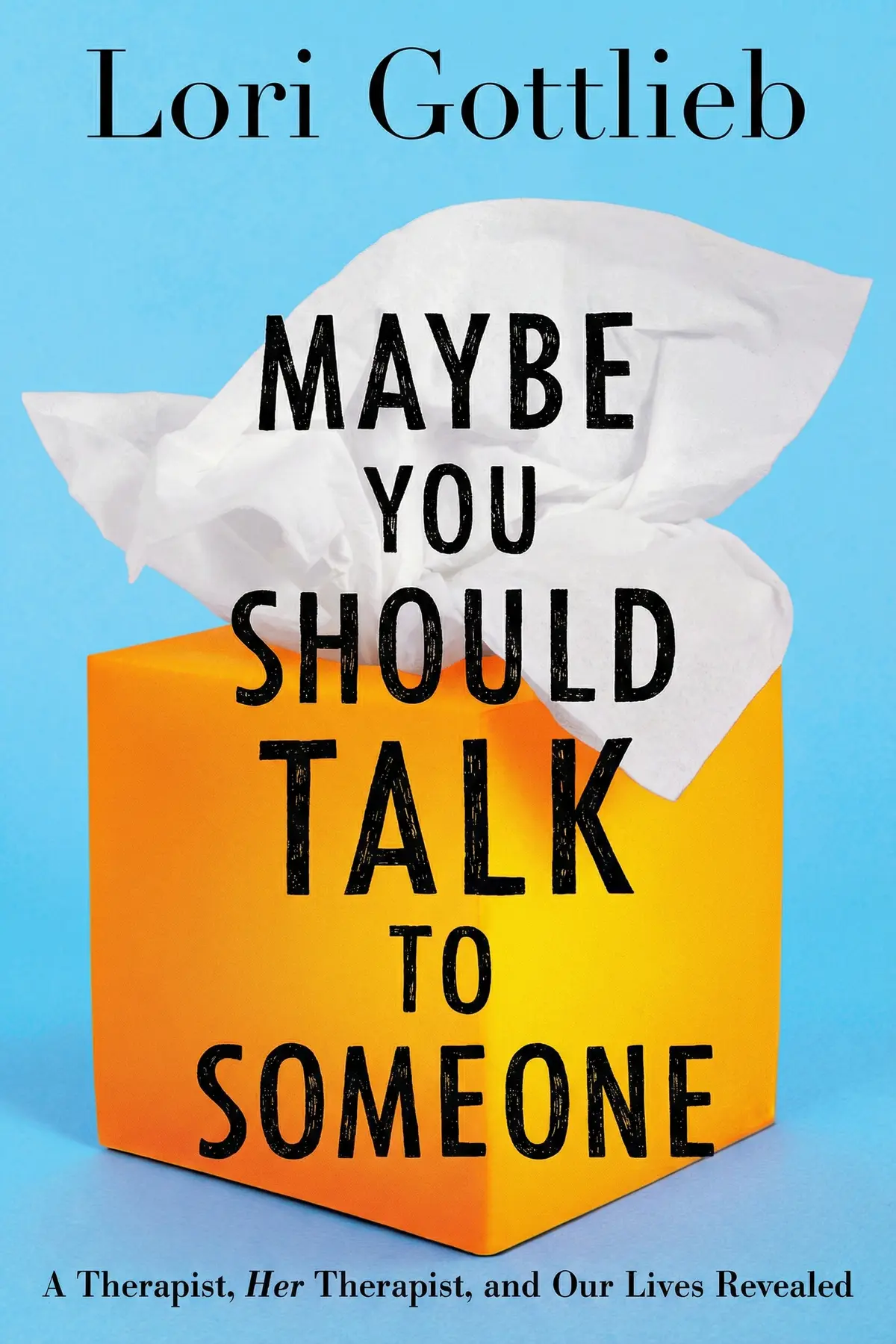
If a setback has hit you harder than it should, the cause is usually somewhere you are not looking. In Maybe You Should Talk To Someone, psychotherapist and writer Lori Gottlieb argues that the complaint people bring to therapy is rarely the real trouble, and she shows it from both chairs: as a therapist, and as a patient after a breakup sent her to a colleague.
Beneath most complaints she finds a few deep fears: of death, of being alone, of a life without meaning, and of being trapped. Her case is that we stay stuck inside easy stories and get free when we finally feel what those stories hide.
A grieving screenwriter, a lonely woman of 69, a young professor facing cancer and a 25-year-old drawn to the wrong men show how, with their details changed to protect them. Their stories offer a way to hear your own complaints more honestly.
1 min 43 sec
A man walks into therapy asking for better sleep and a place to complain about his coworkers. Months pass before he mentions the thing that actually brought him there, and it changes everything about what help means.
1 min 44 sec
A therapist in crisis spends her first sessions building a case against her ex, hoping her own therapist will agree. He refuses, and a phrase she barely notices saying reveals what she is really mourning.
1 min 50 sec
One patient booked pedicures for a reason that had nothing to do with her feet. Another had a wife, two children and a full office, yet felt the same ache. Gottlieb explains what links them.
1 min 41 sec
A large book advance sounds like good news. For Gottlieb it became a source of dread she could not explain, and facing it meant risking the work that gave her life its shape.
1 min 41 sec
Some traps can be escaped at a price, and some cannot be escaped at all. A professor told she had a few years left found a third option, and it led her somewhere nobody expected.
1 min 40 sec
A young woman swears off drinking and bad boyfriends, then returns to both again and again. The pull behind her choices began long before she met any of those men.
1 min 45 sec
A patient describes good news and a terrible assault in exactly the same flat voice. Her eventual breakthrough, and those of the others, came from a moment most of us try hard to avoid.
1 min 12 sec
Gottlieb’s cases share one shape. Someone arrives with a neat explanation: a cruel ex, idiot colleagues, bad luck with men. The explanation does its job by keeping a harder feeling out of sight, and that feeling is almost always old and large, whether grief, mortality, loneliness, emptiness or the sense of being trapped. Therapy, in her telling, works by giving that feeling room to be said.
Her own story makes the point sharpest. A therapist who knew every defense still spent her first sessions trying to win an argument about her ex, until one stray phrase about her life being half over gave her away.
You do not need a crisis to use what she learned. When a complaint keeps coming back, treat it as a cover and ask what it might be shielding. Listen for the throwaway remarks you make while venting. Notice when an unhealthy choice feels strangely like home. And when a feeling rises, let it out in words, a letter or tears instead of swallowing it.
The story you walk in with is rarely the one that frees you. The one underneath usually is.
When life goes wrong, most of us arrive with a ready explanation: a cruel ex, impossible coworkers, plain bad luck. Lori Gottlieb, a psychotherapist and writer, argues that these explanations are usually the problem in disguise. They keep a harder truth out of sight. She makes the case from both sides of the room. After a sudden breakup sent her into anxiety and depression, she began seeing a therapist of her own, and she watched herself use the same defenses her patients used. Alongside her own story she follows four patients: a television writer hiding a devastating loss, a woman of 69 who had been nearly cut off from others for about a decade, a young professor facing terminal cancer, and a 25-year-old who kept returning to drink and to the wrong men. Through them Gottlieb traces four fears that often sit under everyday complaints: death, isolation, meaninglessness and the sense of being trapped. She shows why people resist change even when they hate where they are, and why breakthroughs tend to come when buried emotions finally get out. Readers gain a clearer way to hear their own complaints and to find what lies beneath them.
People hit harder than expected by a breakup, a loss or a stalled project, who sense the cause runs deeper.
Anyone considering therapy who wants to know what actually happens in the room.
Professionals who keep repeating the same unhealthy choice and want to understand the pull behind it.
Lori Gottlieb is an American psychotherapist and writer, born in Los Angeles in 1966, and a New York Times bestselling author. She writes the weekly Dear Therapist column for The Atlantic and co-hosts the podcast Dear Therapists. Her 2019 TED Talk ranked among the ten most watched of that year. Her other books include Marry Him, her third.
Lori Gottlieb

Listeners find this work both gripping and accessible, remarking that it unfolds like an engaging dramatic film. They enjoy the humor, particularly the amusing look into the internal logic of therapists, and cherish the emotional resonance, calling it touching and full of life and love. Listeners praise the clear writing and relatable narrative style, with one listener observing that it reads like a novel. The book provides significant perspectives that help audiences grasp their own psychological makeup while delivering a wealth of truth regarding human nature.
Picked this up during a particularly rough month, and it felt like a warm hug from someone who actually gets it. Gottlieb’s dual perspective—both as a therapist and a patient—is what makes this work so well. It’s incredibly rare to find a book that offers such profound emotional depth while remaining light enough to read in a single weekend. I found myself highlighting passages about how we use anger to mask sadness, which was a real lightbulb moment for me. The way she describes her own sessions with Wendell is both hilarious and humbling. It reminded me that even the 'experts' are just messy humans trying to navigate their own crises. While the book is quite long, every page feels necessary for the emotional payoff at the end. It’s a beautiful exploration of what it means to be human and the universal need for connection. Truly life-changing stuff here.
Show moreEver wonder what’s actually going on behind your therapist’s blank expression? This book pulls back the curtain in a way that is both startling and comforting. Gottlieb is a masterful storyteller, weaving the threads of her patients' lives together with her own post-breakup meltdown. I was especially captivated by the character of John, the high-powered TV producer who starts off as totally insufferable but ends up being one of the most moving figures in the book. The writing is snappy and conversational, making complex psychological concepts feel totally accessible. Look, I’ve read my share of dry self-help books, but this isn't that. It’s an immersive drama that just happens to teach you a lot about your own psyche. It’s heartwarming, witty, and filled with a wealth of truth about human nature. I haven't been this invested in a non-fiction book in years. If you've ever been in therapy or even just thought about it, you need this.
Show moreThis book reads more like a fast-paced medical drama than a standard memoir, which made it impossible to put down. I was hooked from the first chapter when Lori’s boyfriend blindsides her with a breakup. Her reaction is so relatable—stalking him on social media and spiraling into a total crisis—that it immediately humanizes her. As she seeks out her own therapist, Wendell, we get to see the therapy process from the other side of the couch. The storytelling is seamless. She manages to balance humor with intense emotional stakes without ever feeling forced or saccharine. It’s a rare book that can make you laugh out loud on one page and sob on the next. I finished it feeling like I had just gone through a therapeutic process myself. It provides such a compassionate look at our shared struggles. Highly recommended for anyone who loves deep character studies and a healthy dose of wit.
Show moreThe stories of John, the abrasive TV producer, and Julie, the young woman facing terminal cancer, will stay with me for a very long time. Lori Gottlieb has a gift for capturing the subtle shifts in the human heart that happen during a therapy session. This book isn't just a memoir; it's a profound meditation on life, loss, and the courage it takes to change. I loved how she wasn't afraid to look 'bad' in her own story—showing her petty thoughts and her irrational grief over her breakup. It made the advice she gave to her patients feel more earned. The humor is sharp and well-timed, providing much-needed relief during the heavier chapters. It’s one of those rare books that makes you want to be a better, more compassionate person. I’ve already recommended it to three people this week. It truly is a masterpiece of relatable storytelling and emotional depth.
Show moreWow, the emotional payoff in the final few chapters hit me like a ton of bricks. I listened to the audiobook, and I think that added an extra layer of intimacy to the experience; it felt like Lori was speaking directly to me. The way she connects her own breakthrough with the progress of her patients is nothing short of brilliant. It highlights the idea that we are all mirrors for one another. I learned so much about the 'prisons' we build for ourselves and the way we hold the keys without even realizing it. The book manages to be incredibly educational without ever feeling like a lecture. It's filled with life, love, and a deep respect for the therapeutic process. I haven't cried this much over a book in a long time, but they were the good kind of tears. This is essential reading for everyone.
Show moreAfter hearing so many people rave about this on various podcasts, I finally took the plunge and I’m so glad I did. It’s one of the most accessible books on psychology I’ve ever encountered. Gottlieb writes with a clarity and wit that makes the pages fly by. You really get a sense of the deep care she has for her patients, even the ones she initially finds difficult to like. It’s a heartwarming look at the relationships that save us. I think the biggest takeaway for me was the idea that we often choose the 'certainty of misery over the misery of uncertainty.' That’s a powerful insight. The book is long, yes, but it’s so engaging that it never feels like a chore. It’s like watching a high-quality drama series that actually makes you smarter. A definitive five stars for its relatability and profound wisdom.
Show moreFinally got around to reading this bestseller, and while it mostly lived up to the massive hype, I did have a few minor gripes. The good stuff first: the patient stories are absolutely gripping. Julie’s journey with her terminal diagnosis broke my heart, and I found myself rooting for her like she was a personal friend. Gottlieb has a knack for humor that keeps the heavier subjects from feeling too oppressive. However, to be fair, the book is quite long-winded in places. There were times when the author's own narrative felt a bit self-indulgent compared to the high stakes of her patients' lives. I also occasionally felt like the dialogue was a bit too 'perfect' to be real, reading more like a screenplay than actual therapy sessions. Still, the insights into human behavior are top-notch. It’s a solid 4-star read that offers a unique, albeit slightly polished, look into the world of psychotherapy.
Show moreAs someone who has spent years on 'the couch,' I appreciated the way Gottlieb demystifies the therapeutic process without stripping away its magic. The book is incredibly easy to read, almost like a novel, and it does a fantastic job of normalizing the 'messiness' of mental health. My favorite parts were the interactions between Lori and Wendell. The way she tries to manipulate him, and the way he calls her out on her nonsense, is both funny and enlightening. It shows that even therapists have blind spots. I did think some of the patient conclusions felt a little too 'wrapped up in a bow' for real life, which is messy and rarely offers such clean endings. Nevertheless, the emotional core is there. It’s a beautiful reminder that we are all works in progress. A very solid read for the 'therapy generation' or anyone curious about the human condition.
Show moreTo be fair, I went into this expecting a dry self-help manual and ended up laughing out loud at Lori's own messy life. The truth is, it's way more of an immersive drama than a 'how-to' guide. The book is structured beautifully, jumping between her own therapy and the cases of her four main patients. While I occasionally found the author's 'therapist-speak' a bit repetitive, the actual narratives were so compelling that I didn't mind. I especially appreciated her honesty about the 'internet stalking' she did to her own therapist—it made her feel so much more human. Some sections felt a little long, but the wealth of truth about human nature kept me turning the pages. It’s a great look into how therapists think and the hidden struggles we all carry. Not perfect, but definitely worth the time. It’s a heartwarming, relatable, and deeply insightful journey.
Show moreFrankly, I struggled with the ethical ambiguity of the patient 'composites' described in this book. While the writing is undeniably polished and engaging, I couldn't shake the feeling that I was reading fiction masquerading as truth. If you’re looking for a serious look at psychotherapy, this might not be it. The dialogues feel far too scripted—almost like the TV shows Gottlieb used to produce. I found the author's voice to be somewhat self-centered, and her constant reminders of her 'interesting' career path in Hollywood got old fast. Also, for a book about deep emotional work, it felt weirdly superficial in how it handled complex issues like race or socio-economic privilege. It’s essentially a high-gloss Hollywood version of therapy. It’s entertaining enough if you want a light read, but as a professional in the field, I found it more 'scammy' than insightful. I'd stick to the actual classics of the genre instead.
Show moreLori Gottlieb argues that the problem people bring to therapy is rarely the real one. Beneath everyday complaints like insomnia or a painful breakup, she often finds deeper fears of death, isolation, meaninglessness and being trapped. People keep those fears hidden with simple stories and defenses, and they begin to change when they finally feel and express the emotions underneath. She shows this through her patients and through her own time as a patient.
In her late 40s, the man she planned to marry ended their two-year relationship because he did not want to live with her eight-year-old son. The breakup sent her into anxiety and depression, so she began seeing a therapist named Wendell. Over time it emerged that she was also grieving a lost future, fearing an undiagnosed illness and dreading a book she did not want to write.
Gottlieb sees four issues beneath many presenting problems: fear of death, fear of isolation, a loss of meaning and a lack of freedom. Each appears in her cases. Her own remark that her life was half over hinted at mortality, Rita had lived nearly alone for a decade, Gottlieb found her book project meaningless, and Julie, facing terminal cancer, felt trapped until she chose how to respond.
Treat a complaint that keeps returning as a possible cover for something older, and ask what it might be protecting you from. Listen for offhand remarks you make while venting, since they can reveal the real issue. Notice when an unhealthy pattern feels oddly familiar, as Charlotte’s attraction to unstable men did. Finally, express buried feelings rather than swallowing them, whether by talking, writing a letter or crying.

Barack Obama


Masaji Ishikawa

Ben Macintyre

Steven C. Hayes



James Shapiro


AUDIO SUMMARY AVAILABLE
Get the key ideas from Maybe You Should Talk To Someone by Lori Gottlieb, plus 5,000+ more nonfiction titles.