

14 min 21 sec
Available in: English
Mastering Homebrew: The Complete Guide to Brewing Delicious Beer
By Randy Mosher
A hands-on guide to making beer at home: choosing malt, hops and water, brewing a first no-frills batch, keeping yeast healthy, tasting like a connoisseur and designing a recipe of your own.
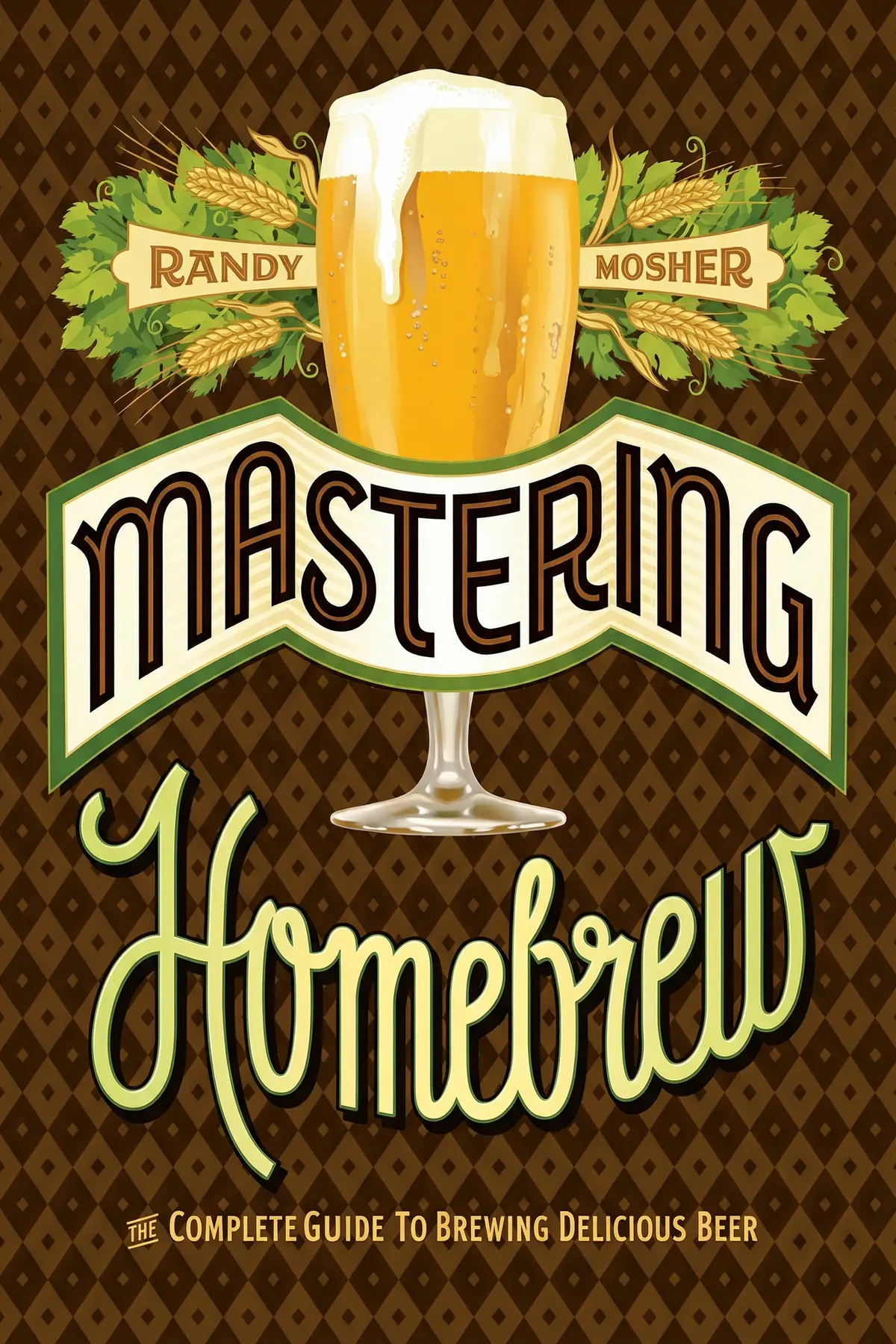
Table of Content
1. Introduction
57 sec
If you enjoy good beer but have only ever bought it, the distance between drinker and brewer is shorter than it looks. In Mastering Homebrew, Randy Mosher, who has served on the board of the American Homebrewers Association, makes the case that every beer comes from the same short chain of reactions, whether a monastery made it or a giant company did. Sugars and enzymes become a sweet liquid called wort, and yeast turns that wort into alcohol and bubbles.
Mosher’s message is that brewing is a little chemistry you can learn in a single batch. Once you have that, plus a clean kit and steady yeast, your own taste does the rest. Ahead are the three ingredients that shape flavor, a full starter recipe with real quantities, a way to keep yeast working for you, a method for tasting like an expert, and a route to sketching a beer of your own and brewing it again on purpose.
2. See the simple chemistry inside every beer
1 min 41 sec
Monks, multinationals and friends in a kitchen all brew differently, yet they follow the same rules. Those rules turn out to be short, and they leave plenty of room for the part no recipe can teach.
3. Choose the three ingredients that decide flavor
1 min 54 sec
Ten thousand years ago, farmers kept planting a barley that would have made terrible bread. Their odd choice says a lot about why ingredients, including one most beginners never think about, shape the beer in your glass.
4. Brew your first batch with a basic kit
2 min 14 sec
A first beer needs less gear and less skill than most people expect. The real danger hides somewhere unglamorous, and it ruins more homebrew than any mistake in the recipe itself.
5. Keep your yeast happy for cleaner flavor
2 min 05 sec
Homebrewing can feel lonely, with hours spent sanitizing tubes and capping bottles. Yet a busy partner shares every batch, and like any colleague it has moods, preferences and a strong say in how things turn out.
6. Judge any beer by its numbers and its taste
2 min 12 sec
A British brown ale can be weak, flat and barely fizzy, and its fans love it that way. Knowing why that is no flaw changes how you order at a bar and how you judge your own bottles.
7. Design a signature beer from one clear idea
2 min 02 sec
Great painters rarely work by numbers, and brewers do not have to either. The trouble is that a new beer has dozens of moving parts, and one careless spoonful can send a whole batch down the drain.
8. Conclusion
1 min 16 sec
Mosher’s book adds up to a reassuring picture of a craft that looks harder than it is. The same few reactions run under a monk’s tripel and a kitchen experiment. Malt sugars become wort, yeast turns wort into alcohol and bubbles, and the brewer’s real work is giving that living partner clean equipment and a steady home. Everything beyond that, the hops, the styles, the pinch of lavender, is taste, and taste can be trained.
The way in is small. Buy filtered water, pale malt extract, a packet of dry ale yeast and a little hops, and brew the plain starter batch before changing anything. Sterilize every piece of equipment before and after use, since dirty gear spoils more homebrew than any recipe error. When you open the bottles a month later, smell before you sip, and judge the beer against what it was meant to be. Then start a notebook for the beer you imagine next, with every measurement written down.
Early farmers chose a barley that made poor bread because it made good beer. Your first choice as a brewer is just as plain: a clean pot, and the patience to let the yeast do its work.
About this book
What is this book about?
Plenty of people love good beer, but few imagine they could make it. Randy Mosher argues that the gap is small. Every beer, whether it comes from a monastery, a multinational or a group of friends in a kitchen, follows the same basic process. Sugars and enzymes become a sweet base called wort, and yeast ferments it into alcohol and carbonation. Mosher treats brewing as part science and part art. He explains the three core ingredients and why even the water matters. He gives a starter recipe with real quantities and a month-long timeline, and he describes yeast as a living coworker with preferences about strain and temperature. Readers also learn to read a beer by its numbers and by its flavors, and to tell a weak British brown ale apart from a strong Belgian tripel. The promise is practical. Brew one plain batch, sterilize everything and keep fermentation steady. Then learn to taste carefully and record every change, so that the beer you imagine can be brewed, and brewed again.
Book Information
Who it's for
New to homebrewing
Beer lovers who have only ever bought their beer and want to brew a first batch at home.
Early batches tasting off
New homebrewers whose batches taste off and who need clear rules on cleaning, yeast and temperature.
Ready to design recipes
Hobbyists ready to move past kits and design a recipe they can repeat.
About the Author
Randy Mosher
Randy Mosher trained in graphic design and became an advertising creative director, with much of his work devoted to food and drink, especially craft beer. He has sat on the boards of the American Homebrewers Association and the Chicago Beer Society. His books include The Brewer's Companion, Beer for All Seasons and Tasting Beer. He tries to cover ground other books have missed, in a clear and encouraging voice, and he draws the basic visuals for his books himself.
Ratings & Reviews
Ratings at a glance
What people think
Listeners find this homebrewing guide thorough and well-composed, commending its sophisticated subject matter and graphical layout. Furthermore, the work remains accessible to beginners as well; one listener notes that it covers all brewing steps, while another highlights its detailed recipe formulation. Listeners also appreciate the text's flow, with one listener describing it as thought-provoking.
Top reviews
Thawee
Ever wonder why some beer books feel like a chemistry lab manual while others are just a list of recipes? Randy Mosher manages to find this incredible middle ground where the art of brewing feels just as important as the science behind the yeast. The visual presentation here is absolutely stunning; it’s the kind of book you want to leave on your coffee table even if you aren't currently brewing a batch. I found the section on recipe formulation to be particularly thought-provoking because it pushes you to think about flavor profiles rather than just following a set of instructions. Truth is, this book changed the way I look at ingredients like malts and adjuncts. It is thick and a bit dense in spots, but the inspiration it provides is worth every single page.
Show moreJob
Picked this up on a whim and I’m honestly blown away by how much ground it covers without feeling disjointed. Most brewing books focus on the 'how,' but Mosher spends a lot of time explaining the 'why' behind every ingredient and step in the process. The way he discusses the history of beer styles makes you feel like you’re part of a long tradition rather than just someone playing with a boiling pot in the kitchen. Not gonna lie, the yeast flavor chemicals chart looked like gibberish to me at first, but after a second read, it really helped me troubleshoot a batch that tasted off. This is a must-have for anyone looking to level up their hobby into a true craft. It’s inspiring, technical, and visually gorgeous.
Show moreTod
Mastering homebrewing requires a deep dive into the science of yeast and sugars, and Mosher delivers that in spades. I’ve read a few other guides, but none of them managed to weave the chemistry of brewing into such an exciting narrative. You can tell the author truly loves the craft, and that enthusiasm is contagious from the very first chapter. The yeast characteristics tables and carbonation charts have become my go-to references whenever I’m bottling a new style. It’s a dense book, but the way it’s broken up into logical sections makes it easy to digest in small chunks before bed. Truly an amazing overview that handles complex topics with a level of grace and humor you don't often see in technical manuals.
Show moreWichai
Finally got around to reading this cover to cover, and it’s easily the most beautiful homebrewing book I own. The illustrations and tables are not just decorative; they are functional tools that simplify complex concepts like water minerals and hop bitterness. I especially loved the section on adjuncts and sugars because it opened up a whole new world of possibilities for my winter stouts. Personally, I think this is the perfect gift for a homebrewer who has the basics down but wants to start creating their own signature recipes. It’s technical without being dry and informative without being boring. If I were to buy only one book on the subject, this would definitely be the one I’d recommend to friends.
Show moreNarut
The chapter on coming up with your own recipe is worth the price of admission alone. For someone like me who has been brewing for a couple of years and wants to move past 'kit' brewing, Mosher provides the perfect roadmap for creative expression. I particularly appreciated the malt flavor graphics and the detailed hop profiles that help you visualize the finished product before you even heat up your strike water. To be fair, the book can get a little wordy and a few sections felt like they could have been trimmed down without losing the core message. However, the sheer amount of technical information regarding water chemistry and yeast management makes it a necessary addition to any serious brewer's library.
Show moreSofia
This book is an absolute beast when it comes to technical data and detailed charts. I have been brewing for years, yet I still found new insights into malt strategies and mineral details that I had never considered before. Mosher’s writing style is definitely more narrative than your average manual, which makes for an engaging read even if it does slow down the pacing a bit. Frankly, I think this serves better as a reference guide than a cover-to-cover read because some of the chemistry can get pretty heavy. The instructions for yeast starters were particularly clear and helped me improve my fermentation consistency almost immediately. It’s a solid resource for the wealth of information, even if it feels a little encyclopedic at times.
Show moreGiulia
After hearing so much about Mastering Homebrew, I finally sat down with a copy to see if it lived up to the hype. What surprised me most wasn't the technical info, but the focus on brewing as a way to build community and express yourself artistically. Mosher encourages you to look beyond the numbers and really taste what you're creating, which is a refreshing change of pace from the more math-heavy books out there. The flavor profiles for herbs and spices were a highlight for me as I love experimenting with weird ingredients in my saisons. My only real gripe is that the layout can occasionally feel a bit cluttered with all the sidebars and graphics. Still, it’s a fantastic resource for those who want to understand the soul of beer.
Show moreDylan
Look, if you want a book that just tells you 'add X at 60 minutes,' this might not be the one for you. Randy Mosher’s approach is far more holistic and comprehensive, focusing on the sensory experience of beer just as much as the brewing mechanics. He does a great job of explaining the various techniques for recipe formulation, which has always been a weak point in my own brewing process. I found the history of beer timeline to be a fascinating addition that adds a lot of context to why we brew certain styles the way we do today. To be fair, it is a very long book and the narrative can be a little self-indulgent in certain chapters. However, the quality of the visual aids and the depth of the ingredient profiles make it worth the shelf space.
Show moreTern
As someone who is relatively new to the hobby, I found this to be a bit of a challenge at first. It is very technical and dives deep into areas like yeast flavor chemicals that I wasn't quite ready for. That being said, it is also incredibly informative and provides a level of detail that I know I will appreciate as I gain more experience. The malt profiles and yeast starter instructions are exceptionally well-written and helped me feel more confident during my last brew day. Got to say, the book’s pacing is a bit slow in the beginning, but once you get into the meat of the ingredient chapters, it really takes off. It’s a great resource for the shelf, even if you’re just using it as a dictionary for now.
Show moreWaree
Not what I expected given the rave reviews from my local homebrew club. While there is no denying that Mosher is a genius when it comes to the history and culture of beer, this book reads a bit too much like a textbook for my personal taste. Some of the narrative sections wander quite far off the path, and I found myself flipping through pages of text just to find the actual brewing process. On the plus side, the charts for hops, malts, and yeast are incredibly helpful and I find myself referencing them constantly during my brew days. If you are a total beginner, you might find the technical depth a bit overwhelming compared to something like Papazian’s book. It’s an okay resource, but it could have been half the length.
Show moreQuestions about this book
What is the main idea of Mastering Homebrew by Randy Mosher?
Mosher argues that brewing is both a science and an art. Every beer follows the same short process: sugars and enzymes form a sweet base called wort, and yeast ferments it into alcohol and carbonation. Once a beginner masters that process with clean equipment and steady fermentation, creativity and a trained palate take over, letting them experiment and eventually design their own recipes.
What do I need to brew my first beer at home?
For the starter recipe, gather one packet of dry ale yeast, about 20 grams of hops, 25 liters of filtered water, and 2.4 kilograms of pale malt extract in dry form. A basic kit with a stainless steel pot, a glass carboy and food-grade tubing covers the equipment, and better kits add an airlock, a digital thermometer and a hydrometer. After about a month, the beer is ready to drink.
Why do homebrews go wrong?
Mosher names poor cleaning as the most common cause. If outside bacteria reach the wort, the carboy or the tubing, they disrupt fermentation and create odd tastes and smells. Unsteady temperatures also affect the result, since yeast prefers specific conditions, typically a little above 13 degrees Celsius for ales and about 4 degrees for lagers. Sterilize everything before and after each use, and ferment somewhere stable.
How do I create my own beer recipe?
Start with a clear picture of the beer you want: its taste, color and mood. Then study beers with a similar flavor profile to learn which malts and hops they use, such as Pilsner malt for bright, floral beers or caramelized malts for amber ones. Add spices and herbs sparingly, expect several attempts, and record every variable so you can repeat a good batch.
Readers also enjoyed








AUDIO SUMMARY AVAILABLE
Listen to Mastering Homebrew in 15 minutes
Get the key ideas from Mastering Homebrew by Randy Mosher, plus 5,000+ more nonfiction titles.
- 5,000+ titles
- Listen as much as you want
- 7-day free trial
- Cancel anytime









