

Ali: A Life
Jonathan Eig
 English
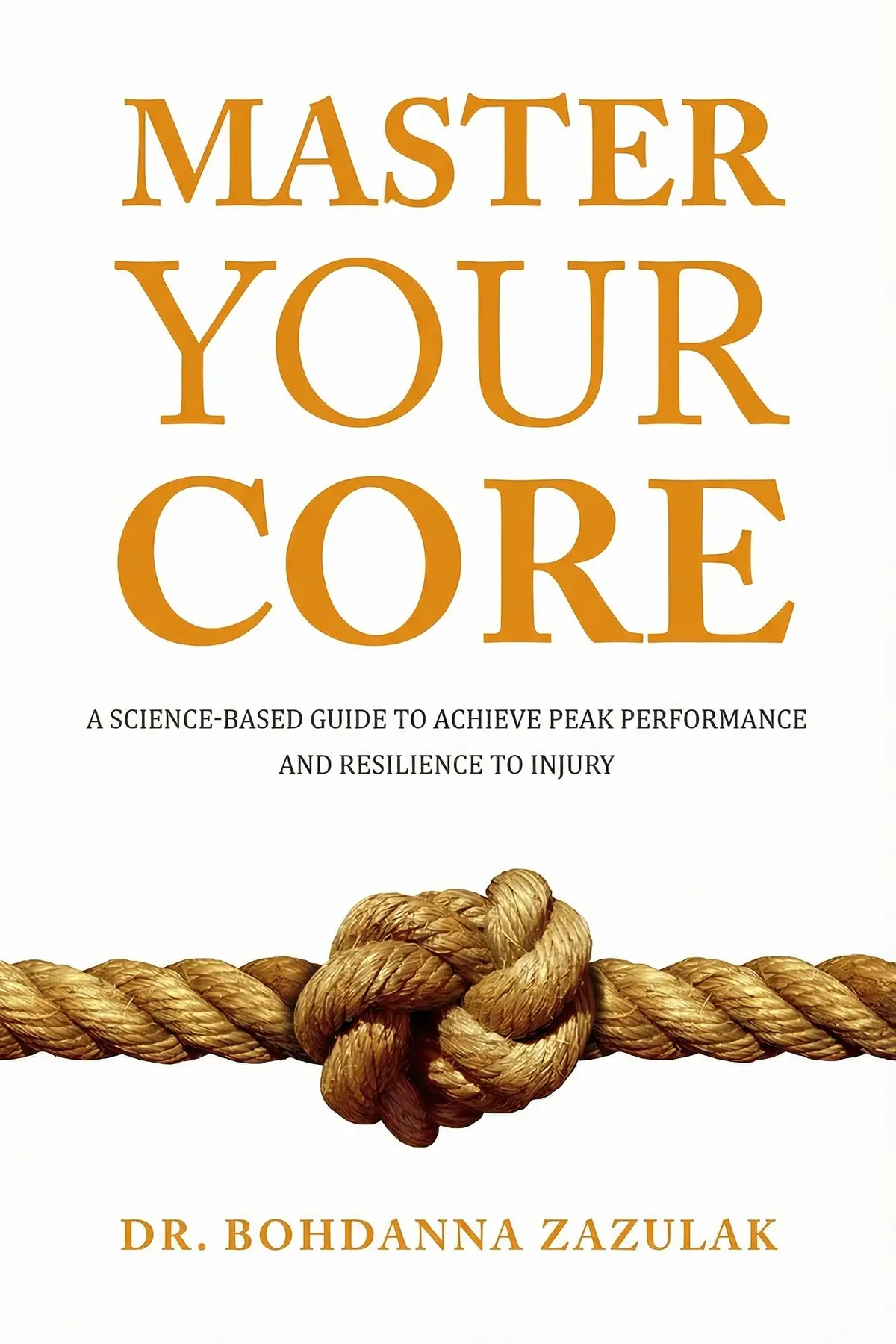
Shows why the core, from glutes to spine, drives every movement you make, and how breathing, posture, balance training, play and daily self-care make you steadier, stronger and less likely to get hurt.
54 sec
If your back aches after a day at a desk, or an old injury keeps coming back, the fix may lie in a part of the body you barely train. In Master Your Core, physical therapist Bohdanna Zazulak argues that the core reaches far beyond the abs and starts every major movement you make, so a weak center leaves shoulders, knees and backs exposed. One college pitcher she treated threw the fastest pitch of his life only after she added core work to his shoulder rehab.
Her central claim is that a stable core depends on breath, posture, attention and play as much as on muscle, and that training them together makes you harder to injure and quicker to heal. Along the way you get a posture check for the bathroom mirror, a breathing drill for the floor, a jump that trains balance and a set of daily habits she gathers under the name self-love.
2 min 04 sec
A star college pitcher kept tearing up his shoulder, and the usual shoulder rehab was not enough. The missing piece sat somewhere else entirely, and it changed what he could do on the mound.
2 min 09 sec
Standing up straight sounds like the obvious cure for a slumped back. Zazulak says it is the wrong instruction, and the alternative she offers changes how your body feels by the evening.
1 min 58 sec
The famous marble abs of Michelangelo’s David get all the admiration. The muscles that would actually keep a living David upright are hidden, and the way to reach them is surprisingly gentle.
2 min 06 sec
A woman with a shattered knee and a torn artery spent the ambulance ride doing something few people would think of. Months later she was back at work, and Zazulak explains why.
2 min 06 sec
Most serious sprains and tears happen faster than anyone can consciously react. Zazulak argues the body can still be taught to get out of the way in time, and the training looks a lot like having fun.
2 min 02 sec
Plenty of people blame their bad back or weak knees on their parents and give up trying. Zazulak thinks that excuse runs out much sooner than they assume, and her reasons reach well past the gym.
1 min 14 sec
Zazulak’s core is a meeting point. The spine and hips start every movement, the diaphragm ties breath to heartbeat, and the attention you bring to a stretch or a fall shapes how well the body holds together. Luke’s fastest pitch and Jessica’s swift return to work came from the same place: a center trained for steadiness and calm as well as strength.
She adds one last piece of advice, which is to take the training outside. She cites studies finding that people who exercise outdoors enjoy better moods, fewer health problems and longer lives than those who work out indoors. Uneven ground tests the core in new ways, and time in the open brings vitamin D and a sense of awe that, she argues, sharpen clarity and resilience.
The place to begin is ordinary. Stand up curved the next time you brush your teeth. Spend a few minutes face down, slowing your breath to under ten a minute. Hum out a long breath when stress rises, and choose one activity that feels like play, ideally on a trail, a hill or open water. The six-pack may arrive as well. The real prize is a body that steadies itself before a slip becomes an injury.
Most people think of the core as a set of abdominal muscles to be crunched into shape. Physical therapist Bohdanna Zazulak sees it differently. Her core includes the glutes, back muscles, hips, pelvis and spine, and it starts every major movement the body makes. When it is weak or unstable, shoulders, knees and backs pay the price. Drawing on her clinical work with athletes and injured patients, Zazulak argues that stability matters as much as strength, and that it depends on the mind as well as the muscles. Her Core BASE Guide moves through four stages: breathing, awareness, stability and empowerment. Along the way she explains why sitting all day weakens the back of the body, how the diaphragm connects breath to the heart, and why laughter and play count as training. Readers get concrete practices they can start at once: a way to stand that protects the spine, a face-down breathing drill, a humming breath for stress, a jump that trains balance, and daily habits around sleep, food and rest that she groups under the idea of self-love.
Desk workers with stiff necks, slumped shoulders and aching backs after long days of sitting.
Runners, climbers and weekend athletes who keep getting hurt or want to recover faster.
Anyone who has done crunches for years and wants a fuller, gentler way to train the core.
Bohdanna Zazulak, known as Billie, is a Doctor of Physical Therapy and an orthopedic certified specialist with about three decades of experience. She has held research and faculty positions at Yale New Haven Hospital and Yale University School of Medicine, and her research on core stability and injury prevention earned the Rose Award from the American Physical Therapy Association. Master Your Core won first place in the 2021 Royal Dragonfly Book Awards in Sports and Fitness and in the 2022 Next Generation Indie Book Awards in Health and Wellness.

Listeners find this resource provides a vast amount of knowledge and actionable advice, serving as a thorough manual for core stability. They value its well-rounded perspective and accessible material, with one listener highlighting the way it integrates both eastern and western philosophies. The work is praised for being highly readable and beneficial for cardiac health, as one listener noted that it lowered their resting heart rate.
Master Your Core isn't your average fitness manual that promises a shredded six-pack in thirty days. Instead, Dr. Zazulak offers a deeply researched, holistic perspective on what it actually means to have a functional center. The BASE framework—Breathing, Awareness, Stability, and Empowerment—provides a clear roadmap for anyone looking to move better and avoid injury. I was particularly impressed by the scientific connection between our emotional state and our physical core floor. The author’s background as a researcher at Yale really shines through in the way she explains complex biomechanics without making them feel inaccessible to a layperson. While it's definitely geared more toward women, the principles of diaphragmatic breathing and pelvic stability are universal. It’s rare to find a book that manages to blend high-level orthopedic science with such a compassionate, spiritual tone. This is now a permanent reference on my shelf for whenever I feel my posture or my stress levels starting to slip.
Show moreWow, the section on the vagus nerve and humming actually changed how I look at my morning routine. I never realized that simple vocal vibrations could stimulate such a significant part of the nervous system to promote relaxation. This book is a masterclass in how our internal organs and muscles work together as a single, unified powerhouse. Dr. Zazulak makes a compelling case for 'belly breathing' over the shallow chest breathing most of us do when we're stressed at work. I appreciate that she highlights how American work culture often sacrifices health for productivity, and she gives us permission to slow down. The illustrations for the fifty exercises are clear, and the focus on 'vagal tone' rather than just muscle tone is a game-changer. It’s a very comprehensive guide that bridges the gap between Eastern mindfulness and Western orthopedic medicine beautifully. Highly recommended for anyone who wants to feel more grounded.
Show moreEver wonder why typical crunches never seem to fix your posture or make you feel stronger? This book explains exactly why those 'six-pack' exercises might actually be leading you toward injury rather than away from it. Dr. Zazulak defines the core so much more broadly than I’ve ever seen before, including the heart-core connection and the diaphragm. The BASE method is easy to remember and implement, even if you only have a few minutes a day to practice. I’ve started doing the ujjayi-style breathing she describes, even though she doesn't use the traditional Sanskrit names for it. It has made a massive difference in my stability during my daily workouts and even during my commute. This isn't just a fitness book; it's a guide to living a more resilient life. If you want to understand the mechanics of your own body, this is the book you need to buy.
Show moreLook, I’ve done Pilates for years, but the CORE Base method adds a layer of depth I hadn't encountered before. Dr. Zazulak combines her personal Ukrainian heritage and her high-level medical training to create something truly unique. The book teaches you that the core is the center of your physical, emotional, and spiritual power, and it gives you the tools to harness it. I especially liked the 'Seeds of Wisdom' sections because they offer a quick summary of the chapter's most important takeaways. The focus on 'empowerment' through physical stability is such a strong message for women in particular. It’s a thick book with a lot of citations, which I appreciate because it proves she isn't just making these claims up. It has changed the way I stand, the way I breathe, and even the way I think about my own aging process. Truly an extraordinary piece of work.
Show moreThe chapter on breathing alone is worth the price of admission. Most of us go through life taking shallow, panicked breaths without realizing how much it messes with our core stability and our stress levels. Dr. Zazulak breaks down the mechanics of the diaphragm in a way that just makes sense. I loved the holistic approach—it’s not just about doing planks; it’s about awareness and how you carry yourself through the world. The exercises are simple enough to do at home but effective enough that you’ll feel the 'burn' almost immediately. It’s a comprehensive guide that everyone should read if they want to stay mobile and injury-free as they get older. The author's passion for the subject is infectious, and the scientific backing is rock solid. This is easily one of the best health books I've read in years.
Show moreAs someone who has struggled with chronic back pain for years, I found this guide to be incredibly refreshing. Dr. Zazulak moves the conversation away from aesthetic goals and focuses on 'peak performance' in everyday life, which is exactly what I needed. The section on the vagus nerve and its impact on heart rate variability was eye-opening and helped me understand why my core feels so tight when I’m anxious. My only real gripe is the layout of the exercises in the second half of the book. Having the illustrations at the end of the descriptions instead of right at the beginning made it a bit clunky to follow while I was actually trying to do the movements. However, the 'seeds of wisdom' at the end of each chapter are lovely, and the advice on exercising outdoors to boost Vitamin D and mood is very actionable. It’s a solid, well-rounded resource for long-term health.
Show moreAfter hearing so much about Dr. Zazulak’s research at Yale, I had high expectations for this book. It’s a very dense read, packed with information about the 35 muscles that make up the core, including the glutes and pelvic floor. I loved the discussion on how the U.S. women’s soccer team uses menstrual cycle tracking to optimize their training; it's about time that's normalized in fitness literature! The focus on 'core stability' as a way to prevent life-altering injuries like ACL tears is so important, especially for younger athletes. I did find some of the terminology a bit repetitive, and I wish there was a better index for quickly looking up specific stretches. Truth is, it’s more of a textbook than a light read, but the knowledge is invaluable. It’s definitely helped me become more aware of my posture while sitting at my desk all day.
Show morePicked this up on a whim because I was tired of feeling stiff after sitting at my desk all day. I wasn't expecting a full-blown deep dive into the nervous system and heart rate variability! Dr. Zazulak’s writing is very crisp, and she clearly knows her stuff when it comes to orthopedic physical therapy. The book is great for learning how to activate those deep, internal muscles that we usually ignore in favor of the 'show muscles.' I’ve noticed a real difference in my balance when I’m out hiking on variable terrain, just like she suggests in the nature section. To be fair, some of the meditation stuff felt a bit basic if you already have a mindfulness practice, but it's a good introduction for beginners. Overall, it’s a very practical guide that provides a lot of 'aha' moments about how the body functions as a whole.
Show moreIs it possible to be too scientific and too spiritual at the same time? This book tries to walk that line, but I’m not sure it always succeeds. On one hand, you have a massive appendix of clinical citations and deep dives into ACL injury prevention among female athletes, which is fantastic. On the other hand, the author leans into some 'new age' language and quotes controversial figures like Dr. Oz and Osho, which felt a bit out of place in a science-based guide. I also found the discussion about the female pelvis being a 'miracle' for childbearing a bit dated and exclusionary for readers who aren't interested in that path. To be fair, the actual physical therapy advice is top-notch and the breathing exercises have helped me lower my resting heart rate. If you can filter out the fluff, there is a wealth of life-changing information here, but the tone is a bit inconsistent.
Show moreFrankly, the lack of gender-inclusive language was a major hurdle for me throughout this read. The book relies heavily on a binary understanding of sex characteristics and makes several assumptions about 'the female miracle' of childbearing that felt very out of step with modern science. While I understand the author is focusing on specific orthopedic risks like hip width and ACL tears in women, the phrasing often felt reductive. Additionally, the inclusion of quotes from figures like Osho, who has a very dark history, really pulled me out of the experience. The science of core stability is definitely there, and the exercises are medically sound, but the delivery is bogged down by a specific worldview that won't resonate with everyone. If you’re just looking for a list of exercises, you can find those in the appendix, but the surrounding text was disappointing for me.
Show moreBohdanna Zazulak argues that the core, which includes the glutes, back muscles, hips, pelvis and spine as well as the abs, starts every major movement the body makes. A core that is stable as well as strong protects the joints and helps the body heal. She trains it through breathing, awareness, dynamic balance work and playful activity, supported by daily habits around sleep, food and rest.
It is Zazulak’s four-stage program: Breathing, Awareness, Stability and Empowerment. Breathing uses slow belly breaths to wake the diaphragm. Awareness adds a breathing meditation and short phrases so the right muscles fire at the right time. Stability uses jump training and suspension straps to build fast reactions, and Empowerment means choosing activities you enjoy, from dance to rock climbing, and even laughter.
Zazulak argues that isolated exercises like crunches can promote injury because they throw the body’s linked chain of muscles out of balance. She prefers training the whole core, including the glutes, back and hips, and building stability through three kinds of muscle work: shortening, lengthening and holding steady, along with the sense of where your body is in space.
Instead of standing up straight, Zazulak recommends standing up curved: keep the spine’s natural S shape, the chin level, the shoulders even, the ribs over the hips and the buttocks lifted, then imagine a thread drawing the spine up through the head. She also suggests shoulder circles, short walks, possibly a standing desk, and pandiculation, the slow full-body stretch people make on waking.
It suits people who sit for long hours and feel it in their neck and back, athletes who keep getting injured, and anyone recovering from an injury who wants to understand how breath and mindset affect healing. Its practices are simple to start, such as a face-down breathing drill, a humming breath for stress and a quick jump exercise called Sky Hops.
Jonathan Eig





Elisabeth Rosenthal




AUDIO SUMMARY AVAILABLE
Get the key ideas from Master Your Core by Bohdanna Zazulak, plus 5,000+ more nonfiction titles.









