
13 min 46 sec
Available in: English
Marie Kondo’s Kurashi at Home: How to Organize Your Space and Achieve Your Ideal Life
By Marie Kondo
Marie Kondo carries her tidying method into kurashi, the way you spend your days. She shows how to picture your ideal life, shape each room around it and turn ordinary routines into small, joyful rituals.
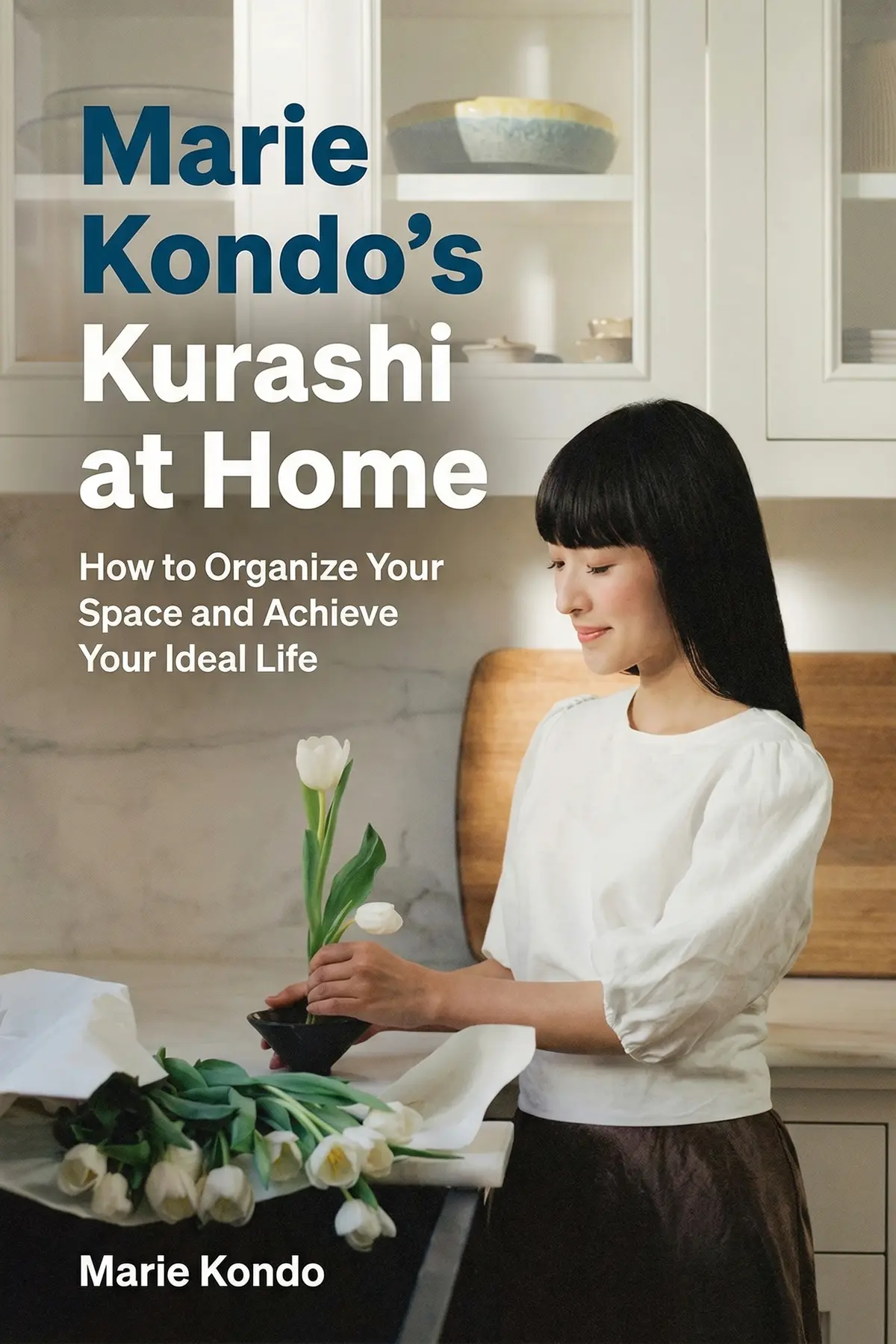
Table of Content
1. Introduction
1 min 00 sec
If your home feels like a place where clutter collects and evenings disappear, Marie Kondo suggests starting somewhere else: picture the life you want first, and let your rooms follow. In Kurashi at Home, the organizing consultant behind the KonMari method extends her tidying approach to kurashi. This Japanese word is close to lifestyle, and it describes how we actually spend our days. For Kondo, a lifestyle is made of the actions you repeat at home.
Her case is that home and life shape each other. Imagine your ideal life clearly and get to know your space and the things in it. Then arrange each room around that vision and turn ordinary moments into rituals, and the home and the life move toward the ideal together. Along the way she offers a ten-morning rule for new routines, a one-day diary of your time, and a way of talking to your belongings that sounds odd but is aimed at the urge to buy more.
2. Picture your ideal life before fixing anything
1 min 52 sec
A one-bedroom apartment and a rococo palace seem worlds apart. Kondo argues that refusing to imagine the palace is what keeps the apartment from improving, and she explains why the dream should come before the floor plan.
3. Hear what your home and belongings are telling you
1 min 53 sec
Saying hello to your living room sounds absurd, and listening for an answer sounds worse. Yet Kondo uses this odd conversation to decide what stays, what goes and where every remaining object should live.
4. Let your oldest possession curb the urge to buy
1 min 16 sec
A childhood sewing box has followed Marie Kondo through every stage of her life. Spending time with an old object like that, she argues, changes how you feel about buying anything new.
5. An entryway and living room that welcome you
1 min 36 sec
The smallest space in the house may shape how you feel about all the others. Kondo walks from the front door to the living room and shows how each can reflect what matters most to you.
6. Calm kitchens, restful bedrooms and walls with a view
1 min 44 sec
One empty surface in the kitchen and one carefully chosen object in the bedroom can change how a home feels from morning to night. Kondo explains what to hide, what to show and where to put it.
7. Make a new morning ritual stick in ten days
1 min 31 sec
Incense, an early start and a greeting to the house begin Kondo’s day. Her number for turning any new morning activity into a habit is smaller than most people expect.
8. Give your hours to what you want or need
1 min 48 sec
A single day written down on paper can show exactly where your time goes. Kondo pairs that record with an unusual approach to tea breaks, cleaning and chopping vegetables.
9. Conclusion
1 min 06 sec
Kondo made her name with tidying. Her method draws on Shinto practice, and since 2011 it has spread so widely that people now use KonMari as a verb for sorting their socks. Kurashi at Home carries that method out of the drawers and into the hours. A neat room was never the final aim. The aim is a way of spending your days that looks like the life you would choose. The home shows that life, and it also helps you build it.
The steps she supports are small enough to start tonight. Say hello to your home, and ask one object on a crowded shelf where it would rather live. Tomorrow, name the feeling you want in the morning, pick one short action that brings it, and keep it up for ten mornings. Some day this week, write down an ordinary day from start to finish. Drop what you neither want nor need, and put one joyful plan in your calendar as firmly as a meeting.
The palace you pictured at the start may never arrive. The life it stood for can begin with a cup of tea, drunk slowly at a table you set for yourself.
About this book
What is this book about?
Plenty of people tidy their homes and still feel their days slipping away to clutter, rushing and screens. In Kurashi at Home, Marie Kondo takes her KonMari method beyond decluttering. Kurashi is a Japanese word close to lifestyle, and Kondo uses it for the actions that make up a day. To her, a lifestyle is something you practice. Her approach moves in steps. First, imagine your ideal living space boldly, whether that is an alpine cabin or a rococo palace, and let that picture guide your decisions. Next, get to know your home and your possessions by talking to them and imagining their point of view. That shows you what to keep, what to let go and how to store the rest. Then shape each room around what matters in your life, from the entryway to a joy niche in the bedroom. The second half turns to time. Kondo suggests building a new morning habit by repeating it ten days in a row, and keeping a one-day record of where the hours go. She books joyful activities like meetings and treats everyday tasks, such as tea or cleaning, as small rituals.
Book Information
Who it's for
Past the first declutter
People who have decluttered before and now want their home to support the life they actually want.
Professionals wanting calmer evenings
Busy professionals whose evenings disappear into scrolling and snacking and who want calmer routines.
Drawn to Japanese mindfulness
Readers drawn to Japanese ideas of mindful living who prefer small, concrete steps.
About the Author
Marie Kondo
Marie Kondo, known as Konmari, was born in Japan in 1984. She is an organizing consultant, author and TV presenter. At 19, while still a university student in Tokyo, she started her own tidying consultancy, and she later founded KonMari Media, Inc. Her book on tidying up was first published in 2011 and reached the United States in 2014. Her four books on organizing have sold millions of copies. She was named to the TIME 100 in 2015, and her 2019 Netflix series Tidying Up with Marie Kondo earned her an Emmy nomination for hosting.
Ratings & Reviews
Ratings at a glance

What people think
Listeners find this book to be elegantly written and motivating, complete with stunning photography that lends it the feel of a coffee table centerpiece. Beyond the visuals, they value the practical guidance provided; one listener observes that it offers fresh tips and practices, while another describes it as a soft prompt for bettering one's living space. The material also earns praise for its applicability, as one listener notes the ease with which its concepts fit into a contemporary lifestyle. Additionally, listeners commend the book’s structure, with one specifically mentioning its superb layout, and they find every page a pleasure to read.
Top reviews
Saovapa
Wow, what a beautiful and meditative experience this book turned out to be! I’ve been a fan of the KonMari method for years, and this feels like the natural evolution of her philosophy. Seeing how she incorporates these principles into her own life as a mother was truly inspiring. I particularly loved the unapologetic inclusion of her spiritual practices, like treating inanimate objects with respect and gratitude. Wiping down the entranceway has become my new favorite morning ritual, and I actually feel more centered throughout the work day because of it. The book is glossy, high-quality, and packed with practical tips that are easy to incorporate into a busy modern life. It’s more than just a guide; it’s a vision for a more intentional way of living.
Show moreMingkwan
Finally got around to reading this, and it felt like a warm hug for my overwhelmed soul. There is something so incredibly calming about Kondo's writing style and the soft, neutral palettes used in the photography. I know some critics say it’s unrealistic, but looking at these beautiful interiors helped me identify my own aesthetic preferences more clearly. I’ve started treating cleaning the floors as a form of meditation rather than a chore, and the difference in my mood is palpable. Even the small advice about choosing natural fiber pajamas has made my evenings feel more luxurious and restful. It’s a book that encourages you to find beauty in the small details of your home. I’ve already recommended it to several friends who are looking for a bit of peace.
Show moreLeah
This book is an absolute visual delight that provides a much-needed sense of serenity. I loved the Kurashi at Home approach because it feels so relevant to how we live today. The photography is breathtaking, and the layout makes every page a joy to read. I found several new tips I hadn't seen before, especially regarding the entranceway and how to set up a welcoming space for guests. It’s the kind of book you want to keep on your bedside table to flip through whenever you feel the world getting a bit too loud. Highly recommend for anyone who loves the KonMari philosophy and wants to see it applied to a full lifestyle. It truly makes home improvement feel like an act of self-care.
Show moreMarco
As someone who has always struggled with maintaining a peaceful environment, I found this latest installment from Marie Kondo to be incredibly grounding. The focus here shifts from just throwing things away to actively designing a life that brings you happiness. I loved the inclusion of recipes like the matcha latte and the spinach with sesame sauce, which added a personal warmth I haven't seen in her other books. Truth is, the photography is the real star here; it’s basically home decor inspiration at its finest. My favorite part was the section on natural fiber pajamas and small rituals for the entranceway. It’s not a hard-core manual for decluttering, but rather an invitation to slow down and show gratitude for the objects that support us daily.
Show moreIsabella
The chapter on the ideal morning routine was exactly what I needed to rethink my chaotic start to the day. While some people might find Kondo's anthropomorphism of objects a bit strange, I find it leads to a much more respectful and mindful home life. This book functions more like a lifestyle manual than a decluttering guide, and I think that’s an important distinction to make before buying. The worksheets are incredibly helpful for narrowing down what you actually want your life to look like instead of just following a generic Pinterest aesthetic. I did find the sections on fermentation a bit random, but they fit the theme of joy in her specific lifestyle. It’s a quick, light read that offers a lot of visual inspiration for anyone looking to refresh their space.
Show moreBig
After hearing mixed reviews, I was pleasantly surprised by how much I enjoyed the 'Kurashi' concept. It’s not just about getting rid of stuff; it’s about what you keep and how you interact with it. I really appreciated how Marie has matured her perspective now that she has children. Her tone is much more relaxed and forgiving than it was in her first book, which I found very relatable. The idea of thanking your shoes or talking to your house might seem odd to some, but it genuinely helps foster a sense of gratitude. Look, you might not use the recipes or follow every single ritual, but there are plenty of gems hidden in these pages. It’s a gentle, beautiful nudge toward a more organized and intentional existence.
Show moreMo
Ever wonder if your home has a personality of its own? Marie Kondo certainly thinks so, and while some of her suggestions are a bit out there, I found the overall vibe of the book quite soothing. The layout is wonderful, featuring a magazine-style approach with Q&As and short chapters that make it easy to digest in small bites. I’m not sure I’ll ever get into the habit of talking to my bathtub while I dry it, but I did appreciate the sections on creating a morning routine that prioritizes calm. The templates and worksheets in the back are a nice touch for those of us who like to visualize our goals. It isn’t as revolutionary as her first book, but it serves as a gentle nudge to appreciate the space you inhabit.
Show moreAnthony
Not what I expected, but it’s definitely pretty to look at. This feels much more like a high-end magazine than a traditional book, which makes it perfect for flipping through while drinking coffee. Frankly, if you’re looking for new, groundbreaking organization tips, you won’t find them here. It’s mostly about vibes and general lifestyle advice like cooking and meditation. The photographs are stunning, though they do feature a lot of white and beige that feels a bit sterile for a home with kids or pets. It’s a nice addition to the shelf if you’re a completionist, but it doesn't have the same impact as her debut. I’ll keep it for the worksheets and the occasional visual inspiration, but it’s not a must-read.
Show moreSomchai
Picked this up hoping for a fresh perspective on the KonMari method, but it mostly felt like a rehash of her previous work with more pictures. To be fair, the aesthetic is lovely, and it would look nice on a coffee table, but there isn't much depth. The instructions are sparse and the focus on 'Kurashi' or lifestyle feels a bit vague and unattainable for someone living in a small, messy apartment. I was especially surprised to find recipes included, which felt like filler in a book that is already quite thin on actual text. It’s a quick read that you can finish in about forty-five minutes. If you’ve already read The Life-Changing Magic of Tidying Up, you can probably skip this one without missing much.
Show moreMethinee
This book didn’t just fail to spark joy; it actually made me feel a bit stressed about things I never knew were problems. Do my shoes really talk to their neighbors in the closet? I found the advice about wiping the soles of my shoes every single morning to be completely out of touch with my actual life as a working parent. While the photography is undeniably gorgeous, it feels like a lifestyle magazine for people who have endless hours to spend on fermentation and floor-polishing. I was looking for practical organizational strategies, but instead, I got strange personifications of household objects. If you enjoy looking at minimalist, beige interiors that look like nobody actually lives there, you might like this. For me, it was a waste of time and space.
Show moreQuestions about this book
What does kurashi mean in Marie Kondo's Kurashi at Home?
Kurashi is a Japanese word that roughly means lifestyle. Kondo uses it for the actions that make up our days and the way we spend our time, so a lifestyle is something you practice through conscious choices. The book applies the idea in two ways: making the home a joyful place to be, and spending your time there in a joyful way.
How does Kurashi at Home relate to the KonMari method?
It builds on it. The KonMari method, introduced in 2011, is about keeping only the possessions that spark joy, then thanking the rest and giving them away. Kurashi at Home keeps that practice and extends it to your whole way of living. That means imagining an ideal space, understanding your home’s personality and designing each room. It also means turning mornings, schedules and chores into rituals.
How do you build a morning routine with Marie Kondo's approach?
First decide how you want to feel in the morning, whether calm, focused or energized. Then choose one small activity that helps you get there. Kondo herself rises before her children, lights incense and greets her home. To make something new stick, such as five minutes of meditation, she suggests doing it ten mornings in a row, after which it should feel natural.
What practical tips does Kurashi at Home give for each room?
Keep the entryway sparse, with storage for coats, shoes and umbrellas and one or two joyful objects. Let the living room reflect your passions, and arrange furniture for conversation. Keep kitchen counters empty and food visible. Make the bedroom restful, with a joy niche you see when you wake. Hide bathroom utility items, and hang the scenery you long for on your walls.
Featured in

Readers also enjoyed


A High-Performing Mind: Strengthen Your Mind and Live Your Best Life
Andrew D. Thompson


Abundance: The Inner Path to Wealth
Deepak Chopra


59 Seconds: Change Your Life in Under a Minute
Richard Wiseman




AUDIO SUMMARY AVAILABLE
Listen to Marie Kondo’s Kurashi at Home in 15 minutes
Get the key ideas from Marie Kondo’s Kurashi at Home by Marie Kondo, plus 5,000+ more nonfiction titles.
- 5,000+ titles
- Listen as much as you want
- 7-day free trial
- Cancel anytime









