


60 Seconds & You’re Hired!
Robin Ryan
 English
A practical guide to working well with the person above you. It shows how to spot common boss types, what each one needs from you, and how to tell when it is time to leave.
1 min 06 sec
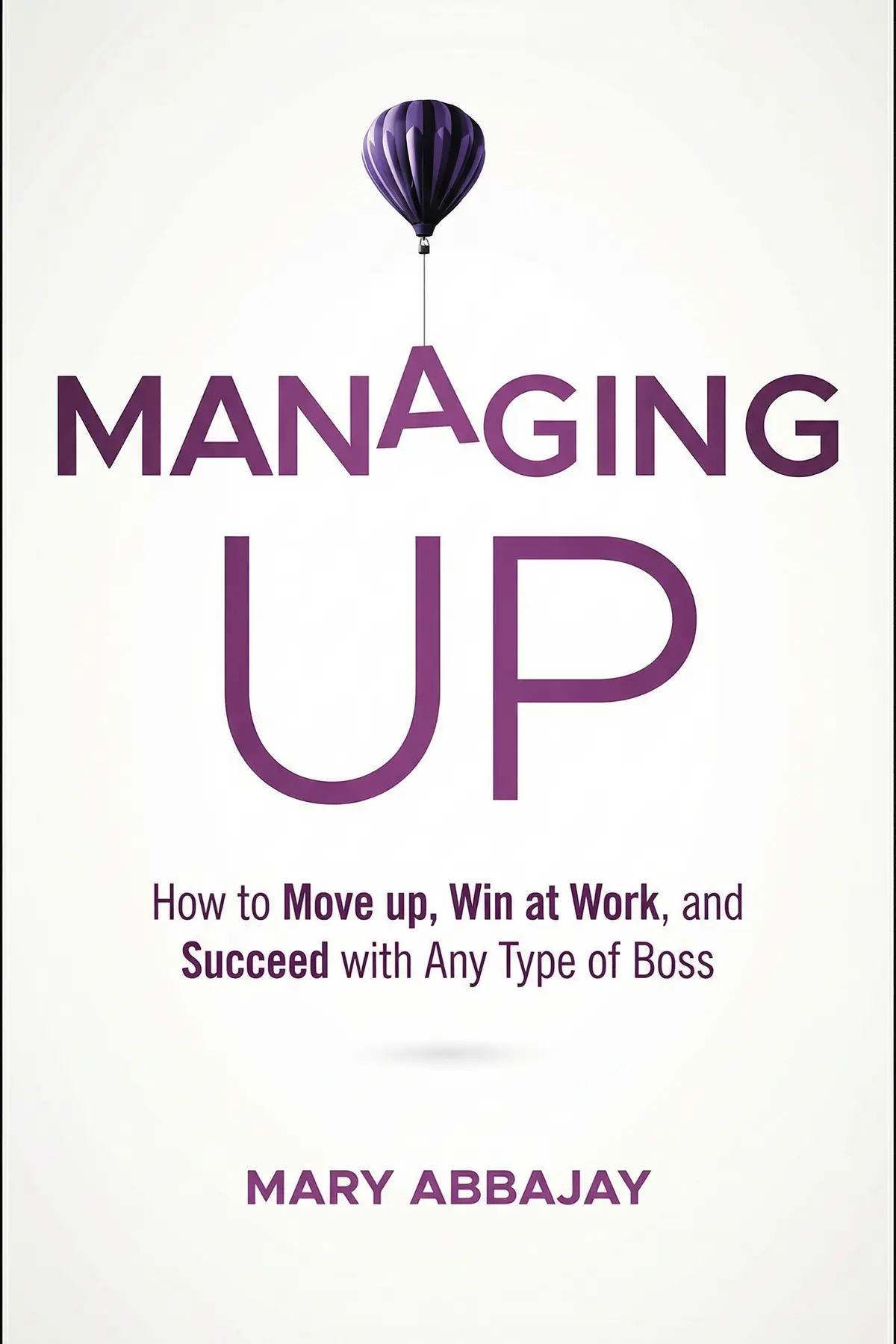
Almost everyone has a boss, yet advice for managers is far easier to find than advice for the people working under them. In Managing Up, organizational consultant Mary Abbajay argues that this is a costly blind spot, because the relationship with the person above you shapes both your career and how happy you are at work. Her case is that you cannot choose your boss, but you can learn how they work and adjust to it.
The method starts with observation. Work out what kind of boss you have: quiet or talkative, driven by results or by team peace, controlling, absent, vain or out of their depth. Then change how you communicate and deliver to suit them. And when no adjustment can make the situation livable, managing up also means knowing when to go.
What follows is a short field guide to the difficult bosses most people meet sooner or later, with what to say and do around each one, and a simple Sunday evening test for deciding whether to stay.
1 min 41 sec
Some managers are slow to respond to questions and keep their views to themselves. Others narrate every passing thought. Both can wear you down, and the fix depends on which side of the divide you sit on yourself.
1 min 45 sec
According to the golden rule, you should give other people the kind of treatment you hope to receive yourself. At work, following it can quietly annoy the person who decides your next promotion, depending on which of two personalities they have.
1 min 40 sec
He hovers at your desk and explains tasks you understand better than he does. Earning his trust comes first. Abbajay points to what is really driving the hovering, and a counterintuitive way to make it stop.
1 min 39 sec
A manager who leaves you alone all week sounds like a gift. Abbajay sees two traps in that freedom, one that can sink your reputation and one opportunity most people let pass by.
1 min 48 sec
He charmed you at the interview, then turned out to need constant praise and total control. Abbajay’s advice is surprising: if you can bear it, staying may be good for you, provided you learn one way of speaking.
1 min 36 sec
She dodges decisions, misses deadlines and leaves you guessing about what is happening. It is easy to write her off. Abbajay argues that doing so might cost you more than it costs her.
1 min 41 sec
Many of us were raised to believe that winners never quit. Abbajay names two warning signs that a job has crossed a line, and explains why the years you have already invested are no reason to stay.
1 min 19 sec
Abbajay’s book turns a relationship most people feel stuck with into one they can steer. Your boss sets the agenda, but how well you read them is up to you. Her portraits share one lesson: difficult behavior usually has a cause, whether a need for quiet, a hunger for results, fear, overload, ego or insecurity, and once you see the cause you know what to offer. An Advancer gets options. A micromanager gets the memo before he asks. A narcissist hears respect first and disagreement second. The struggling boss gets a question about what she still does well.
A good place to begin is to study your own boss for a week the way you would study an important client. Notice how she likes to be spoken to, what she cares about most and where her blind spots are. Then change one habit to fit what you see, such as how you raise a problem or how often you report progress. Keep the Sunday evening question in reserve. Managing up is a skill for making hard situations work, and part of that skill is recognizing when one cannot.
You will rarely get to pick who sits above you. You can always choose how well you understand them.
Almost everyone has a boss, yet advice on being a great manager is far easier to find than advice on being a good subordinate. Mary Abbajay, an organizational consultant and trainer, finds that gap surprising, since the relationship with your boss has a major effect on your career prospects and your overall happiness. Her approach is to treat the boss relationship as something you manage. That starts with observation. Is your boss an introvert or an extrovert? Do they chase results or protect team harmony? Are they a micromanager acting out of fear, an absentee leaving a gap, a narcissist who needs praise, or someone simply out of their depth? Each type has its own logic, and each calls for a different way of talking, reporting and handling problems. Readers get concrete moves for every case, from sending a daily status memo to a hovering manager to opening any disagreement with a vain boss by acknowledging his authority. Abbajay also gives two plain warning signs that no strategy will fix the situation, and a clear way to think about walking away without feeling like a failure.
Early-career professionals who want to get ahead and feel stuck under a difficult manager.
Employees reporting to a micromanager, an absent boss or an ego-driven leader who need practical moves.
Anyone who dreads Sunday evenings and wants a clear way to decide whether to stay or go.
Mary Abbajay is an organizational consultant, public speaker, facilitator and trainer who founded a consultancy offering talent and organizational development services. She has 20 years in leadership roles, a Master's degree in Organizational Management, and further certificates from Georgetown University and the Coaches Training Institute. She has taught at George Mason University's School of Management as adjunct faculty, at Montgomery College and at the Georgetown University Center for Professional Development, and often comments as an expert in Washington, DC area media.

Listeners find this guide to be an excellent and relevant resource, offering straightforward and useful tips that are simple to implement. They enjoy the witty tone and thorough information, with one listener highlighting how the detailed case studies clarify the concepts. The book offers concrete strategies to apply and assists in strengthening professional bonds; one listener even shared how it helped them better navigate their connection with a remote supervisor.
Picked this up while struggling with a manager who lives halfway across the country, and the insights were surprisingly relevant to my remote situation. Abbajay’s approach is refreshing because it doesn’t just tell you to 'deal with it,' but instead provides concrete frameworks for navigating different professional styles. The humor kept me engaged throughout, which is rare since most business books usually put me to sleep within ten pages. I particularly liked the section on adapting to specific personality drivers rather than just complaining about them. It's not just about surviving a difficult boss; it's about thriving in your career by understanding the human on the other side of the Zoom call. The advice is timely, actionable, and remarkably easy to follow for anyone feeling stuck in their current role.
Show moreEvery single person with a desk job needs to have a copy of this on their shelf for those days when you want to quit. Abbajay delivers bite-sized, no-nonsense advice that you can apply the second you walk back into the office from your lunch break. I loved the structure—identifying the boss type, understanding their drivers, and then getting a clear strategy to win them over. It takes the heavy emotion out of frustrating interactions and turns them into a logic puzzle to be solved. The tone is encouraging and straightforward without being overly academic or dry. I've already shared the chapter on 'Micromanagers' with half my team. It is truly a fantastic resource for career advancement and mental sanity.
Show moreWow, I didn't expect a business book to actually make me laugh out loud while providing such valuable insights. Mary Abbajay has a great sense of humor that makes the management 'medicine' go down much easier. Dealing with a 'Seagull Boss' who flies in, makes a mess, and flies away is soul-crushing, but this book gives you a legitimate game plan to handle it. The advice is immediate and easy to follow, which is exactly what I need when I'm stressed at the end of a long week. It’s refreshing to see a book that empowers the employee to take charge of their own professional happiness instead of just waiting for a bad boss to magically change. Highly recommend for any career level.
Show moreFinally got around to reading this after my mentor recommended it, and I definitely see the appeal for newer professionals. Managing Up offers a really solid set of tools for navigating tricky office hierarchies without losing your mind. Abbajay uses a great sense of humor to soften the blow of some pretty harsh reality checks about professional responsibility and self-sufficiency. I found the 'Nitpicker' and 'Seagull' boss profiles to be eerily accurate to my own past experiences in the corporate world. To be fair, some of the advice leans heavily toward common sense, but having it all mapped out with specific case studies makes it much easier to actually implement. It helped me reframe my manager’s annoying habits as just another personality trait to work around.
Show moreAs someone who has spent years in middle management, I actually found myself reflecting on my own leadership style while reading this. We always think about how to manage our bosses, but the descriptions of the 'BFF Boss' and 'Workaholic' were eye-opening for my own self-awareness. Abbajay provides actionable steps to improve these relationships that go beyond just 'being nice' or sucking up to the higher-ups. I appreciated the emphasis on flexibility and how we can adjust our own behaviors to get the results we need for our teams. My only real gripe is that the section on narcissists felt a little thin—there's only so much 'managing up' you can do with a total ego-maniac. Still, it is a very timely read.
Show moreAfter hearing several people mention this in my professional circle, I decided to pair it with 'Crucial Conversations' for my monthly career reading. It’s a great accompaniment that focuses more on the long-term relationship rather than just single difficult moments. While the language can be a bit colloquial and occasionally jarring, the core message about empathy is solid. The book focuses heavily on the 'why' behind boss behavior, which helps build a sense of understanding even for the most difficult supervisors. I specifically liked the focus on the 'Ghost Boss'—it’s a dynamic I haven't seen addressed much elsewhere. It’s not a perfect book, but the practical value and the specific case studies far outweigh the occasional cringey nickname or personality label.
Show moreEver wonder why your boss seems to constantly ignore your emails but then pings you incessantly about minor details? This book helped me navigate a very difficult transition where I felt my work was being overlooked by upper management. Learning to manage up isn't just about playing politics; it's about ensuring your work is actually seen and valued by the people who make the decisions. Abbajay gives you the tools to bridge that communication gap effectively. The real-life stories were relatable, though I'll admit I skimmed a few of the personality types that didn't apply to my current situation. It's a comprehensive guide that makes you feel more in control of your career path. Definitely worth the time for the self-sufficiency it builds.
Show moreNot what I expected, though I wouldn't call it a total waste of time for a quick weekend read. Most of the philosophy here boils down to basic emotional intelligence and being the 'bigger person' in every interaction. If you already have a decent grasp of how to read people, you probably won’t find many life-changing revelations in these pages. The nicknames for bosses are a bit cheesy, and I personally found the 'Innie/Outtie' terminology a little cringy at times. However, the last few pages with the bonus tips were actually quite helpful and condensed the best points. It’s a fast read, so it’s okay if you need a quick refresher on workplace dynamics, but don't expect deep theory or radical new management strategies.
Show moreThe truth is, this felt more like reading a workplace horoscope than a professional development guide. While the writing style is snappy and the book reads fast, the categorization of 'personality types' felt incredibly reductionist and lacked any real scientific backing. I was especially put off by the depiction of introverts as socially awkward recluses who can't handle a simple conversation—it felt judgmental and outdated. If you’re looking for data-backed psychology or deep research, keep moving. These anecdotes felt like 'real life' stories that were cherry-picked to fit a narrative rather than providing deep, research-driven insight. It’s far too surface-level for anyone who has been in the workforce for more than a year and already possesses basic common sense.
Show moreIs it too much to ask for a management book that acknowledges the actual systemic world we live in? Abbajay presents a world where the burden of a toxic workplace falls entirely on the individual employee to 'adapt' and 'man up.' This individualistic approach completely ignores the roles that systemic sexism and racism play in the office hierarchy. By framing every conflict as a simple personality clash, the book erases the very real power imbalances that can't be fixed by just 'learning to communicate better.' It's essentially a guide on how to survive a broken system without ever questioning if the system itself should change. If you have a truly toxic or abusive boss, this advice feels woefully inadequate and even a bit victim-blaming at points.
Show moreIt is a guide to handling your relationship with the person above you. Abbajay argues that this relationship strongly affects both your career and your happiness, yet most advice targets managers. She describes common boss types, such as introverts and extroverts, Advancers and Harmonizers, micromanagers, absentee bosses, narcissists and incompetent bosses, and explains how to adapt your communication and work to each. She also covers when leaving is the better choice.
Abbajay suggests starting with the motive: many micromanagers act from fear and insecurity, and control calms them. Your aim is to earn trust by consistently meeting expectations and showing good judgment, even if that means extra effort for a while. Communicate far more than usual, for example with a daily memo listing your projects and their status. Knowing these details reassures him and can mean fewer visits to your desk.
If you can bear it, Abbajay says staying may help your career, because narcissists often rise high and become influential, bringing advancement and connections to those around them. To manage it, show exaggerated respect, acknowledge his authority before giving your opinion and choose your words carefully when disagreeing. Never complain about him to coworkers, since a colleague seeking his favor may report what you said.
Abbajay offers two warning signs. One is how you feel on Sunday evening: mild reluctance about Monday is normal, but real dread, as if you were heading to jail, is a signal to consider leaving. The other is when office politics or avoiding your boss takes more of your energy than the work itself. She adds that past investment in a job is no reason to give up future happiness.
It suits anyone who reports to a boss, especially people early in their careers who want to move up and people struggling with a manager who hovers, disappears, demands praise or cannot make decisions. Its advice is concrete: bring solutions instead of complaints to a results-driven boss, settle conflicts yourself under a peace-keeping one, and step into the gap an absent manager leaves.
Robin Ryan






Marianne Cantwell

William Vanderbloemen

AUDIO SUMMARY AVAILABLE
Get the key ideas from Managing Up by Mary Abbajay, plus 5,000+ more nonfiction titles.









