
14 min 15 sec
Available in: English
 ไทย
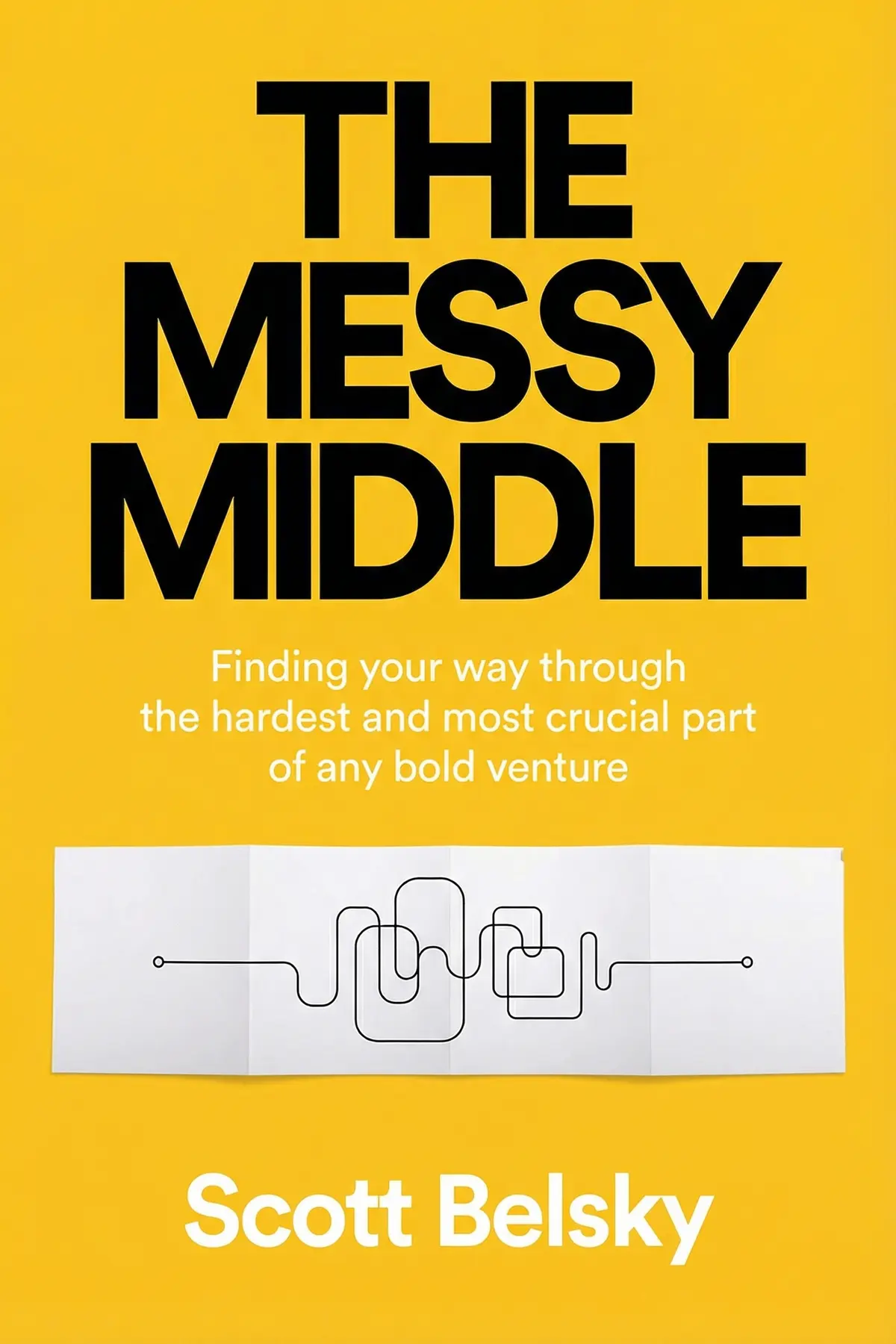
EnglishไทยMaking Ideas Happen: Overcoming the Obstacles Between Vision and Reality
By Scott Belsky
Shows why good ideas usually die after the excitement fades, and how to carry them to completion by breaking projects into action steps, cutting reactive work, sharing ideas openly and building balanced teams.
Table of Content
1. Introduction
59 sec
Most good ideas do not die because they were bad. They die a few weeks after the meeting where everyone loved them, when nobody can say what to do next. In Making Ideas Happen, Scott Belsky, who built the creative platform Behance, argues that what separates realized ideas from forgotten ones is execution. Organization, momentum and the right people, in his view, count for more than the brilliance of the idea itself.
The book turns that claim into a working method. Every project can be sorted into three kinds of material, time spent reacting is time lost, and teams can be built to carry an idea past the point where enthusiasm fades. Along the way come John Grisham’s 5:00 a.m. writing routine, the odd-couple leadership behind Apple and a memorial museum built around a few points nobody would compromise on. The reward is a plan for taking the idea you are sitting on now and moving it forward this week.
2. Get an idea past the point where most quit
1 min 45 sec
Every exciting idea hits a stretch where the work suddenly looks enormous and a newer idea looks better. A design firm and a best-selling novelist each found a way to keep going through it.
3. Turn a blank page into a clear next step
1 min 36 sec
You sit down to prepare the presentation that matters most this quarter, and your mind goes empty. The cause is rarely a lack of ideas, and the fix takes one sheet of paper.
4. Leave every meeting with something to do
1 min 35 sec
Brainstorms feel productive and weekly meetings feel responsible. Yet many of them leave nothing behind. A small habit, practiced even in the shower, changes what your meetings and ideas produce.
5. Stop spending your day answering other people
1 min 44 sec
A century ago, small questions were too much trouble to send. Today they arrive by the hundred, and Belsky argues they decide whether your workday is spent winning or losing.
6. Find the partner who covers your blind spots
1 min 47 sec
Some people start ten projects and finish none. Others finish everything and propose nothing. Apple’s leadership shows what happens when the right opposites end up in the same room.
7. Share your idea openly to help it succeed
1 min 43 sec
Most people guard a promising idea in case someone steals it. A magazine editor did the opposite, sharing his idea openly and giving it six weeks to attract a team, and readers responded with enthusiasm.
8. Build a team that finishes what it starts
1 min 54 sec
Experience looks like the safe hire, and constant compromise looks like good teamwork. A research executive and the designer of a national memorial both learned that the opposite choices produced better work.
9. Conclusion
1 min 12 sec
Belsky’s book moves the credit for success away from the idea and toward everything that happens after it. Good ideas are common; follow-through is rare. What carries an idea across the gap is a set of ordinary disciplines: knowing your next action, guarding your attention from the message flood, pairing with people unlike you and letting others watch your progress.
His closing tool ties these together. He calls it an Energy Line. Gather your projects and rank them by their economic and strategic value, from the ones that matter most down to the ones that barely matter. The hard part is the rule behind the ranking. Judge each project by how much energy it deserves from now on, not by how much you have already poured into it. A project you have worked on for months can still belong near the bottom.
With that line drawn, the rest of the method has a target. Your evening processing hour and your first action steps go to the projects at the top. Your partners and skeptics help defend those few from the bright new ideas that will keep arriving.
Grisham relied on a fixed daily routine to get himself writing. He sat down at 5:30 and wrote one page, then another the next day.
About this book
What is this book about?
Plenty of people have good ideas. Far fewer turn them into finished projects. Scott Belsky argues that the difference rarely lies in the quality of the idea. It lies in execution: what happens after the exciting first meeting, when the real size of the work appears and energy starts to drain. Belsky treats execution as a set of learnable habits. He shows how to sort any project into action steps, references and backburner items, how to stop weekly rituals and message floods from eating the day, and how to use the first burst of enthusiasm to build something real. Examples range from IDEO's prototype workshop and John Grisham's early-morning writing routine to the partnership of Jonathan Ive, Steve Jobs and Tim Cook at Apple. The book then turns to people: why sharing an idea protects it, why initiative can matter more than experience when hiring, why teams need skeptics at the right moment, and how leaders can hold a few elements sacred while compromising on the rest. Readers get a practical system for moving their own stalled ideas forward.
Book Information
Who it's for
Creatives with unfinished ideas
Creative professionals with a drawer full of ideas and few finished projects.
Managers whose teams stall
Managers whose teams brainstorm well but stall during execution or drown in weekly meetings.
Self-employed wanting time back
Founders and freelancers who react to messages all day and want time back for their own priorities.
About the Author
Scott Belsky
Scott Belsky helped create Behance, an online platform where creative professionals showcase and discover work, and led it as CEO until Adobe acquired it in 2012. He also founded 99U, a publication and annual conference about productivity in creative work. As an investor he backed Uber and Pinterest early. Fast Company named him one of its 100 Most Creative People in Business in 2010, and his books Making Ideas Happen and The Messy Middle were both bestsellers.
Ratings & Reviews
Ratings at a glance
What people think
Listeners find that the book provides actionable advice and methods for bringing their visions to life, noting that it is both accessible and simple to implement. They also value its approachable nature, as one listener points out its speed while another highlights the friendly, conversational style. Furthermore, listeners feel motivated, with one listener describing the work as a refreshing reminder, and they appreciate the logical layout, where one listener specifically praises the effective project management tools. This book helps listeners stay focused on their objectives and responsibilities, leading to increased productivity.
Top reviews
Kamol
Belsky gets it. Most creative people don't have a shortage of ideas; we have a shortage of discipline to see them through. This book provides a much-needed framework for anyone who finds themselves starting a dozen projects but finishing none. The 'Action Method' described here is a game-changer because it forces you to categorize every piece of information into actionable steps, references, or backburner items. I particularly loved the section on 'shipping' and the psychological hurdles we face when a project loses its initial luster. To be fair, some of the advice feels like common sense once you hear it, but having it structured this way is incredibly helpful. It’s written in a conversational tone that makes the complex logistics of project management feel approachable. If you are tired of your best concepts gathering dust in a notebook, this is the manual you’ve been looking for. It’s inspiring without being overly flowery.
Show moreMilk
After hearing so much buzz about the 'Action Method,' I decided to give this a shot to help manage my side projects. Wow. It’s exactly the kind of kick in the pants I needed. The author argues that organization is actually a creative's greatest ally, not an enemy that stifles spontaneity. I love the idea of the 'Backburner' list for those distracting flashes of brilliance that usually derail my current tasks. In my experience, most business books are dry and clinical, but this one feels very human and tailored to the creative ego. The advice on managing teams and navigating conflict was surprisingly insightful too. It isn't just about personal to-do lists; it’s about how to lead others toward a vision. While some might call it a sequel to GTD, I think it stands on its own by addressing the specific emotional lulls that creatives face. This book helped me get back on track with my goals almost immediately.
Show moreSiriphen
Frankly, the breakdown of how to ship projects is the most useful thing I've read all year. Belsky understands that the 'middle' of a project is where most of us fail, and he gives specific strategies to push through that dip. I really appreciated the focus on 'Action Steps' rather than just vague goals. The writing style is engaging and doesn't feel like a lecture. It’s more like a conversation with a mentor who has seen every mistake in the book. I especially liked the section on how to share ideas without the fear of them being stolen, as that’s a common hang-up for many of us. This book has helped me streamline my workflow and actually finish two major projects that had been languishing for months. It is an essential read for anyone in a leadership position within a creative agency. Simple, effective, and highly motivating.
Show moreFah
Ever wonder why your best ideas just sit in a notebook gathering dust? Scott Belsky explains exactly why that happens and how to fix it in this brilliant book. He tackles the 'organization' problem head-on, proving that you don't have to sacrifice your soul to be efficient. The section on developing leadership capability was particularly valuable for me as I grow my small business. It’s a refreshing reminder that execution is a skill that can be learned, not a talent you’re born with. The tone is encouraging throughout, and the layout makes it easy to refer back to specific chapters when you need a refresher. I've read a lot of books in this genre, and this is one of the few that provides truly actionable insights you can use the same day. It's a must-have for any modern professional. Five stars for making the mundane parts of creativity feel exciting and achievable.
Show moreTen
As someone who identifies as a chronic 'Dreamer,' I found the typology of creatives in this book to be eye-opening. Belsky breaks us down into Dreamers, Doers, and Incrementalists, and it helped me realize why I always struggle with the middle phase of any project. The writing is clear and direct, making it a relatively quick read for a productivity book. I appreciated the focus on the community aspect of making ideas happen—sharing your work early and building a support network is something I often overlook. Frankly, I think this is a necessary companion to books like 'The Creative Habit' because it focuses so heavily on the logistical 'how-to' rather than just the 'why.' There is a bit of fluff regarding the author's own company, Behance, which can feel like a subtle sales pitch at times. However, the core principles of organization and leadership capability are solid enough to make that a minor annoyance. I’ve already started using his meeting follow-up techniques with my team.
Show moreRuangrat
Finally got around to reading this after several colleagues mentioned it, and I’m glad I did. It’s a refreshing reminder that creativity is 1% inspiration and 99% perspiration. Belsky does a great job of explaining how to organize workflows to maximize output without killing the creative spirit. I particularly enjoyed the segments on 'killing' ideas that lack potential; we often hold onto projects for far too long simply because we’ve already invested time in them. The book is organized into three logical areas: Organization, Community, and Leadership, which makes it easy to navigate. Got to say, the layout of the book itself is quite beautiful and fits the 'creative' vibe perfectly. My only real gripe is that it can get a bit theoretical in the middle chapters, losing that practical edge that the beginning established so well. Still, the concept of treating everything in life as a project is a mindset shift I needed. Definitely worth a read for any entrepreneur.
Show morePla
Picked this up because my desk was a graveyard of unfinished projects and half-baked sketches. Belsky’s premise is simple: your ideas don't matter if you don't ship them. This resonated with me deeply. The book is incredibly easy to read and follow, with a clear structure that helps you visualize a better way to work. I’ve already implemented the 'minimal note taking' rule to avoid getting bogged down in documentation. One of the best takeaways for me was the idea that constraints actually beget greater creativity. Instead of wanting infinite time and resources, he teaches you how to work within what you have. Personally, I found the section on self-marketing a bit weak, but the rest of the material is highly applicable to any professional setting. It’s a practical guide that bridges the gap between vision and reality. If you’re struggling with implementation, this will help you find your footing again.
Show moreSirirat
In my experience, creative people are often their own worst enemies when it comes to logistics. This book provides a gentle but firm structure to keep that from happening. It’s not just another productivity manual; it’s a study on how to sustain your creative energy over the long haul. The 'Action Method' is intuitive, and I love that it encourages using materials that you actually enjoy touching and seeing. Making the process beautiful makes you want to stick with it. Some of the case studies felt a little 'tech-bro' heavy, which might not appeal to everyone, but the underlying lessons are universal. I’d recommend this to anyone from a freelancer to a corporate manager. It’s a quick read that pays dividends if you actually apply the techniques. Not gonna lie, I still struggle with the discipline, but now I have a roadmap to follow when I get lost.
Show morePornpimon
Not what I expected, but perhaps exactly what I needed for a reality check. This book isn't about how to have better ideas; it's about the boring, gritty work of execution. Look, the Action Method is decent, but I felt the book was about 50 pages longer than it needed to be. Belsky tends to circle the same points about energy levels and project lulls multiple times. To be fair, the insights into how community feedback can shape a project are very strong. I just wish there were more concrete examples and fewer philosophical ramblings. I found myself skimming the sections on leadership toward the end because they felt a bit disconnected from the early practical steps. It’s a good refresher if you’re feeling stuck, but don’t expect any groundbreaking secrets. It’s a solid 3-star read that offers some value but requires you to sift through a fair amount of fluff to find the real gems.
Show morePriya
The truth is, this book feels like a protracted advertisement for the author's website, Behance. I went in expecting a deep dive into productivity techniques for artists, but what I got was a lot of repetitive, vague philosophy about 'harnessing your community.' If you have already read David Allen’s 'Getting Things Done,' you will find the first third of this book almost entirely redundant. Belsky’s 'Action Method' is essentially GTD-lite with a focus on nicer paper and better aesthetic tools. While there are a few intelligent one-liners about focus and teamwork hidden in the text, the majority of the content is unremarkable and unfocused. I was hoping for more practical, direct suggestions on how to balance creative dreaming with the drudgery of doing. Instead, it’s mostly excerpted interviews with famous people that don't offer much actionable advice. It’s not terrible, but it certainly isn't the life-changing manual it claims to be. Save your time and stick to the classics.
Show moreQuestions about this book
What is the main idea of Making Ideas Happen?
Scott Belsky argues that ideas usually fail because of poor execution, not because they were bad. Enthusiasm fades once the real work appears, a stage he calls the project plateau. To get through it, he recommends treating every idea as a project, breaking it into concrete action steps, limiting reactive work, and building teams with the right mix of dreamers, doers, initiators and skeptics.
What are action steps, references and backburner items?
Belsky sorts everything a project involves into three groups. Action steps are specific tasks that move it forward, such as drafting an outline for a pitch. References are useful information, like sales forecasts or feedback from earlier pitches. Backburner items are ideas that may matter later but not now, such as polishing slides. Separating them reduces stress and shows exactly where to start.
How do you overcome the project plateau?
Belsky suggests two approaches. First, use the energy of a new idea to build something real quickly, the way IDEO sends ideas straight to its prototype workshop, The Shop. Second, adopt a fixed routine so starting work costs no willpower. John Grisham began writing at 5:30 every morning and committed to at least one page a day, however long it took.
Why does Belsky say you should share your ideas?
Sharing shows how much interest an idea attracts, brings criticism from people who see things differently, and makes you accountable because others will ask about your progress. Chris Anderson of Wired announced his Geek Dads blog idea publicly and gave it six weeks to attract a team. Belsky also notes that people struggle to execute their own ideas, so theft is less likely than feared.
What is the Energy Line in Making Ideas Happen?
The Energy Line is Belsky’s tool for deciding where your limited energy goes. Next, you order every project by its strategic and economic worth, running from highly important down to unimportant. The key is to judge each one by how much energy it should receive from now on, not by how much effort you have already invested. The ranking then guides where your time goes.
Readers also enjoyed








AUDIO SUMMARY AVAILABLE
Listen to Making Ideas Happen in 15 minutes
Get the key ideas from Making Ideas Happen by Scott Belsky, plus 5,000+ more nonfiction titles.
- 5,000+ titles
- Listen as much as you want
- 7-day free trial
- Cancel anytime









