

A River in Darkness: One Man’s Escape from North Korea
Masaji Ishikawa
 English
Shows how ordinary people can push back against injustice. Pick one cause rooted in your own story, join an organized effort with a real plan, and keep going through the defeats most campaigns face.
1 min 02 sec
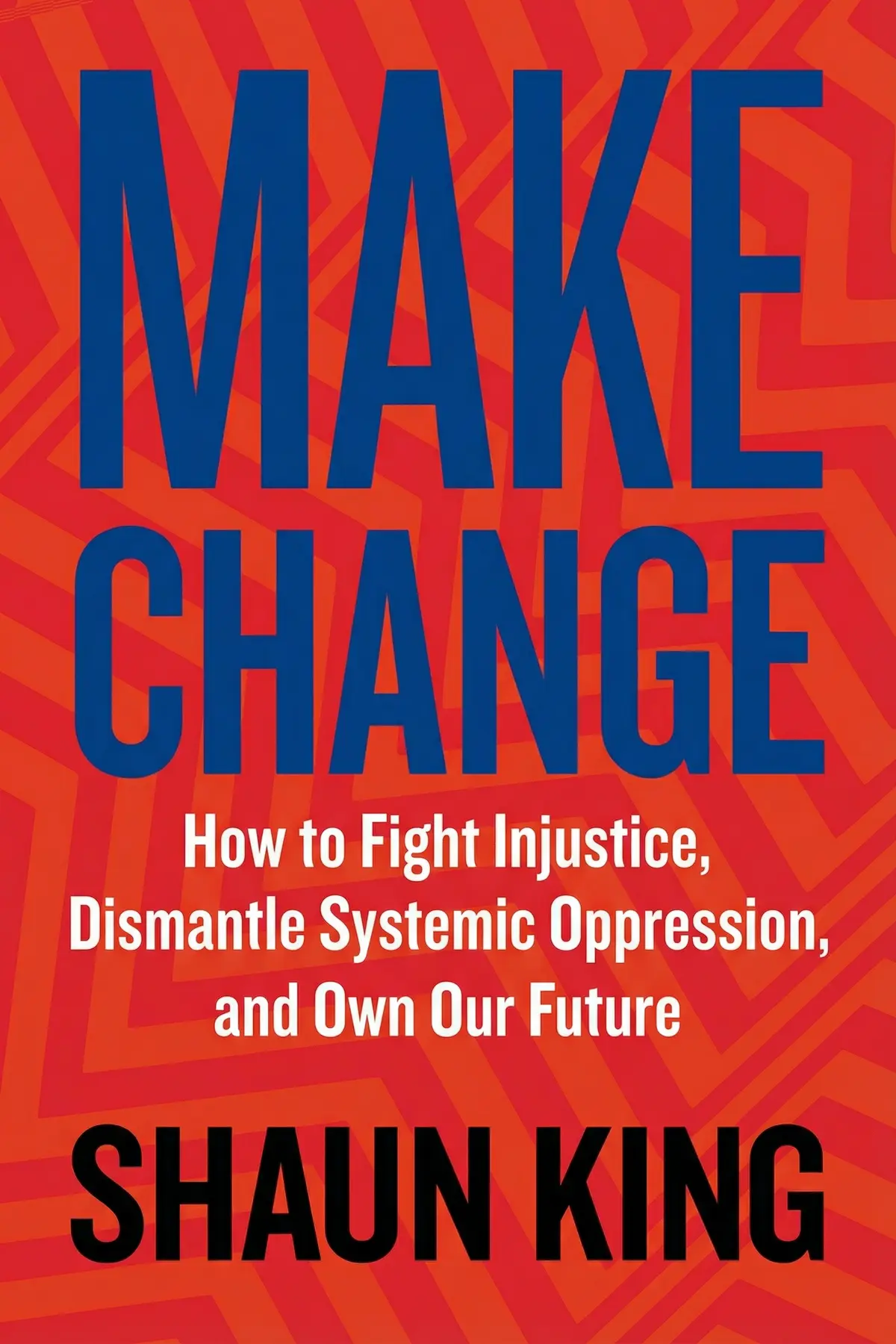
Caring about injustice and feeling powerless to touch it is a painful combination, and in Make Change, Shaun King argues that the feeling comes from misreading history. Big change has never been made by a few heroes. It comes from ordinary people doing thousands of small things together.
King, a leading voice of the Black Lives Matter movement, opens with hard numbers. In recent years American police have shot about three people a day, a disproportionate share of them Black, and more than half a million people in the country are homeless. Problems that large make one person feel irrelevant.
King argues the reverse. Progress is never automatic, so it moves only when individuals choose one cause, join an organized effort with a real plan, and keep going after defeats. He shows how to pick that cause and what to do in your first week as a volunteer. He also explains what separates movements that win from those that fade, and how to last long enough to see a result.
1 min 43 sec
A college course King did not really want to take, where he studied an old German historian, overturned a belief he had held until then. It changed how he read every setback his movement suffered.
1 min 30 sec
Most caring people spread themselves across a dozen issues and move none of them. King offers a blunt test for choosing, and his own reason for choosing began with a beating in a school hallway.
1 min 26 sec
Too young, too old, too busy, not qualified. King has heard every reason for staying out, and he answers each one with a real person who refused to accept it, including himself.
1 min 30 sec
Many willing people never act because they cannot see a first step. King’s starting routine fits into a single evening, but he warns that the early work will look nothing like the protests on television.
1 min 52 sec
A hashtag united millions of people, and still not one grieving family got justice. King explains what that energy lacked, and how a smaller campaign in New York managed to change the law.
1 min 34 sec
King’s new organization won its first election and then lost two in a row by embarrassing margins. What the team did next is the difference between a movement that fades and one that grows.
1 min 20 sec
The most committed activists are often the first to collapse. King argues that rest belongs inside the work, and he borrows a striking claim from Audre Lorde to answer anyone who feels guilty about stopping.
1 min 26 sec
A man on death row in Texas had days left, and the odds looked impossible. King’s campaign to stop the execution shows what the rewards of this work can be when the system seems built to win.
1 min 10 sec
What King offers, finally, is a different picture of the people who change things. A 16-year-old organizing a strike, a 90-year-old entertainer still speaking out, a candidate serving drinks between campaign events, a volunteer entering data on a weeknight. History rises and falls, and the dips grow from structures people chose to ignore. The climbs come from people who decided to stop ignoring them.
That decision is the place to start. Use King’s test to name the one injustice that makes you angriest, and let your own history guide the choice. Find a local group working on it, email them this week, and accept the dull first tasks as your training. When a campaign fails, as most will, study what the people you could not reach were worried about, the way Real Justice did after San Diego and Sacramento. And guard your energy with a few phone-free hours, because this work is long.
Rodney Reed is alive because three million people signed a petition and volunteers made thousands of phone calls, each person doing a small part.
Police shootings, homelessness, soaring health costs and a warming planet can make any caring person feel powerless. What could one individual possibly do? Shaun King, one of the best-known voices of the Black Lives Matter movement, argues that this feeling comes from misreading history. Progress has never moved forward by itself. It rises and falls, and every climb out of a bad period has been the work of many ordinary people doing small, steady things together. King builds his case from his own life: a brutal racist beating in a Kentucky high school, years of drifting away from activism, and campaigns that saved a man from execution and changed how New York jails young people. From these he draws a practical path. Choose the one cause that hurts you most, find a local organization and start with humble tasks, and bring your particular skill as you grow. The book also explains why good intentions fail. Movements need energized people, real organization and a plan as detailed as the problem. Readers learn to treat lost campaigns as lessons, to protect their energy from burnout, and to see that big historical change is made of thousands of small acts.
People who follow the news about injustice and feel helpless to do anything about it.
Students and young professionals ready to volunteer but unsure where to begin.
Organizers whose campaigns have stalled after early energy faded or a big loss.
Shaun King became one of the leading figures in the Black Lives Matter movement after Eric Garner's death in 2014. He has written for the New York Daily News and The Intercept and hosted a daily news podcast, The Breakdown. He co-founded Real Justice, which has helped elect 20 district attorneys, and the Grassroots Law Project, which works with families affected by police brutality. In 2018, Time named him one of the 25 most influential people online. He has also started and sold three tech companies.

Listeners find this work to be essential reading that provides a thorough education from start to finish, and one listener even called it the best read of 2020. Furthermore, the text acts as a compelling call to action for transformation, assisting people in discovering their inner activist, while one listener characterizes it as a roadmap for making change. The prose is also highly captivating, with one listener observing that it feels as though the author is talking straight to the audience. Listeners value the profound emotional resonance, with one saying it feeds their soul, and they greatly respect the author’s openness and sincerity. This title is also very easy to connect with, as one listener points out how it details the author's own path as a change-maker.
This book acts like a compass for anyone feeling lost in the current political climate. King manages to weave his personal journey into a broader instructional guide that truly feeds the soul. I felt like he was speaking directly to me, stripping away the jargon to reveal the core of what it means to be a change-maker. The transparency about his failures and his resilience makes the advice feel grounded and achievable rather than just another idealistic lecture. While some chapters feel a bit more polished than others, the overall impact is undeniable. It’s an educational deep dive from start to finish that helped me identify my own 'inner activist' without feeling overwhelmed by the scale of systemic injustice. If you want a blueprint for making a difference that doesn't ignore the emotional toll of the work, this is it. It’s a required read for the modern era.
Show moreWow, what a powerful testimony. This isn't just a book; it's an experience that challenges you to look inward at your own potential for impact. King’s honesty about his upbringing and the brutal violence he survived in high school is gut-wrenching but necessary context for his drive. I’ve read a lot of non-fiction this year, but this feels like the best read of 2020 because it’s so immediate and raw. The way he breaks down the statistical reality of gun violence and police brutality makes the abstract feel painfully personal. Frankly, the writing style is so conversational that I finished it in two sittings. It feels like a long-overdue conversation with a mentor who isn’t afraid to show you their scars. This book provides the emotional depth needed to sustain long-term commitment to social justice. Highly recommended for anyone ready to own our future.
Show moreAs someone who struggles to find their place in social movements, this book was a revelation. King asks a pivotal question: 'What is your gift?' and then shows you how to use it. I’ve always felt guilty for being an introvert who avoids protests, but he validates the 'behind the scenes' work like childcare or logistics as essential. The educational value here is immense, especially the historical context regarding Leopold Von Rancke’s theories and 'the dip.' It’s a roadmap for making change that feels inclusive of all personality types. His transparency regarding his own mistakes makes him feel human rather than some untouchable figurehead. You can tell he poured his heart into these pages to help others avoid the same pitfalls. It’s definitely a soul-feeding piece of literature that I will be recommending to my entire community.
Show moreEver wonder how to turn your outrage into actual progress? This book answers that question with clarity and conviction. King provides a brilliant summary of how the current social order was crafted to keep power in specific hands. It’s an educational journey that doesn't just point out problems but offers tangible solutions for dismantling them. I found the section on the history of the criminal justice system particularly eye-opening, even as someone who follows the news closely. The book serves as a powerful testimony to what can happen when we stop making excuses and start organizing. His voice is distinct and urgent, making the reader feel like an essential part of the story. By the time I finished, I felt equipped with a real roadmap for the next generation of activists. It is the best read of the year for those who want to see a better world.
Show morePicked this up during the 2020 protests and it served as the perfect guide for navigating that turbulent time. This book is a required read because it bridges the gap between understanding injustice and taking action against it. King's journey as a change-maker is presented with such transparency that it’s hard not to be inspired. He manages to make the daunting task of 'dismantling systemic oppression' feel like a series of manageable, necessary steps. The focus on identifying one's unique skill set—whether that's administrative, creative, or physical—removes the barrier to entry for many people. It’s the best read for anyone who wants to ensure that the current wave of activism isn't just a trend but a lasting movement. Truly a powerful testimony that promotes genuine, sustainable change through organized effort. It fed my soul when I was feeling most cynical.
Show moreFinally got around to reading King's manifesto and it’s a solid mixture of personal history and tactical advice. The writing is incredibly engaging, moving at a clip that sometimes feels like a suspense novel when he recounts his experiences in Kentucky. Truth is, the book struggles slightly with its dual identity as both a memoir and a call to action, leading to some jarring transitions between his personal life and policy discussions. However, the practical steps he outlines for organizing are genuinely useful for those of us who aren't comfortable on the front lines. I appreciated the emphasis on using your specific gift, whether that’s cooking or administrative work, to support the movement. It’s a powerful testimony that proves everyone has a role to play in dismantling oppression. Even if you don't agree with every tactical decision he's made, the roadmap he provides for local organizing is undeniably valuable.
Show moreThe chapter on 'the dip' was a revelation for me. It perfectly explains that frustrating moment when progress stalls and you feel like giving up on your goals. King’s writing is punchy and direct, which helps when dealing with heavy topics like mass incarceration and systemic racism. I did feel that the religious undertones were a bit smuggled in toward the middle, which might be off-putting for some secular readers. However, his work with the Real Justice movement is impressive and provides concrete proof that his methods can yield results. Bernie Sanders’ foreword sets a strong tone for the rest of the book, emphasizing that this is about collective action rather than a single persona. It’s a compelling read, even if it feels a bit padded in the middle sections with repetitive motivational phrases. Definitely worth your time if you want to understand the machinery of power.
Show moreKing writes with a raw honesty that feels like a face-to-face conversation. He doesn’t shy away from the messy parts of his life, including the moments he wanted to quit everything out of sheer overwhelm. This relatability is what makes the book so effective; it makes the reader believe that they, too, can overcome their procrastination and capacity issues. The research presented on the Washington Post’s tracking of police killings is sobering and serves as a necessary wake-up call for those still on the fence. I appreciated the specific chapter on rebounding from failure, as it provides a realistic view of activism that isn't all victories and viral moments. While the 'foreshadowing' in the early chapters was a bit heavy-handed and silly, the overall message of empowerment is strong. It’s a required read for anyone looking to transition from passive observer to active participant.
Show moreTo be fair, I went into this with high expectations given King's massive social media presence. While there are some incredible insights here—especially regarding the 'War on Drugs'—the overall structure felt somewhat disorganized and unpolished. King bounces between career shifts and personal anecdotes in a way that occasionally muddles the central message, and I noticed some timeline issues regarding his family life that felt out of sync. Not gonna lie, some parts felt like a collection of sound bites I've already seen on Instagram rather than fresh, deep-dive analysis. That said, the section on rebounding from failure was surprisingly vulnerable and offers a perspective often missing from activist literature. It’s a decent starting point for beginners who need motivation, but more experienced organizers might find the advice a bit sophomoric. It feels less like a cohesive book and more like a series of essays stitched together.
Show moreNot what I expected based on the social media hype. Look, King has done some significant work, but this book often feels like he’s trying too hard to be the 'voice of a generation' without the depth to back it up. The narrative jumps around quite a bit, making it hard to follow his personal trajectory from pastor to activist, which felt a bit jarring. Some of the advice feels like a basic orientation for volunteers, lacking the intellectual rigor I was hoping for regarding complex systemic issues. To be fair, his passion is clear and the statistics he cites are staggering and important for everyone to read. But the tone can be a bit lecturing, like being stuck in a very long, arrogant sermon that you didn't sign up for. It’s a fine introductory text for those new to the movement, but it feels a bit padded and unoriginal in places.
Show moreKing argues that progress is never automatic. History swings between advances and backlashes, and it moves forward only when ordinary people push together. He urges readers to choose one cause tied to their own life, join an organized group, bring their particular skills, and keep going through failure. Movements win, in his view, when they combine energized people, good organization and a detailed plan.
He says you can care about many issues but can only fight effectively for one, because time and resources are limited. His test is to ask yourself which issue brings you to tears, anger and despair more than all the others. Your personal story usually decides it. For King, the path to fighting racial injustice began when about 15 white students beat him in a racist attack at his Kentucky high school.
Search online for leading organizations working on your cause, pick one with a local chapter, and email to volunteer or attend a public event. Read up on the group, be patient if it replies slowly, and do not ask about paid jobs right away. Expect modest early tasks like data entry, flyers and petitions, and do them with pride before bringing your own skills.
He says you will fail more often than you win, because the systems you face are large and entrenched. His group Real Justice won in Philadelphia, then lost badly in San Diego and Sacramento. The team adjusted its message to local concerns such as public safety, and that helped Wesley Bell become the first Black district attorney in a later race. He also stresses rest and saying no to avoid burnout.
Masaji Ishikawa

John Rawls



Miles Taylor



Fay Bound Alberti


Daniel Goleman
AUDIO SUMMARY AVAILABLE
Get the key ideas from Make Change by Shaun King, plus 5,000+ more nonfiction titles.









