
13 min 52 sec
Available in: English
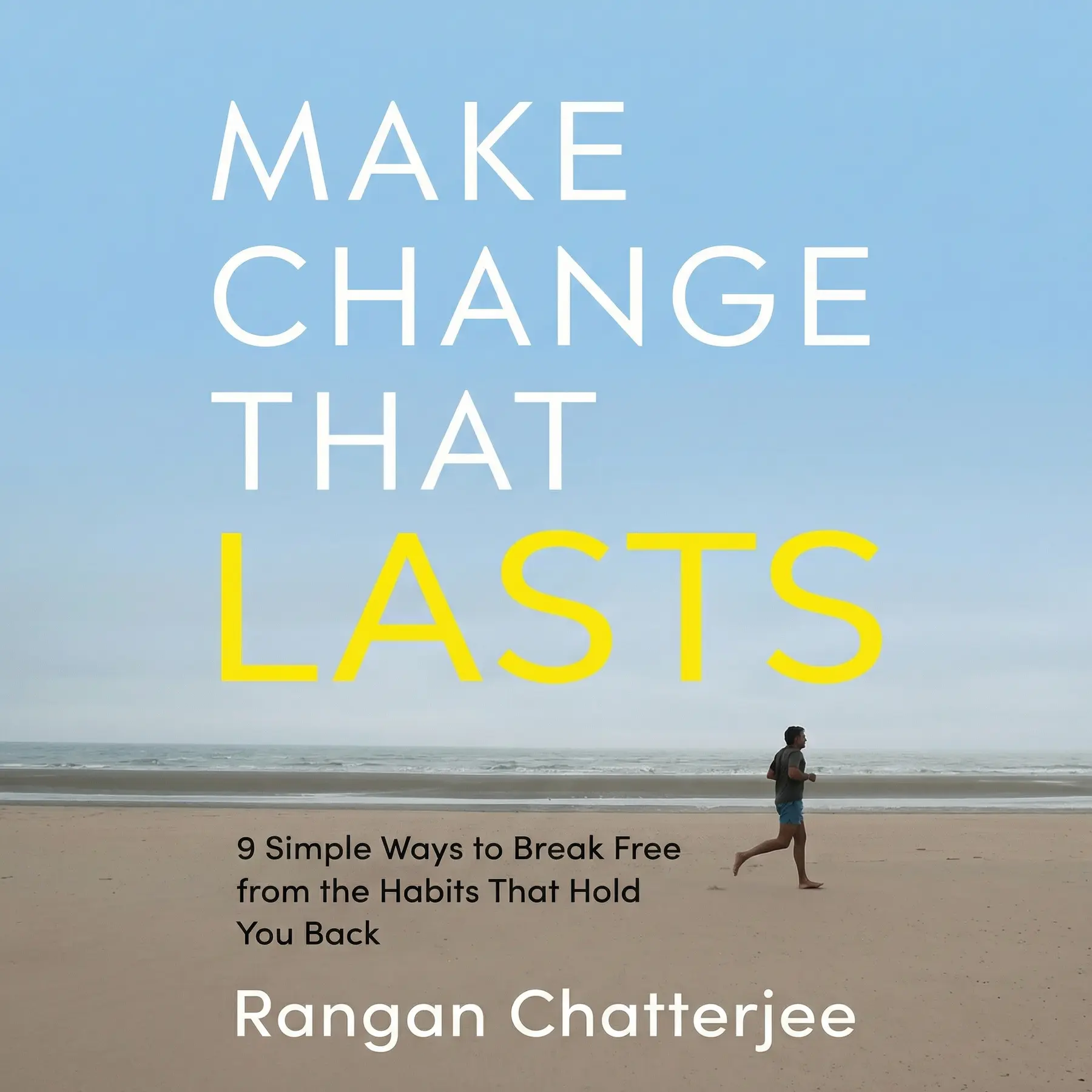
Make Change That Lasts: 9 Simple Ways to Break Free from the Habits That Hold You Back
Shows why knowing what to change rarely changes anything, and how to find the hidden needs for approval, comfort, certainty or busyness that keep unwanted habits in place, then loosen them in small steps.
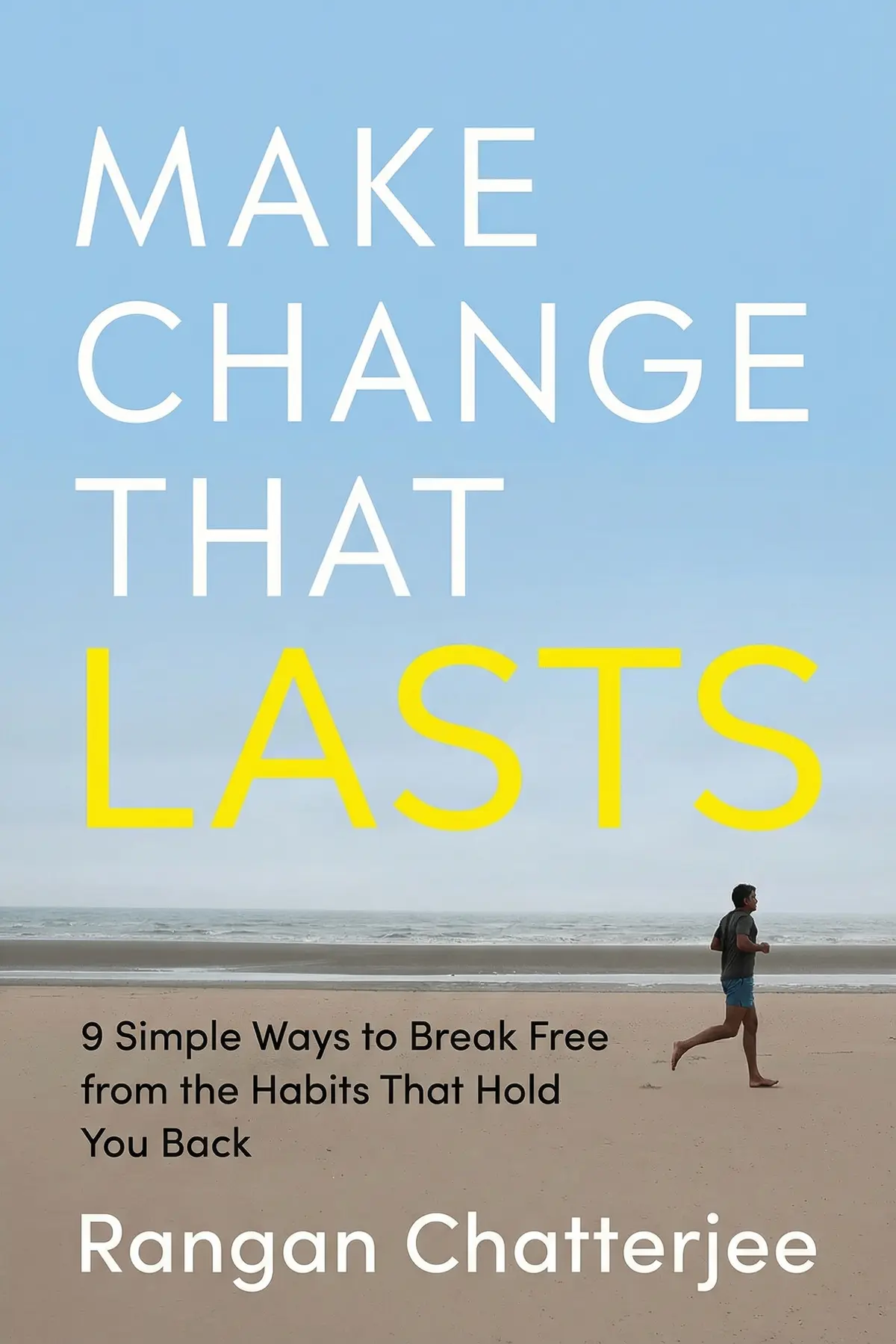
Table of Content
1. Introduction
1 min 04 sec
If you know exactly what you should change and keep doing the opposite, the problem is probably not your willpower. In Make Change That Lasts, physician and broadcaster Rangan Chatterjee argues that stubborn habits often cover a hidden reliance: on approval, comfort, being right or staying busy. Snacking, scrolling and overworking are frequently ways to escape a discomfort we have never named.
His answer is what he calls minimal reliance. You can keep the chocolate or the phone, but you choose them on purpose instead of using them to hide. Lasting change, in his view, comes from finding the need that drives a behavior and loosening its grip, not from fighting the behavior harder. He makes the case through other people’s stories, among them a doctor ashamed of her cravings, and through his own life, from a rejection on a school field at 14 to a panic in open water. What you gain is a way to read your own habits, plus a handful of small experiments to start this week.
2. Find the need hiding behind your cravings
1 min 40 sec
A doctor who knew everything about sugar still could not stop eating chocolate, and a patient’s cruel remark made it worse. What finally broke the pattern had nothing to do with nutrition or self-control.
3. Trust your own body over borrowed rules
1 min 41 sec
A woman followed popular health advice to the letter and felt worse every week. Her story, and another about a friendship that drained all her energy, show the cost of measuring yourself against someone else’s yardstick.
4. Say no and keep the people who matter
1 min 33 sec
One afternoon on a school field turned a teenager into an adult who agreed to everything. The habit felt like kindness, yet it was slowly damaging his health and the very friendships it was meant to protect.
5. Grow stronger by choosing small discomforts
1 min 29 sec
Delivery apps and perfectly heated homes make life easy, and Chatterjee thinks that ease is costing us. A frightening swim, once the ocean floor drops out of sight, shows what changes when you stop avoiding the uncomfortable.
6. Trade the need to be right for calm
1 min 51 sec
A personal post about racism drew angry replies, and the urge to strike back was strong. What Chatterjee did instead, and a lesson borrowed from shopkeepers, offers a calmer way to handle disagreement and setbacks.
7. Free yourself from old grudges and busyness
1 min 42 sec
One woman carried anger at a betrayal for decades, and it may have cost her more than peace of mind. A full calendar can hold you back in a similar way, and the fix starts with one slow day.
8. Lean on others without losing yourself
1 min 36 sec
A roommate with an exam the next morning made a choice one night in 1998 that, years later, shaped how a doctor answered a friend’s late-night call. It reveals the kind of reliance worth keeping.
9. Conclusion
1 min 16 sec
Helen’s chocolate, a teenager’s years of saying yes, Maren’s decades of anger and a calendar with no empty squares look like separate problems. Chatterjee’s argument is that they share one shape. Each is a reliance on something outside you, whether approval, comfort, expert rules, being right, the past or busyness, that ends up deciding how you feel. Pushing harder against the behavior rarely holds, because the need underneath is still there. Change lasts when you see that need and loosen it.
That makes the work smaller and more personal than most self-improvement plans. Begin with the habit that frustrates you most and notice what you felt just before it. Practice one honest no and one chosen discomfort, a cold shower or the stairs. When a disagreement flares, say you have a different perspective and watch the tension ease. And pick one action for each of your four circles, because loosening the unhealthy reliances is meant to leave room for the healthy kind.
Steve drove through the night before his exam. That is the reliance worth keeping: someone you can call at midnight, and the freedom to be the one who answers.
About this book
What is this book about?
Most people already know what they should do differently. They know sugar harms them, that saying yes to everything leaves them exhausted, that a packed calendar is not the same as a good life. They still keep doing it. Physician Rangan Chatterjee argues that the missing piece is not willpower or more information, but insight into why a habit persists. His central idea is minimal reliance. Many habits, he says, cover a dependence on something outside us: other people's approval, expert rules, comfort, being right, old grievances or the feeling of being busy. These reliances tie our well-being to forces we cannot control. Minimal reliance does not mean giving up treats or pleasures. It means choosing them on purpose rather than using them to escape discomfort. Drawing on other people's stories and his own life, from a rejection on a school field at 14 to a night drive in 1998 that stayed with him, Chatterjee offers small, practical experiments: a first honest no, a chosen discomfort, a calmer phrase in an argument, a slow day each week and one action for each of four social circles.
Book Information
Who it's for
Stuck despite knowing better
People who know exactly what they should change but keep slipping back into the same habits.
Drained by saying yes
People-pleasers and overworkers who feel drained by saying yes and staying busy.
Stress showing in habits
Anyone whose stress shows up as cravings, scrolling, grudges or a constantly full calendar.
About the Author
Rangan Chatterjee
Rangan Chatterjee is a British physician, author, television presenter and podcast host. He became widely known through the BBC One series Doctor in the House, shown in more than 70 countries, and has served as resident doctor on BBC Breakfast. He hosts the podcast Feel Better, Live More. His books, including The 4 Pillar Plan and Happy Mind, Happy Life, have reached the Sunday Times bestseller list, and his TED talk How To Make Disease Disappear has passed 5 million views.
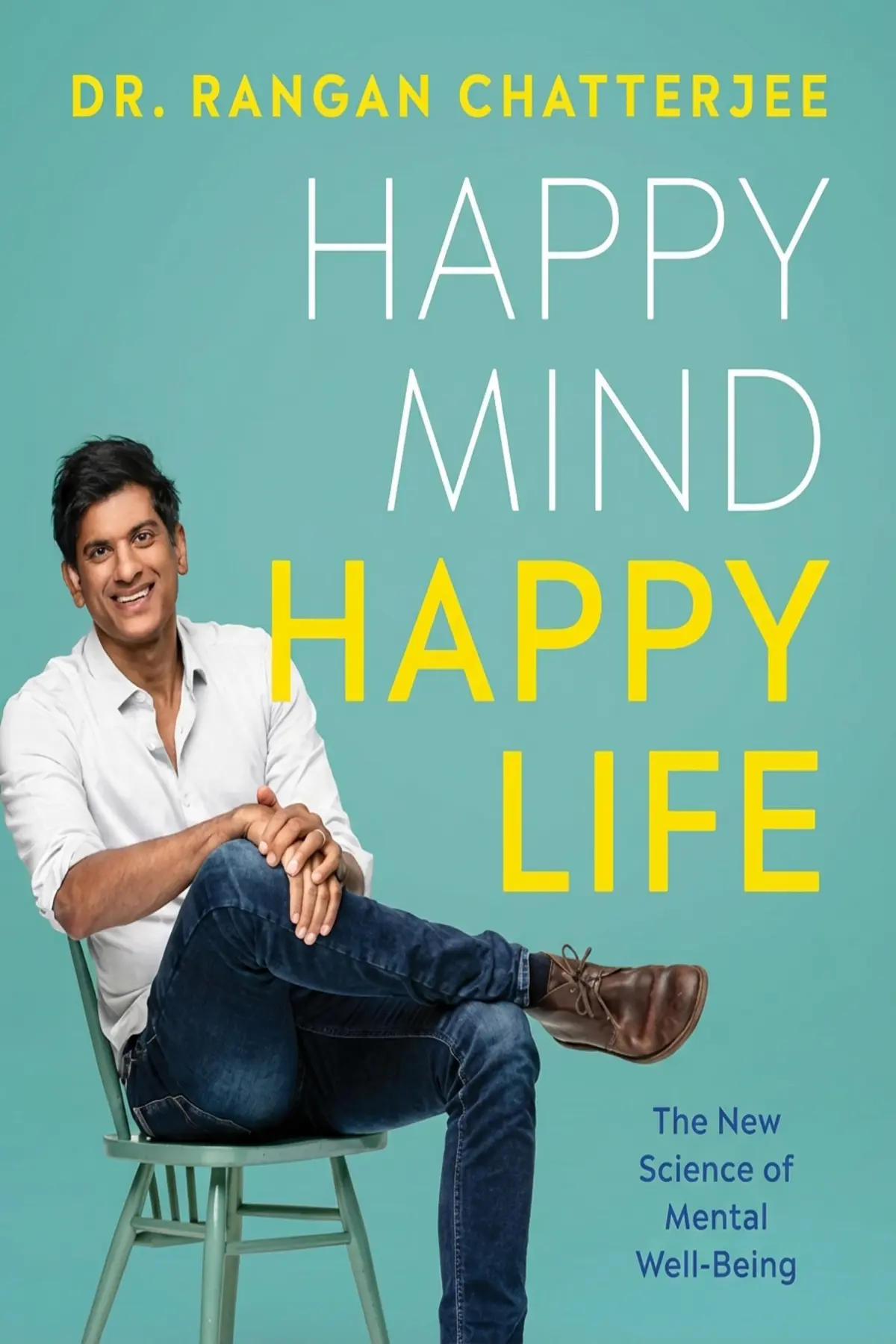
Happy Mind, Happy Life: The New Science of Mental Well-Being
Rangan Chatterjee
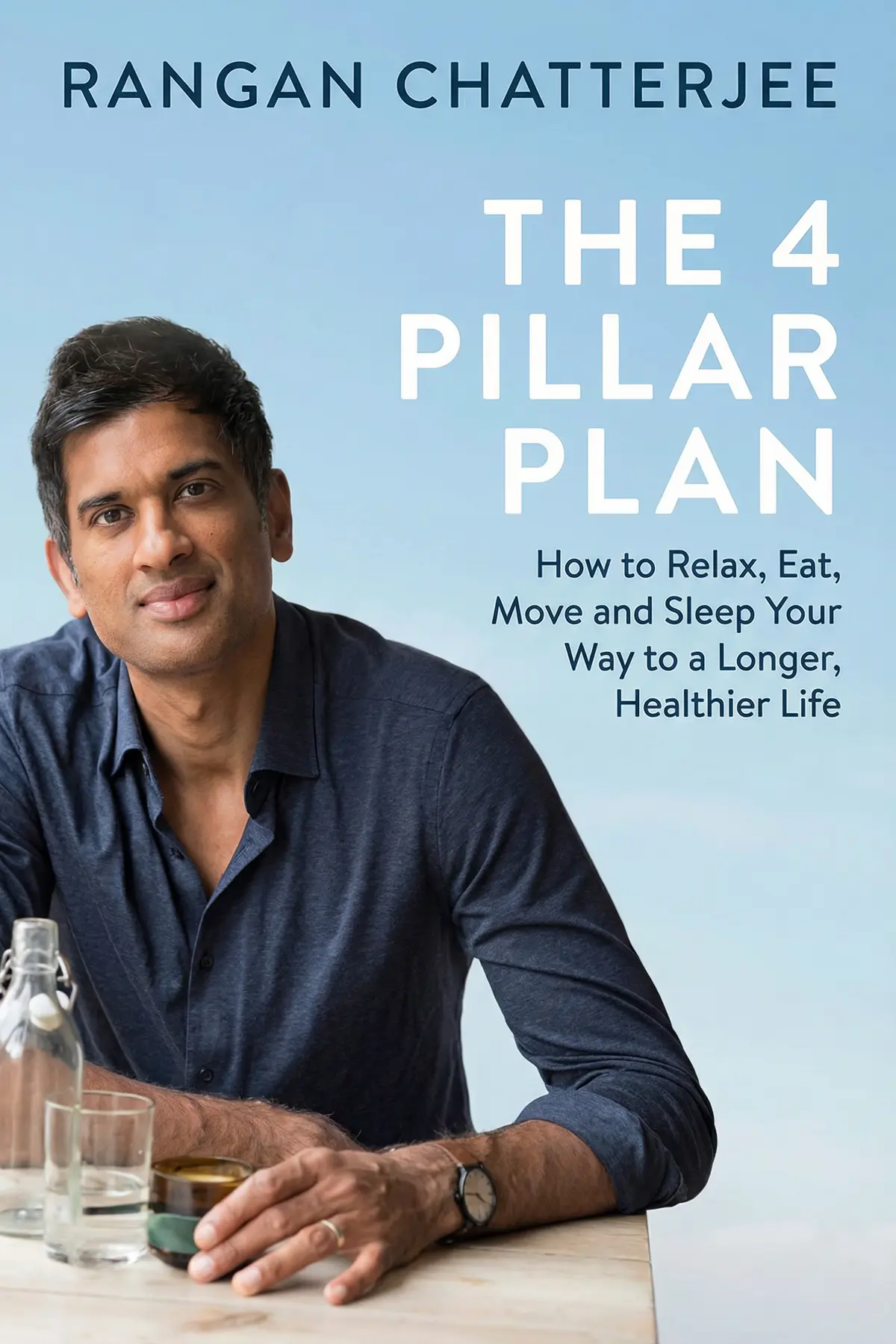
The 4 Pillar Plan: How to Relax, Eat, Move and Sleep Your Way to
Rangan Chatterjee
Ratings & Reviews
Ratings at a glance
What people think
Listeners find that this guide provides actionable tips and deep viewpoints on self-improvement, describing the experience as truly life-altering. The material is top-notch, featuring striking imagery and very accessible prose, while one listener highlights how simple the concepts are to put into practice. Listeners also value the empathetic delivery and the meaningful reflections shared throughout.
Top reviews
Grace
Picked this up because I’ve been a follower of Dr. Chatterjee’s podcast for years, and this book feels like the natural evolution of his work. While his previous books focused heavily on the mechanics of health, this one dives deep into the psychology of why we struggle to maintain those habits in the first place. Frankly, the concept of 'reliances'—those internal blockers that prevent us from moving forward—was a complete lightbulb moment for me. The writing is incredibly compassionate, almost like sitting in a therapy session with a friend who genuinely wants the best for you. I found the practical advice on mindfulness and self-observation much more useful than just another list of things to eat or avoid. It is a beautiful book to hold, filled with soothing photography that matches the gentle, reflective tone of the text. This isn't just a health manual; it’s a guide to becoming an expert in your own internal world.
Show moreManop
Finally, a health book that doesn’t make me feel like I’m failing at life every time I miss a workout or eat a cookie. Dr. Chatterjee has written something truly life-changing here by focusing on the 'why' instead of just the 'what.' The truth is, most of us know what to do, but we can't seem to do it. This book addresses that gap with so much heart and kindness. I particularly loved the section on how our need to be right often stands in the way of our own happiness and growth. The chapter on giving more than you get was another standout for me, shifting the focus from selfish 'optimization' to genuine connection. It’s a thoughtful, insightful guide that feels very relevant for 2025. Every page is packed with compassionate insights that encourage you to look inward without guilt or judgment. This is definitely going to be my go-to gift for friends this year.
Show moreWipawan
Wow, this book really hit home for me in ways I wasn’t prepared for. I’ve always struggled with the 'shame cycle' when I can’t stick to a diet or exercise routine. Chatterjee’s approach is the antidote to that shame. He teaches you how to observe yourself without judgment, which has already changed how I react to stress at work. The writing is beautiful and the layout makes it a very easy, digestible read for busy people. Not gonna lie, I teared up during the chapter about the fragility of time and the importance of being present for those 'last' moments with loved ones. It’s a very emotional read, but also very practical in its own way. If you’re tired of the typical 'hustle' culture in health, this is the book for you. It’s about building a better relationship with yourself, and that is the most lasting change you can make.
Show morePan
After hearing him speak on a podcast about the 'reliances' we all have, I knew I needed to grab a copy. This book is a masterclass in self-compassion. Dr. Chatterjee has a way of explaining complex emotional patterns in a way that feels incredibly relatable and easy to understand. The anecdotes about his patients provide great context for the lessons, showing how small mindset shifts lead to huge health gains. I love that he emphasizes that life isn't about being perfect every day, but about how we return to ourselves when things get chaotic. The focus on 'presence' is something I’ve been trying to work on, and his advice here is some of the best I’ve found. It’s a truly life-changing perspective on what it means to be healthy in the modern world. I will definitely be revisiting specific chapters whenever I feel myself slipping back into old, unhelpful patterns.
Show moreKob
The photography in this book is absolutely stunning, creating a sense of calm before you even dive into the first chapter. I appreciate how Dr. Chatterjee has moved toward a more holistic, 'therapy-style' approach rather than just giving us another set of 5-minute hacks. To be fair, if you are looking for a rigid plan like 'The 4 Pillar Plan,' you might find this a bit abstract at times. However, the insights into how our reactions and outlook impact our physical well-being are incredibly profound. The focus on 'reliances' helped me identify why I keep failing at the same three habits every single year. My only minor gripe is that some of the personal anecdotes felt a bit self-congratulatory, which can occasionally feel slightly patronizing. Still, the core message about embracing discomfort and trusting yourself is something everyone needs to hear right now. It’s a very quick, accessible read that offers a lot of wisdom.
Show moreJavier
As someone who has read a lot of habit-forming literature, the concept of 'reliances' was a fresh and unexpected take on personal growth. Most authors tell you to just 'try harder' or 'set better goals,' but Chatterjee asks you to look at what you are leaning on to avoid your feelings. It’s an insightful perspective that makes you realize health is as much about your mind as it is about your body. The book is very easy to apply to daily life because it encourages small, manageable shifts in mindset rather than a total overhaul. I did find the tone a bit overly-simplistic in a few places, and the 'expert in yourself' blurb felt a little ambitious. That said, the compassionate delivery makes the more difficult 'therapy' parts of the book much easier to swallow. It’s a great companion piece to his earlier work, even if it’s a bit less 'medical' than some fans might prefer.
Show morePor
Ever wonder why you can't seem to make positive changes stick despite your best intentions? This book digs into the psychological roots of that struggle. It’s less about the '4 pillars' of health and more about the internal foundations of your personality. I found the framework for reducing reliances to be a really smart way to look at habit formation. The book is filled with beautiful photos and the text is very readable, which makes the deeper 'therapy' concepts feel less intimidating. To be fair, some of the advice on mindfulness and journaling isn't exactly groundbreaking if you've read a lot in this genre. However, the way it's structured and the compassionate tone make it feel fresh and accessible. It’s a solid read that I’ve already started recommending to my coaching clients. It helps you unlock a version of health that feels sustainable rather than forced.
Show moreMalee
Chatterjee has shifted his focus from the 'how' to the 'why' in this latest release, and it’s a transition that mostly works. The book is brilliantly structured and leads you through a process of self-discovery that is both challenging and comforting. I really appreciated the focus on embracing discomfort and letting go of the need to be right. These aren't usually things you find in a 'health' book, but they are so vital for long-term happiness. My only minor critique is that it can feel a bit repetitive, as if he’s trying to drive the same three points home in every chapter. Also, if you’re a fan of his more data-driven work, the lack of scientific citations might be a bit of a letdown. But as a guide for personal growth and mental wellbeing, it’s excellent. The insights are thoughtful and the compassionate tone makes it a joy to read.
Show moreGung
Look, I have a massive amount of respect for Rangan’s work, but this one felt quite different from his usual actionable style. I was expecting more of those small, concrete tips that made his earlier books so famous. Instead, this felt a bit like a rehash of a podcast rant or a long-form therapy session. There is a lot of focus on journaling and mindfulness, which is great, but it felt like there wasn't much 'new' information if you've already read a lot of self-help. Personally, I found the tone a bit preachy in the chapters regarding how we perceive stress and illness. He tries to avoid blame, but some of the stories about his patients felt a little judgmental despite his disclaimers. It’s a solid 3-star read because the framework for identifying internal obstacles is genuinely clever. I just wish it had more of the health and wellness science I’ve come to expect from him.
Show morePrayoon
Not what I expected based on the hype and my love for his previous books. While I usually find Dr. Chatterjee’s advice practical, this felt remarkably simplistic and, at times, quite condescending. The 'Simple Perfect Life' vibe of the photos felt a bit disconnected from the reality of people struggling with real, complex issues. I was particularly put off by the section where he discussed a past social media controversy regarding George Floyd. He suggests we should be open to discomfort, yet he spent pages justifying his own actions instead of truly listening to the feedback he received. It felt like he wasn't taking his own advice about the 'reliance on being right.' Furthermore, the way he links stress and personality to serious illnesses like cancer felt dangerously close to victim-blaming. I struggled to find the actionable 'change' promised in the title amidst all the anecdotes and repetitive mindfulness prompts. Not for me.
Show moreQuestions about this book
What is the main idea of Make Change That Lasts?
Rangan Chatterjee argues that stubborn habits usually cover a hidden reliance on something outside us, such as approval, comfort, expert rules, being right, old grievances or busyness. Information about what to change, which he calls outsight, is not enough. Lasting change needs insight into why a behavior persists, so you can address the root cause instead of fighting the habit with willpower.
What does Rangan Chatterjee mean by minimal reliance?
Minimal reliance means reducing how much your well-being depends on external forces you cannot control. It does not require giving up treats, phones or pleasures. It asks you to choose them consciously rather than using them to escape discomfort. His example is Helen, a doctor whose chocolate cravings faded once she saw they were soothing the stress of needing to be liked at work.
How can I stop people-pleasing according to Make Change That Lasts?
Chatterjee, a former people-pleaser himself after a painful rejection at 14, recommends starting small. Say no to one thing that drains you and state your preferences openly. It will feel uncomfortable at first, but boundaries let others see and respect the real you. He argues that pleasing everyone actually weakens relationships, while consistent small refusals build healthier, more honest ones.
What practical steps does the book suggest?
Chatterjee offers several small experiments. Note what you feel before giving in to a habit. Keep a journal of moments when you acted like a hero. Add a chosen discomfort such as a cold shower or taking the stairs. In disagreements, say you have a different perspective. Set aside one slow day a week, and pick one action for each of four circles: community, friends, family and partner.
Who should read Make Change That Lasts?
It suits people who understand what they should change but keep falling back into old patterns, especially those whose habits are tied to stress. People-pleasers, perfectionists, chronic overworkers and anyone holding onto old grievances will find their situation described. The tools are small and personal, from a first honest no to one weekly day of rest, so it works for busy readers.
Readers also enjoyed

59 Seconds: Change Your Life in Under a Minute
Richard Wiseman





A Guide to the Good Life: The Ancient Art of Stoic Joy
William B. Irvine


A High-Performing Mind: Strengthen Your Mind and Live Your Best Life
Andrew D. Thompson


Abundance: The Inner Path to Wealth
Deepak Chopra
AUDIO SUMMARY AVAILABLE
Listen to Make Change That Lasts in 15 minutes
Get the key ideas from Make Change That Lasts by Rangan Chatterjee, plus 5,000+ more nonfiction titles.
- 5,000+ titles
- Listen as much as you want
- 7-day free trial
- Cancel anytime









