All About Love: New Visions
bell hooks
 English
Shows long-term couples why new tricks stop working and how desire returns when each partner accepts their own sexual self, takes charge of their arousal and stops treating sex as a duty.
58 sec
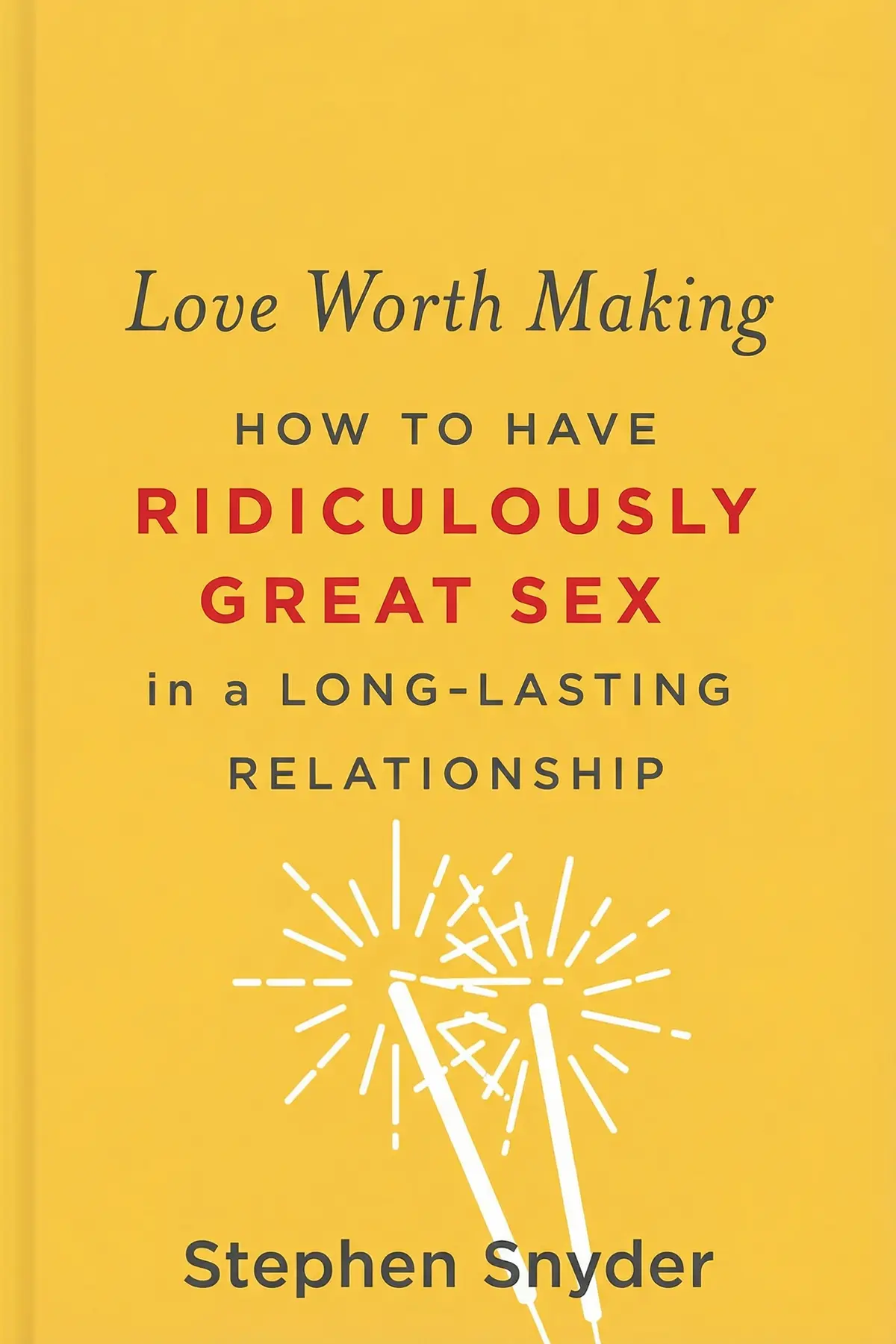
Many couples try to buy their way back to passion with new positions, new toys and endless advice, then watch the thrill fade fast. In Love Worth Making, psychiatrist and sex therapist Stephen Snyder explains why: without real emotional connection, erotic novelty wears off fast. What these couples are missing is a state no formula can deliver, and he calls it true arousal.
Snyder argues that great sex in a long relationship depends on how each partner treats their own sexual self. This is the honest, childlike part of us that mostly says yes or no. If you accept it, let it be a little selfish and stand your ground with your partner, desire tends to return.
His evidence comes from couples in his Manhattan practice. Each case gives a rule you can test at home, from a brief embrace that keeps desire warm to a better way to deal with the thoughts that spoil the moment.
1 min 58 sec
A woman who felt nothing in the bedroom found her desire again with two small changes. One of them involved furniture. The other meant asking her husband to try less hard.
1 min 55 sec
One partner tries harder and harder in bed, and the other only grows more critical. The missing ingredient sounds like a flaw, and a troubling fantasy shows how shame can block it.
1 min 54 sec
A husband who swore he was always ready still left his wife feeling unwanted. A strange lesson from the animal world changed his mind, and a habit that is not quite cuddling kept things warm.
1 min 59 sec
A man still attracted to his wife felt an invisible force stopping him from reaching for her. The force turned out to be a pattern the two of them were building together, one step at a time.
2 min 02 sec
Just as one partner finally got better, the other seemed to fall apart. The way through was a skill most couples never practice: holding your position while fear tells you to rush or hide.
2 min 13 sec
A couple’s children had finally left home, and one partner lost all interest in sex. The cause went back decades, and the cure began with a coin toss and a wave of sadness.
1 min 16 sec
Love Worth Making turns the usual sex advice around. It doesn’t offer a better technique. It asks for a better relationship with the part of you that feels desire. That small, honest, selfish self can’t be rushed, shamed or argued into anything. Carmen’s couch, Jill’s fantasy and Sarina’s river of sadness all make the same case: once that self is accepted, arousal has room to come back.
One habit makes the rest easier. People often stop enjoying sex because automatic negative thoughts, which Snyder calls ANTs, take over their attention. Many advisers say to replace those thoughts with affirmations. Snyder thinks it works better to spot an ANT, acknowledge it and move on without giving it your emotional attention.
Beyond that, set up the conditions for your own arousal instead of waiting for your partner to supply them. Allow yourself to take pleasure selfishly. Tell your partner plainly what makes you feel wanted, whether that is being chased or being welcomed. When a hard stretch brings disappointment, sit with it before you react.
The sexual self never grows up. Treated with patience, kindness and acceptance, it keeps saying yes.
Plenty of couples know the routine. They try new positions, new toys and endless advice, and the excitement soon fades again. Psychiatrist and sex therapist Stephen Snyder argues that novelty can't hold up a sex life when emotional connection is missing. What couples really want is true arousal, and no formula can produce it on command. Snyder's answer is a set of rules of the heart, built around what he calls the sexual self: an honest, childlike part of each of us that mostly says yes or no and can't be forced. Through couples from his Manhattan practice, he shows how to take charge of your own arousal and why sex should never feel like work. He also explains why many women need to feel pursued, how criticism and withdrawal tie partners into a sex knot, and what changes when each partner learns to stand their ground. Readers get practical tools for keeping desire alive, including simmering, sensate focus and a simple way to handle the negative thoughts that pull people out of the moment. He presents all of it with warmth and without shame.
Long-term couples whose sex life has faded, even though new tricks and toys have been tried.
Partners stuck in cycles of criticism, withdrawal or feeling unwanted.
Anyone who carries shame about their own arousal or fantasies and wants a kinder approach.
Stephen Snyder, MD, is a psychiatrist and sex and couples therapist in Manhattan and an associate clinical professor of psychiatry at the Icahn School of Medicine. New York Magazine has repeatedly named him a Best Doctor. He has written for Psychology Today, the Huffington Post and The Times of London, and has chaired the Consumer Book Award Committee for the Society for Sex Therapy and Research. Love Worth Making, his first book, won the 2018 Nautilus Gold Book Award for Relationships and Communication.

Listeners find this book both profound and entertaining, noting its straightforward explanations and lighthearted tone. They also value the expert perspectives on sexual health, specifically the emphasis on an erotic mindset and emotional connection, plus actionable methods for deepening intimacy. Furthermore, the relationship guidance is well-received; one listener points out the thorough coverage of various relationship styles, while the approachable writing makes intricate topics easy to grasp.
Finally got around to reading Snyder’s perspective on long-term intimacy, and I must say it’s a refreshing departure from typical manuals. Instead of focusing on mechanical 'tips,' he dives into the psychological underpinnings of why desire fades in marriage. The concept of the 'sexual self' as a non-verbal toddler was an eye-opener for me. It explains so much about the confusing irrationality of arousal! While he does weave in some spiritual language that might not land for everyone, it felt more like a 'sanctification of the ordinary' rather than a sermon. The two-step method is already helping us slow down and actually connect without the pressure of a specific outcome. It’s a gentle, wise guide for anyone feeling a bit stuck.
Show moreEver wonder why the sparks seem to vanish once you’re comfortable and secure? Snyder tackles this head-on with a lot of humor and empathy. I loved the emphasis on 'the simmer'—the idea that you don't just flip a switch when you get into bed. You have to keep the embers glowing all day through small, non-sexual connections. The writing is incredibly accessible, making complex psychological barriers feel manageable. It’s one of those rare books that makes you feel understood rather than judged for having a low libido. The shift from a 'performance' mindset to a 'feeling' mindset is exactly what my partner and I needed. It’s less about the 'how-to' and much more about the 'why,' which is ultimately more helpful.
Show moreWow. As someone who has read a lot of self-help, this is easily the most insightful book on intimacy I’ve encountered. Snyder avoids the 'plumbing' diagrams and instead focuses on the 'sexual self'—that impulsive, non-verbal part of us that needs to be nurtured. His tone is warm and frequently funny, which helps lower the defenses when talking about such a taboo topic. I particularly liked his take on 'sanctifying the ordinary' and how everyday moments of connection build the foundation for a better sex life. It’s a deep read that challenges you to look inward rather than just trying to 'fix' your partner. Highly recommended for any couple that wants to move past the routine and find real joy again.
Show moreAfter hearing so much buzz about this book, I finally gave it a shot and it didn't disappoint. Snyder’s approach to sex therapy is refreshingly honest and grounded in real-world experience. He treats the reader like an adult, acknowledging that maintaining a sexual spark in a long-term relationship takes intentionality and a shift in perspective. I loved the idea that sex should never feel like 'work.' That one realization alone changed how I approach my nights with my spouse. The focus on mindfulness and 'hotness' vs. 'intimacy' was exactly the distinction I needed to hear. Even the parts that felt a bit more religious or traditional were handled with a level of grace that made them easy to digest.
Show moreThe chapter on the 'sexual self' is worth the price of the book alone. Snyder has this way of explaining our deepest insecurities and desires with such clarity and wit that you can’t help but laugh at yourself. It’s a professional guide that doesn’t feel clinical or dry. I appreciated the emphasis on being responsible for your own arousal rather than putting that burden on your partner. It creates a much healthier dynamic in the bedroom. While some might find the patient vignettes a bit repetitive, I thought they provided excellent context for his theories. It’s a comprehensive look at how to stay erotically alive over decades of marriage. A must-read for anyone who values their long-term partnership.
Show moreThis book offers a fascinating look at the erotic mindset, though it’s definitely written from an older, male perspective. Snyder uses a lot of patient vignettes to illustrate his points, which makes the reading experience feel like sitting in on a therapy session. Personally, I found some of the stories a bit long-winded, but the core ideas about 'simmering' and maintaining an erotic charge throughout the day are brilliant. It isn't a book about toys or positions; it's about how you think and feel. My only real gripe is how he treats certain psychological theories as absolute facts, like the controversial section on early childhood connections. Still, if you can filter out the dated psychoanalysis, there is a wealth of practical wisdom here for committed couples.
Show morePicked this up after a recommendation from a friend, and I appreciate how Snyder treats sex as a spiritual and emotional experience rather than just physical exercise. He frames intimacy as a way to find balance in a relationship, which is a lovely sentiment. To be fair, the book is heavily geared toward heterosexual, cisgender couples, though he tries to include some queer examples. The 'two-step' process is a great practical strategy for reducing performance anxiety. I did find the sheer volume of patient dialogues a little overwhelming at times; it felt like he was repeating the same four or five ideas through twenty different people. However, those core ideas are strong enough to carry the book through its slower chapters.
Show moreLook, this isn't your typical 'ridiculously great sex' manual despite the flashy title. It’s actually a very thoughtful exploration of the psychological blocks that keep us from being present with our partners. I found the 'simmer' technique to be a game-changer for our busy schedule. It’s just about keeping that flirtatious energy alive in small ways. The truth is, some parts of the book felt a little 'old school,' especially when he talks about gender dynamics, and I didn't always agree with his conclusions. But the practical strategies for enhancing intimacy are solid. It’s an engaging read that manages to make a heavy subject feel light and hopeful. Definitely worth a look if you're in a bit of a rut.
Show moreA bit of a mixed bag for me. On one hand, the advice on being responsible for your own pleasure is vital for anyone in a long-term relationship. On the other hand, the author’s religious background peeks through way too often for a book that claims to be secular sex therapy. I found the random biblical quotes jarring and, frankly, unnecessary. Also, I have to echo what others have said about the breastfeeding analogy—it felt incredibly off-base and sexualized a non-sexual bond in a way that discredited his otherwise solid advice. It’s a 'mid' book that has some gems buried under a lot of personal bias and slightly sexist undertones regarding how men and women perceive each other. Read it with a critical eye.
Show moreNot what I expected at all. I was looking for modern, science-based advice, but this felt like a throwback to 1950s psychoanalysis. The author makes some very strange claims about breastfeeding and 'first sexual exposures' that honestly made my skin crawl. It’s hard to take a professional seriously when they project that kind of weirdness onto infant care. Plus, the constant sprinkling of religious quotes felt forced and out of place in a therapeutic context. If you want something realistic that deals with the complexities of modern desire without the baggage of religious morality or outdated Freudian theories, I'd suggest sticking to Esther Perel. This was mostly a waste of time and left me feeling more frustrated than inspired.
Show moreStephen Snyder argues that technique and novelty can’t keep sex exciting in a long relationship without emotional connection. What couples want is true arousal, and it grows when each partner cares for their own sexual self. That means taking charge of your own arousal, accepting your desires without shame, allowing some selfishness in bed and standing your ground with your partner.
Simmering is Snyder’s term for a brief moment of shared excitement when sex isn’t practical, such as a sensual hug that leaves both partners a little buzzed. It keeps the erotic climate warm between sexual encounters. He separates it from cuddling, which he says tends to drain erotic energy. He also suggests that in straight couples the man should simmer the woman more often, as a sign of his desire.
A sex knot forms when a partner’s sexual self doesn’t respond the way they want, and each person’s reaction makes things worse. In one case, a wife criticized more and her husband withdrew more, until neither felt wanted or welcome. Snyder’s way out began with the husband listening instead of retreating, because the criticism grew out of feeling ignored and lonely.
Start by noticing where and when your body already responds, and arrange sex around that. Let yourself enjoy sex selfishly instead of treating it as a duty. Tell your partner what makes you feel wanted. When disappointment or fear comes up, sit with it before reacting. When negative thoughts about yourself appear, acknowledge them and move on instead of fighting them with affirmations.
It suits long-term couples whose desire has faded, partners caught in patterns of criticism and withdrawal, and people who feel ashamed of how they become aroused. Snyder works from cases in his practice, including straight and lesbian couples, from early relationships to empty nesters. His tone is warm and practical rather than clinical.
AUDIO SUMMARY AVAILABLE
Get the key ideas from Love Worth Making by Stephen Snyder, plus 5,000+ more nonfiction titles.