

10 min 31 sec
Available in: English
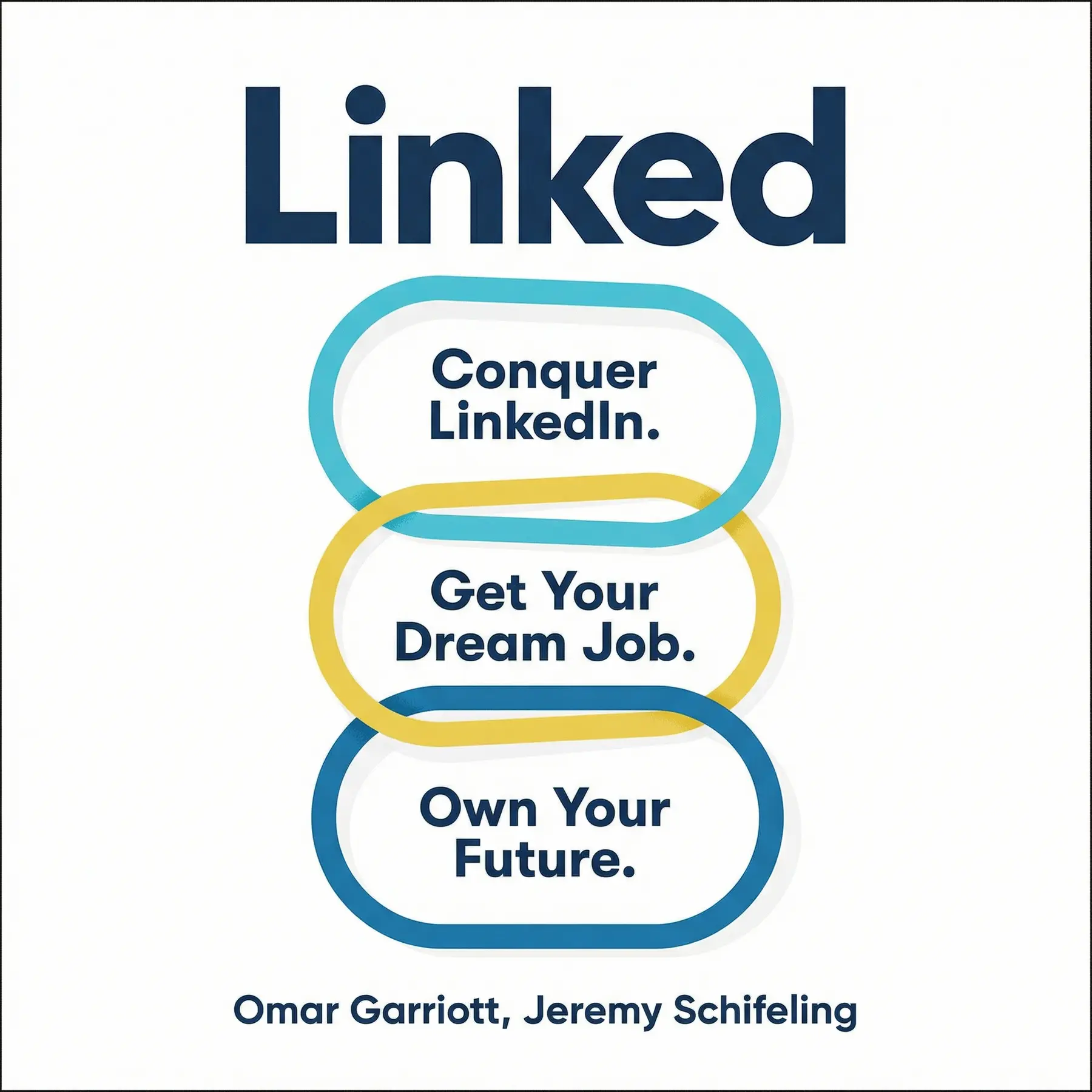
Linked: Conquer LinkedIn. Get Your Dream Job. Own Your Future.
A practical guide to using LinkedIn the way recruiters do. It shows how to find a clear career direction, match their search filters, apply early and widely, earn referrals and prepare sharply for interviews.
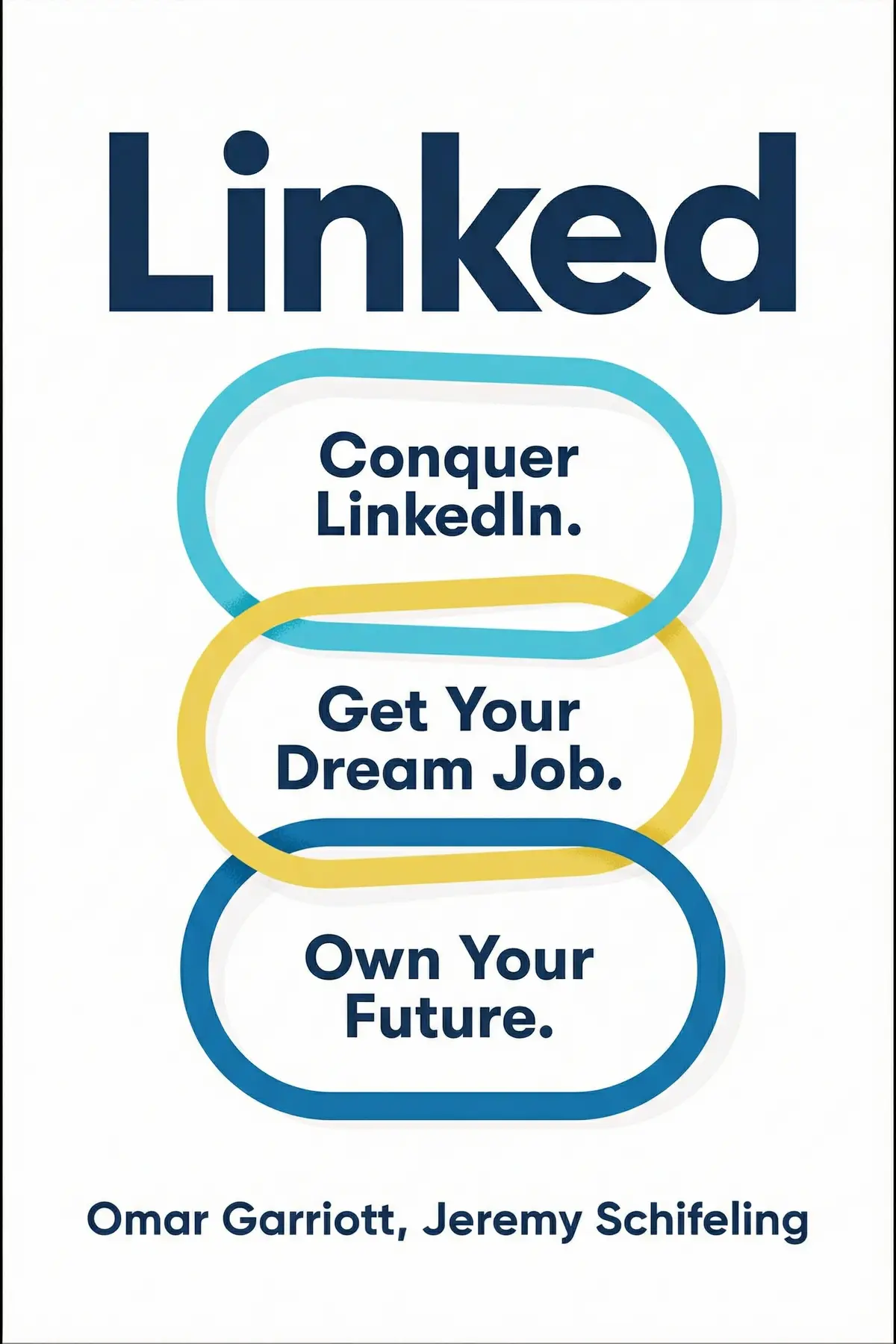
Table of Content
1. Introduction
55 sec
If your applications keep disappearing without a reply, the search itself is probably aimed badly, and that can be fixed. In Linked, Jeremy Schifeling and Omar Garriott, who both led marketing work at LinkedIn, argue that the platform rewards people who think like the recruiters using it. Those recruiters are busy, cautious screeners looking for the safest possible match.
Their case is that a job search becomes a plan instead of a gamble once you do four things. Settle on a direction. Make yourself easy to find. Apply early and widely. Then get someone inside the company to speak up for you, and arrive at the interview knowing the place well.
The payoff is practical. You will know how to read where people from your school ended up, which words belong in your headline, why the first four days after a posting matter, and how to ask for a referral without waiting to be invited.
2. Map your next role through where alumni landed
1 min 34 sec
Most people begin a job search by fixing their resume, and that is exactly why so many searches feel scattered. There is an earlier step, and the people who already took the path you are curious about can help.
3. Become the obvious candidate recruiters can't skip
1 min 50 sec
A recruiter can throw out your application in seconds for reasons that have nothing to do with your skills. Once you see how they sort the pile, your profile starts working in your favor.
4. Get your application past the software, early
1 min 51 sec
Software may reject your application before any person sees it, and timing can bury a strong candidate. The authors also suggest applying to jobs that many careful people would talk themselves out of.
5. Win referrals that outweigh a stack of applications
1 min 38 sec
Months of online applications often produce nothing, while a single conversation can change everything. The authors explain why, and why the order in which you apply and ask for help matters more than most people think.
6. Walk into the interview speaking their language
1 min 38 sec
Two candidates can meet every requirement, and only one gets the offer. The difference usually comes from work done days before the interview, in three places most people barely look.
7. Conclusion
1 min 05 sec
What the book adds up to is a change of seat. Most job seekers behave like applicants: they send material out and wait. Schifeling and Garriott ask you to see the search the way a recruiter sees it. There is a pile of hundreds, a strong wish to avoid a risky hire, a search box, a few days of real attention for each posting, and a clear preference for anyone a colleague will vouch for. Every tactic in the book is a way of becoming the low-risk choice inside that view.
Some of this can start tonight. Rewrite your headline with the exact title and city a recruiter would search for, and set alerts so you can apply within 96 hours. Before your next application, find one person at that company who shares your school or a past employer, and ask for a referral or an introduction. When your direction still feels unclear, let the Alumni Tool and a couple of honest conversations settle it before you polish anything else.
A recruiter has only moments for each name. Make yours the easy one to say yes to.
About this book
What is this book about?
Many job seekers polish a resume, send it out dozens of times and hear nothing back. Jeremy Schifeling and Omar Garriott, who both led marketing work at LinkedIn, argue that the problem is usually the approach, not the person. Recruiters face hundreds of applications for each opening, avoid risky hires and rely on search filters and tracking software to decide who gets seen. The authors turn that knowledge into a plan. Start by using LinkedIn's Alumni Tool and informational interviews to decide what you actually want. Then shape your profile so you become the Obvious Candidate for the searches recruiters run, with the right keywords in your headline and job titles. Apply within four days of a posting, aim at roles where you meet about half the requirements, and look for an insider who will refer you. The last step is the interview, where research on the company, its industry and the people on the panel lets you talk like someone who already belongs there. Readers get a structured, repeatable method for turning a stressful search into steady progress.
Book Information
Who it's for
Applying with no replies
Graduates and early-career professionals sending applications that never get a reply.
Changing fields
Career switchers who want to see where people with their background have moved and how to get noticed in a new field.
Experienced professionals needing referrals
Experienced professionals with a neglected LinkedIn profile who need referrals and sharper interview preparation.
About the Author
Omar Garriott
Jeremy Schifeling began as a kindergarten teacher in Brooklyn, recruited for Teach For America and later led education marketing at LinkedIn. Through The Job Insiders he trains students, alumni and staff at more than 350 universities in advanced LinkedIn and AI techniques. Omar Garriott spent 15 years as a tech executive, leading education product marketing at LinkedIn, Salesforce, Apple and Adobe and heading the education business at Qualtrics. He has worked as a career coach at UC-Berkeley Haas and the University of Virginia and directed the Batten Institute at UVA's Darden School.
Ratings & Reviews
Ratings at a glance
What people think
Listeners consider this LinkedIn manual to be a perceptive and useful tool for job hunters, offering straightforward and brief material that is simple to understand and apply. The guide delivers beneficial tips and concrete tasks, as one listener mentions how it aids in discovering fresh professional paths, while another emphasizes its success in managing LinkedIn’s search algorithm.
Top reviews
Omar
Ever wonder why your LinkedIn profile feels like a digital graveyard while others are getting flooded with recruiter pings? This book completely shifted my perspective on how the platform actually functions. Instead of just telling you to 'network,' the authors dive into the specific keywords you need in your About section to satisfy the ATS and the search algorithm. I spent one afternoon updating my profile based on their suggestions, and the difference in my search appearances was almost immediate. The tone is incredibly upbeat and encouraging, which is exactly what I needed during a stressful job hunt. It feels less like a dry manual and more like a secret map to the modern professional landscape. If you're looking for a clear, actionable path to visibility, this is the one.
Show morePhimwan
Wow, this book really pulls back the curtain on the entire hiring process in a way that feels empowering rather than overwhelming. Garriott and Schifeling have a gift for making the complex search algorithms of LinkedIn feel like something you can actually master. I’ve always been hesitant about the 'About' section, but their advice on blending industry keywords with personal storytelling was a total lightbulb moment for me. It’s detailed yet surprisingly fast-paced. I also appreciated their honest take on LinkedIn Premium—it's refreshing to see authors who aren't just trying to upsell you on every paid feature. They focus on what actually moves the needle, like getting hiring managers to talk about themselves during the interview. This is a must-have for recent grads.
Show moreSamroeng
After hearing so much hype about 'Linked,' I was skeptical it would offer anything beyond the usual career platitudes, but I was wrong. This is an essential toolkit for anyone looking to navigate the 'dark arts' of the modern job market. The authors don't just tell you to be better; they show you how to use org charts to understand who actually holds the power in a company. I loved the focus on the human element of the search, like how to properly message a stranger without sounding like a bot. The writing style is punchy and direct, which I appreciated. It's rare to find a career book that actually feels like it was written in this decade. I’ve already recommended it to three colleagues who are currently looking for new roles.
Show morePacharapol
Truth is, I’ve been using LinkedIn for years and I didn't know half of what was in this book. The strategy for conducting advanced people searches to find managers who are actively hiring is worth the price of admission alone. It’s those kinds of specific, 'insider' tips that set this apart from the generic advice you find online. I found the authors' perspectives as former insiders to be incredibly valuable, especially when they discuss what recruiters actually see on their end of the screen. The book is detailed without being boring, and the upbeat spirit of the writing really helped keep me motivated. If you want to stop shouting into the void and actually start getting responses, you need to read this. It’s the definitive guide for the current era.
Show moreAnong
Picked this up while navigating a difficult career pivot, and I must say the tactical advice is top-notch. I particularly enjoyed the section on finding email patterns using tools like Hunter.io, which makes reaching out to specific hiring managers feel much more manageable. However, I have to agree with some other readers that the formatting can be a bit of a hurdle. Those side boxes appear on almost every page and, frankly, they make for a very choppy reading experience that can break your concentration. Despite that layout issue, the content itself is solid gold for anyone who isn't already a power user. It covers everything from interview prep to leveraging org charts on TheOrg to understand company structures better. Definitely worth the read for the tools alone.
Show moreMilk
As someone who just finished a coding boot camp, I found the breakdown of the tech-adjacent job search to be incredibly helpful. The authors mention specific resources like breakinto.tech that I hadn't heard of before, and they really emphasize building a bond with recruiters. One minor gripe is that the book tries to cover so much ground that some of the deeper strategies feel a bit rushed. I would have loved more depth on the advanced search features, though the tip about adding 'hiring' to job title searches was a brilliant little hack. It’s an upbeat overview that manages to be both strategic and tactical. Even if you think you know LinkedIn, you'll likely find a few hidden gems in here that you aren't currently using.
Show moreRin
Finally got around to polishing my online presence, and I’m glad I used this book as my guide. The authors do a great job of explaining the 'why' behind the 'how.' For instance, I never realized how much of an impact the Interview Prep tool on the main Jobs page could have on my confidence. They provide specific sample questions and practice opportunities that are surprisingly robust. I also took their advice on the LinkedIn Premium free trial to dig into Company Insights, and the data I found helped me stand out during a recent interview. It’s a practical resource that doesn’t just give you theories; it gives you a checklist. My only complaint is that some sections felt a bit repetitive towards the end.
Show morePraepimon
Not what I expected from a typical dry career manual, and that's a good thing! The upbeat tone makes the daunting task of a job search feel like a series of winnable games. I particularly found the section on the Applicant Tracking System (ATS) to be eye-opening; I had no idea how many of my applications were likely being filtered out before a human even saw them. The book is packed with actionable steps, though the frequent references to external websites and decks can be a little tedious if you're reading a physical copy. Still, the value you get from the Company Insights and the 'About' section optimization is worth every penny. It’s a clear guide that should be required reading for anyone leaving school right now.
Show moreTaweesak
To be fair, if you have already spent time in business school or worked in a high-level sales role, much of this will feel like common sense. I was looking for deeper 'dark arts' than what was presented here. While the advice is practical, there is a significant amount of filler writing that could have been trimmed to make the book more concise. I found myself skimming through several chapters that felt targeted toward someone who has never even opened a LinkedIn account. That said, the specific tip about using the Career Explorer tool to see how your current skills map to new industries was a nice touch. It’s a decent introductory guide, but seasoned professionals might find the actionable value a bit thin for the price of the book.
Show moreGioia
The layout of this book is unfortunately a bit of a mess, even if the information is high-quality. I found the constant sidebars and call-outs to be incredibly distracting, making it difficult to find a rhythm while reading. It felt like the authors were trying to pack too many ideas into one space without a cohesive flow. Furthermore, a lot of the 'insider' tips are things you could find with a quick Google search or by following a few career coaches on social media for a week. I think this is a three-star read because while it’s up to date and clear, it lacks the depth I expected from former LinkedIn employees. It’s fine for a total beginner, but for an 'oldster' like me with tech experience, it was just okay.
Show moreQuestions about this book
What is the main idea of Linked by Schifeling and Garriott?
The authors argue that job seekers succeed on LinkedIn when they think like recruiters. Recruiters sort hundreds of applications, avoid risky hires and rely on search filters and tracking software. So the book’s method is to choose a clear direction, make your profile the obvious match for those searches, apply early and broadly, earn an internal referral and research the company, industry and interviewers before you meet them.
How do I make my LinkedIn profile stand out to recruiters?
Become what the authors call the Obvious Candidate. Put the keywords for the roles you want in your headline and job titles, since LinkedIn’s search weights those most heavily. Show the location where you want to work, and say if you will relocate. Use a professional photo, remove errors, turn on the Open to Work feature, and connect with people at companies you are targeting.
How soon should I apply for a job on LinkedIn?
The book recommends applying within the first 96 hours, about four days, after a job is posted, because recruiters give early applications more attention while the role is still a priority. Job alerts help you see new postings as they appear. The authors also suggest applying to many roles where you meet around half the listed requirements, instead of only perfect matches.
Why are referrals so important in a job search?
According to the authors, online applications through job boards and career sites produce only a small share of hires, while referred candidates succeed far more often. An insider’s endorsement tells the recruiter you are credible and lowers the perceived risk. If you know someone at the company, ask early; if not, apply first and then look for an employee, alum or former colleague who can refer you.
Readers also enjoyed

60 Seconds & You’re Hired!
Robin Ryan




Be A Free Range Human: Escape the 9 to 5, Create a Life You Love,
Marianne Cantwell
Be the Unicorn: 12 Data-Driven Habits That Separate the Best Leaders from the
William Vanderbloemen
AUDIO SUMMARY AVAILABLE
Listen to Linked in 15 minutes
Get the key ideas from Linked by Omar Garriott, plus 5,000+ more nonfiction titles.
- 5,000+ titles
- Listen as much as you want
- 7-day free trial
- Cancel anytime









