

59 Seconds: Change Your Life in Under a Minute
Richard Wiseman
 English
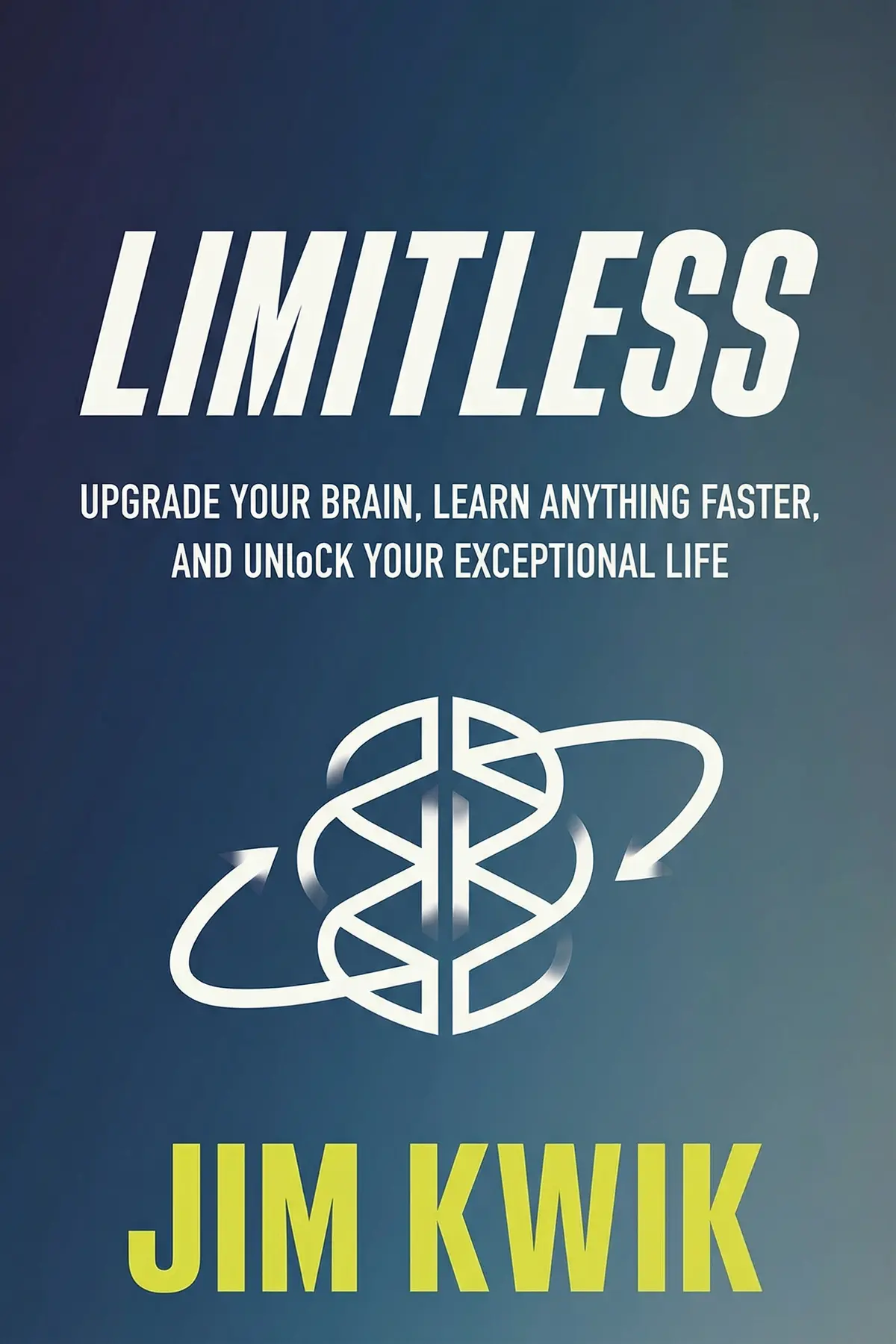
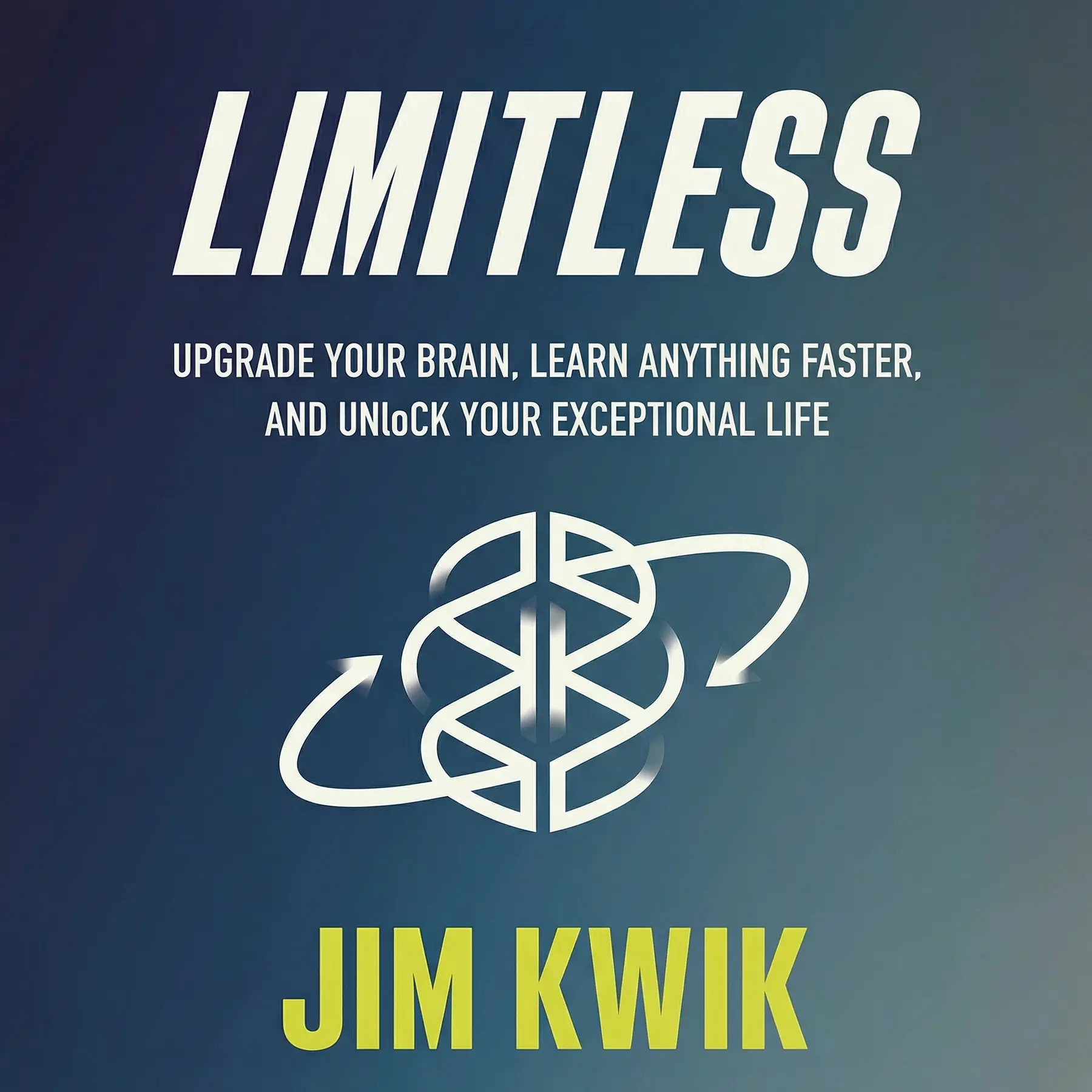
Jim Kwik argues that most learning limits are false beliefs and weak methods. He offers concrete techniques for motivation, focus, study, memory, faster reading and problem solving that anyone can practice in daily life.
1 min 01 sec
Struggling to learn usually says less about your brain than about the methods you were handed. In Limitless, brain coach Jim Kwik argues this from his own life: a childhood head injury left him so far behind at school that one teacher called him “the boy with the broken brain.” In college he stopped grinding out longer hours and changed how he studied, and his focus, memory and speed all improved.
His case is that most limits on learning are beliefs and habits, and both can be rebuilt. First comes a mindset that lets you try, then a reason and enough energy to keep going, then specific methods for focus, study, memory, reading and thinking.
Along the way you meet London taxi drivers whose memory centers grew, a word list turned into a flying fire hydrant, and a finger that can make you read up to twice as fast. Each one is something to test before the week is out.
1 min 46 sec
Every fact your phone stores for you comes at a price your memory pays. Yet a group of London drivers shows that what the brain lets go of, it may also rebuild, well past childhood.
1 min 33 sec
On a freezing overnight film shoot, one actor spent his breaks doing something nobody expected. The reason was a single question he kept asking himself, and most people carry one too, often without liking it.
1 min 52 sec
A 70-year-old with no love for early mornings is at the gym by five. A small change of wording made people more likely to vote. Both point to where lasting drive actually comes from.
1 min 32 sec
A deeply focused state can raise output by as much as 500 percent, while a single interruption can cost you twenty minutes. There is also a simple way past the jobs too dull for that state.
1 min 34 sec
Bach, a dab of scent and a kitchen timer all belong in the same study plan. Even the order in which you place material inside a session changes how much of it you keep.
1 min 33 sec
Repeating a list until it sticks rarely works for long. A fire hydrant, a seesaw and a huge diamond show a stranger method, and a familiar room can hold an entire presentation.
1 min 29 sec
Most adults read no faster than children still in their first years of school. The cause is a habit you are probably using right now, and the fix starts with something as plain as your finger.
1 min 25 sec
A tennis champion counts as a genius in Kwik’s eyes, and so does a way of thinking that skips the obvious fix. Both suggest that your hardest problems may be stuck on the wrong level.
1 min 04 sec
A teacher once looked at Kwik and saw a broken brain. The London cabbies suggest what the book adds up to: a brain given hard, steady work changes shape, and much of what holds people back is a verdict about ability that nobody tested. Limitless asks you to test it, then to give your learning a reason, a rested body and better tools.
Those tools are small enough to try this week. Trade one I can’t for a better question. Guard a 90-minute block and begin with the tiniest piece of the task you keep avoiding. Close your notes after 25 minutes and write down what you remember. Kwik also recommends a not-to-do list: tasks that outside circumstances have blocked, busywork, jobs you can hand to someone else and jobs a system already covers, so today’s effort lands where it matters.
The only requirement is to stop trusting the limit long enough to test it.
Plenty of capable people have decided they are slow learners, bad with names or hopeless at a subject. Jim Kwik had more reason than most to believe it: a childhood brain injury left him struggling at school. He argues that most such limits are beliefs and habits, and that both can change, because the brain keeps reshaping itself with use. Limitless moves from mindset to method. Kwik shows how to replace limiting beliefs and the negative questions that run in your head, how purpose, identity, sleep, exercise and food feed motivation, and how to protect time for deep focus. He then lays out concrete techniques: Pomodoro blocks with active recall and spaced repetition, memory stories and the loci method, a finger pacer for faster reading, and thinking hats and root-cause thinking for hard problems. Readers get a practical toolkit they can test within a week, drawn from cases such as London taxi drivers who grew their memory centers, Will Smith on a freezing film set and a Stanford study on voting.
Students and professionals who are convinced they are slow learners and want a way to prove themselves wrong.
People facing exams, new skills or presentations who need to remember more in less time.
Knowledge workers buried in reading and notifications who want their focus and reading speed back.
Jim Kwik is a brain coach, podcaster, writer and entrepreneur. A head injury in childhood left him struggling at school, which led him to study how learning works and to develop techniques that improve it. He has taught those methods to students at Harvard and Caltech and to staff at companies including Google, Nike and Virgin. He also supports Alzheimer's research and the building of schools in Guatemala and Kenya.
Listeners find this guide very educational, filled with useful study tactics and sensible advice. Beyond that, the content is deeply moving, as one listener called it a blueprint for tapping into infinite capability. They also praise its impact on the mind, observing that it supports neurological health and elevates cognitive clarity. This lengthened version provides added chapters, which listeners describe as straightforward and clear, including one listener who noted it doubled their reading speed. Finally, the approachable methods for boosting memory are highly regarded.
Finally got around to reading the expanded version of Limitless and it truly lives up to the hype. Jim Kwik has a way of making complex brain science feel like common sense, especially with the new sections on momentum. I've been a fan of his podcast for years, but seeing the framework laid out on paper makes it so much easier to implement. The section on "animal brain types" was a total epiphany for me; identifying as a dolphin helped me realize why my productivity peaks at specific times. While some of the memory tricks take real discipline to master, the payoff is immediate once you get the hang of them. Honestly, the advice on nootropics alone was worth the cover price. It’s rare to find a self-help book that feels this sturdy and well-researched without being dry.
Show moreEver wonder why some people just seem to absorb information like a sponge while you struggle to remember a simple grocery list? This manual isn't just about "trying harder," but about learning how to learn using the actual mechanics of the human brain. Kwik’s take on AI was particularly refreshing, framing it as a tool for cognitive augmentation rather than a threat to our jobs. I started practicing the speed reading techniques immediately and saw a noticeable jump in my words-per-minute count within the first week. The layout of the physical book is excellent, with great spacing and a high-quality dust jacket that makes it a pleasure to hold. It’s a transformative journey that forces you to confront the self-imposed walls you've built around your own potential.
Show moreAs a student who has always struggled with focus, I found the practical strategies here incredibly grounding. Jim Kwik focuses heavily on mindset, nutrition, and sleep, which are often ignored in other "hustle culture" books. I appreciate that he doesn't just give you a list of things to do, but explains the "why" behind every method. Truth is, I already knew a few of the memory techniques from other sources, which was a bit of a letdown initially. However, the way he integrates them into a holistic lifestyle—addressing stress management and brain health—is what makes this special. It’s a helpful guide for anyone looking to sharpen their edge, and the new section on momentum is perfect for anyone feeling stagnant in their studies.
Show moreThe chapter on "Momentum" in the expanded edition is exactly what I needed to get out of my recent creative slump. Jim Kwik manages to blend motivational storytelling with actionable neuroscience in a way that feels both inspiring and scientifically sound. I’ve started giving these as gifts to my family because the lessons on mindset are universal regardless of your age. My younger brother is already seeing improvements in his study habits thanks to the focus techniques. Look, many authors talk about "potential," but Kwik gives you the actual manual to unlock it. The inclusion of online resources and exercises makes the whole experience interactive rather than passive. It’s a brilliant book that makes the process of learning feel fun again.
Show moreWow. I wasn't expecting a book about memory to be so emotional, but Jim's personal anecdotes about his "broken brain" childhood really resonated with me. It’s more than just a collection of hacks; it’s a philosophical shift in how we view our cognitive limitations. The specific focus on brain health—specifically what we eat and how we sleep—is a total game-changer for my daily routine. I've even started looking into the nootropics he mentioned to see if they can help with my afternoon brain fog. Frankly, the advice on how to use AI to boost human intelligence is the most practical thing I've read all year. This is a must-read for anyone who feels stuck in their career or personal growth.
Show moreAfter hearing my father's neurologist recommend this book, I knew I had to pick it up for the whole family. It is deeply informative and provides clever ideas that are applicable whether you are twenty or sixty-five. The Expanded edition is particularly great because it tackles modern challenges like digital distraction and the rise of AI. Jim Kwik’s writing style is engaging and filled with a genuine passion that makes you want to be better. We’ve even started discussing the animal brain types at dinner, which has been a fun way to understand each other's work styles and communication needs. This isn't just a book to read once; it’s a reference guide for keeping your brain sharp and healthy as you age.
Show moreThis book is an absolute masterclass in personal development and cognitive enhancement. Jim Kwik doesn't just teach you how to read faster; he teaches you how to rethink your entire life through the lens of limitless potential. The structure allows you to seamlessly integrate these principles into a busy schedule without feeling overwhelmed by the science. I particularly loved the section on nutrition and supplements, as it provided several options I hadn't considered before. Everything from the sturdy binding to the actionable advice screams quality and thoughtfulness. It truly feels like a manual for the modern human who wants to stay competitive in an increasingly complex and distracting world. I've already seen a boost in my focus at work.
Show morePicked this up because I was feeling burnt out and lacked focus, and it has been a total breath of fresh air. Kwik’s emphasis on the holistic approach—nutrition, stress management, and mindset—makes this so much better than standard memory guides. I’ve started using his techniques for remembering names at networking events, and the results have been incredible for my confidence. The writing is easy to digest, yet the science behind it is profound enough to keep you thinking long after you close the cover. Not gonna lie, I was skeptical about the "limitless" claims at first, but the practical results speak for themselves. This is a five-star journey for anyone ready to unlock their hidden abilities and live a more fulfilled, high-performance life.
Show moreNot what I expected from a standard "productivity" book, as it dives much deeper into the biological roots of learning than I anticipated. Kwik provides a clear framework for memory enhancement that actually works if you put in the effort and practice. I noticed my reading speed doubled after just a few days of practicing the specific drills he outlines. My only minor gripe is that some of the supplemental online content felt a bit like a sales pitch for his expensive courses. Despite that, the value within the pages of the book itself is undeniable and very practical for everyday life. It's a solid 4-star read for anyone wanting to improve their cognitive function and mental clarity without needing a PhD.
Show moreTo be fair, the production quality of this book is top-notch and Jim Kwik is clearly an expert in his field. I enjoyed the sections on brain types and found the animal descriptions remarkably accurate for my own personality. However, I felt like the book spent a lot of time on "why" you should improve before finally getting to the actual "how" in the later chapters. For someone who has read a lot of personal development, some of the early mindset stuff felt a little repetitive and slow. If you’re looking for a quick list of hacks, you might find the narrative parts a bit long-winded. Still, the actual techniques for speed reading and memory are very effective if you have the patience to stick with them through the fluff.
Show moreKwik argues that most limits on learning come from false beliefs and poor methods, not fixed ability. The brain keeps changing with use, as London taxi drivers show with their extra gray matter. He moves from mindset, through purpose and physical energy, to concrete techniques for focus, study, memory, reading and problem solving, so that anyone can learn faster with the right approach.
Kwik says most adults read about 200 words per minute because they pronounce each word in their heads, a habit called subvocalization. To reduce it, he suggests counting aloud while reading, which trains the brain to see words instead of saying them. He also recommends a pacer, such as a finger sliding down the page, which he says can raise speed by 25 to 100 percent.
Kwik favors visual imagery over repetition. To remember a list, link the items in a vivid, absurd story, such as a fire hydrant lifted by balloons that batteries keep popping. For presentations, he teaches the loci method: assign each of your key points to an object along a path through a familiar room, then rehearse by walking that path in your mind.
It suits students preparing for exams, professionals learning new skills or giving presentations, and anyone who has decided they have a bad memory or are bad at a subject. Kwik’s own story of struggling after a childhood brain injury speaks to readers who feel behind and want practical methods rather than motivation alone.
Start small. Spend 30 minutes a day with devices off. Rewrite one I can’t into a more hopeful statement. Study in 25-minute Pomodoro blocks, then close your notes and write down everything you remember. Read for at least 30 minutes daily using your finger as a pacer. Kwik also suggests a not-to-do list of busywork, blocked tasks and jobs you can delegate.
Richard Wiseman





William B. Irvine


Andrew D. Thompson

AUDIO SUMMARY AVAILABLE
Get the key ideas from Limitless by Jim Kwik, plus 5,000+ more nonfiction titles.









