

14 min 03 sec
Available in: English
Lighter: Let Go of the Past, Connect with the Present, and Expand the Future
By Yung Pueblo
Shows how to trace outsized emotional reactions back to lessons learned in childhood, pause before acting on them, release what you cannot have, and become someone whose calm improves every relationship around you.
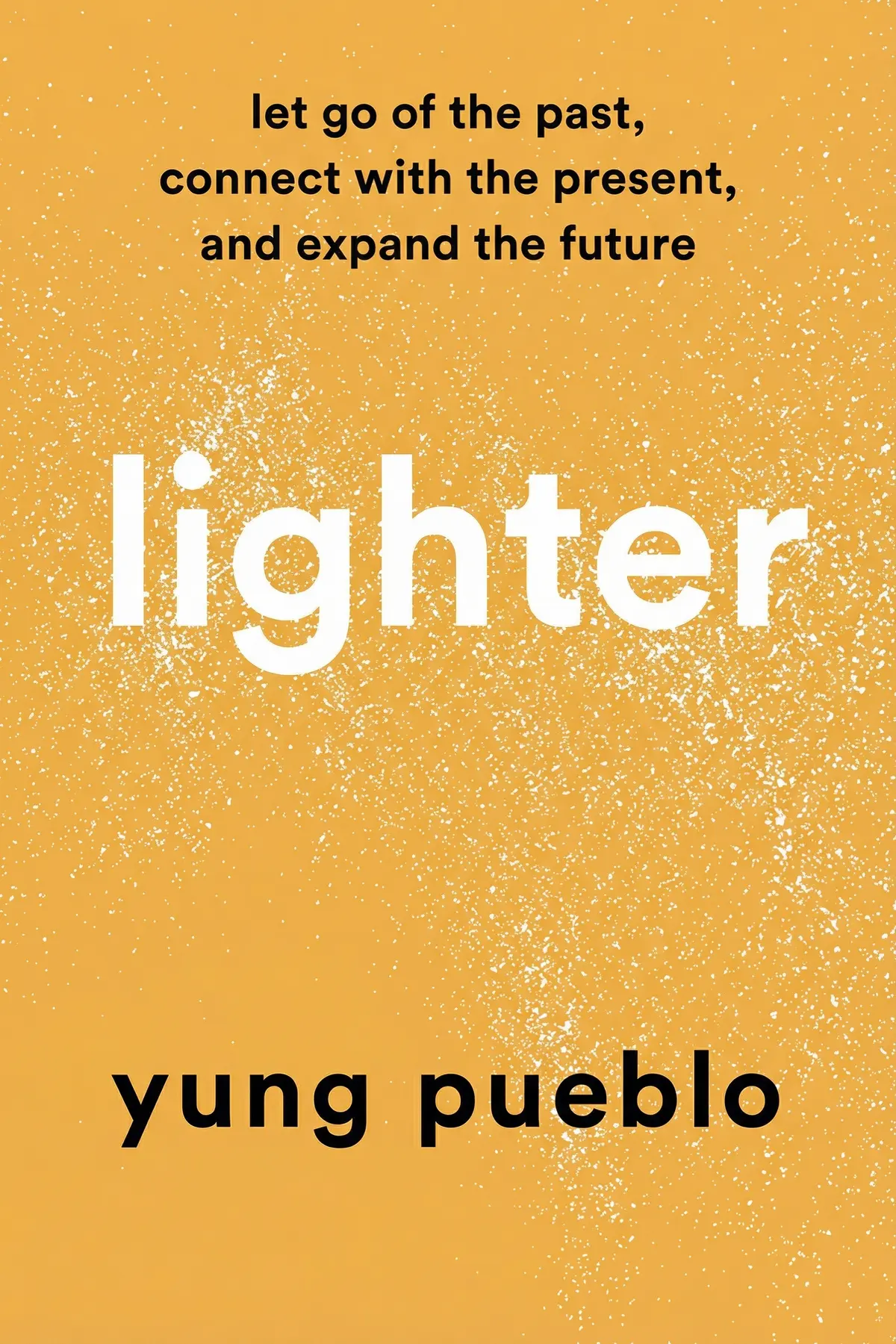
Table of Content
1. Introduction
1 min 00 sec
Many people carry old pain into new rooms. A small remark at work sets off anger that seems to come from nowhere, and the outburst leaves them ashamed. In Lighter, Yung Pueblo, the pen name of writer Diego Perez, argues that most of these reactions have little to do with the present. They are habits the mind learned in childhood, before we were aware enough to choose.
Pueblo came to this view the hard way, after drug addiction and a life chasing pleasure brought him close to death. His claim is that healing begins with a kind of self-love built on honesty. Once you can feel an emotion without obeying it, you can release what you cannot have and choose who to be, and that choice changes the people around you too.
What follows is a way to catch an old reaction as it rises, trace where it came from, and answer the moment you are actually in.
2. Practice self-love as honesty and acceptance
1 min 45 sec
The usual picture of self-love involves treats and pampering. Pueblo sets that picture aside and replaces it with something harder, which he says has to come before anyone else’s love can reach you.
3. Trace your anger back to its older roots
1 min 37 sec
A complaint about strong coffee draws a coworker’s jibe, and anger flares. The real cause lies decades back, with a father who shamed tears instead of comforting them. Seeing that changes how you act the next time you feel provoked.
4. Pause, breathe and let the wave pass
1 min 49 sec
Feeling an emotion fully and being ruled by it can look identical from the inside. Pueblo describes the small gap between the two, and the questions that turn a flare of anger into useful information.
5. Release the wish that keeps you stuck
1 min 40 sec
The facts of a painful past cannot be changed, yet they keep hurting. Pueblo points to the hidden thing that keeps the pain alive, and explains why releasing it is different from bottling anything up.
6. Become the person you choose after the impulse
1 min 41 sec
Some people fear that working on themselves will make them fake. Pueblo answers with an evening that starts with an office argument and ends at a dinner table, where an old pattern finally breaks.
7. Love a partner without needing them to fix you
1 min 40 sec
Many couples expect each other to supply happiness and calm. Pueblo argues that expectation puts a relationship in danger, and he draws a line between two kinds of closeness that look alike at first.
8. Spot the signs that your healing is working
1 min 43 sec
One good day feels like a breakthrough and one bad day feels like failure. Pueblo offers a steadier way to judge your growth, including seven signs that change is taking hold even when it feels slow.
9. Conclusion
1 min 08 sec
Lighter ends where it began, with the claim that the way you treat yourself sets the limit for everything else. Pueblo’s own turn came after addiction and pleasure-seeking nearly killed him, and the book reads as the method he built from that edge: honesty with yourself, a pause before reacting, and the slow release of wishes that cannot come true. Its picture of change is small and domestic. A parent who was shamed for crying as a child hugs their crying son instead.
Pueblo sees that scene multiplied. People around the world are working on themselves, and he believes compassionate societies can only be built by compassionate people, who learn compassion first in how they treat themselves.
To begin, catch one reaction this week that feels bigger than the moment. Breathe until the wave passes, then ask what old lesson it touched and what you wished had happened instead. When you find that wish, let it go, and then go back and repair what the reaction broke. The hug you missed can still be given; it just has to come from you.
About this book
What is this book about?
A sharp comment at work sets off anger that seems to come from nowhere. A crying child brings up a fury you cannot explain. Yung Pueblo argues that moments like these are rarely about the present. They are reactions the brain learned in childhood, long before we were aware enough to choose them. Pueblo, who came to self-healing after a life of chasing pleasure and abusing drugs nearly killed him, begins with self-love. He does not mean treats. He means honesty, curiosity and unconditional acceptance. From there he lays out a sequence: notice where a reaction comes from, let the feeling pass without acting on it, find the craving underneath, and let go of what you cannot have. What remains is the self you choose to be. The book follows that work into intimate relationships, where Pueblo separates selfish attachment from real connection, and into the slow business of measuring growth. Readers get a plain method for catching old patterns, seven signs that healing is working, and a hopeful argument that personal change adds up to a kinder world.
Book Information
Who it's for
Regretting outsized reactions
People whose anger or hurt flares up out of proportion and leaves them full of regret.
Parents repeating their upbringing
Parents who catch themselves repeating what their own parents did to them.
Couples wanting more balance
Partners who expect each other to supply happiness and want a calmer, more equal relationship.
About the Author
Yung Pueblo
Yung Pueblo is the pen name of Diego Perez, born in Guayaquil, Ecuador. The name means young people and reflects his Ecuadorian roots and his past in activism. His writing on self-healing, healthy relationships and self-knowledge grew out of his vipassana meditation practice, including many silent courses. His books have been translated into more than 25 languages, and he was named one of the Time100 Creators of 2025. He also cofounded the investment fund Wisdom Ventures and started Ready, a relationship app.
Ratings & Reviews
Ratings at a glance

What people think
Listeners view this work as a necessary read for personal development and mindfulness, with one listener observing that each chapter seems to appear at just the right time. Additionally, the writing is compelling, and listeners enjoy how it addresses human emotions. The book also functions as a crucial ally for healing, with one listener sharing how it helped them connect with their inner self. Listeners characterize the text as beautiful and life-changing, with one listener emphasizing how reading it transformed their life.
Top reviews
Pornpimon
Finally got around to reading Yung Pueblo's latest, and it was exactly what my soul needed this month. The way he discusses personal growth isn't just about feeling better; it’s about the hard, necessary work of opening up to yourself. Each chapter seemed to arrive at the perfect time, addressing specific internal hurdles I was struggling to articulate. While some might find his style simple, I found the engaging writing to be a soothing companion for my current healing journey. It’s rare to find a book that touches on deep human emotions without feeling overly clinical or detached. This is a must-read for anyone who wants to feel truly unburdened and grounded.
Show moreTern
As someone who has spent years in the trenches of recovery, I found Diego’s vulnerability here to be incredibly grounding. He doesn't just offer platitudes; he provides a language for the heavy lifting required to move past old trauma and conditioning. Personally, the sections on developing self-awareness through discipline were the most impactful for my own progress. This isn't a book you just read once and put away on a shelf to gather dust. It is a beautiful, life-changing tool that encourages you to be much kinder to yourself while doing the difficult work of evolving. I feel significantly lighter having finished it.
Show morePatcharaporn
Wow, I certainly didn’t realize how much I was holding onto until I started working through the pages of this beautiful book. It functions as an essential companion for anyone on a healing journey who feels stuck or overwhelmed by their past. The way Pueblo touches on human emotions is both gentle and direct, making the concept of radical honesty feel achievable rather than intimidating. I found myself highlighting almost every other page because the insights were just that relevant to my daily life. Reading this has genuinely helped me open up to myself in ways I hadn't been able to before.
Show moreJoy
In my experience, most self-help books try to sell you a quick fix, but "Lighter" acknowledges that true healing is a continuous, often messy state of growth. Pueblo writes with a poet’s sensitivity and the urgency of someone who has actually lived through the struggles he describes. The engaging writing style kept me hooked even during the more analytical sections about societal structures and collective responsibility. I loved how he emphasizes that your own effort and intention are the primary drivers of your evolution. This book is a life-changing masterpiece that reminds us that we are all capable of finding internal harmony.
Show morePor
After hearing so many people talk about "Lighter," I decided to see if it actually lived up to the name, and I wasn't disappointed. The book provides practical advice for practicing kindness toward yourself while also holding yourself responsible for your own happiness. It’s an all-around fantastic read that covers everything from individual trauma to how we can build a better world together. The chapter on radical honesty was a particular standout for me because it challenged me to face my own truths. If you want a book that serves as a guide for living a more impactful life, this is definitely it.
Show moreGrace
The timing of each chapter felt strangely intentional, almost as if the book knew which obstacle I was facing that day. I’ve followed Diego on Instagram for years, but this deeper dive into mindfulness offered a much more comprehensive framework for self-awareness. To be fair, there is a decent amount of repetition throughout the three hundred pages, and the prose can feel a bit circular at times. However, the core message of radical honesty and self-compassion remains incredibly powerful despite the occasional long-windedness. If you are new to the concept of self-healing, this will be an essential guide that transforms your perspective on internal peace.
Show moreDivya
Picked this up after a friend recommended it for my morning reflection routine, and I’m glad I took the time to sit with it. The reflection questions at the end of each chapter are probably the best part of the entire experience. They force you to stop consuming the text and actually start applying the principles of mindfulness to your own history. Not gonna lie, some parts felt a little too similar to his previous poetry collections, but the added context makes the message stick better. It’s a solid companion for anyone looking to foster a more compassionate relationship with their own mind.
Show moreRome
This book attempts to bridge the gap between individual peace and collective social change, which is a truly ambitious goal for any author. I appreciated the later chapters that focused on how our personal healing impacts the world, but the journey to get there was a bit of a slog. To be honest, the writing style is quite bloated and could have been condensed into a much shorter, more impactful manifesto. While there are some standout quotes that really hit home, the overall structure felt a bit disjointed and occasionally lost me. It’s a decent resource for beginners, but seasoned practitioners of mindfulness might find it a bit elementary.
Show moreNew
Look, I appreciate the message of self-healing, but there were moments where the prose felt a bit bloated and circular for my taste. I am a huge fan of his poetry, yet I felt that the transition to a longer prose format wasn't entirely seamless. Some of the chapters felt like they were just rephrasing the same three points about meditation and awareness over and over again. To be fair, there are enough gems hidden in the text to make it a worthwhile read for fans. I just wish it had been edited down to be a bit more concise and punchy like his online work.
Show moreMonthon
Not what I expected given the hype, especially considering how much I usually enjoy his bite-sized wisdom on social media. Frankly, this felt like one long Instagram post that was stretched thin to meet a publisher's word count requirement. The "just meditate and you will heal" message is repeated so frequently that I found myself skimming large sections toward the middle. It’s not that the advice is bad, but it lacks the depth or new insights I was hoping for in a full-length book. I struggled to finish because it felt so weighed down by its own repetitive nature, which is ironic given the title.
Show moreQuestions about this book
What is the main idea of Lighter by Yung Pueblo?
Pueblo argues that most impulsive emotional reactions come from programming learned in childhood, not from the situation in front of us. Healing starts with self-love built on honesty and acceptance. From there you learn to feel an emotion without acting on it, find the craving underneath, let go of what you cannot have, and choose who you want to be. That change then spreads to your relationships and beyond.
What does Yung Pueblo mean by self-love?
He does not mean treats like a spa day or ice cream, which he counts as self-care. Self-love in Lighter means compassion and curiosity toward yourself, strict honesty about your mistakes, and acceptance without conditions. You take responsibility for what you did without sinking into self-blame. He adds that you should not wait until you are healed to love yourself, because healing is itself an act of self-love.
How do you stop reacting emotionally, according to Lighter?
When the first spike of emotion hits, remind yourself it is shaped by past experience, pause, breathe and let the feeling pass like a wave without acting on it. Once it settles, look for the pattern in what triggers you and ask what you want that you cannot have. Pueblo says the tension between reality and that craving is the root of many reactions, and releasing it brings peace.
What does Lighter say about romantic relationships?
Pueblo says you can only love a partner as deeply as you love yourself, so personal healing helps the relationship most. He separates attachment, which wants a partner to be a certain way for your comfort, from connection, which is mutual love and support. No one can make you happy or fix your emotional wounds. Support should be offered freely and should flow in both directions.
How can I tell if my personal growth is working?
Pueblo advises against judging by single good or bad moments. Compare yourself now with who you were when you began. He lists seven signs: pausing before old triggers, seeing others with compassion, staying with uncomfortable feelings, choosing long-term goals over quick pleasure, setting boundaries, disagreeing without fighting, and hearing your own intuition. Setbacks and repeated struggles are a normal part of the process.
Featured in
Readers also enjoyed





A Guide to the Good Life: The Ancient Art of Stoic Joy
William B. Irvine




A High-Performing Mind: Strengthen Your Mind and Live Your Best Life
Andrew D. Thompson
AUDIO SUMMARY AVAILABLE
Listen to Lighter in 15 minutes
Get the key ideas from Lighter by Yung Pueblo, plus 5,000+ more nonfiction titles.
- 5,000+ titles
- Listen as much as you want
- 7-day free trial
- Cancel anytime









