
All About Love: New Visions
bell hooks
 English
Shows how to break codependent relationship patterns with a three-step method: a planned pause from romance, firm boundaries to protect it, and a return to love guided by written intentions, whether single or with a partner.
57 sec
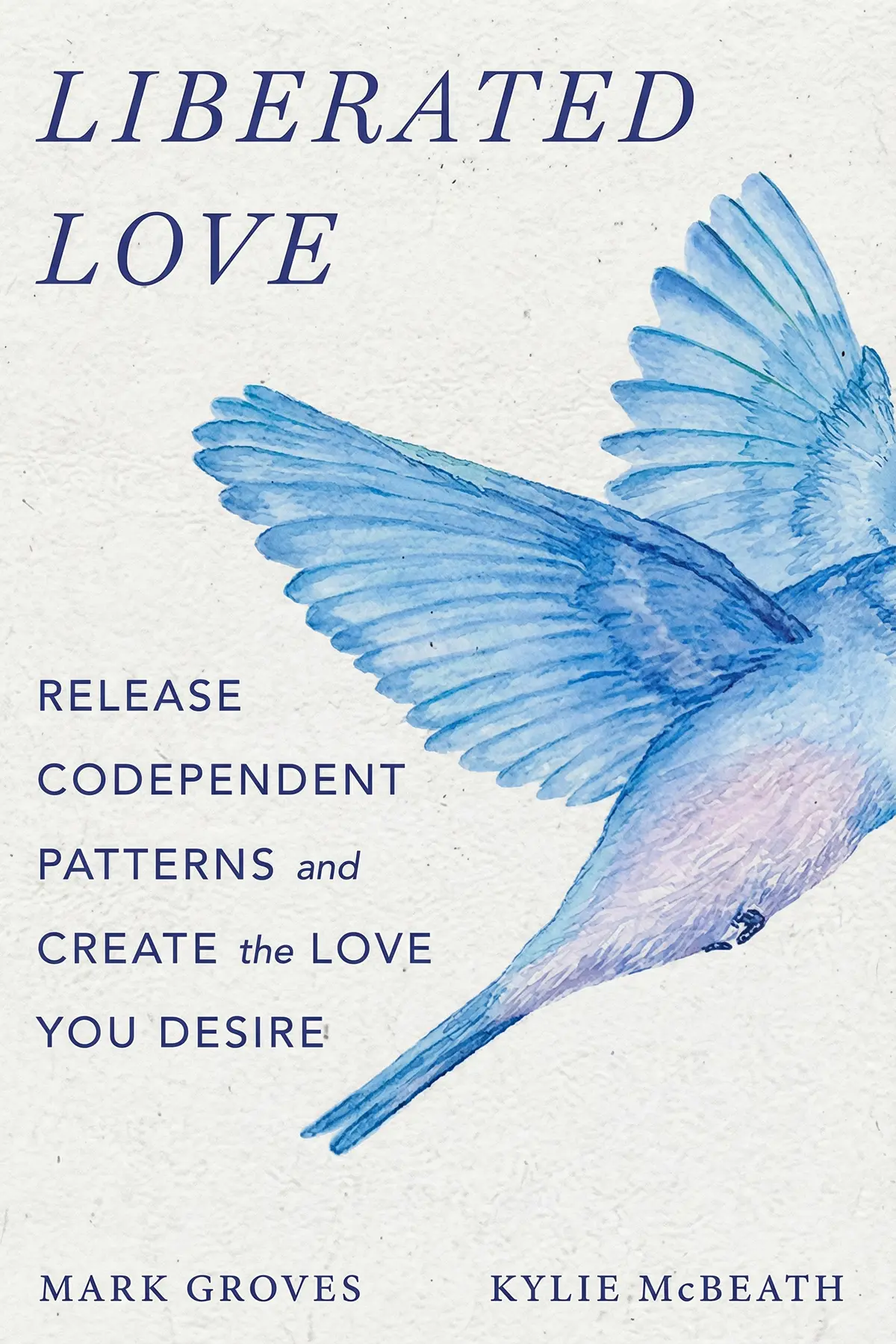
Plenty of couples love each other and still feel something essential is missing, and the cause is often a pattern neither of them chose. In Liberated Love, relationship coaches Mark Groves and Kylie McBeath name that pattern codependency: seeking safety and approval from a partner while slowly giving up your own identity. They know it from the inside. The two of them broke up, spent time apart, and came back together to build what they call Relationship 2.0.
Their method has three steps: a deliberate pause from romance, firm boundaries to protect that pause, and a return to love built on written intentions. It works whether you stay single or try again with the same person. The idea running through all three is that better love begins by stepping back.
Ahead are a one-page exercise for designing that pause and a short script for holding your ground when family or friends push back.
1 min 34 sec
A couple with careers, a home, two kids and a dog sat in a counseling session feeling empty. Kylie told them the old relationship had to die before a new one could be built, and acknowledging that reality is where the method begins.
1 min 41 sec
Some people spend years keeping the peace and call it a happy relationship. The authors trace that habit to a pattern that is common, hard to spot and rooted long before the first date.
1 min 28 sec
Monks, sober months and digital detoxes share an old logic about giving something up to see clearly. The authors apply it to love, and the first weeks are not easy.
1 min 20 sec
To give the pause a clear shape, the book suggests setting up what it calls a container. The authors’ fix fits on one sheet of paper and settles the hard decisions before the lonely evenings arrive.
1 min 31 sec
Once you start changing, you may run into resistance, whether from inside yourself or from the people around you. Kylie faced it with her own family, and a psychologist’s framework gives words for the moment.
1 min 31 sec
Tips about getting a text back and mistakes to avoid on a date are everywhere. When Mark and Kylie reunited, they set their own shared rules instead, and those rules helped them create the love they wanted.
1 min 03 sec
Liberated Love makes an unusual promise for a book about relationships: the way back to closeness runs through distance. Cho and Alex had every outward sign of a good life and still felt empty. Kylie found her own needs only after she stopped dating. She and Mark built something new only after letting the old version go. Each time, change began when someone stopped performing and looked honestly at what was there.
The book supports a few concrete moves. When a relationship feels hollow, admit it without blaming either person, since both of you learned love from imperfect teachers. Take one sheet of paper, set an intention with dates at least three months apart, and circle what you will say yes to. When someone presses on that space, name what happened, notice what you feel and choose what you will ask for next.
None of it requires a perfect record. It asks only that you let the old relationship end, so the person you actually are has room to show up in the next one.
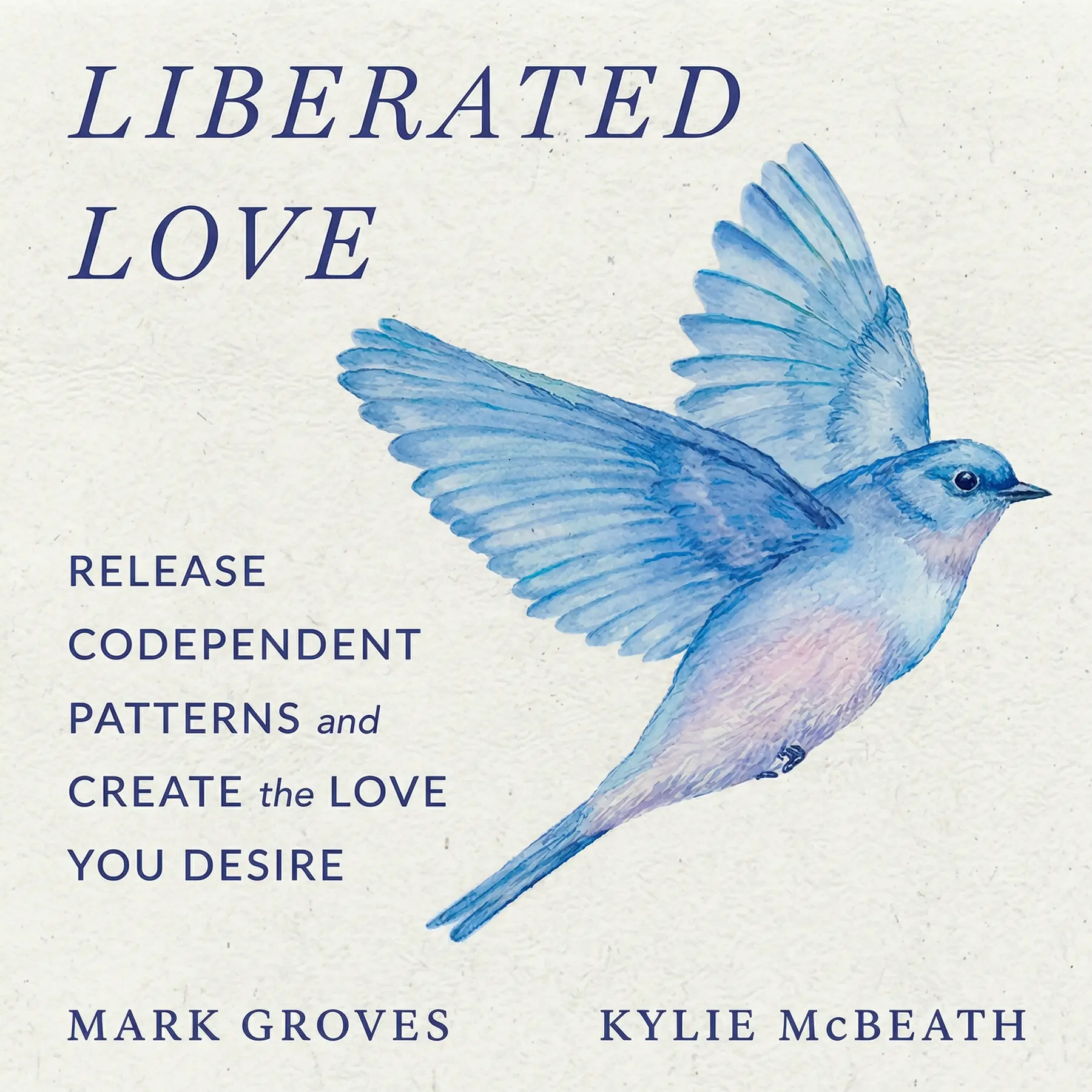
Many couples love each other and still feel something essential is missing. Mark Groves and Kylie McBeath argue that the cause is often codependency: looking to a partner for safety and approval while slowly giving up your own identity. They trace that habit back to childhood, where people learn a way of loving that may not serve them as adults. The authors write from experience. They broke up, spent time apart and came back together to build what they call Relationship 2.0. From that process comes a three-step method. First, a sacred pause, a deliberate break from romance shaped by a simple paper exercise. Second, boundaries that keep family, friends and old habits from pulling you off course, supported by a three-part script from psychologist Alexandra Solomon. Third, a return to love based on fresh intentions rather than dating tricks. Readers get a way to see their own patterns without blame, a concrete tool for designing time alone, and a clear approach to starting again, single or with the same partner.
People stuck in a relationship that looks fine but feels empty, who suspect they lose themselves in love.
Recently single readers who want to use time alone to stop repeating old patterns.
Couples considering a break, or a fresh start together after one.
Mark Groves is a human connection specialist, keynote speaker and writer who founded Create The Love and hosts The Mark Groves Podcast. He has coached people around the world on relationships for about a decade, and he has described the end of a relationship as his own rock bottom. Kylie McBeath is a certified health coach, author, podcast host and ceremonialist who co-founded Zura Health. She teaches about relationships, spirituality and embodied liberation, with an aim of helping people slow down and return to their hearts.
Listeners find the content deeply insightful, with one individual noting that it pairs actionable advice with motivational themes. The prose itself earns high marks, and one listener specifically mentions the lovely narration of the audio edition. Furthermore, the book is quite accessible, with one listener describing the work as an excellent resource for navigating relationships.
The audiobook version of this is genuinely beautiful, with a narration that feels like a warm conversation rather than a lecture. Mark and Kylie have a way of weaving personal stories with psychological insights that makes the concept of 'liberated love' feel attainable. It’s an easy listen but deals with heavy themes like the 'anxious-avoidant' dance and how we often recreate our parents' relationship dynamics. Truth is, I found myself rooting for their journey just as much as my own as I listened to them discuss breaking up with mediocrity. Some might find the tone a bit soft, but for me, it was the perfect blend of inspiration and practical guidance. It’s a wonderful resource for anyone looking to move from codependence to a more secure, interdependent way of relating.
Show moreAfter hearing Mark Groves on various podcasts, I had high expectations, and this book delivered on the deeper psychological work I was craving. It’s not just a surface-level dating guide; it’s an exploration of how we’ve lost our communal 'village' and how that lack of support puts immense pressure on our romantic partners. I particularly appreciated the section on 're-parenting' and how we can earn a secure attachment style through intentional inner work. The writing flows well, balancing heavy topics like grief and the 'dark night of the soul' with a refreshing sense of humor. Personally, I think the chapter on 'liberated lovemaking' is worth the price of the book alone for how it reframes sexual desire outside of codependent hooks. It's a staff favorite for a reason.
Show moreThis book hits a bit differently than your standard self-help manual because it demands that you take total responsibility for your own life and alignment. The concept of 'breaking up with who you’ve been' to heal your lineage is a powerful framework that I haven't seen explained this clearly elsewhere. I love how they emphasize that to be centered in oneself is the only true way to be free in a partnership. Look, relationships are not simple, and this book doesn't pretend they are. It offers a compassionate but firm mirror to our blind spots and survival strategies. It’s the kind of book you want to keep on your nightstand to revisit whenever you feel yourself playing small again. Highly recommend for fans of Matthew Hussey or Julie Menanno.
Show moreFinally got around to finishing this, and I have to say it’s one of the more comprehensive resources out there for modern couples. The way Mark and Kylie talk about the 'village' and the grief of being 'culturally orphaned' was something I didn't know I needed to hear. It explains so much about why we feel so empty even when our relationships seem 'fine' on paper. They push you to reach for more than just 'fine' and to actually create a sacred container for your love. Not gonna lie, I was rooting for the authors as they shared their own story of ending their old relationship to build a new, healthier one together. It’s an empowering read that makes you feel like healing is actually possible. If you’re tired of mediocre love, buy this book.
Show moreWow. I didn't expect to feel so seen by a book about attachment styles, but here we are. The central question—'Do I actually like who I’m being?'—is such a simple but devastatingly effective way to evaluate a relationship. This book isn't just about fixing a partnership; it's about a total realignment with your own values and self-worth. I found the discussion on 'earned secure attachment' to be incredibly hopeful for those of us who didn't grow up with great examples of love. The authors manage to be both compassionate and challenging, which is a difficult balance to strike. Personally, I found the audiobook narration to be top-notch, making the more complex sections on 'codependent hooks' much easier to grasp. It’s an excellent, insightful read that I’ll be recommending to all my friends.
Show moreEver wonder why you feel like you're playing a character in your own relationship instead of just being yourself? This book dives deep into the masks we wear to be loved and how those masks eventually become the very things that prevent true intimacy. While I'll admit the writing can be a bit repetitive at times, the core message about 'choosing conviction over convenience' really resonated with me. To be fair, there is a lot of talk about 'sacred sexuality' and 'the village' that might feel a bit too 'woo-woo' for some readers. However, if you can get past the occasional cliché, the exercises provided are incredibly grounding. It helped me realize that my boundaries aren't walls, but the high-quality information others need to love me well.
Show moreI’ll be frank: some of the language in here is definitely leaning into that 'astrology for therapy' vibe which won't be for everyone. There were moments where it felt a little too relevant to my current situation, which was uncomfortable but ultimately necessary for my growth. The authors keep warning that they might sound a bit 'woo-woo,' and honestly, they aren't wrong about that. Despite the occasionally immature-feeling writing style, the actual advice on navigating the transition from codependence to interdependence is solid. I found the 'integration questions' for dating again to be particularly useful for someone like me who tends to rush into things. It’s a bit focused on romantic love, but the lessons on self-approval apply to every area of life. Definitely worth a read if you're feeling stuck.
Show morePicked this up during a particularly rough patch, and it served as a much-needed mirror for my own behaviors in conflict. The authors explain the 'anxious-avoidant' dynamic in a way that doesn't vilify either side, which was incredibly refreshing. They argue that we often choose partners who confirm our worst fears about the world, and breaking that cycle requires a massive shift in self-worth. Gotta say, the exercises were the highlight for me because they turned abstract concepts into actionable steps I could take today. My only gripe is that it can be painfully repetitive in the middle sections, hammering the same points about childhood wounds over and over. Still, the insight into 'embodied anger' and how it relates to boundaries was a lightbulb moment for me. It’s a solid 4-star read.
Show moreNot what I expected, but in a good way. I thought this was going to be a standard 'how to find a partner' book, but it's actually much more about the internal work required to be ready for love. The writing is light and easy to digest, though it occasionally veers into territory that feels a bit immature or overly sentimental. I appreciated the specific focus on how unprocessed pain gets in the way of intimacy and the reminder that 'f*ck fine' should be our new mantra. The chapters are short and the exercises are frequent, which helps keep the momentum going even through the more repetitive parts. It’s a useful tool for anyone willing to do the uncomfortable work of looking at their own 'dysfunctional boundary blueprints.' Just be prepared for some serious 'woo' along the way.
Show moreTo be fair, I think I’m just not the target audience for this particular style of writing. I found the book to be badly written and filled with the most tired American relationship clichés I've ever encountered. From the very first chapter, it felt like the authors were trying to put me in a box based on my parents' mistakes and generalized attachment theories. It’s very unpleasant to be told you have all these 'blind spots' before the authors even establish a coherent argument. It felt more like a collection of Instagram captions than a deeply researched piece of nonfiction. Frankly, the 'woo-woo' vibes were off the charts, making it feel more like a spiritual manifesto than a practical guide. It was just too repetitive and lacked the depth I was looking for.
Show moreMark Groves and Kylie McBeath argue that many unhappy relationships rest on codependency, a habit of seeking safety and approval from a partner while giving up your own identity, often learned in childhood. Their answer is a three-step process: a sacred pause from romance, boundaries that protect that pause, and a return to love based on clear written intentions. The goal is love where you respect yourself as much as your partner.
A sacred pause is a planned break from romantic relationships or dating, which the authors compare to a caterpillar’s cocoon. It draws on the old idea of liberation through limitation, the same logic behind vows of silence or a sober January. Kylie McBeath took one after her breakup with Mark Groves and used it to discover her own needs, values and desires.
Write your intention for the pause on a sheet of paper, such as avoiding all romantic contact, and set start and end dates at least three months apart. Draw a large circle and write your yeses inside, like supportive friends, time in nature and eating well. Outside it, list your nos, such as numbing with substances, mindless scrolling or casual dating.
The authors use psychologist Dr. Alexandra Solomon’s framework called Name, Connect, Choose. First name the boundary being crossed, such as a parent’s unsolicited opinion. Then connect with what you feel, whether anger, frustration or being misunderstood. Finally choose what needs to change and tell the person directly. Kylie used this kind of firm statement with her family during her break from dating.
AUDIO SUMMARY AVAILABLE
Get the key ideas from Liberated Love by Mark Groves, plus 5,000+ more nonfiction titles.