

14 min 29 sec
Available in: English
Leaving Microsoft to Change the World: An Entrepreneur's Odyssey to Educate the World's Children
By John Wood
How a Microsoft executive turned one visit to a Nepalese school into a global literacy charity, and the habits behind its growth: counting results, pitching donors well, building local teams and setting bold public goals.
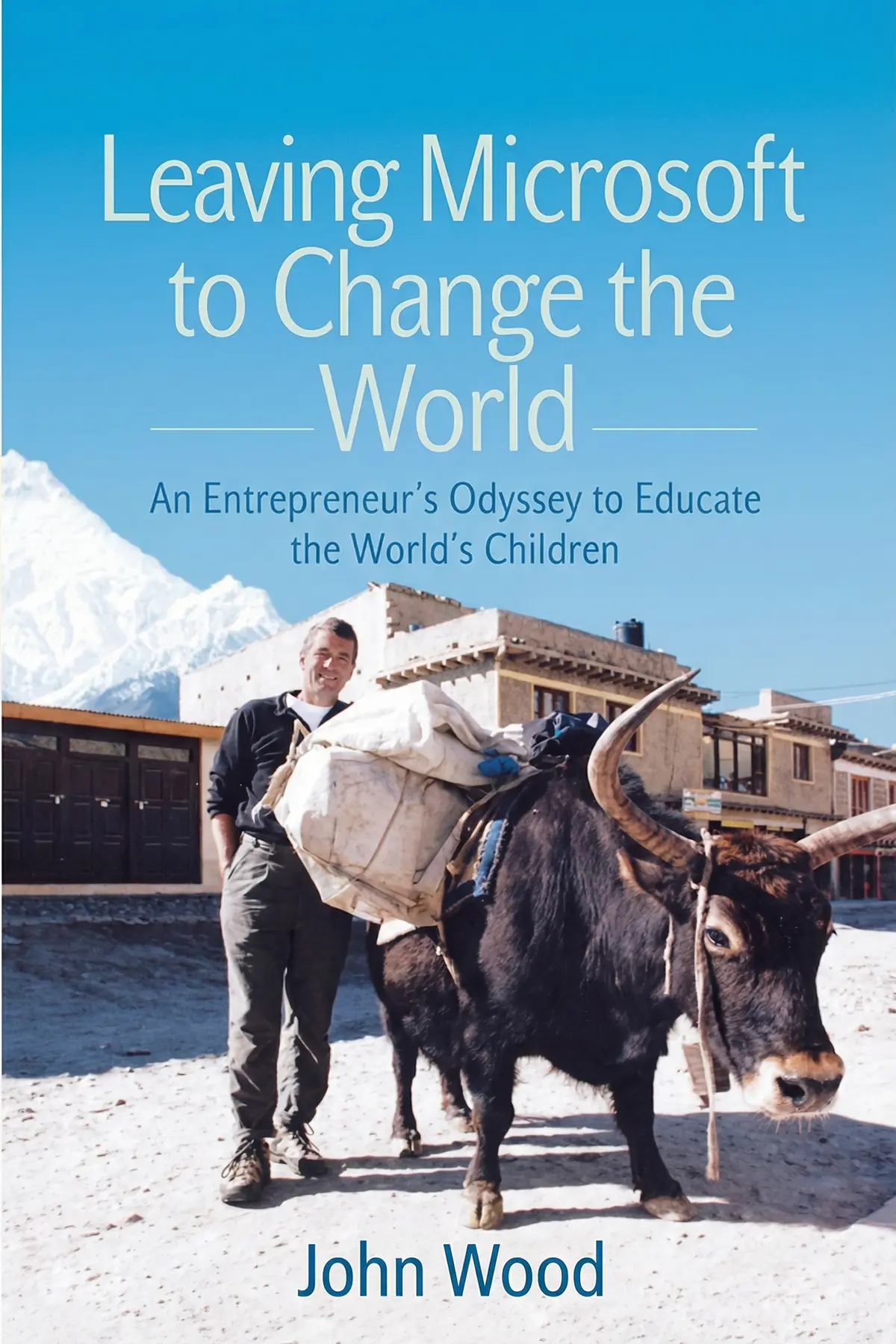
Table of Content
1. Introduction
1 min 04 sec
If your job pays well but leaves you wondering whether it matters, John Wood’s story starts where you are. In Leaving Microsoft to Change the World, the former Microsoft executive describes walking into a school library in rural Nepal and finding its few books locked in a cabinet, too precious for children to touch. That cabinet ended his corporate career.
Wood left a senior post to found Room to Read, a charity that builds libraries and schools across poor, rural communities, and later Room to Grow, which pays for girls to stay in school. His story makes one case: a good cause grows furthest when passion is run with a businessperson’s discipline, through kept promises, hard numbers, a sharp pitch, strong local teams and goals announced boldly. Along the way you will hear how one email became 3,000 books, how a pitch can turn a refusal into a future gift, and what one scholarship meant to a 15-year-old in New Delhi.
2. Small promises can grow into a life's work
1 min 49 sec
A school library with nothing on its shelves and a cabinet behind a lock. One visitor made an offhand offer to help, and what he did in the following days decided everything that came after.
3. Choose the work where you are hardest to replace
1 min 40 sec
He had stock options, a travel account and a car with a driver. Walking away cost him more than money, and the reasoning he used to decide is one any restless professional can borrow.
4. Turn every no into a not yet
1 min 45 sec
Donors say no far more often than yes. Wood built a habit for refusals and a five-part pitch that worked on highly educated, skeptical audiences, and both travel well beyond charity.
5. Bring corporate discipline into a cause you love
1 min 49 sec
Many people assume charity work means leaving business habits at the door. Wood kept four of them, including one unusual interview question that told him whether a job candidate really cared.
6. Expand only where a local team can carry it
1 min 57 sec
A teenager studying spreadsheets on a hotel night shift and a stranger who offered to work for free opened a new country. Neither money nor planning did it, and that shaped how Wood grew everywhere.
7. Educate girls and lift whole communities
1 min 36 sec
A 15-year-old’s parents decided she would marry because school cost too much. She argued back, lost, and then found another way, and her story explains why Wood built a program only for girls.
8. Announce the big goal before the money arrives
1 min 38 sec
A holiday interrupted by news of a tsunami, a team told to commit before any funding existed, and four minutes on television. Wood took a risk most cautious planners would never take.
9. Conclusion
1 min 11 sec
Wood’s story begins with a locked cabinet and ends with schools rebuilt after a tsunami. What connects the two is that he ran a charity like a business that had to prove itself. Passion put him on the plane back to Nepal. What built an organization working across countries, and kept girls like Anita in school, was the discipline that came after: counting books and students, a pitch that turned refusals into future gifts, local champions like Pasupathi and Erin, and the nerve to announce goals before the money existed.
You do not have to quit your job to use any of this. If a cause keeps pulling at you, make one small, concrete promise and keep it this month, the way Wood sent books after a single school visit. Decide which number would show it is working. And when someone turns you down, ask for a not yet before you accept the no.
Wood’s own verdict is that one person can change the world. His story adds a condition: the change lasts when that person brings along everything they learned before, including the skills from the job they left.
About this book
What is this book about?
John Wood had a senior job at Microsoft, stock options and a car with a driver. Then, on a hiking holiday in Nepal, he visited a village school and found its few books locked in a cabinet because they were too precious to touch. He promised to send a few hundred books. He ended up sending about 3,000, and soon after he left Microsoft to found Room to Read. Leaving Microsoft to Change the World tells how that charity grew, first in Nepal, then in Vietnam and beyond, and how Wood later created Room to Grow to give scholarships to girls. Wood argues that passion alone does not keep a nonprofit alive. What worked was the toolkit he brought from business: exact counts of results, careful use of data, respect for staff, a five-part pitch for donors, and local champions in each country. Readers get an inspiring story and a set of habits they can use. They learn how to ask for support, how to measure whether a mission is working, how to expand without abandoning where they started, and why stating a big goal in public can bring in the help needed to reach it.
Book Information
Who it's for
Questioning a secure career
Professionals with secure jobs who wonder whether their work matters and are thinking about a cause.
Growing a nonprofit
Nonprofit founders and volunteers who need to raise money, measure results and grow into new places.
Managers curious about nonprofits
Managers curious how business habits like data and team respect carry over into mission-driven work.
About the Author
John Wood
John J. Wood is an American activist who was a senior executive at Microsoft before turning to social causes. In 2000 he founded Room to Read, a worldwide charity focused on literacy and education. He also founded Room to Grow, a nonprofit working to end childhood illiteracy, and in 2021 he started U-Go, which raises money for women's education after secondary school. He is a best-selling author, and Leaving Microsoft to Change the World is among his books.
Ratings & Reviews
Ratings at a glance
What people think
Listeners find this memoir inspiring, with one listener describing it as a touching exploration of the author's personal path. The book is widely suggested for its accessibility, and listeners appreciate the compelling narrative and refined writing style. They also value the professional guidance, with one listener emphasizing the author's work in founding schools and computer labs, while others commend the emphasis on practical results and the book's superb organization.
Top reviews
Watchara
Wow. What a massive shift in perspective this memoir provides. John Wood manages to weave his high-stress Microsoft background with the sheer simplicity of a library in Nepal beautifully. I appreciated the focus on measurable results, which makes this more than just a feel-good story. Personally, the way he translated corporate efficiency into a non-profit model was fascinating to see in action. While some might find his drive bordering on intense, his dedication to girl’s education and literacy is undeniably life-changing. It is a heartwarming walk through a journey that most of us are too scared to take ourselves. The book is an easy read that leaves you questioning your own career path and contributions to the world. If you want to see how one person can leverage their skills for global good, look no further.
Show moreWipada
This book is essentially a blueprint for how to build a world-class organization from the ground up using business principles. John Wood’s transition from software executive to literacy advocate is nothing short of breathtaking. I was particularly moved by the stories of the girls receiving scholarships in the second half of the book. It’s rare to find a memoir that is both emotionally resonant and practically useful for leaders. The author’s ability to mobilize resources and refuse to 'sell' poverty as a marketing tool is a refreshing change of pace. Frankly, we need more leaders who approach global issues with this level of organizational genius and heart. Every chapter felt like a lesson in how to stop talking about problems and start solving them through action. Highly recommended for anyone who wants to see real-world results.
Show moreRapee
John Wood shows us that passion, when combined with professional discipline, can create a massive ripple effect across the globe. The story begins with a simple promise to a headmaster in Nepal and grows into a movement involving millions of books. I was deeply inspired by his commitment to girls' education, realizing that educating a woman changes an entire family's trajectory. The book is exceptionally organized, moving from his personal epiphany to the global expansion of his NGO. Some might find his relentless drive a bit exhausting to read about, but the children’s smiles in the libraries make it all make sense. It’s a powerful reminder that our careers can serve a much higher purpose if we are willing to take the risk. This is easily one of the most motivating memoirs I’ve read in years.
Show moreAdam
After hearing about Room to Read for years, it was great to finally dive into the origin story. Wood writes with a sense of urgency that is contagious, making you want to go out and start your own project immediately. The way he describes the empty libraries and the children’s hunger for knowledge is genuinely moving. I think the book excels at showing the 'how' of philanthropy, not just the 'why.' He provides excellent career advice for those looking to transition into the social sector without losing their professional edge. It’s an easy, engaging read that avoids the typical traps of being overly preachy or sentimental. Wood stays grounded in the reality of the work while maintaining a hopeful outlook for the future. A must-read for anyone who believes that literacy is a fundamental human right.
Show moreSofia
Ever wonder what happens when a high-level executive trades a corner office for a Himalayan trail? This book answers that question with a mix of corporate grit and genuine altruism. Wood’s story of bringing books to Nepal on the back of a yak is a striking image that stays with you long after the chapter ends. I found the parallels between his time at Microsoft and the scaling of Room to Read to be the most compelling parts. Look, the guy is clearly driven by metrics, but in the world of non-profits, that might be exactly what is needed for sustainable change. Some sections felt a little repetitive regarding his travel schedule, but the impact he has on those children’s lives is undeniable. It’s a solid choice for anyone looking for career inspiration or a new look at philanthropy.
Show moreMaksim
The chapter on Wood’s final days at Microsoft really sets the tone for the rest of the book. His interactions with leadership illustrate the high-pressure environment he left behind to pursue something more meaningful. I enjoyed the fast-paced nature of the story, as it reflects the urgency of his mission to build libraries across Asia. While the writing isn't overly complex, the message is clear: education is the greatest equalizer we have. Not gonna lie, some of the corporate jargon he brings to the non-profit world was a bit much at first. However, seeing the sheer number of books and schools he has established makes it hard to argue with his methods. It’s a very practical look at how to make a difference without losing your head in the clouds. Definitely a worthwhile read for aspiring social entrepreneurs.
Show moreCholada
As someone working in the corporate world, I found Wood’s journey incredibly relatable and motivating. He doesn't just tell you to quit your job; he shows you how to apply your existing skills to a cause you care about. The way he built Room to Read into a global powerhouse is a testament to the power of a clear vision and a workable business plan. My only minor gripe is that he glosses over some of the deeper systemic issues in the countries he visits. He stays fairly surface-level when it comes to the politics of education in places like Vietnam or Sri Lanka. Still, his focus on results and accountability in the charity sector is a breath of fresh air. It’s an inspiring narrative that proves you don't have to be a saint to change the world. You just need to be dedicated.
Show morePita
It’s hard to knock the mission, but the prose is admittedly a bit clunky at times. The writing style feels somewhat simplistic, almost like a corporate report dressed up in a high-school-level narrative. Truth is, Wood seems relentlessly positive, likely because he’s still in fundraising mode throughout the book. This makes some of his interactions, especially with figures like Ballmer or Gates, feel a bit filtered for the audience. I struggled with the business-first approach to charity, which occasionally felt a bit 'oogy' and sterile. To be fair, his results are incredible and the expansion of Room to Read is a feat of logistics. However, as a literary work, it lacks the depth of character I usually look for in a memoir. It is a decent guide for non-profit management, but don't expect a masterpiece of storytelling.
Show moreAey
Truth is, the author’s 'business-like approach' to charity is a bit of a double-edged sword for the reader. On one hand, you have to admire the efficiency and the incredible numbers Room to Read has achieved in such a short time. On the other hand, the narrative feels a bit like a long pitch deck for a venture capital firm. I missed the human element that makes memoirs like this truly sing; everything felt a bit too calculated and polished. To be fair, Wood is honest about his drive and his desire for measurable achievement. He admits to having no life outside of his mission, which is both admirable and a little sad. If you’re looking for a manual on how to fundraise effectively, this is five stars. If you want a poetic journey into the heart of the developing world, it’s closer to two.
Show moreKwame
Picked this up expecting a deep dive into the cultural heart of Nepal, similar to 'Three Cups of Tea,' but found something entirely different. Wood focuses heavily on the mechanics of his own success and his previous life at Microsoft rather than the people he is helping. The personal connection to the actual communities on the ground felt secondary to the logistics of fundraising and scaling up. I wanted to feel the heartbreak of the parents who can’t afford school, but instead, I got a lot of talk about business plans. He hires locals to do the ground work, which is efficient, but it leaves the narrative feeling disconnected from the local culture. It’s a book about how to run a charity like a business, not a book about the people of Nepal. If you want a soulful story about developing nations, this isn't it.
Show moreQuestions about this book
What is Leaving Microsoft to Change the World about?
It is John Wood’s account of leaving a senior Microsoft job after a visit to a Nepalese school whose few books were locked away. He founded Room to Read to build libraries and schools in poor, rural communities, later expanded to Vietnam and other countries, and created Room to Grow to give scholarships to girls. The book shows how he used business skills to make the charity grow.
What are John Wood's five principles for pitching donors?
Wood won over donors by reminding them how much their own education had given them. He showed a clear link between gifts and results. He stressed low overhead: Room to Read spent 10 percent on running costs, so 90 cents of each dollar reached schools. He showed personal passion, having left Microsoft for the work. And he stressed long-term meaning, showing how donations changed lives for years.
What lessons from Microsoft did John Wood use at Room to Read?
Wood brought four lessons. He focused on tangible results, counting books donated and students enrolled. He treated staff with respect and invited them to speak freely in meetings. He relied on data, even quizzing job applicants on the figures published on the Room to Read website. And he practiced the loyalty he learned from Steve Ballmer, who treated people equally whatever their rank.
Why does John Wood focus on educating girls?
Wood notes that women make up two-thirds of the illiterate people in the world, so he created Room to Grow, a scholarship program only for girls from poor families. He argues that educating girls helps whole communities: informed mothers mean lower infant mortality, education helps prevent diseases such as HIV/AIDS, and more schooling brings jobs that reduce hunger and poverty.
How can I apply the ideas in Leaving Microsoft to Change the World?
Start small and keep your first promise quickly, as Wood did with books for one school. Choose the numbers that will show whether your effort works. When asking for support, aim to turn a no into a not yet. When growing, find committed local people and keep supporting your original base. And once you have a track record, consider announcing a bigger goal in public.
Readers also enjoyed

A Life Decoded: My Genome: My Life
J. Craig Venter


A Long Way Gone: Memoirs of a Boy Soldier
Ishmael Beah

All Creatures Great and Small
James Herriot


A Promised Land
Barack Obama


A River in Darkness: One Man’s Escape from North Korea
Masaji Ishikawa

A Spy Among Friends: Philby and the Great Betrayal
Ben Macintyre
AUDIO SUMMARY AVAILABLE
Listen to Leaving Microsoft to Change the World in 15 minutes
Get the key ideas from Leaving Microsoft to Change the World by John Wood, plus 5,000+ more nonfiction titles.
- 5,000+ titles
- Listen as much as you want
- 7-day free trial
- Cancel anytime









