

A Life Decoded: My Genome: My Life
J. Craig Venter
 English
 ไทย
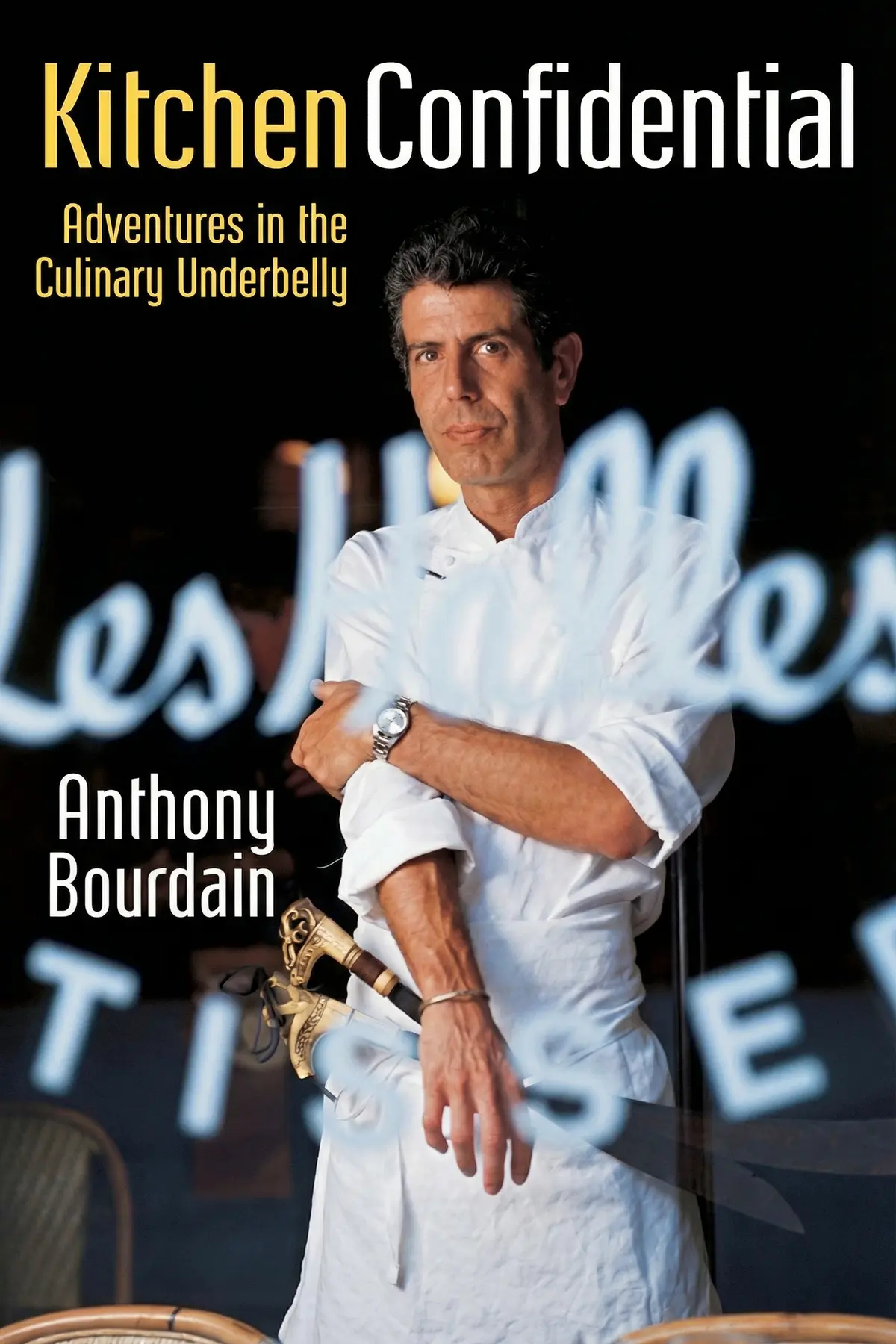
Anthony Bourdain's memoir of restaurant life, from a first oyster to drugs, failed kitchens and recovery. It adds the tools, pantry basics and work rules that help home cooks and aspiring chefs work like professionals.
55 sec
Most people cook just to get fed, and many who dream of a kitchen career have no idea what it really demands. In Kitchen Confidential, the classically trained chef Anthony Bourdain speaks to both. Home cooks, he argues, will never cook like professionals, and that is fine, because a few professional habits will improve their food at once.
He wrote for working cooks, who he hoped would recognize every detail as true, and for everyone else, whom he wanted to feel the look, the smell and the fun of a busy kitchen. His own life supplies the throughline. A boy learns that food matters, a young cook falls for kitchen chaos, nearly loses his career to it, and climbs back by owning his failures.
Along the way he hands over the knife, the pantry and the work rules that separate people who cook from people who cook well, at home or on the line.
1 min 43 sec
A nine-year-old on an ocean liner is served a soup that breaks every rule he knows. Weeks later, being shut out of a famous restaurant gets him wondering what he is missing and pushes him to try everything.
1 min 45 sec
An aimless college dropout takes a dishwashing job in a restaurant on stilts. What makes him decide to become a chef has nothing to do with food, and it says a lot about kitchens back then.
1 min 45 sec
A small burn and a simple request for a bandage silence an entire kitchen. What the broiler man does next sends a young cook back to school and into one of New York’s busiest restaurants.
2 min 00 sec
Three friends take over a struggling New York restaurant, sure they will conquer the city. They work hard and they are happy, which makes it harder to see what is actually sinking them.
1 min 36 sec
Professionals know home cooks will never match them, and one veteran chef says that is perfectly fine. A short list of inexpensive tools closes more of the gap than you might expect.
1 min 40 sec
The best plates often use fewer ingredients than you think. The difference lies in a handful of basics professionals keep ready, and in one habit that takes a weekend afternoon but pays off every weeknight.
1 min 37 sec
Many would-be chefs take a six-month course, see what kitchen work truly demands, and run. A veteran’s blunt rules for surviving the line, from language to sick days, turn out to apply to almost any job.
1 min 11 sec
Kitchen Confidential works as a confession and a manual at once. The boy who tasted cold soup on the Queen Mary and the chef who rebuilt his career at Brasserie Les Halles share an appetite for intensity. In the kitchen, that appetite gave Bourdain a life he compared to a warm bath, and it also brought the drugs, the blame and a string of failed restaurants. Climbing out meant quitting heroin, no longer getting high at work, and accepting that things had to change.
In 2000 he said he meant to stay in the business until he was dragged off the line, and in 2014 Les Halles called him its chef at large. In 2018 he died by suicide while filming Parts Unknown.
His lessons are small enough to start tonight. Cook with one sharp knife, keep shallots and roasted garlic close, freeze a batch of your own stock, and let three or four fresh ingredients carry the plate. At work, arrive on time and own your mistakes before anyone has to point them out. Bourdain counted the breakages and the losses, and still called it an adventure he would never have missed.
Most home cooks never see the inside of a professional kitchen, and many would-be chefs who take a six-month course quit once they see what the work really demands. Anthony Bourdain wrote Kitchen Confidential for both groups. Working cooks, he hoped, would recognize his kitchens as true, and everyone else would feel the heat, the noise and the fun of the line. The book follows his own path. It starts with a cold bowl of vichyssoise on the Queen Mary and a first oyster on a French oyster boat. Then come a dishwashing job at a Cape Cod restaurant on stilts, training at the Culinary Institute of America, and a reckless stretch at Work Progress in New York that ended in failure and heroin. He climbed back to run the kitchen at Brasserie Les Halles. Alongside the stories, Bourdain shares what he learned. Home cooks get the few tools and ingredients that matter most, from one good knife to homemade stock. Aspiring chefs get blunt rules on punctuality, honesty, respect for coworkers and owning mistakes, rules that reach well beyond the kitchen.
Home cooks who want restaurant-style results from a few tools and pantry basics.
Culinary students and career switchers deciding whether kitchen life is really for them.
Young professionals on demanding teams who want blunt rules on reliability, honesty and owning mistakes.
Anthony Bourdain (1956 to 2018) graduated from the Culinary Institute of America in 1978 and worked in many restaurant kitchens, including several years as executive chef of Brasserie Les Halles in Manhattan. A New Yorker essay in the late 1990s launched his writing career, and Kitchen Confidential became a New York Times bestseller in 2000. He went on to write more books, novels and graphic novels, and hosted A Cook's Tour, No Reservations, The Layover and Parts Unknown on television.

Listeners find this work to be an excellent, fast-paced experience that is both amusing and educational, particularly for individuals in the food service business. The prose earns acclaim for its informal quality, and listeners enjoy the author's wit, with many remarking that it is laugh-out-loud funny at times. This memoir offers various stories and an unfiltered style of narration, while listeners value the author’s transparency and distinct character.
Finally got around to this culinary classic and it’s essentially a high-octane ride through a world most of us only see through a service window. Bourdain writes with a frantic, caffeinated energy that makes you feel the heat of the line. He paints cooks not as refined artists, but as a band of functional misfits and pirates. The prose is sharp and rhythmic. To be fair, some of the advice is dated—like the infamous warning about ordering fish on Mondays—but the spirit of the book remains untouchable. It’s a raw, hilarious, and sometimes disgusting look at what it takes to feed the masses. If you love food, or just love a great storyteller, this is essential reading.
Show moreWow, this was a punch to the gut in the best way possible. Bourdain’s honesty about his struggles with addiction and his failures in the business is what makes this book stand out from typical celebrity memoirs. He isn't trying to make himself look like a hero. Instead, he shows us the grime, the sweat, and the sheer repetition required to produce a 'perfect' plate of food. The transition from a dishwasher at a clam shack to an executive chef in NYC is a fascinating journey. His voice is so distinct that you can almost hear him narrating the words in your head. It’s gritty, vulgar, and absolutely brilliant.
Show moreAfter watching his shows for years, reading his origin story felt like reconnecting with an old friend. This book is the definition of a page-turner. Bourdain’s love for the 'pirate ship' mentality of a kitchen is infectious, even if you’ve never picked up a chef’s knife in your life. He has this incredible ability to make a mundane task like prepping shallots seem like a life-or-death mission. The humor is laugh-out-loud funny in spots, especially when he’s describing the various eccentric owners he worked for. It’s a bittersweet experience reading it now, knowing how his story ended, but the legacy he left behind in these pages is nothing short of extraordinary.
Show moreEver wonder why the bathroom at a restaurant is a good indicator of the food quality? Bourdain explains it all here with brutal, hilarious transparency. He takes all the romanticism out of being a chef and replaces it with a reality that is much more interesting. The descriptions of the kitchen hierarchy are fascinating. I loved learning about the 'expediter' and the 'saucier' and how they function under extreme pressure. It’s a hold-no-punches approach to storytelling that you just don't see very often. Whether he’s talking about truffle oil or the importance of a good chef's knife, his passion is undeniable. I couldn't put it down.
Show moreThis book reads like a long, booze-soaked conversation with the most interesting guy at the bar. Bourdain’s unique personality shines through every sentence. He manages to be both elitist and a man of the people at the same time, which is no small feat. The way he describes the textures and smells of a busy kitchen is so vivid you’ll find yourself getting hungry and nauseous at the same time. His advice to avoid brunch and stay away from well-done meat is legendary for a reason. It is more than just a memoir; it's a manifesto for a way of life that most people couldn't handle. Simply fantastic.
Show moreWorking in the industry for years makes you appreciate how accurately Bourdain captures the kitchen's subculture. He doesn't sugarcoat the grueling hours or the questionable characters you meet behind the scenes. The book is incredibly entertaining, though I’ll admit he leans into the 'bad boy' persona quite heavily. His disdain for vegetarians and the dreaded garlic press is legendary, providing some of the funniest rants in the book. Truth is, the industry has changed a lot since 2000, so take the specific restaurant 'tricks' with a grain of salt. Still, as a memoir of a specific time and place, it is atmospheric and vivid. A must-read for any aspiring chef.
Show moreThe section regarding his first trip to Japan is probably my favorite part of the entire memoir. You can see the seeds of what would eventually become his travel shows—that genuine curiosity and respect for other cultures. The book as a whole is a fantastic quick read, though it does get a bit repetitive when he discusses the various failed restaurants he worked at. Some chapters feel more like a collection of essays than a cohesive narrative. However, the 'From Our Kitchen to Your Table' chapter is worth the price of admission alone. It’ll make you think twice about ordering the seafood frittata at a Sunday brunch, that’s for sure.
Show moreIt’s hard to believe this book is over twenty years old because the energy feels so modern. The prose is sharp, cynical, and deeply informative for anyone curious about the restaurant industry. I particularly enjoyed the chapters on his time at the Culinary Institute of America. He captures that specific mix of ambition and insecurity perfectly. My only real gripe is that he can be a bit redundant with his descriptions of kitchen 'misfits.' We get it—cooks are tough guys. But when he stops posturing and just talks about the food and the craft, it’s magic. It is an authentic, messy, and wonderful look at a hidden world.
Show moreNot everyone is going to love the tone here, and I struggled with it at times. To be fair, Bourdain admits he was an arrogant jerk in his youth, but hearing him describe it can be exhausting. It often feels like he’s trying too hard to be edgy with the constant references to drug use and kitchen debauchery. Also, why the intense hatred for the garlic press? I use mine every day and it’s perfectly fine! While the anecdotes about the CIA and his early career are interesting, the writing style felt a bit like a high schooler discovering sarcasm for the first time. It’s a decent enough read, but the hype might be slightly overblown.
Show moreFrankly, I found this disappointing because there was actually very little insight into the food itself. Not gonna lie, I expected a book about cooking, but this is more about a bunch of dysfunctional people behaving badly. He focuses so much on the 'underbelly'—the drugs, the theft, the screaming—that the actual art of the kitchen gets lost. I also found his attitude toward home cooks to be incredibly condescending. I don’t need to be told that my kitchen tools are garbage just because I don't work 80 hours a week in a swanky bistro. It’s well-written, I suppose, but the toxic masculinity was just too much for me.
Show moreIt is Anthony Bourdain’s account of life in professional kitchens, written so that cooks would recognize it as true and other readers could feel what busy kitchen work is like. It follows him from his first taste of vichyssoise and his first oyster in France to Cape Cod, culinary school, a reckless period of drugs and failed restaurants in New York, and his recovery as executive chef of Brasserie Les Halles.
He says home cooks will never match professionals, but a few habits help. Use one comfortable, easy-to-sharpen chef’s knife, plus a squeeze bottle for sauce and a metal ring for stacking food. Cook with shallots, butter mixed with oil and roasted garlic, never garlic from a jar. Make and freeze your own stock and demi-glace. Above all, combine three or four fresh ingredients and garnish the plate.
Be fully committed and never complain. Learn Spanish and respect your coworkers’ cultures. Never steal or take kickbacks, always be punctual, and never blame others or make excuses. Come to work unless something truly serious happens. Protect your résumé by avoiding gaps and short stints, read cookbooks and trade magazines, and keep your sense of humor, because he warns that you will need it.
Working as a dishwasher at The Dreadnaught in Provincetown, he admired the cooks’ wild, adventurous lifestyle. He chose the career the night the chef, Bobby, slipped out the back with a bride during her own wedding meal. Later, after a broiler man named Tyrone answered his request for a bandage by lifting a hot platter barehanded, he enrolled at the Culinary Institute of America to become a better cook.
It suits home cooks who want restaurant-style results from simple tools and fresh ingredients, culinary students and career switchers weighing a life in kitchens, and readers who enjoy candid memoirs. Its rules on reliability, honesty, respect for coworkers and owning mistakes also speak to anyone starting out on a demanding team, inside or outside the food business.
J. Craig Venter


Ishmael Beah
James Herriot


Barack Obama


Masaji Ishikawa

Ben Macintyre

AUDIO SUMMARY AVAILABLE
Get the key ideas from Kitchen Confidential by Anthony Bourdain, plus 5,000+ more nonfiction titles.









