

14 min 38 sec
Available in: English
 ไทย
EnglishไทยJoyful: The Surprising Power of Ordinary Things to Create Extraordinary Happiness
Shows how ordinary design choices, from wall color and furniture to gardens, room layout and seating plans, can set off real moments of joy, and how to rework your own spaces to get more of them.
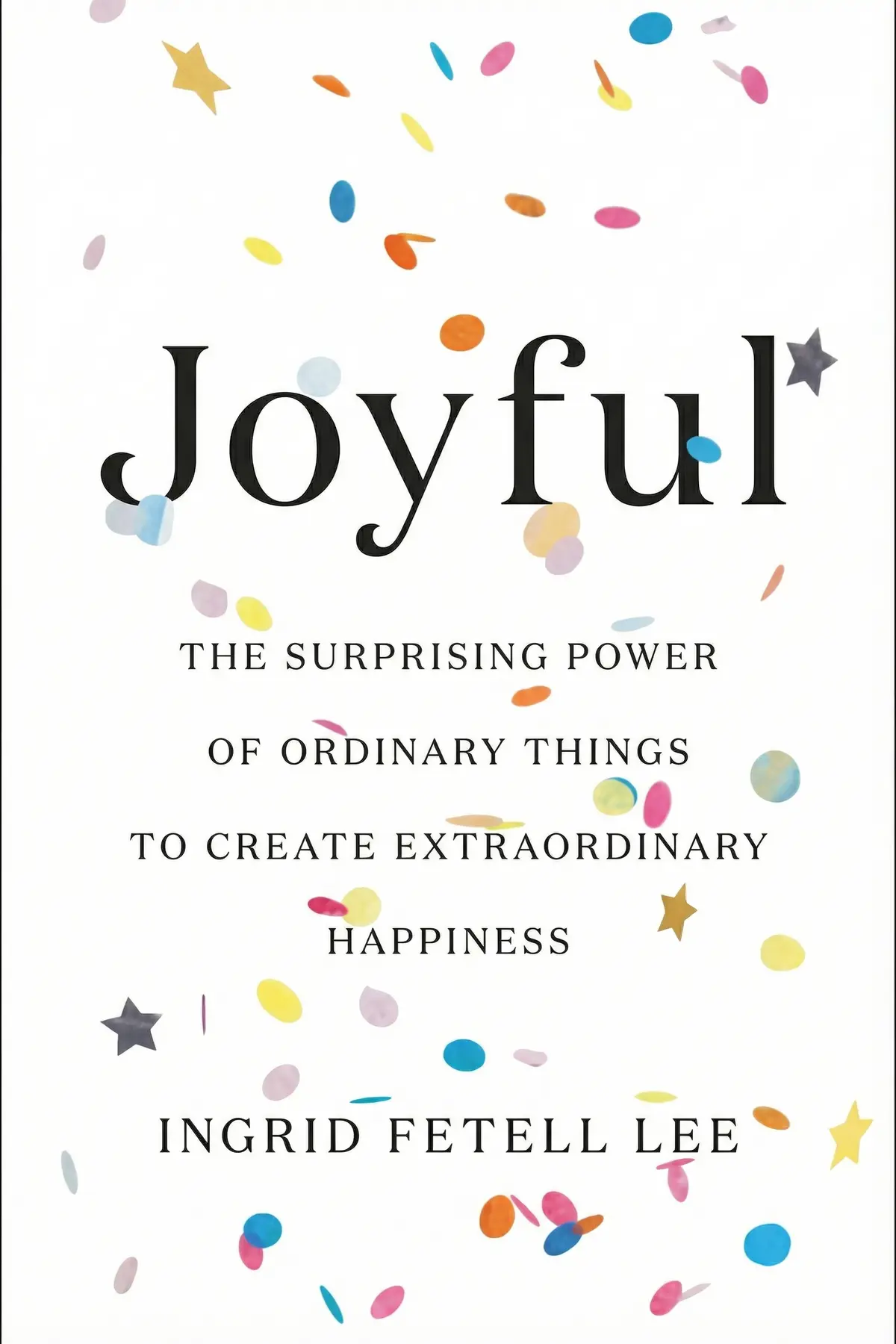
Table of Content
1. Introduction
1 min 02 sec
If your home or office feels flat and tiring, the cause may be the space itself. In Joyful, designer Ingrid Fetell Lee asks you to picture a world of identical buildings in shades of grey, with trimmed lawns and bare, sterile rooms, and she warns that current design trends are pushing us toward it. Her answer is that joy, a brief and vigorous burst of positive feeling, can be triggered by ordinary things: a color, a shape, a ceiling, a seating plan.
That is the idea behind everything that follows. The physical world can be arranged to produce joy, and the bare, grey style so many spaces now share is taking it away. Lee tests the idea on painted cities, striped hotel lobbies, wild gardens, foam chairs, flamingos and the Academy Awards. Each example gives you something to change or notice in your own rooms, and a good reason to stop apologizing for liking bright, odd and abundant things.
2. Use color to make any room feel brighter
1 min 39 sec
A crime-ridden capital and a tired couple’s grey house were both changed by a few cans of paint. The trick behind both has less to do with taste than with what color does to light.
3. Choose abundance over minimalism to bring more joy home
1 min 52 sec
Empty shelves and single-color rooms are sold as calm and good taste. Lee traces that ideal back a century and finds a troubling history, plus a lesson from a bird that refuses to look modest.
4. Plant a garden that sets you free
1 min 34 sec
One Dutch designer threw out the rulebook of a famous gardening tradition. Visitors to his garden near the German border feel something most tidy lawns never give them, and the reason is surprisingly simple.
5. Clear the way so energy and people flow
1 min 45 sec
A blocked hallway can follow you out the door and sour your whole morning. An old Chinese practice, stripped of mystery, offers a quick test any room can be put through in seconds.
6. Ease a tense room with play and quirk
1 min 56 sec
A pair of rainbow socks, a sea lion in the Galapagos and a chair with no frame inside it all point to the same overlooked source of joy, and to an unexpected bonus for anyone who invents things.
7. Find awe in big skies and grand halls
1 min 52 sec
Visitors to a national park and to a busy city were asked to draw themselves. One group made themselves tiny, and how they felt about it turns a common assumption about feeling small upside down.
8. Design a room that turns a crowd into a party
1 min 53 sec
By 2008 the Academy Awards audience barely clapped and slipped out early. One architect changed the mood without touching the script, and his fix works for any gathering that keeps falling flat.
9. Conclusion
1 min 05 sec
Lee’s book is a challenge to the belief that a grown-up space should be grey, bare and serious. Joy, as she describes it, is a reaction we have to things: a yellow front door, a striped hotel lobby, grasses bending in the wind, a foam chair, a pink bird on thin legs, a whale hanging over a museum hall, a ring of seats around a stage. If those things can be chosen, then joy can be designed, and not only by architects. Anyone who paints a wall, moves a sofa or plans a party is already making that choice, whether they notice it or not.
Lee’s practical starting point is a joy journal. Keep it with you and note each moment that makes you smile or say wow, along with where it happened and who was there. Over time the entries show which colors, places and experiences lift you most, and that tells you what to bring into your rooms. Then change the space you use most: pale walls with one burst of color, a clear entryway, chairs in a circle.
Ordinary things were never neutral. Every day they were adding a little joy or taking some away.
About this book
What is this book about?
Many homes, offices and city streets are drifting toward the same look: grey, bare, orderly and serious. Ingrid Fetell Lee, a designer who led design at IDEO's New York office, argues that this look drains something people need. Joy, in her account, is a short burst of strong positive feeling, and it is often triggered by the things around us rather than found only inside us. Lee follows that idea through color, abundance, wild gardens, the flow of a room, playful furniture, quirky style, awe-inspiring buildings and spaces built for celebration. Her examples range from an Albanian mayor who painted his city in bright colors to a foam armchair that ships at a tenth of its size and an Oscars stage redesigned so the audience stayed until the end. Readers get both a new way of seeing everyday spaces and practical steps: how to use color in a room, how to test whether furniture blocks movement, why a cluttered entry can sour a day, and how a simple journal reveals what lifts your mood.
Book Information
Who it's for
Wanting a livelier space
People whose home or office feels flat and draining and who want practical ways to change it.
Designers, architects and creatives
Designers, architects and creative professionals looking for a case against bare, grey minimalism.
Gatherings keep falling flat
Team leads and hosts whose meetings, offices or gatherings keep falling flat.
About the Author
Ingrid Fetell Lee
Ingrid Fetell Lee is a designer and the founder of The Aesthetics of Joy. She spent more than twelve years in design and branding, including time as a fellow at IDEO and as Design Director of its New York office. She studied industrial design at Pratt Institute and English and creative writing at Princeton, and was a founding faculty member of the Products of Design program at the School of Visual Arts. Her 2018 TED talk on design was widely viewed.
Ratings & Reviews
Ratings at a glance
What people think
Listeners find the work deeply researched and educational, with one review pointing out how it deconstructs the components of joy. Furthermore, the prose is expertly written, and listeners characterize it as a transformative book that offers practical advice. They also value its visual appeal; one listener describes how it adds sparkle to everyday life, while another emphasizes its focus on color.
Top reviews
Narongrit
Ever wonder why a simple bunch of colorful balloons or a sprinkle-covered cupcake can instantly lift your mood? Ingrid Fetell Lee does a magnificent job of breaking down the components of joy through a designer's lens. This book is a life-changing exploration of how our physical surroundings impact our internal state. I especially loved the section on 'Energy' and how color affects school environments; the Publicolor anecdotes were incredibly moving. It’s a research-backed, informative read that manages to feel both scientific and soulful. I’ve already started adding small pops of color to my office to combat the 'beige' fatigue. Truly, this is a masterpiece for anyone wanting to add a little more sparkle to their daily routine.
Show moreMint
Wow, I never realized how much my 'sophisticated' neutral palette was actually draining my energy levels until I read this. Ingrid Fetell Lee breaks down the science of why we love rainbows and circles with such warmth and clarity. The book provides a thorough breakdown of how to inject sparkle into a mundane routine through the aesthetics of joy. It’s easily one of the most informative non-fiction books I’ve picked up this year. Not gonna lie, I went out and bought a bright yellow rug immediately after finishing the 'Energy' chapter. The research is thoroughly presented, making the argument for color feel legitimate rather than just superficial. This is a must-read for anyone who feels the world has become too gray.
Show moreEarn
After hearing Ingrid Fetell Lee speak on a podcast, I knew I needed the full-length exploration of her framework. This book is a vibrant invitation to stop settling for the 'beige' and start seeking the 'abundance' in our surroundings. From the way she describes the impact of natural light to the importance of the 'Surprise' aesthetic, every page felt like a discovery. I love how she validates our childhood love for bright things that society often tells us to outgrow as adults. It’s a well-crafted, informative book that manages to be both intellectually stimulating and emotionally resonant. This is the kind of book you buy for your friends who are going through a dull season.
Show moreUbolwan
As someone who has always lived in a minimalist, neutral-toned world, this book was a much-needed wake-up call for my senses. Lee acts as the 'Nancy Drew of joy,' investigating why certain shapes and hues resonate so deeply with our human biology. The discussion on how vibrant paint can reduce graffiti and increase safety in schools was absolutely fascinating to me. I appreciated the specific breakdown of the ten aesthetics, even if some chapters felt a bit more robust than others. Personally, the focus on color and 'Magic' changed how I view my own home decor. It’s a solid, well-researched read that offers a unique perspective on happiness that isn't just 'all in your head.'
Show moreAnthony
Finally got around to reading this after hearing so much about the author’s focus on the physical environment. It is more than just a home decor guide; it is a deep dive into the psychology of our spaces. The ten aesthetics—like Abundance, Harmony, and Surprise—give you a clear roadmap to audit your own life. I’m definitely looking at my round coffee table and colorful pillows differently now because of the 'Play' chapter. The sentence structure is engaging, and the mix of anecdotes and data kept me turning the pages. It’s a very informative read that provides actionable ideas for anyone feeling stuck in a bland, colorless environment. I highly recommend it for design enthusiasts.
Show moreVarinee
The chapter on 'Play' was worth the price of admission alone, even if a few other sections felt a bit like filler. I appreciated the balance between Lee's personal stories and the neurological research that explains our reactions to certain patterns. Seeing how curved lines and bright patterns influence our brain's evolutionary safety response was genuinely eye-opening for me. While some of her travel examples are a bit 'niche,' the overall message is empowering and surprisingly practical for a design-focused book. It makes you realize that joy isn’t just a random occurrence; it’s something you can consciously cultivate. The writing is elegant, and the pace is generally quite brisk.
Show morePenelope
I've been trying to be more mindful of my environment lately, and this book provided the perfect scientific backbone for that journey. Frankly, I expected fluff, but what I got was a well-crafted analysis of human emotion and design. The way Lee connects our prehistoric needs for safety to modern architectural choices is absolutely brilliant. It makes you realize that joy isn't just a fleeting feeling; it's a physical experience we can actively engineer. I especially appreciated the 'Renewal' section, which focuses on nature and growth. My only minor gripe is that the tone can get a bit academic in the middle. Overall, it’s an enlightening read that will change the way you look at a simple polka dot.
Show moreJonathan
Not what I expected based on the subtitle’s promise of finding joy in 'ordinary things.' While the writing is well-crafted and the research into neuroscience is informative, I found many of the examples felt quite out of reach. Lee often recounts her far-flung trips to see the Northern Lights or cherry blossoms in Japan to illustrate her points. To be fair, most people find those things joyful, but they aren't exactly part of a standard Tuesday afternoon. I did enjoy the chapter on 'Play' quite a bit, though it borrowed heavily from other sources. It’s a beautiful book to look at, but the actionable ideas felt a bit thin for the average person who isn't traveling the globe.
Show moreKoi
Look, the writing is beautiful and the book itself is an aesthetic masterpiece, but it lacks a certain depth I was hoping for. It’s a lovely coffee table book disguised as a psychological study, which isn't necessarily a bad thing. I enjoyed the history of why we find certain objects joyful, like the evolution of our attraction to bright fruit and blossoms. However, I wanted more focus on how to find joy when you can't renovate your house or travel. The anecdotes about Publicolor were great, but they felt a bit disconnected from the average reader's daily life. It’s a pleasant read, but maybe not the 'life-changing' manifesto the blurbs suggest.
Show morePriya
This book felt like a twenty-minute TED talk that was stretched incredibly thin to fill two hundred pages. While the central premise is lovely, the content becomes repetitive after the first few chapters. The author spends a significant amount of time on luxury travel and high-end architectural examples rather than practical, everyday applications. Truth is, it’s a bit elitist to suggest that joy is found in these rare, expensive experiences when the title promises 'ordinary' insights. I found myself skimming through the latter half because the 'Aesthetics of Joy' started to blend together. There are some bright spots, but it definitely didn't need to be this long.
Show moreQuestions about this book
What is the main idea of Joyful by Ingrid Fetell Lee?
Lee argues that joy, a short and vigorous burst of positive feeling, is often triggered by the physical things around us. Color, abundance, wild gardens, rooms that flow, playful objects, quirky style, awe-inspiring buildings and spaces built for celebration can all produce it. She warns that the grey, bare look many modern spaces share drains joy, and she shows how to design it back in.
How does Joyful suggest using color at home?
Lee recommends keeping large surfaces such as walls and floors white or close to white, because light colors reflect light and make a room feel airier. Then add a few strong bursts of color: a bright piece of furniture, some decorative objects or painted stripes on a wall. She tells of a couple whose house changed after architects gave it a bright yellow front door.
Is Joyful against minimalism?
Largely, yes. Lee sees strict minimalism as repressive and argues its ideal of purity has a troubling history, tracing it to early twentieth-century theorists such as Adolf Loos, who scorned ornament partly because it was common in Persia and Eastern Europe. She credits today’s minimalists for avoiding waste but prefers maximalism, whose abundance and contrast she sees as signs of energy, like a peacock’s tail.
How can I apply the ideas in Joyful?
Start a joy journal: write down every moment that makes you smile or say wow, with where it happened and who was there, to learn what lifts you. Clear your entryway so leaving and arriving feel easy. Imagine a small pet loose in a room to spot furniture that blocks movement. For gatherings, set seats in circles instead of rows, as architect David Rockwell did for the Academy Awards.
Readers also enjoyed

A High-Performing Mind: Strengthen Your Mind and Live Your Best Life
Andrew D. Thompson


Abundance: The Inner Path to Wealth
Deepak Chopra


59 Seconds: Change Your Life in Under a Minute
Richard Wiseman




AUDIO SUMMARY AVAILABLE
Listen to Joyful in 15 minutes
Get the key ideas from Joyful by Ingrid Fetell Lee, plus 5,000+ more nonfiction titles.
- 5,000+ titles
- Listen as much as you want
- 7-day free trial
- Cancel anytime









