


14 min 19 sec
Available in: English
 ไทย
EnglishไทยJog On: How running saved my life
By Bella Mackie
A journalist's account of how short, nervous jogs eased her lifelong anxiety and panic, with the research on why exercise calms the mind, why nature adds to it, and what keeps people from starting.
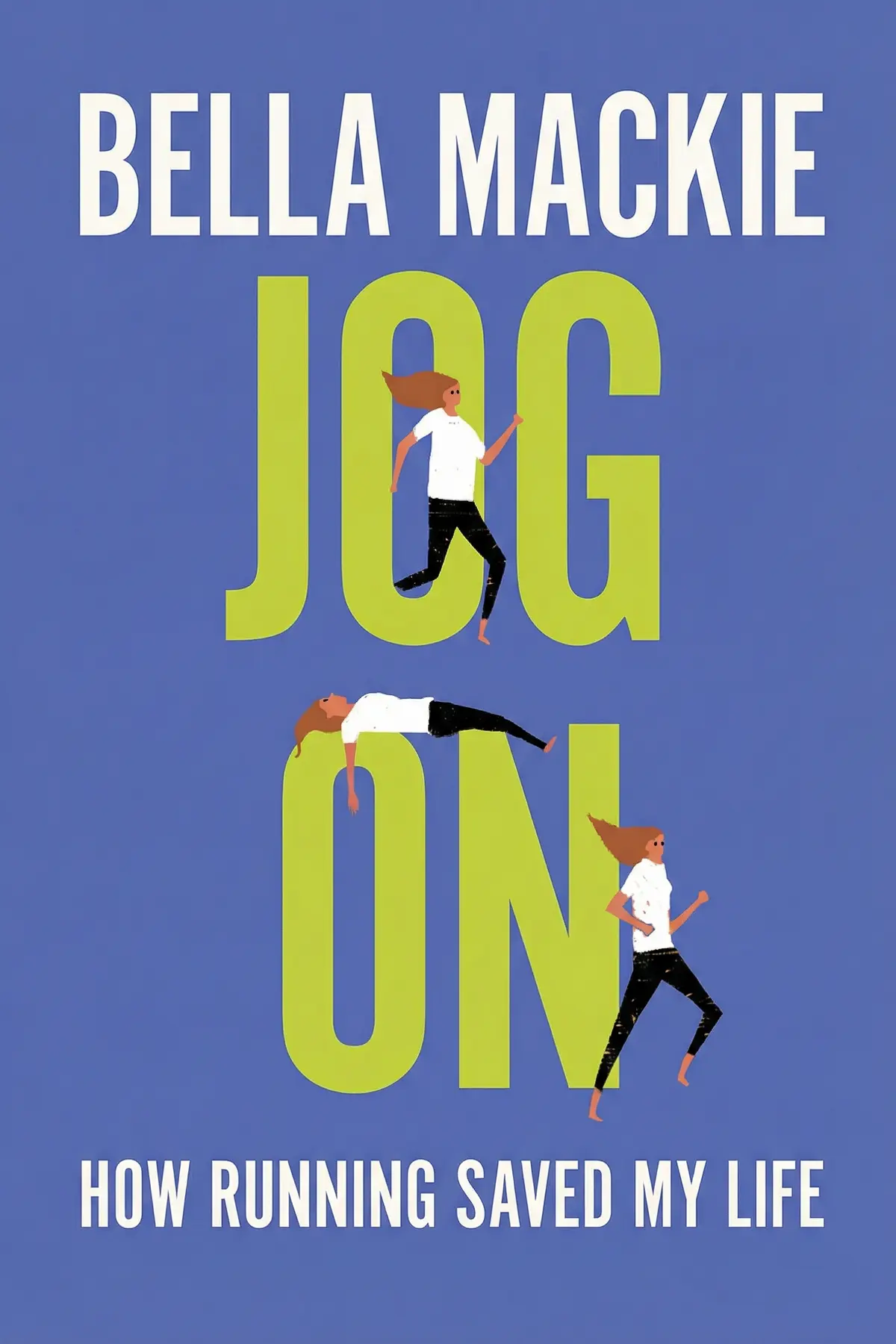
Table of Content
1. Introduction
1 min 02 sec
If anxiety has ever shrunk your world down to the few rooms and streets that feel safe, Bella Mackie’s story shows one way to make it wide again. In Jog On, the journalist describes how a three-minute jog in a hidden alley, taken days after her husband left her, began to loosen a lifetime of panic. She is careful to say there is no magic cure. But running quieted her mind as nothing else had, and the research she gathers suggests why: exercise lowers stress hormones, changes how the body reads its own alarms and may even reshape the brain.
The argument is simple. Moving your body, starting small and ideally outdoors, can give you real tools to manage anxiety and reclaim the places it took. Along the way come a clear picture of what anxiety disorders actually feel like, the reason a racing heart grows less frightening on a run, the case for green routes, and an honest look at why so many people never start.
2. Tell everyday worry apart from an anxiety disorder
2 min 01 sec
Friends meant well when they said they were worriers too. A childhood of dread, scars and a mirror that showed a stranger’s face reveals how far real anxiety goes beyond ordinary nerves.
3. Understand how frightening thoughts and false alarms take over
1 min 57 sec
Everyone has the occasional dark, random thought, and everyone’s body can flood with adrenaline. So what turns these ordinary human events into hours of rituals or the certainty of dying in a supermarket?
4. Start with three minutes and a hidden alley
1 min 58 sec
Heartbroken, frightened of parks and gyms, she chose the least likely remedy imaginable. The first attempt lasted three minutes, yet afterward she noticed something she had not felt in days.
5. Teach your body that a racing heart is safe
2 min 07 sec
A pounding pulse once meant a heart attack to her, and seconds later, full panic. Exercise produces the same sensations, and that overlap turns out to be part of why running helped.
6. Take your run somewhere green
2 min 01 sec
Two groups took the same long walk, but only one came back with calmer brain scans. The difference was the scenery, and even city dwellers can borrow some of the effect.
7. See the hidden barriers that keep people still
2 min 03 sec
If running helps this much, the obvious question is why so few people do it. The answer has less to do with laziness than with gym classes, judgment and who feels welcome.
8. Conclusion
1 min 10 sec
Mackie never set out to become an athlete. Her story is about a woman whose world had shrunk to a few safe rooms finding a way to move through it again, one short run at a time. The alley was the size of her courage that first night, and it was enough. She is clear that no pill or workout guarantees you will never feel worried or sad again. What running gave her was a set of tools: a calmer body, a heartbeat she no longer feared, and a mind that went silent long enough to rest.
If anxiety has been narrowing your own map, the book supports a modest start. Choose a place that feels safe, even a hidden one, and move for a few minutes, walking whenever you need to. Let your pulse climb and remind yourself it is effort you chose. When you can, point your route toward trees, water or open sky, and build up slowly over weeks, because the long runs come later.
Six years on, the woman who once could not visit her nearest park runs for an hour every morning. Her first step lasted three minutes.
About this book
What is this book about?
Bella Mackie lived with severe anxiety from childhood: obsessive rituals, self-harm, disassociation and panic attacks that slowly shrank her world until she avoided shops, parks, planes and the subway. Then, eight months into her marriage, her husband left, and at her lowest point she went for a three-minute jog in a hidden alley near her home. Jog On follows what happened next. Running is not presented as a magical cure, and Mackie is clear that no pill or workout can promise freedom from anxiety. But it quieted her mind, faded her panic attacks and let her move through places she had feared for years. She sets her own story beside research on stress hormones, on how exercise changes the way we read a racing heart, on brain changes in stressed mice and on the extra benefits of green spaces. The book is also honest about why so many people, especially women and ethnic minorities, never start exercising, and it closes with a simple rule for beginners: go slowly and build up over weeks.
Book Information
Who it's for
Living with anxiety
People living with anxiety or panic attacks who want a practical tool alongside other help.
Avoiding shops and crowds
Anyone whose fears have made them avoid shops, transport or crowds.
Nervous about trying running
Nervous beginners, especially women who feel unwelcome in gyms, wondering whether running is for them.
About the Author
Bella Mackie
Bella Mackie, born Isabella Kathleen Rusbridger in 1983, worked as a journalist before turning to books, writing for papers including The Guardian and for Vogue. Jog On, her first book, is a memoir about mental health and running, later followed by a companion journal on using exercise to care for the mind. She then moved into fiction: her novel How To Kill Your Family appeared in July 2021, each of her three novels has been a Sunday Times bestseller, and Netflix has been adapting How To Kill Your Family.
Ratings & Reviews
Ratings at a glance
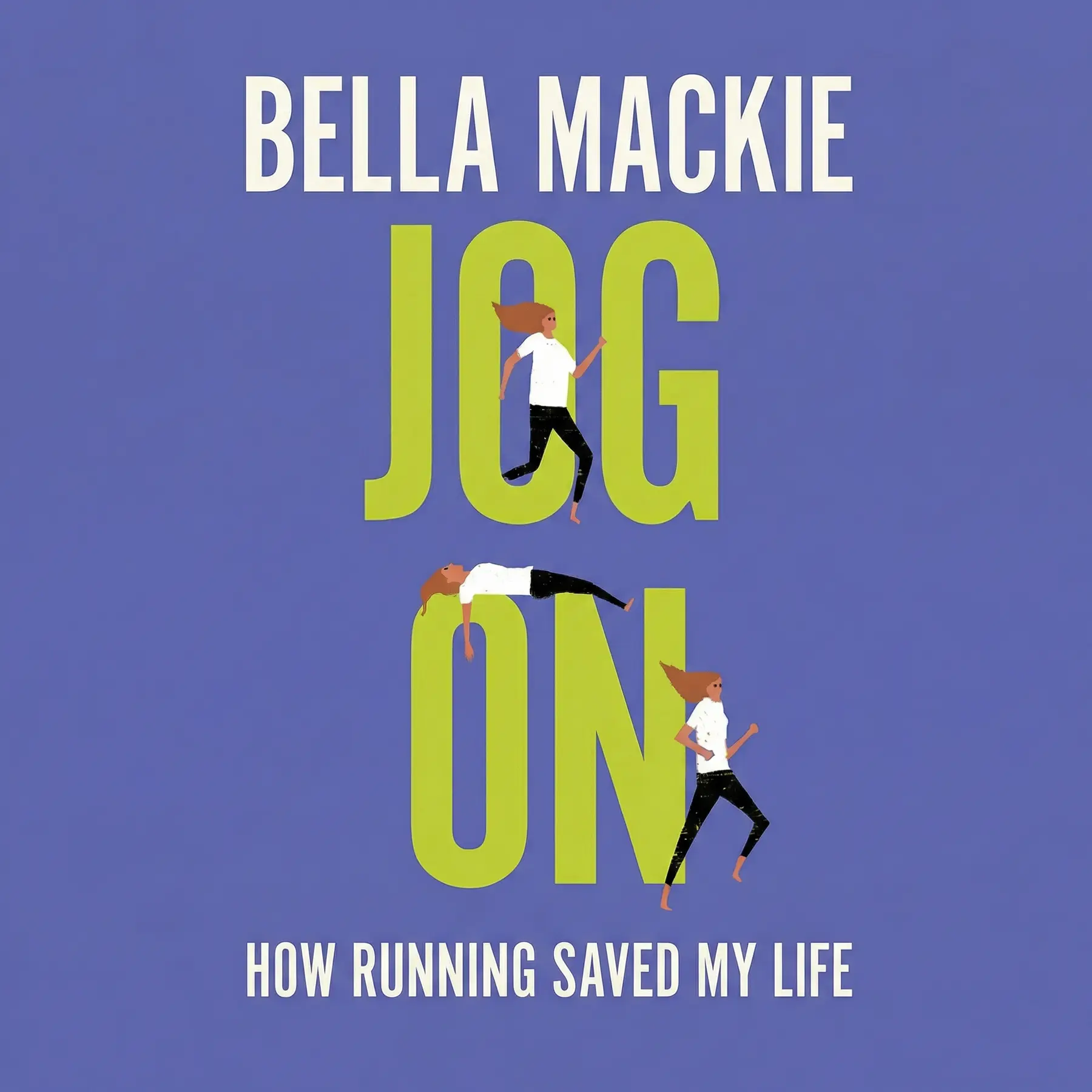
What people think
Listeners find Bella Mackie’s candid account of her battle with anxiety to be a profoundly relatable and encouraging guide to the mental health advantages of physical activity. Though some listeners feel the narrative is occasionally repetitive, they value the author's down-to-earth perspective on beginning with small steps, and one listener noted that the book inspired them to start running for the first time. Furthermore, they appreciate the casual tone and the inclusion of supportive data and quotes that provide empathy to fellow sufferers. Many also mention that the actionable advice is truly beneficial for anyone wanting to utilize running as a method for self-care and mindfulness.
Top reviews
Ubolrat
This book actually made me run for the first time in my adult life! I was totally sucked in by the blurb, and the content delivered exactly what I needed: a way to manage my anxiety that didn't feel like a chore. Bella writes with such incredible empathy and lack of pretension that you can't help but feel she’s in your corner. Her journey from divorce to 10Ks is moving without being sappy, and her humor made me snort out loud more than once. If you’re struggling with your mental health, please give this a try.
Show moreSophia
Look, if you’ve ever had a panic attack that left you feeling broken, you need to read this immediately. The author’s honesty about her "rollercoaster life" of high anxiety resonated with me on a level I wasn't prepared for. It’s not just a collection of "jogging is good" platitudes; it’s a deep dive into how exercise seeps into every other part of your life and opens it up. I highlighted so many passages in the second half of the book that it’s basically all yellow now. This is a multidimensional guide to reclaiming your headspace.
Show moreTim
After hearing so many people talk about "Jog On," I decided to listen to the audiobook, and it was a revelation. Mackie’s delivery is so down-to-earth and sincere, making the "chat with a mate" vibe even stronger. I actually listened to it while out on my morning walks, and by the end of the week, those walks had turned into slow jogs. While she definitely repeats herself a few times—making the middle section feel a bit circular—the perspective on running as meditation is beautifully explained. It’s an unpretentious, inspiring, and deeply relatable guide that ignores the bullshit and focuses on what actually works.
Show moreChon
Finally got around to reading this after seeing it everywhere, and I’m glad I did. Mackie nails the description of how crippling anxiety feels, capturing that sense of being stuck on the sofa while your brain spins out of control. Her approach to exercise is so refreshing because she doesn’t care about "wellness" or looking good; she just wants to survive. I did find it slightly repetitive toward the end, but the practical tips for using movement as a form of mindfulness were genuinely helpful for my own training. It’s an honest, gritty look at recovery.
Show moreSupranee
Picking up this book felt like a lifeline during a particularly anxious month. I loved that the author doesn't pretend to be a pro athlete, instead focusing on the messy reality of starting from zero. Her writing style is punchy and often funny, which balances out the heavier themes of depression and panic attacks. Some sections felt like they could have been condensed, but the overall message is so empowering that I didn't mind the occasional fluff. It’s a remarkable memoir that reminds us that our bodies are capable of much more than our minds believe.
Show moreGoy
Truth is, I never thought I’d enjoy a book about running since I usually find the sport incredibly boring. Yet, this isn't really a book about running; it's a book about survival and finding a mechanism to cope with life's sharpest edges. Mackie integrates research and quotes from figures like Jane Austen or Hillary Clinton in a way that feels organic rather than academic. While she occasionally rants a bit much about the "wellness industry" and the idea of giving up staples like sugar, her central thesis about the mind-body connection is spot on. It’s a motivating read for anyone who feels intimidated by the gym.
Show moreDream
As someone who already jogs, I found this to be a bit of a mixed bag. Bella Mackie is a great writer with a witty, conversational voice that makes you feel like you’re chatting with a friend over coffee. However, the book suffers from a circular narrative that made me feel like I was experiencing déjà vu every other chapter. There are some excellent takeaways regarding the "runner’s high," yet the constant dismissal of wellness culture felt a bit forced and unnecessary. It's an okay read if you need a gentle nudge, though don't expect a linear progression.
Show moreSook
Did anyone else find the structure a bit messy? I really loved the bits about her initial struggle—that relatable moment of not being able to run for sixty seconds—but then it devolved into a lot of "samey" advice. I appreciate her lack of pretension because the running world is often way too competitive and focused on gear or marathons. That said, I struggled to stay engaged during the middle section where the focus shifted to facts and figures rather than her own feelings. It’s definitely a solid choice for someone in a dark place, but as a piece of literature, it’s just fine.
Show moreTanawan
Frankly, this book could have been an essay. While I appreciate Mackie’s vulnerability regarding her divorce and mental health struggles, the content becomes agonizingly repetitive after the first fifty pages. She makes the same point about running and anxiety over and over again without adding new layers. I was looking for a deeper personal connection, but the narrative felt bogged down by cold statistics and external quotes that pulled me away from her journey. It's a nice sentiment, but the execution felt thin and stretched.
Show moreSureerat
Not what I expected at all. I thought this would be a practical "how-to" guide for beginners, but instead, it felt like a sluggish slog through a diary. It took me three weeks to get through the first few chapters because the narrative just didn't move. To be fair, I know people find her story inspiring, but for me, it was incredibly dull and lacked a cohesive structure. My book club chose this, and honestly, we all ended up abandoning it before the halfway mark. It felt uninspiring when I wanted something to actually get me off the couch.
Show moreQuestions about this book
What is Jog On by Bella Mackie about?
Jog On is a memoir about anxiety and running. Bella Mackie describes a lifetime of anxiety, including OCD rituals, disassociation and panic attacks that led her to avoid most of her city. After her husband left, she began jogging in a secluded alley for three minutes at a time. Over the following years running quieted her mind, faded her panic attacks and helped her rebuild her life.
How does running help with anxiety, according to Jog On?
Mackie describes three effects. Exercise lowers cortisol, a stress hormone. It produces the same racing heart, sweating and adrenaline as anxiety, so regular exercisers learn to find those sensations less frightening. And a study of stressed mice found that the ones allowed to exercise grew new connections in the hippocampus, a brain region tied to emotion, suggesting exercise helps the brain handle stress.
Does running in nature make a difference?
Mackie argues it adds an extra benefit. A Stanford University study found that people who took a long nature walk dwelled less on negative thoughts and showed lower activity in a brain area linked to poor mental health, unlike city walkers. Research at the University of Essex found that even looking at photos of natural scenery while exercising raised self-esteem and lowered blood pressure.
How should an anxious beginner start running?
Start small and somewhere that feels safe. Mackie’s first run lasted three minutes, in a quiet alley, with plenty of walking. Her practical advice is to avoid doing too much too soon, since early overexertion can cause injury or exhaustion and make you quit. A 5k app that builds distance gradually over several weeks is one way to pace yourself.
Why don't more people exercise, according to Bella Mackie?
Mackie notes that 26 percent of adults in England exercise less than 30 minutes a week, and women exercise less than men. Many women and girls see sport as aggressive and unfeminine, feel uncomfortable in mixed gym classes, or feel intimidated and judged at gyms. Ethnic minority women can face added fears, so she argues institutions and policy makers must help, not just individual willpower.
Featured in
Readers also enjoyed





Alcoholics Anonymous
Alcoholics Anonymous World Services

Ali: A Life
Jonathan Eig

A Liberated Mind: How to Pivot Toward What Matters
Steven C. Hayes

AUDIO SUMMARY AVAILABLE
Listen to Jog On in 15 minutes
Get the key ideas from Jog On by Bella Mackie, plus 5,000+ more nonfiction titles.
- 5,000+ titles
- Listen as much as you want
- 7-day free trial
- Cancel anytime









