Crush It!: Why Now is the Time to Cash in on Your
Gary Vaynerchuk
 English
Shows small businesses and marketers how to get heard on crowded social networks by creating content people actually want, then fitting it to how Facebook, Twitter and Pinterest each work.
1 min 05 sec
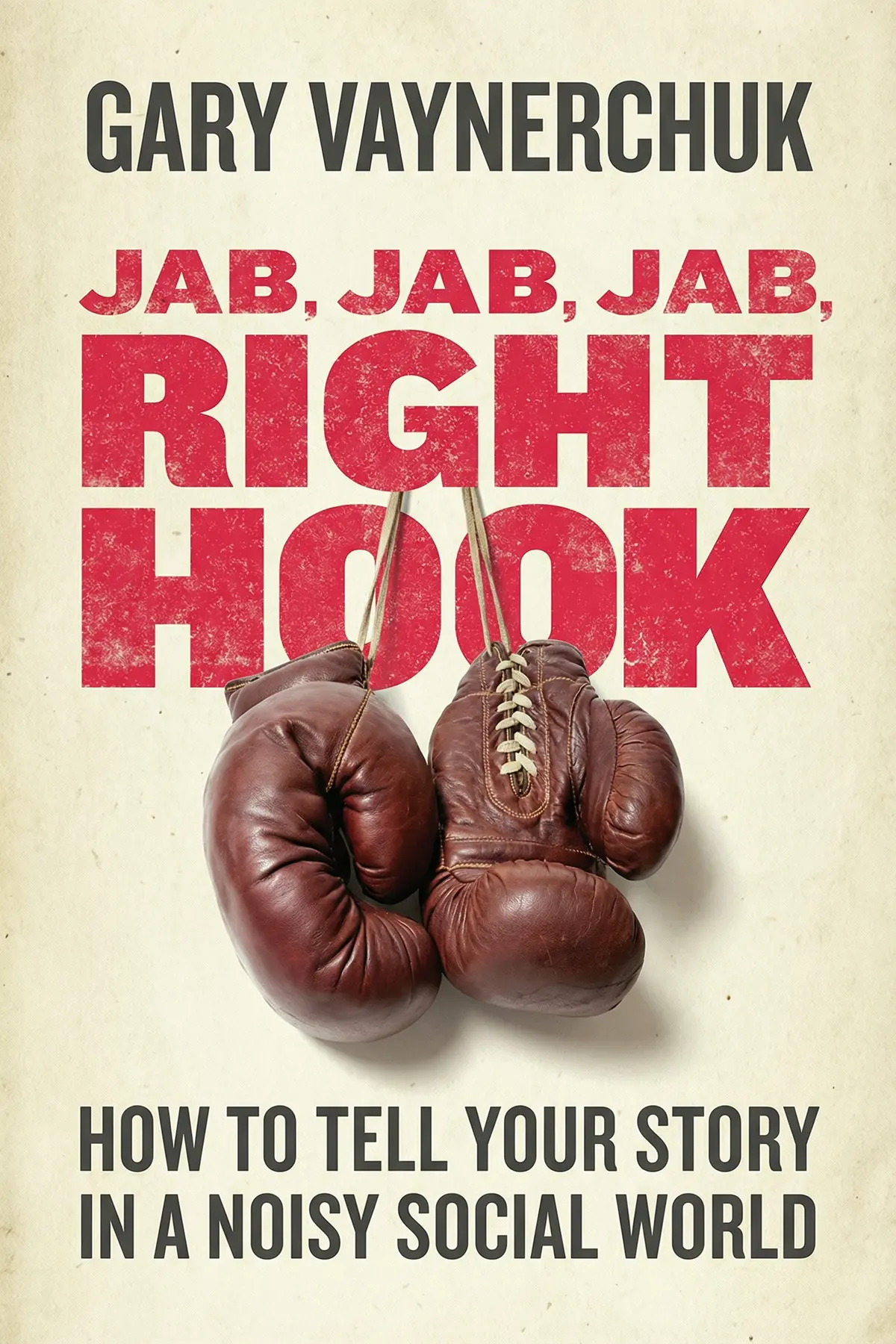
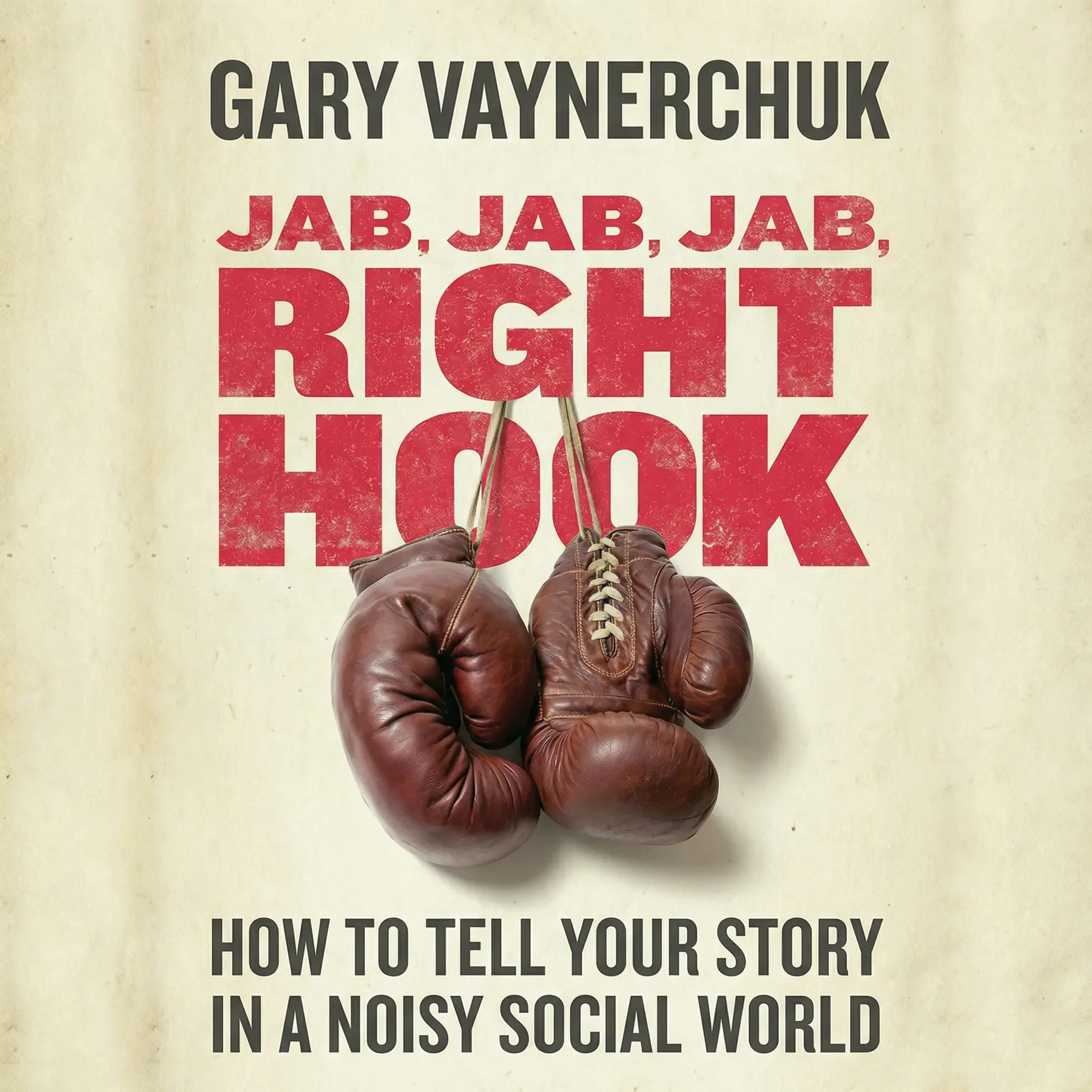
Shouting louder on social media rarely gets a brand heard; fitting the story to the platform does. That is the core claim of Jab, Jab, Jab, Right Hook, in which Gary Vaynerchuk, who grew his family’s wine business before becoming known for digital marketing and social media, explains how to tell a business story in a world crowded with billions of voices. If you post again and again and hear nothing back, his diagnosis is that volume is rarely the problem. The usual cause is content that interrupts instead of entertaining, or content dropped onto the wrong network in the wrong shape.
The thread running through every idea here is simple: attention now goes to brands that know their story and retell it in the native language of each platform. Along the way you’ll see why one photo can fail on one network and work on another, how Facebook picks which posts people see, what a jeans company missed when a popular TV series ended, and which network Vaynerchuk thought marketers were neglecting most.
1 min 59 sec
There are now more phone subscriptions in one country than there are people living in it. Behind that odd number sits a shift in how people decide what to buy, and it is moving faster than any change in media before it.
1 min 57 sec
Viewers can mute, block or scroll past almost any ad in a second. A running app shows a different route, where customers keep a brand’s story going by themselves, and it starts with one rule most companies break.
1 min 50 sec
Facebook advertising costs a fraction of a television slot, yet a post that could sell millions can still vanish from view. The reason lies in an unseen scoring system that counts something money alone cannot buy.
2 min 02 sec
Hundreds of tweets fly past every second, and most brand messages sink without a trace. A famous TV finale and a jeans label with the perfect nickname show the opening many companies leave on the table.
1 min 52 sec
One network’s users were far more ready to buy than Facebook’s, and its audience was growing fast. Yet most companies stayed away, for reasons that turn out to say more about habit than about real risk.
1 min 08 sec
Vaynerchuk turns a noise problem into a placement problem. Billions of voices compete online, and the brands that get heard are seldom the loudest. They know what their story is, they tell it every day in a form people would choose to watch, and they reshape it for each network: the edge-counting Facebook feed, the fast public stream of Twitter, the shop-window boards of Pinterest. No single approach fits every platform, and that is exactly why care pays off.
The work this week can be modest. Look at your last few posts and count the comments and shares each one earned, since those are what the newsfeed counts too. Check the trending topics in the morning and look for one honest link between what people already love and what you sell. And if a network suits your customers but feels untested, try it on a small scale before your competitors decide it deserves their effort.
Remember Sevens, a brand whose nickname matched one of the country’s biggest conversations that day, and which said nothing. The chance to be heard is often already in front of you. The skill is noticing it and stepping in.
Many brands treat social media as a shouting contest. They post more, louder and everywhere, and they hear almost nothing back. Gary Vaynerchuk argues that the noise is not the real obstacle. The problem is content that interrupts people, and content placed on a network where it does not fit. Drawing on figures about phone use, buying habits and how quickly new media spread, he makes the case that social networks are now where buying decisions begin. He then sets out what good content looks like: it entertains, it asks little of the audience, it runs every day and it is native to its platform. From there he walks through three networks in turn. He shows how Facebook's EdgeRank decides what reaches the newsfeed, how Twitter's trending topics hand brands ready-made conversations, and why Pinterest, despite strong buying intent, was left almost untouched by marketers. Readers get a clear way to judge their own posts, a habit for spotting trends worth joining, and the confidence to test a platform before competitors decide it matters.
Small business owners who post on social media every week and get little response.
Marketers deciding how to split time and budget between Facebook, Twitter and Pinterest.
Founders selling to women or families who want to know where buying intent is strongest.
Gary Vaynerchuk was born in Babruysk, Belarus, in 1975. He first made his name as a wine critic while growing his family's wine business, and he founded Wine Library TV, an online video blog about wine. He went on to become known for digital marketing and social media as chairman of VaynerX and CEO of its subsidiary VaynerMedia. He co-founded Resy and Empathy Wines, created VeeFriends, and has invested in companies including Facebook, Twitter and Uber. He is a New York Times bestselling author.
Gary Vaynerchuk
Gary Vaynerchuk
Listeners find this book to be an excellent resource for marketing professionals, offering actionable tips and an all-encompassing look at various social media outlets. The work showcases insightful case studies along with contemporary real-world examples, ensuring it is both simple to grasp and enjoyable to consume. Listeners value how the content successfully instructs on improving one's digital footprint and engaging more effectively with the public.
This book is a masterclass in understanding the nuance of different social media platforms. Vaynerchuk breaks down the 'platform appropriate' mindset with surgical precision, showing exactly why a post that kills on Facebook might totally flop on Twitter. I found the 'good, bad, and ugly' examples of brand posts to be the most valuable part of the entire experience. It’s one thing to hear advice, but seeing the actual critiques helps you develop a much sharper eye for your own content. While some of the specific platform features have changed since it was published, the core philosophy of giving before asking is timeless. It’s an indispensable guide for any marketer looking to stop shouting and start connecting.
Show moreAfter hearing Gary V on a podcast, I knew I had to grab this for my small business strategy. The breakdown of real-life examples is indispensable because it translates abstract marketing theory into concrete, visual critiques you can actually use. I spent the whole afternoon saying 'of course!' as he pointed out tiny details that make or break a post’s engagement. It’s entertaining to read and doesn't get bogged down in technical jargon that usually puts me to sleep. Not only did I get ideas for my Instagram, but I also found tips for a non-profit I volunteer with. If you want to understand the underlying philosophy of modern branding, this is a must-have for your library.
Show moreFinally got around to reading this and I am genuinely surprised by how much I learned about crafting the perfect right hook. The sheer volume of case studies provides a comprehensive overview that helps you stop guessing and start interacting with your consumers in a way they actually appreciate. Gary's no-nonsense descriptions of why certain posts work and others fail is mind-bogglingly helpful for anyone trying to build a brand today. I love that he focuses on being visual and generous rather than just pushing for a quick sale. It’s a very visual book, so I’d highly recommend the print version over an e-reader. This belongs on the desk of every modern entrepreneur.
Show moreThe visual breakdown of various brand posts makes this book worth every penny for anyone in the creative space. I love how it highlights the 'good' and the 'bad' in real-time, teaching you how to prepare your audience for an exchange of value without being annoying. Some of the content definitely feels a bit stuck in 2013, but the logic behind the 'Jab, Jab, Jab' strategy is evergreen. If you want to boost your presence and actually connect with people instead of just talking at them, this is a mandatory read. Gary V’s voice jumps off the page, making it both educational and highly entertaining from start to finish. I will be going back to these examples regularly.
Show moreEver wonder why your brand’s content feels like it is shouting into a void? Gary V explains the 'jab, jab, jab' philosophy—giving value before you ever ask for a sale—and it is a total game changer for visual marketing. The book is very visual itself, which makes it much easier to digest than a dry textbook. Truth be told, it does show its age in the chapters about platforms like Tumblr, but the tactical overview is still incredibly relevant for 2024. You learn how to prepare your audience for an exchange of value rather than just hitting them with constant ads. It’s a great starting point for anyone who wants to boost their social media presence effectively.
Show moreWow, the visual nature of this guide makes it so much more practical than your typical marketing business book. Personally, I think the most valuable insight is the emphasis on making content 'native' to the specific user experience of each app. Gary doesn't just tell you to be interesting; he shows you exactly how brands fail by being too corporate or out of touch. To be fair, some of the screenshots are pretty dated now, but the logic of building a relationship through generosity remains a winning strategy. It is a straightforward, no-nonsense look at how to interact with consumers without being that annoying brand everyone ignores. Definitely worth a read for the case studies alone.
Show moreAs someone transitioning into a digital role from a traditional background, this served as an amazing starting point for understanding social media strategy. Vaynerchuk’s approach to analyzing brand posts helps you develop a critical eye for what makes content truly 'native' to each platform. The boxer analogy—jabbing with value before throwing the right hook for the sale—is a perfect way to visualize a long-term marketing plan. I did find some sections a bit long-winded, but the practical advice usually makes up for the rambling. It is a pertinent read even years later because the psychology of why people click 'like' hasn't changed. Solid 4 stars for the tactical overlook and clear, actionable tips.
Show morePicked this up because my boss recommended it as a starting point for our new social media strategy. While the core message of providing value through 'jabs' is solid, the narrative gets incredibly long-winded and the examples feel redundant after the first few chapters. It honestly feels like a transcribed speech, which works for Gary's high-energy personality but can be a bit rambling to read on the page. Frankly, if you have a year or two of experience in digital marketing, a lot of this will feel like common sense. It is a decent overview for beginners, but I wish it were more concise and less repetitive throughout the middle sections.
Show moreThe section on Pinterest and Tumblr definitely shows the book’s age, which is expected for anything in the fast-paced digital space. Look, if you already live and breathe social media, some of these 'profound' tips will feel like elementary observations. The writing style is very much 'Gary V'—loud, direct, and slightly rambly at times. While I appreciate the effort to include so many case studies, a lot of them start to feel like the same point being made over and over again. It is a generally nice overview for those who are clueless about media strategy, but it lacks the depth needed for a seasoned professional. I’d recommend it as a quick weekend skim rather than a deep study.
Show moreNot gonna lie, I found the writing style a bit grating and repetitive after the first fifty pages. It feels like a collection of blog posts stitched together rather than a cohesive book, and I spent half my time wishing he would just get to the point. Most of the 'wisdom' here boils down to 'be helpful and use nice pictures,' which isn't exactly groundbreaking information for anyone born after 1990. The overflowing amount of examples for every single point is just redundant and makes the book feel twice as long as it needs to be. Unless you are completely new to the internet, you can probably skip this one and just watch a few of his YouTube videos.
Show moreGary Vaynerchuk argues that brands cannot win attention on social media by shouting louder. They need to know their story, tell it through fresh, entertaining content every day, and adapt it to the format and habits of each platform. Content that is excellent in one place can fail in another, so understanding how each network works matters as much as the story itself.
EdgeRank records each user action on Facebook as an edge and uses those edges to decide what shows up in the newsfeed. As Vaynerchuk explains it, the system ignores purchased likes and clicks that lead to other sites. A brand post only spreads if people like it, share it or comment on it, so content has to invite real interaction to be worth paying for.
Trendjacking means linking your brand to a subject people are already discussing, using the trending topics Twitter lists. Vaynerchuk’s example is the 30 Rock finale in January 2013, which trended the next day. The jeans brand 7 For All Mankind, nicknamed Sevens, could have joined the conversation about the show but missed the chance.
He points to a 2012 survey in which people on Pinterest proved 79 percent likelier to purchase there than on Facebook, plus fast growth that reached 48.7 million users by 2013. Women make up five times as many users as men, and roughly half of them are mothers. He argues businesses stayed away mostly from copyright fears and reluctance to try a new platform, not from real risk.
Judge each post by whether people would choose to see it and whether it fits the network it is on. Measure Facebook posts by comments and shares. Check Twitter’s trending topics daily for honest links to your product, and use hashtags sparingly and with some humor. If your audience is mostly women, test a few Pinterest boards that link back to your site.
AUDIO SUMMARY AVAILABLE
Get the key ideas from Jab, Jab, Jab, Right Hook by Gary Vaynerchuk, plus 5,000+ more nonfiction titles.