
Crush It!: Why Now is the Time to Cash in on Your
Gary Vaynerchuk
 English
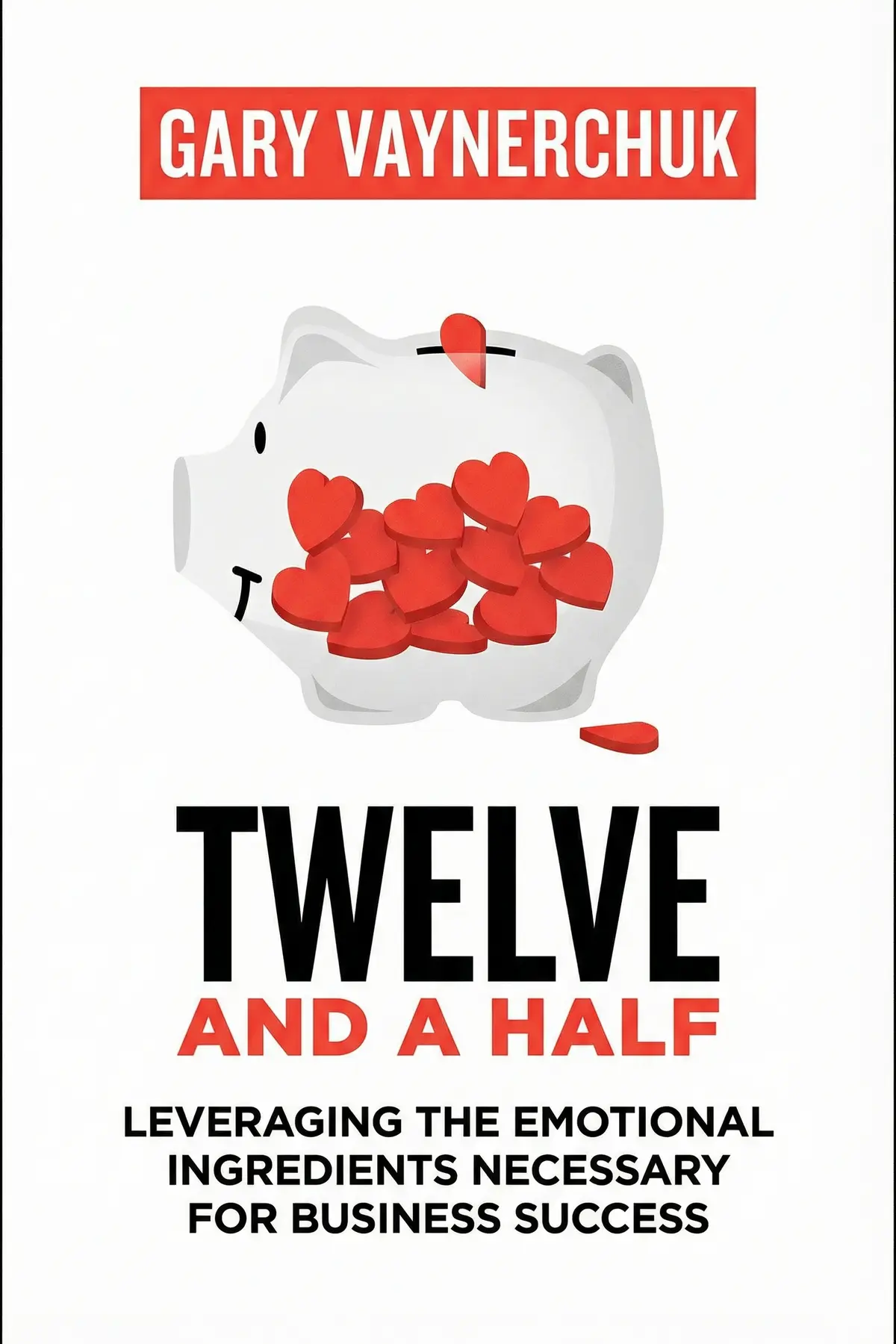
Shows how twelve emotional traits, from gratitude and accountability to patience and curiosity, can be combined to handle real business problems, and how to find the one trait you most need to build.
55 sec
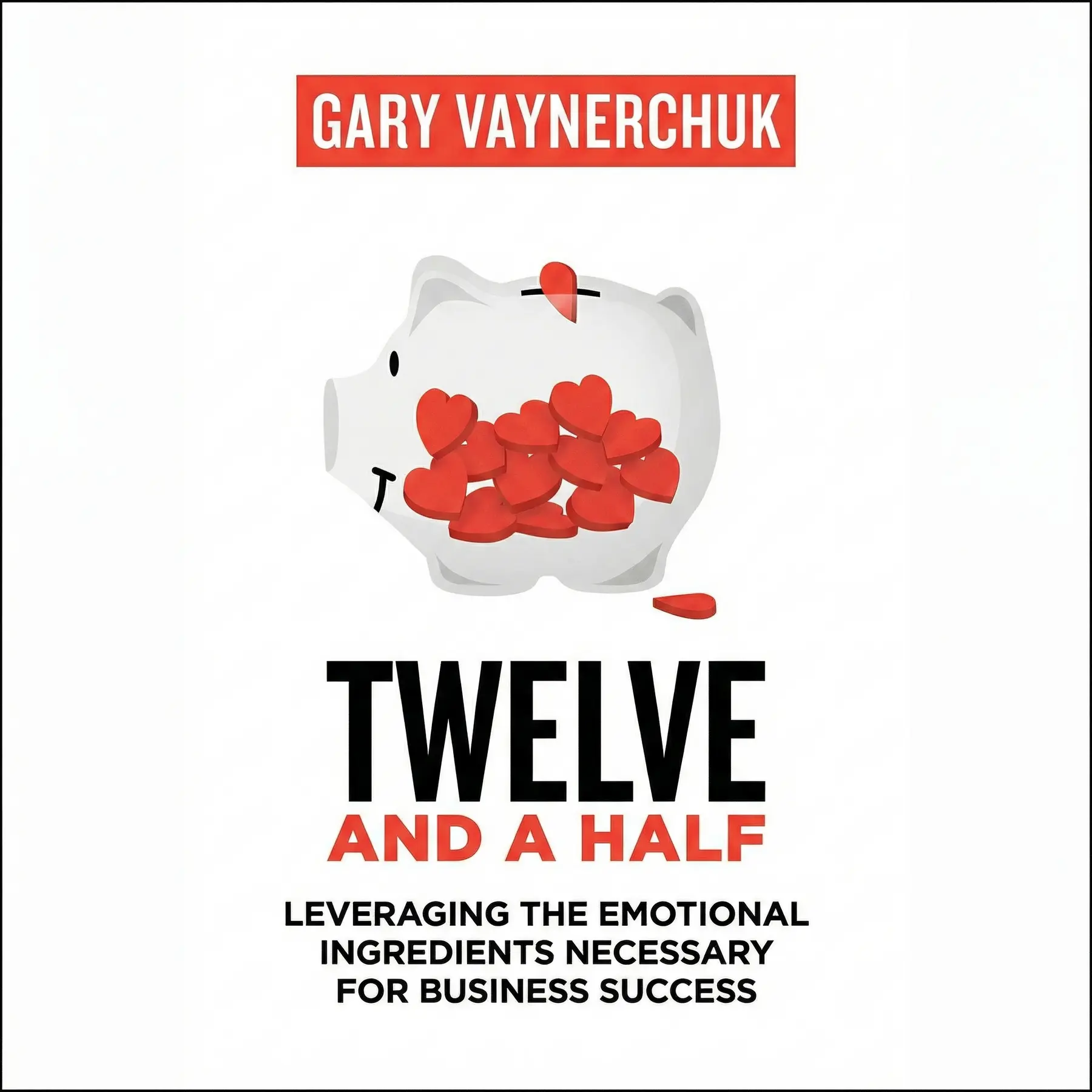
When a business or a career stalls, most people reach for a new strategy or simply push harder. In Twelve and a Half, entrepreneur and CEO Gary Vaynerchuk argues that the fix is often emotional. Gratitude, accountability, humility and nine other traits shape how you respond when results fall flat, and they are easy to ignore because they are hard to measure. Ignore them, he warns, and you end up with a culture where people fear each other and their bosses.
His picture is a kitchen. There are twelve ingredients, each useful alone and stronger in the right mix, plus the one you handle worst, which is the half in the title. Along the way come recipes for a launch that isn’t working, a coworker who keeps stepping on your toes and a tempting jump into your own company, and a way to find the ingredient you most need to build.
1 min 39 sec
Two months of nonstop posting have brought followers but not a single customer. Before changing the plan or giving up, Vaynerchuk asks for a step back that most founders skip, and it starts far from their own screen.
1 min 38 sec
Blaming a colleague or a stingy boss feels natural and even fair. Vaynerchuk points to a harder sentence, one most people avoid saying, and he argues it is the fastest way to get control back.
1 min 29 sec
Every post, pitch and proposal competes with endless other ways to spend a minute. Vaynerchuk’s answer combines two traits that sound modest with one that sounds almost stubborn, and each guards against the others.
1 min 30 sec
Vaynerchuk’s own wine show started with almost no audience, and his newsletter barely registered. What kept him going was a pair of traits that only work together, plus a question worth asking on every slow week.
1 min 31 sec
Friends at dinner start enthusing about something you know little about and doubt you’d like. The usual reaction feels harmless, yet Vaynerchuk sees it as a way to miss the very thing that could change your work.
1 min 40 sec
A colleague keeps doing parts of your job just as you are trying to get noticed. Anger feels justified, but Vaynerchuk’s approach starts with two checks, one of them pointed uncomfortably at you.
1 min 43 sec
A well-paid executive dreams of going solo, and a young artist driving for Uber sees a new way to sell their work. Vaynerchuk gives each a different recipe, and both include a sacrifice.
1 min 28 sec
Vaynerchuk built a workplace on encouragement and praise, and he still counts it as his weak spot. His confession explains the half in the title and shows how a real strength can let people down.
1 min 15 sec
Twelve and a Half rests on one claim: the qualities that sound soft are the ones you need when business gets hard. A launch with followers but no customers, a colleague who keeps taking over, a comfortable job you are tempted to leave all look like problems of strategy. Vaynerchuk reads them as problems of response, each with its own recipe. Gratitude and optimism steady you. Accountability returns control. Humility and curiosity open doors your ego would shut, and patience gives tenacity time to work.
The method asks for honesty more than talent. When something stalls, notice which ingredient you reached for first and which one you skipped. Turn your next complaint into an I sentence with an action at the end. Ask one real question before you judge a person or a trend. And find your half, the trait you use worst, the way Vaynerchuk found that his kindness needed candor beside it.
He made his name with an online wine show that almost nobody watched at first. He kept going then, and the book’s wager is that the rest of the mix can be learned the same way: one ingredient, one stubborn situation at a time.
Leaders tend to skip qualities like empathy, kindness and self-awareness because they are hard to measure and easy to dismiss next to sales figures and follower counts. Gary Vaynerchuk, an outspoken entrepreneur and CEO, argues that ignoring them is a costly mistake. Without them, he warns, it becomes much harder to build a positive culture where people don't fear their colleagues or their bosses. He sees emotional intelligence as made up of twelve parts: gratitude, self-awareness, accountability, optimism, empathy and humility, followed by conviction, tenacity, patience, kindness, ambition and curiosity. Each is useful alone, but the real skill is choosing the right mix for the problem in front of you. He shows this with everyday business situations: a new owner whose content draws followers but no customers, an evening when friends bring up an unfamiliar trend, a coworker who keeps doing your job for you, and two people weighing a risky leap into work of their own. The half in the title is personal: the ingredient each reader handles worst. Vaynerchuk names his own and explains what it cost the people he managed. Readers get a practical vocabulary for their emotional strengths and gaps, and concrete moves for setbacks, conflict and big decisions.
New founders and creators whose content gets followers but no customers.
Employees dealing with a difficult coworker or weighing a move to work for themselves.
Managers who praise generously and suspect their teams are missing honest feedback.
Gary Vaynerchuk was born in Babruysk, Belarus, in 1975. He first made his name as a wine critic while growing his family's wine business, and he founded Wine Library TV, an online video blog about wine. He later became known for digital marketing and social media. He is chairman of VaynerX and CEO of its subsidiary VaynerMedia, co-founded Resy and Empathy Wines, created VeeFriends and has invested in companies including Facebook, Twitter and Uber. He is a New York Times bestselling author.
Gary Vaynerchuk
Gary Vaynerchuk
Listeners view this title as a vital guide providing helpful perspectives, with one person noting how the 12 traits are advantageous when mentoring youth sports. Additionally, the book is accessible and fosters compassion for the situations of others. Listeners also value its professional utility, with one highlighting the inclusion of practical examples. However, there is some disagreement among listeners concerning whether the content is worth the cost.
Finally got around to reading Gary’s latest, and it’s probably his most grounded work yet. Instead of the usual "hustle until you drop" vibe, he’s digging into the emotional ingredients that actually make a business sustainable. I loved the breakdown of things like humility and patience—traits that usually get ignored in the "alpha" business world. Identifying your "half" is a game changer; realizing that my lack of candor was actually hurting my team was a hard pill to swallow, but necessary. It’s an easy read that focuses more on being a decent human than just making a buck. Some might say it’s basic, but in a world where everyone is cutthroat, this kind of optimism is refreshing and practical. Definitely worth a spot on the shelf if you’re looking to lead with more empathy.
Show moreAs a coach for youth athletics, I found the "ingredients" approach surprisingly applicable outside of the corporate world. We talk a lot about tenacity and ambition with the kids, but Gary’s focus on gratitude and humility is what’s actually missing in sports today. I’ve started using some of the "scenario" logic to help my players navigate conflict on and off the field. The writing style is very conversational and easy to digest, which makes it a great gift for young adults just starting their careers. Truth is, we often overcomplicate leadership, but this book brings it back to the basics of human connection. It’s a heart-centered approach to winning. Honestly, it changed how I view my own "half"—which is definitely patience. I’ll be recommending this to other parents in the league for sure.
Show moreWow, this was exactly what I needed. I’ve been feeling burnt out and cynical lately, and Gary’s take on optimism and gratitude really pulled me out of a rut. This isn't just a business book; it's a guide to being a better human being. I love how he admits his own flaws, specifically his struggle with candor, which makes his advice feel much more authentic. It’s a very fast read—I finished it in two sittings—and the language is simple and direct. Some people might find it too basic, but sometimes the most basic truths are the ones we ignore the most. If you’re an entrepreneur struggling with the "people" side of things, buy this book. It’s an essential tool for building a business that actually has a soul.
Show moreEver wonder why some leaders are loved while others are just tolerated? Gary Vaynerchuk argues it’s the balance of soft skills, and he’s right. The concept of "Kind Candor" really struck a chord with me because I’ve always struggled with giving tough feedback. This book provides a framework to fix that. I appreciated how he broke down complex emotions into actionable business tools. The structure is a bit weird—the scenario section is a bit long—but the core message is vital for anyone in a management role. It’s a blunt, fair commentary on how we treat each other at work. Even though it's geared toward business, these principles apply to almost any relationship in your life. It’s not a revolutionary manual, but it’s a necessary reminder that kindness isn't a weakness in the boardroom.
Show moreThe chapter on kind candor is worth the price of the book alone. Most business books tell you to be "tough" or "nice," but Gary explores the messy middle where most of us fail. I realized that my "kindness" was actually a form of selfishness because I was avoiding uncomfortable conversations to protect my own feelings, not my employees'. The book is quite short, which I liked, though some might feel it’s a bit light on data or research. It relies heavily on Gary's personal anecdotes and intuition. If you’re looking for a scientific breakdown of EQ, look elsewhere. But if you want a practical, high-energy guide on how to be a better person in a professional setting, this hits the mark. It’s a fast-paced read with a lot of heart.
Show moreAfter hearing Gary talk about soft skills for years, I was glad to see him finally put it all into a structured format. This book is a quick, enjoyable read that emphasizes that "soft" skills are actually the hardest to master. I think the "Half" concept—identifying your single greatest emotional weakness—is a brilliant way to approach self-improvement. My only gripe is that the book feels a bit repetitive in the middle. He uses so many scenarios to illustrate the same points that I started skimming by page 120. Still, the core message about leading with kindness and accountability is something every CEO needs to hear. It’s a blunt but fair look at what it takes to build a company culture that people actually want to be a part of.
Show morePicked this up because I enjoy Gary’s energy on podcasts, but the book itself was a mixed bag for me. The first section where he defines the twelve traits like accountability and gratitude is excellent and very motivating. However, the momentum died for me during the scenario section. Some of the situations he describes felt a bit unrealistic or "well, obviously" moments that didn't add much value. I think the book would have been more powerful if it focused more on how to develop these traits rather than just showcasing how Gary would use them. It’s a decent read for a flight, and it’s certainly optimistic, but I felt like I was sitting through a long conference keynote. Good for beginners, but long-time followers might find it a bit redundant.
Show moreNot what I expected from a typical business book, but that’s Gary Vee for you. It’s very high-level. He spends a lot of time talking about "ingredients" like optimism and empathy, which is great, but I wanted more "how-to" and less "what-to." The scenarios are hit or miss. Some are relatable, while others feel like they were written for a very specific type of startup culture that doesn't apply to my industry. I also felt the section on empathy was a bit strange; at one point, it sounded like he was suggesting empathy could be used to manipulate people, which gave me pause. It’s an okay read if you need a mindset shift, but don’t expect a step-by-step manual for business growth. It's more of a philosophical guide for the modern workplace.
Show moreTo be fair, the first half of the book where he defines the 12 ingredients is quite strong. I enjoyed the definitions of curiosity and conviction especially. But then the book shifts into these hypothetical scenarios that felt very "Gary-centric." It’s basically him saying, "Here is a problem, and here is how I would solve it because I’m great at these values." I would have preferred more exercises for the reader to find their own values rather than just studying his. It feels a bit like a transcribed lecture at times, which makes it easy to read but also a bit thin on substance. It’s a good reminder of the importance of EQ, but I’m not sure I’ll be revisiting it often. It’s worth a library checkout, but maybe not a permanent spot on the shelf.
Show moreThis felt more like a collection of LinkedIn posts than a cohesive book. While the "twelve and a half" ingredients are solid values, I found the second half of the book incredibly repetitive. Gary presents dozens of hypothetical scenarios that all basically have the same answer: use one of the ingredients. It started to feel like filler after the tenth scenario. To be fair, his perspective on "kind candor" is interesting, but I don't think I needed 200 pages to get the point. If you follow him on social media, you’ve already heard most of this. For the price, I expected something with more depth and less fluff. It’s a quick read, but I’m not sure it provides enough "meat on the bone" to justify a full purchase when his blog covers the same ground for free.
Show moreVaynerchuk argues that emotional intelligence is central to business success, even though it is hard to measure. He breaks it into twelve components, including gratitude, self-awareness, accountability and optimism, along with empathy, humility, conviction and tenacity, plus patience, kindness, ambition and curiosity. Each helps on its own, but they work best mixed to suit a specific problem, such as a stalled launch, a workplace conflict or a risky career decision.
The half is whichever emotional ingredient you are weakest in, and Vaynerchuk says everyone has one. His own is kind candor. He gave employees plenty of positive feedback to keep the workplace safe, but without enough honesty about shortcomings, some became entitled or never learned where to improve, and fell short in their roles. He wishes he had been candid more often.
In his example of a coworker named Rick who keeps doing your job, he starts with empathy: don’t assume bad intent. Then use self-awareness to check whether you have been slacking. Next, have a conversation that adds accountability and curiosity: say you value his drive, explain how it feels, and ask about his workload. The outcome might be sharing tasks, involving a manager, or improving your own work.
Vaynerchuk walks through a new owner whose content brings followers but no customers. Gratitude puts the setback in perspective, self-awareness checks whether your formats match your strengths, and accountability reminds you that strategy and delivery are yours to change. Empathy and humility accept that viewers have endless choices, conviction gives them a reason to choose you, and tenacity and patience keep you going, as they did when his wine show began with almost no viewers.
It suits early founders, content creators and ambitious employees who want practical ways to handle setbacks, conflict and big decisions. Managers will find his warning about praise without honesty useful. Anyone who sees soft skills as vague gets a concrete vocabulary of twelve traits, examples of mixing them, and a prompt to identify the one they handle worst.




Joseph A. Maciariello



Deborah Gruenfeld

Mike Michalowicz


AUDIO SUMMARY AVAILABLE
Get the key ideas from Twelve and a Half by Gary Vaynerchuk, plus 5,000+ more nonfiction titles.









