

13 min 04 sec
Available in: English
 ไทย
EnglishไทยIt Starts With Food: Discover the WHOLE30 and Change Your Life in Unexpected Ways
Shows how processed food hijacks cravings, hunger hormones and the immune system. It then lays out a simple way to build each plate and a strict 30-day plan for finding which foods actually suit your body.
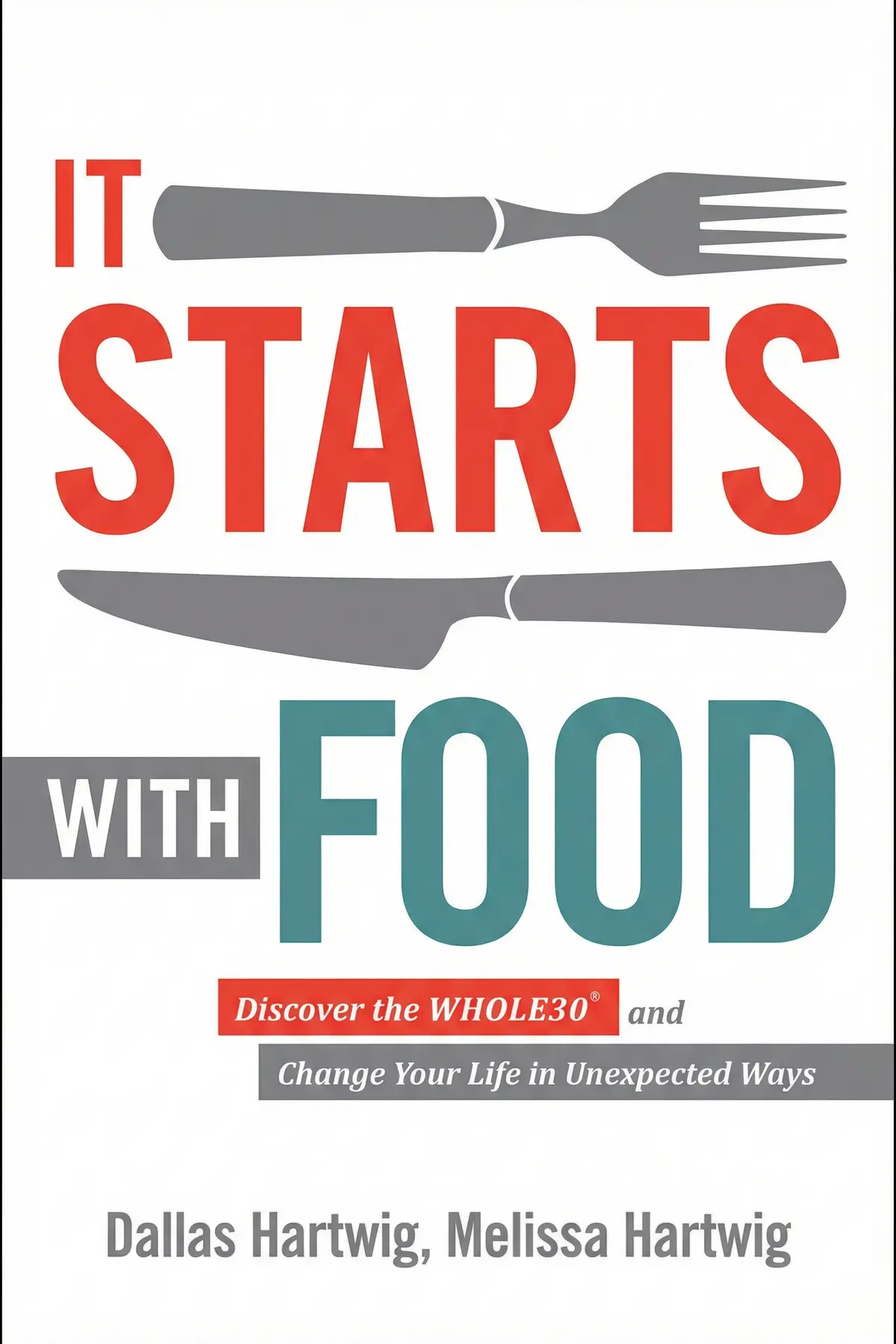
Table of Content
1. Introduction
1 min 01 sec
If you have given up sugar three times and gone back three times, the problem may not be your willpower. In It Starts With Food, Dallas and Melissa Hartwig argue that processed food is built to be sweeter, saltier and fattier than anything in nature, and that this extra push trains your cravings until every diet feels like a fight you were meant to lose. Their answer is to change the food itself, so the cravings change with it.
The book’s case is that what you eat sets your mood, your hunger signals and the health of your immune system, and that the right foods, eaten the right way, can reset all three. The Hartwigs explain which foods they believe help and which harm, how to sit down to a meal, and a strict 30-day plan called the Whole30. What you gain is a clear rule for building a plate, a way to trust your own hunger again, and a test for finding which foods truly agree with you.
2. Understand your cravings and break the diet cycle
1 min 44 sec
Most people blame themselves when a diet collapses after a few weeks. The Hartwigs point to something very old and something very new, and together they explain why the chocolate bar keeps winning.
3. Get your fullness signal working again
1 min 45 sec
Feeling shaky and starved an hour after a big lunch seems like a clear sign you need more food. The authors read that signal very differently, and two hormones sit at the heart of their explanation.
4. Spot the healthy foods that may work against you
2 min 08 sec
Quinoa, lentils, tofu and a glass of milk sound like a model diet. The Hartwigs see a problem hiding in each one, and it begins in the organ that holds most of your immune system.
5. Build every plate around protein, fat and vegetables
1 min 55 sec
After cutting grains and dairy, many people wonder what a full meal even looks like. The answer here includes butter and egg yolks, plus a firm warning about a drink many consider the healthiest choice.
6. Eat three calm meals and stop counting calories
1 min 45 sec
Counting calories feels like the responsible way to eat. The Hartwigs drop it entirely and replace it with rules about tables, clocks and the size of your hand, plus one instruction most dieters would never expect.
7. Reset your cravings in thirty days
1 min 43 sec
Small steps feel safer than a sharp break. The authors think they are a trap, and their 30-day plan ends with an experiment on your own body that no food list can replace.
8. Conclusion
1 min 03 sec
The Hartwigs’ book rests on a shift in blame. When a diet collapses, they do not point at the person. They point at food engineered past anything nature offered, and at the hormones and immune responses it pushes off balance. Change the food, they argue, and the craving, the false hunger and the strain on the gut begin to ease by themselves.
That view makes the daily choices small and concrete. Look at your next plate and check that protein sits at the center, with vegetables around it and a fat such as olives or avocado. Give the meal a table and fifteen minutes with the phone off, then leave four or five hours before you eat again, so you relearn what real fullness feels like. If you want a test you can run on yourself, the Whole30 offers one: thirty strict days, then foods returned one at a time while you watch how each one leaves you.
The title carries the whole argument. Before willpower, before calorie math, before any plan, it starts with what is on the plate.
About this book
What is this book about?
Most people who return to junk food after a diet blame their own lack of discipline. Dallas and Melissa Hartwig see it differently. Food makers, they argue, design products to be sweeter, saltier and fattier than anything in nature, and those foods rewire cravings, confuse the hormones that signal hunger and fullness, and strain the gut, where much of the immune system lives. Their answer is to change the food rather than fight the craving. The authors make a case against foods many people consider healthy, including grains, legumes, soy, dairy and seed oils, and they build meals around protein, vegetables, fruit and fats such as olives, avocado and butter. They pair that with simple habits: three unhurried meals a day, no snacking, no calorie counting. At the center sits the Whole30, a strict 30-day elimination followed by a slow reintroduction. Readers get a clear rule for building a plate and a method for testing, one food at a time, what their own body handles well.
Book Information
Who it's for
Drawn back to sugar
People who keep returning to sugar and snacks after every diet and want to understand why.
Professionals eating at desks
Busy professionals who eat at their desks and want a simple rule for building real meals.
Curious about food triggers
Anyone curious whether grains, dairy or legumes are behind how they feel, and how to test it.
About the Author
Dallas Hartwig
Dallas Hartwig is a licensed physical therapist who has practiced since 2001, after a master's degree at Andrews University. He is also a Certified Sports Nutritionist, ran a functional medicine practice for hormonal, digestive and metabolic problems, and has given more than 200 talks on health and nutrition. Melissa Hartwig co-created the original Whole30 with him in 2009, after their own experience changing habits on a strict Paleo diet. Together they co-owned and ran a strength and conditioning facility, and Dallas later founded Whole9.
Ratings & Reviews
Ratings at a glance
What people think
Listeners find this work enlightening and simple to navigate, as it provides a detailed walkthrough of the way nutrition impacts the body. They value its comprehensive examination of dietary science, deconstructing the logic behind food selections while offering useful tips for better eating routines. Listeners mention major health benefits, with one noting they feel satiated with three healthy meals a day, and many characterize the experience as life-changing.
Top reviews
Olivia
Finally finished this deep dive into nutritional science, and it’s a total game-changer. The Hartwigs explain how our hormones react to certain foods without making it feel like a dry, dusty textbook. I never realized how much my afternoon slumps were tied to systemic inflammation until I read the sections on 'sugar dragons' and brain chemistry. The step-by-step breakdown of the Whole30 program is incredibly thorough and easy to navigate for any beginner. To be fair, it’s a lot of work to read every label for hidden soy or alcohol, but the payoff is worth it. I feel more satiated eating three solid meals than I ever did snacking on junk all day. If you're ready to actually understand your body’s internal signals, this is the book to grab right now.
Show moreNongnuch
As someone who has struggled with chronic fatigue for years, the promise of a life-changing reset was hard to resist. The book provides a solid framework for understanding how processed grains and dairy might be dragging us down. I noticed my energy levels stabilizing significantly after just two weeks of following their protocols. However, the tone can be a bit polarizing; at times, it feels like a 'tough love' intervention from a very intense trainer. The authors use flippant colloquialisms that might annoy some readers, but the core message remains powerful. I appreciated the layout, though the frequent shaded text boxes did break my concentration a few times. Overall, the results speak for themselves, even if the writing style is a bit quirky. It’s a practical guide that demands commitment but offers real physical rewards.
Show moreCholada
The chapter on how food affects your psychological relationship with eating was the wake-up call I didn't know I needed. Most nutrition books focus purely on weight loss, but this one dives into how certain ingredients impact mood and cravings. Since starting the program, my joint pain has vanished and I’m sleeping better than I have in a decade. The authors take you through a step-by-step explanation of systemic inflammation that actually makes sense to a layman. Personally, I don't mind the 'tough love' approach because it kept me motivated during the difficult first week. I no longer feel the need to snack between meals because I’m choosing nutrient-dense options. It really is an insightful look at how fuel impacts every facet of our existence.
Show moreArt
After hearing about the Whole30 everywhere, I decided to go to the source and read the actual book. It’s a very comprehensive guide that explains the 'why' before telling you what to do. I liked the focus on high-quality meats and produce rather than just pushing supplements or shakes. The 'sugar dragon' metaphor is a bit cheesy, but it accurately describes my relationship with sweets. Gotta say, the requirements are very rigid, and scrutinizing every label for traces of sugar is exhausting. I had a hard time finding a compliant dijon mustard without wine or additives! Despite the difficulty, the book provides a clear path to cleaning up your eating habits. It’s not just a diet; it’s an education in nutritional biology.
Show morePear
Picked this up because a friend recommended it for my recurring headaches. I’ve been following the guidelines for about three weeks now, and my head feels clearer than it has in years. The book does a great job of breaking down complex biological processes into simple, actionable steps. However, I’ve definitely developed some major 'egg fatigue' from the breakfast suggestions. In my experience, coconut aminos are not a perfect substitute for soy sauce, despite what the authors claim in the text. Even with those minor gripes, the book is a valuable resource for anyone looking to reset their system. It’s a rigorous lifestyle change, but the physical improvements are hard to deny. Just be prepared to spend a lot more time in the kitchen and at the grocery store.
Show moreRatchada
Wow. I’ve looked at a lot of nutrition guides over the years, but this one actually made an impact. It’s a thorough approach to health that moves beyond simple calorie counting to focus on hormonal balance and blood sugar. I feel completely satiated after eating three healthy meals, which is a miracle for a lifelong snacker like me. The Hartwigs provide a logical argument for why we should avoid processed fillers. It has truly been a life-changing experience for my energy levels and my relationship with my plate. This isn't just a 30-day fix; it’s a permanent shift in how I view nutrition. Frankly, the 'tough love' can be a bit much, but the results are hard to argue with.
Show moreSumalee
Ever wonder why you feel like absolute garbage after a weekend of eating out? This book explains those biological crashes in great detail. It’s essentially a 'hormone reset' disguised as a diet, and the science-y parts at the beginning are quite compelling. However, it definitely feels like it was sponsored by the Coconut Oil Marketing Board at times. The insistence on cutting out legumes and dairy entirely seems a bit extreme for someone without major health issues. I also found the overuse of italics for emphasis to be a bit distracting as I was reading. It’s a useful manual for a temporary cleanse, but the elitism of the Paleo lifestyle is hard to ignore. It’s worth a read, but take the 'caveman' history with a grain of salt.
Show morePichaya
The section on the immune system was particularly eye-opening for me. As someone with a background in biology, I appreciated that they didn't just tell me what to eat, but explained the complex mechanics of how food interacts with our cells. The book is written at an accessible layman’s level, making it perfect for people who aren't experts. My only real complaint is the ebook formatting, where some of the tables were broken and hard to follow. Look, it’s a tough program to stick to, especially when social events involve alcohol and grains. But the information regarding systemic inflammation and gut health is truly top-notch. I feel much more informed about my choices now, even if I don't follow the plan 100% of the time. It’s a solid, thorough guide to reclaiming your vitality.
Show moreWatcharee
Is this book a revolution or just another well-marketed fad diet? Truth is, it’s probably a bit of both. The Hartwigs do a decent job explaining the role of insulin and leptin in digestion, which I found fascinating. Yet, their logic becomes slightly fuzzy when they dismiss all grains and legumes based on 'caveman' history. We don’t have living paleolithic humans to study, so that specific angle felt more like speculation than hard science. I also found the referencing at the end of the book a bit vague, as I prefer seeing direct citations in the text. While I appreciate the emphasis on whole, unprocessed foods, the strictness is quite daunting for a normal social life. It's a good tool for a temporary reset, but I'm not convinced it's a sustainable way to live forever.
Show moreErn
Not what I expected based on the hype. While I agree that eating more vegetables is a good thing, the presentation of this book was frustrating. The tone felt condescending, almost as if the authors were talking down to me for enjoying a simple piece of toast. I found the layout to be a bit of a mess, with shaded boxes interrupting the flow of the text on nearly every page. Furthermore, their 'science' felt slightly cherry-picked to support a specific Paleo agenda. They discredit studies funded by the dairy industry but don't address who funded their own cited research. I felt exhausted during the first few weeks, and I didn't experience the 'magic' they promised. It’s too immoderate for my social life and felt more like a lecture than a health guide.
Show moreQuestions about this book
What is the main idea of It Starts With Food?
Dallas and Melissa Hartwig argue that food affects far more than weight. Processed products made extra sweet, salty and fatty train strong cravings, upset the hormones insulin and leptin that govern hunger and fullness, and add stress to the gut and immune system. Rather than relying on willpower, they say you should change the food itself, building meals on protein, vegetables, fruit and good fats, and use their 30-day Whole30 to reset.
What can you eat on the Whole30?
The plan centers on meat, seafood and eggs, with one or two palm-sized portions of protein per meal. Vegetables fill the rest of the plate, fruit is allowed but should not replace vegetables, and each meal includes a fat such as olives, avocado or butter. Grains, legumes, soy, dairy and seed oils are left out, along with additives like monosodium glutamate, sulfites and carrageenan.
Why do the Hartwigs say to avoid grains and legumes?
They argue that grains, even quinoa and brown rice, are less nutritious than fruits and vegetables and higher in calories, so they crowd produce off the plate. Grains and legumes such as beans, lentils and peanuts also contain phytate, an acid the authors say binds to minerals like zinc and blocks their absorption, which could lead to deficiencies over time.
How does reintroduction work after the Whole30?
After 30 strict days, foods come back slowly and in order: legumes, grains without gluten and dairy first, with gluten-containing grains last. After adding one food, you return to the plan for a day and notice how you feel. The Hartwigs advise bringing back only foods you truly miss and dropping any that make you feel worse. If old habits return, you simply restart the 30 days.
Who should read It Starts With Food?
It suits people who keep slipping back to junk food after dieting and want an explanation that does not rest on willpower. It also helps busy eaters who want a simple, repeatable plate formula without counting calories, and anyone who wants to test whether foods like grains, dairy or legumes affect how they feel, using a structured elimination and reintroduction plan.
Readers also enjoyed








AUDIO SUMMARY AVAILABLE
Listen to It Starts With Food in 15 minutes
Get the key ideas from It Starts With Food by Dallas Hartwig, plus 5,000+ more nonfiction titles.
- 5,000+ titles
- Listen as much as you want
- 7-day free trial
- Cancel anytime









