
16 min 01 sec
Available in: English
Israel: A Concise History of a Nation Reborn
Daniel Gordis traces how the need for a safe haven from European pogroms became a Jewish state, and how war, refugees and new immigrants have tested its founding ideals ever since.
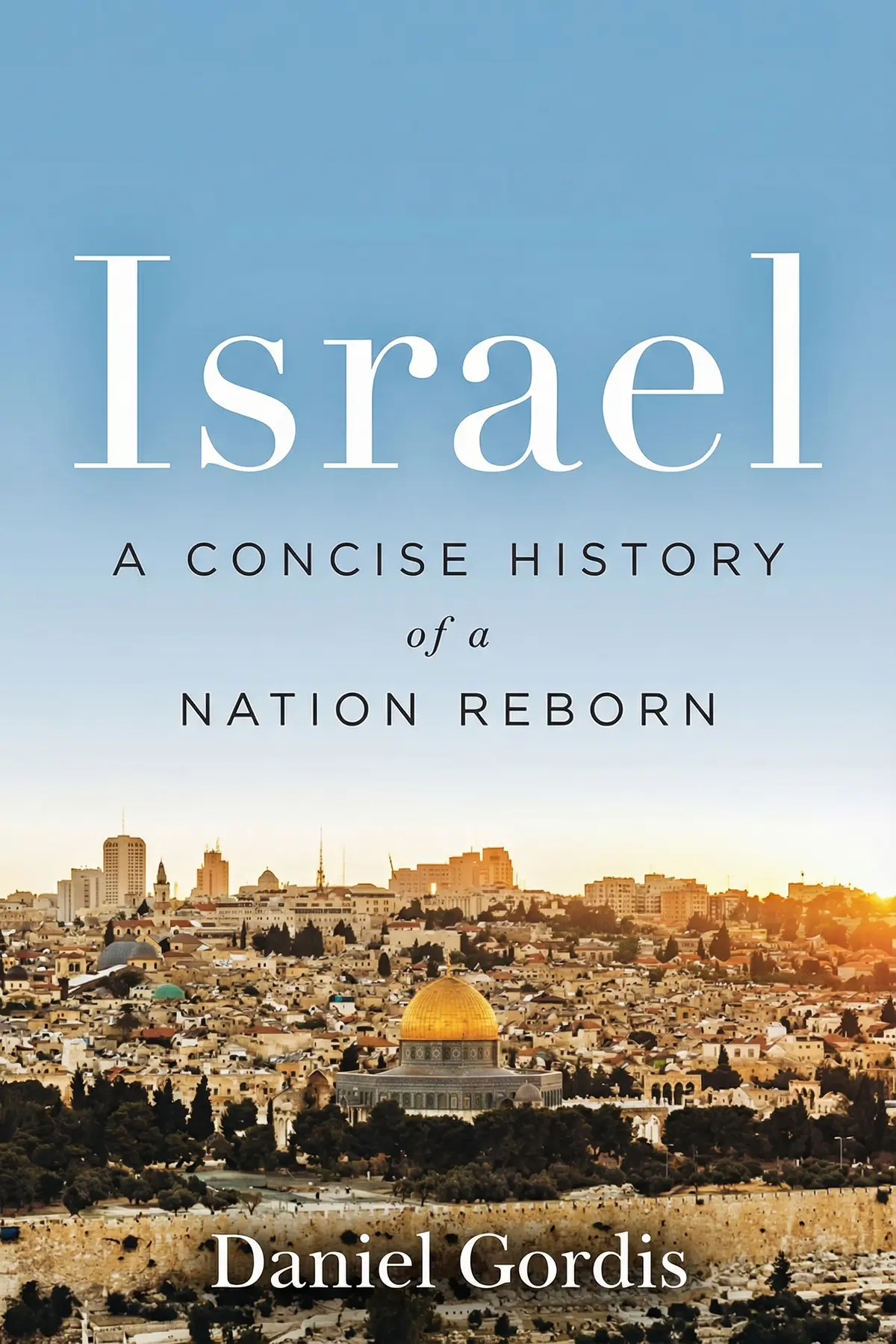
Table of Content
1. Introduction
1 min 01 sec
If the news from Israel reaches you as a blur of wars and peace talks, the country’s past can feel impossible to follow. In Israel: A Concise History of a Nation Reborn, Daniel Gordis offers a single thread to hold. The state began as an answer to an emergency: a place where Jews threatened in Europe could finally be safe. Between 1882 and the First World War, about 2.5 million Jews left Eastern Europe in search of that safety.
Gordis shows that everything since, from kibbutz farms to wars and peace accords, is the story of that refuge being built and then tested. Its founders pictured a secular, communal democracy living calmly beside its neighbors, and reality pressed hard on each of those hopes. Follow the thread and you can tell the arc from Herzl’s small book to the Gaza withdrawal in order, and name the questions Israelis still argue about today.
2. See why Europe's Jews needed a safe home
1 min 49 sec
Some Jews in Europe rose to respected positions, and that made things worse, not better. A young writer in Vienna and Paris watched it happen and drew a conclusion that would redraw the map.
3. A divided dream that still found powerful allies
1 min 59 sec
Even the people who wanted a Jewish state could not agree on what it should be, or whether God alone should create it. A massacre, a farming ideal and a chemist’s wartime discovery pushed the argument forward.
4. What it took to build a homeland under fire
1 min 59 sec
Malaria, swamps and desert drove many early settlers away, yet those who stayed transformed the land. Their success brought a backlash, and a world war brought desperate refugees to a closed door.
5. The founding war and the question it left open
1 min 59 sec
Israel won its independence against predictions that it would not last two years. But the war also created a refugee crisis and a dilemma about equal rights that the country has never fully resolved.
6. Watch a secular dream turn military and religious
1 min 57 sec
The founders wanted generals kept out of politics and imagined a nation of secular farmers. Within a few decades, soldiers led governments and devout voters shaped elections. Here is how that happened.
7. Wars that exposed the limits of military strength
2 min 01 sec
An army many believed could not lose suffered heavy losses for little gain, and a later campaign ended in a massacre that brought crowds into the streets. Israelis began questioning their own military.
8. Peace deals, a Gaza withdrawal and an economic boom
1 min 57 sec
Negotiations meant to end the conflict were followed by the deadliest run of terror attacks Israel had known. Yet the country written off at birth built one of the world’s most dynamic economies.
9. Conclusion
1 min 19 sec
Gordis’s history comes down to one tension that never resolves. Israel exists because Jews in Europe had nowhere safe to go, and from Kishinev to the refugee boats turned back from Palestine’s shore, that need was real. But a refuge has to be defended, and defending it kept bending the founders’ plans. The secular new Jew came to share the country with devout communities who became a political force. A state meant to live beside its neighbors fought war after war. A democracy with a Jewish majority took shape through a war that left 700,000 Arabs as refugees, and it still has no constitution settling the rights of citizens who are not Jewish.
That tension makes a useful lens. When the next headline arrives, about an Israeli election, a clash in Gaza or a new peace proposal, try placing it on this thread: ask which founding ideal is under strain and which fear is driving the decision. Headlines then become part of a story you can follow and explain to someone else. Gordis also leaves room for what was achieved: swamps drained, a refuge built, an economy that surprised its doubters. Israel began as a place to be safe, and it is still deciding what kind of country that safety should make.
About this book
What is this book about?
Israel is in the news constantly, but the history behind the headlines is hard to piece together. Daniel Gordis tells it as one continuous story. It starts in late nineteenth century Europe, where restrictive laws and repeated pogroms convinced millions of Jews to leave and led Theodor Herzl to call for a Jewish state. Gordis follows the idea from Herzl's small book and the first Zionist congress through the immigrant waves that drained swamps in Palestine, the British Mandate, the 1947 United Nations vote and the war of independence. That war left more than 700,000 Palestinian Arabs as refugees, and Gordis faces the controversy over Plan Dalet directly. He then shows how the founders' vision of a secular, communal and peaceful democracy was reshaped by the Six Day War, the Yom Kippur War, Lebanon, the rise of religious voters, the Oslo Accords and the withdrawal from Gaza. Readers get a clear, ordered account of how Israel came to be and of the questions it has never settled, especially how a Jewish state can give equal rights to citizens who are not Jewish. Gordis also explains how a country many expected to collapse became a leader in start-ups and venture capital.
Book Information
Who it's for
Following Middle East news
Readers who follow Middle East news and want the history behind it in one clear story.
Needing a quick grounding
Students and professionals who need a quick, ordered grounding in how Israel was founded and changed.
Curious about Zionist ideals
Anyone curious how Zionist ideals held up against war, refugees and immigration.
About the Author
Daniel Gordis
Daniel Gordis, born in the United States in 1959, is an Israeli author who has held senior roles at Shalem College in Jerusalem, including Koret Distinguished Fellow. He has written more than ten books on Judaism and Israel, and this history won Book of the Year at the National Jewish Book Award. He has written columns for the Jerusalem Post and Bloomberg View, and his articles have appeared in the New York Times, Commentary and Foreign Affairs.
Ratings & Reviews
Ratings at a glance
What people think
Listeners find that this historical work offers a solid grasp of Israel’s past, crafted in a compelling style that feels like reading an absorbing novel. Additionally, the book is well-researched, succinct, and informative, with one listener remarking that it functions as an excellent primer on the topic. The writing remains neutral, while one review emphasizes its polished storytelling technique.
Top reviews
Tim
Wow. I didn't expect a 500-page history of a Middle Eastern nation to read like a page-turning novel, but Daniel Gordis has achieved something truly remarkable here. He manages to weave together the political, the cultural, and the deeply personal into a narrative that feels both educational and visceral. While some might find the prose a bit too celebratory of the Zionist cause, the sheer depth of research on display is undeniable. The way he describes the 19th-century pogroms in Russia provides a heartbreaking but necessary context for why the Jewish people felt they had no other choice. It is a sophisticated narrative that doesn't just list dates, but attempts to explain the soul of a country that probably shouldn't exist based on the odds. If you want to understand the modern identity of Israel, start with this book.
Show moreAnong
Picked this up after a friend recommended it as the definitive 'introductory' book for the region, and I was not disappointed. The author’s writing style is incredibly engaging, almost like a novel, yet it remains rigorously well-documented and educational. I particularly appreciated the focus on the diverse backgrounds of the Jewish people who moved there, from the religious Haredi to the secular socialists. It highlights the unlikely nature of the state’s survival, making the history feel urgent and fragile. Even if you think you know everything about the 1948 war, Gordis brings new perspectives to the table. This is an essential read for anyone wanting a deep, sophisticated understanding of the Israeli experience. The way he integrates poetry and music into the historical timeline is a stroke of genius.
Show moreSamart
Truth is, I was worried this would be a dry, boring account of policy papers and border disputes. Instead, I found a deeply emotional and poetic exploration of what it means for a people to return home after two thousand years. The inclusion of Hebrew poetry and music throughout the text adds a layer of cultural depth that most history books completely ignore. It’s an engaging style that really helps you empathize with the pioneers who built the country from nothing. While the author is undeniably passionate about his subject, he doesn’t shy away from some of the internal friction points of Israeli society. This is a sophisticated and beautifully written piece of historical scholarship. It makes the complex reality of Israel much more accessible to the average reader.
Show moreJackson
The chapter on the 1977 election and the rise of Menachem Begin was a turning point in my understanding of modern Israel. It did a great job explaining the shift from the old Labor guard to a more nationalist, religious focus. Gordis has a way of making complex political shifts feel like a compelling drama between powerful personalities. The book is incredibly well-documented, yet it never feels like it's bogged down in minutiae or boring statistics. You get a real sense of the anxiety and hope that has defined the country since its inception. I would recommend this to anyone looking for a comprehensive, sophisticated narrative of the region. It is easily one of the most informative books I have picked up this year.
Show morePracha
Looking back at my time reading this, I’m struck by how much more I understand the internal diversity of the Jewish state. I never realized how contentious the divide between secular and religious groups has been from the very beginning. Gordis presents these arguments with a level of sophistication that forces you to think deeply about democracy and identity. It is an educational journey that reads like a page-turning novel, which is no small feat for a historical text. The prose is beautiful, and the structure is concise enough to keep the story moving without losing the 'big picture.' For anyone wanting to know what makes Israel tick, this is the book to buy. It is a brilliant achievement in historical writing.
Show moreFord
Ever wonder how a language that was effectively dead for two thousand years became the primary tongue of a modern, high-tech democracy? The section on Eliezer Ben-Yehuda and his obsessive quest to revive Hebrew was easily my favorite part of this entire book. Gordis does a fantastic job showing that Israel isn't just a collection of soldiers and politicians, but a wild mix of poets, dreamers, and cultural rebels. He spends a lot of time on the internal divisions between the Ashkenazim and the Mizrahim, which I found really eye-opening. In my experience, most histories ignore these internal class struggles. I think he goes a little light on the military tactics of the Six-Day War, but since this is more of a political and cultural history, I can forgive it. It’s a well-documented look at a very complicated place.
Show moreSomchai
This book serves as a masterclass in how to condense a massive amount of history into something digestible and compelling. Gordis focuses heavily on the big ideas and the 'why' behind the state, rather than just the 'what' and 'when' of various battles. I found his analysis of the 'New Jew' concept—the idea of moving away from the perpetual victimhood of the Diaspora—to be fascinating. Look, it’s clearly written from a Zionist perspective, so don't go in expecting a cold, detached academic text. But as a political history, it provides a crucial look at the internal debates that shaped the nation. My only real complaint is that the latter chapters feel a bit rushed compared to the early history. Despite that, it remains a fantastic, sophisticated introduction to a very dense subject.
Show moreSumalee
After hearing so much noise in the news, I wanted to find a source that explained the foundational logic of the Jewish state. Gordis delivers exactly that, providing a clear and well-documented timeline from the 1800s to the modern era. The analogy of an indigenous tribe returning to their ancestral lands after centuries away really helped frame the narrative for me. I do wish he had spent more time on the Entebbe raid and other major military moments, as they felt a bit glossed over in favor of political theory. However, as an educational tool for understanding the political landscape, it’s hard to beat. It’s a readable, fast-paced account that kept me interested for the full length of the book. It certainly provides a perspective you won't get from headlines.
Show morePannipa
As someone who has tried to stay neutral on Middle Eastern politics, I found this work to be a bit of a struggle to finish. The first half, which deals with the roots of Zionism and the struggle against the British, is absolutely brilliant and informative. However, once the narrative hits the 1967 war and the subsequent occupation, the author's pro-Israel bias becomes quite overwhelming. He presents the IDF’s actions with a lot of empathy while painting the Palestinian response as almost entirely irrational and driven by hatred. I really wanted a more balanced view that took the suffering of the local Arab populations into account. It is well-written and engaging, but it definitely feels like a one-sided story meant to bolster a specific national narrative. The prose is beautiful, but the perspective is limited.
Show moreEye
Frankly, I have some mixed feelings about the way this book handles the more controversial aspects of the occupation. While the early history of the Zionist movement is explained with incredible clarity and detail, the treatment of the Intifadas felt somewhat dismissive. The author tends to focus almost exclusively on the losses sustained by the Jewish community while barely touching on the humanitarian issues in Palestinian territories. It is an engaging read and very educational on the internal Jewish experience, but it lacks the balance I was hoping for in a 'concise history.' If you read this, I'd suggest pairing it with a book written from a different perspective to get the full picture. It's a good history, but it's certainly not an objective one.
Show moreQuestions about this book
What is Israel: A Concise History of a Nation Reborn about?
Daniel Gordis tells the history of Israel from the pogroms of late nineteenth century Europe to the twenty-first century. He follows Theodor Herzl’s call for a Jewish state, the immigrant waves that developed Palestine, the 1947 UN vote and the war of independence, then the wars, peace efforts and immigration that reshaped the country. His theme is how the founders’ ideals were tested by reality.
Why did the Zionist movement begin?
According to Gordis, Zionism grew out of persistent anti-Semitism in Europe: restrictive laws, pogroms the authorities ignored or encouraged, and resentment even toward successful Jews. Theodor Herzl, shaken by a respected scholar’s anti-Jewish book and by the Dreyfus affair in France, published The Jewish State in 1896. The Kishinev pogrom of 1903 convinced many Zionists that a refuge was urgent.
Does Gordis discuss the Palestinian refugees of 1948?
Yes. Gordis writes that the refugee tragedy, however blame is divided, began with Plan Dalet, launched by David Ben-Gurion, under which Arab towns judged a threat were emptied. By mid-1949 more than 700,000 Palestinian Arabs had become refugees. He notes that many left-leaning Israeli historians see the plan as a way to secure a Jewish majority, and that the question of equal rights remains open.
How did Israel change from its founders' vision?
The founders imagined a secular, communal state with soldiers kept out of politics. Gordis shows repeated wars, especially the Six Day War of 1967, making the army central and sending many military leaders into the prime minister’s office. Immigration from North Africa, West Asia and Ethiopia brought devout communities who were first sidelined, then became a voting bloc that right-wing politicians courted.
Who should read Israel by Daniel Gordis?
It suits readers who want a clear, ordered account of how Israel came to be, without years of study. People who follow Middle East news can use it to place current events in context, and students get a framework running from Herzl to the Gaza withdrawal. It suits readers who want a compact account of how the state took shape and the questions it still wrestles with.
Readers also enjoyed

A Long Way Gone: Memoirs of a Boy Soldier
Ishmael Beah



A Promised Land
Barack Obama


A River in Darkness: One Man’s Escape from North Korea
Masaji Ishikawa

A Splendid Exchange: How Trade Shaped the World
William J. Bernstein

A Theory of Justice
John Rawls

A Spy Among Friends: Philby and the Great Betrayal
Ben Macintyre
AUDIO SUMMARY AVAILABLE
Listen to Israel in 15 minutes
Get the key ideas from Israel by Daniel Gordis, plus 5,000+ more nonfiction titles.
- 5,000+ titles
- Listen as much as you want
- 7-day free trial
- Cancel anytime









