
14 min 09 sec
Available in: English
 ไทย
EnglishไทยInto the Wild
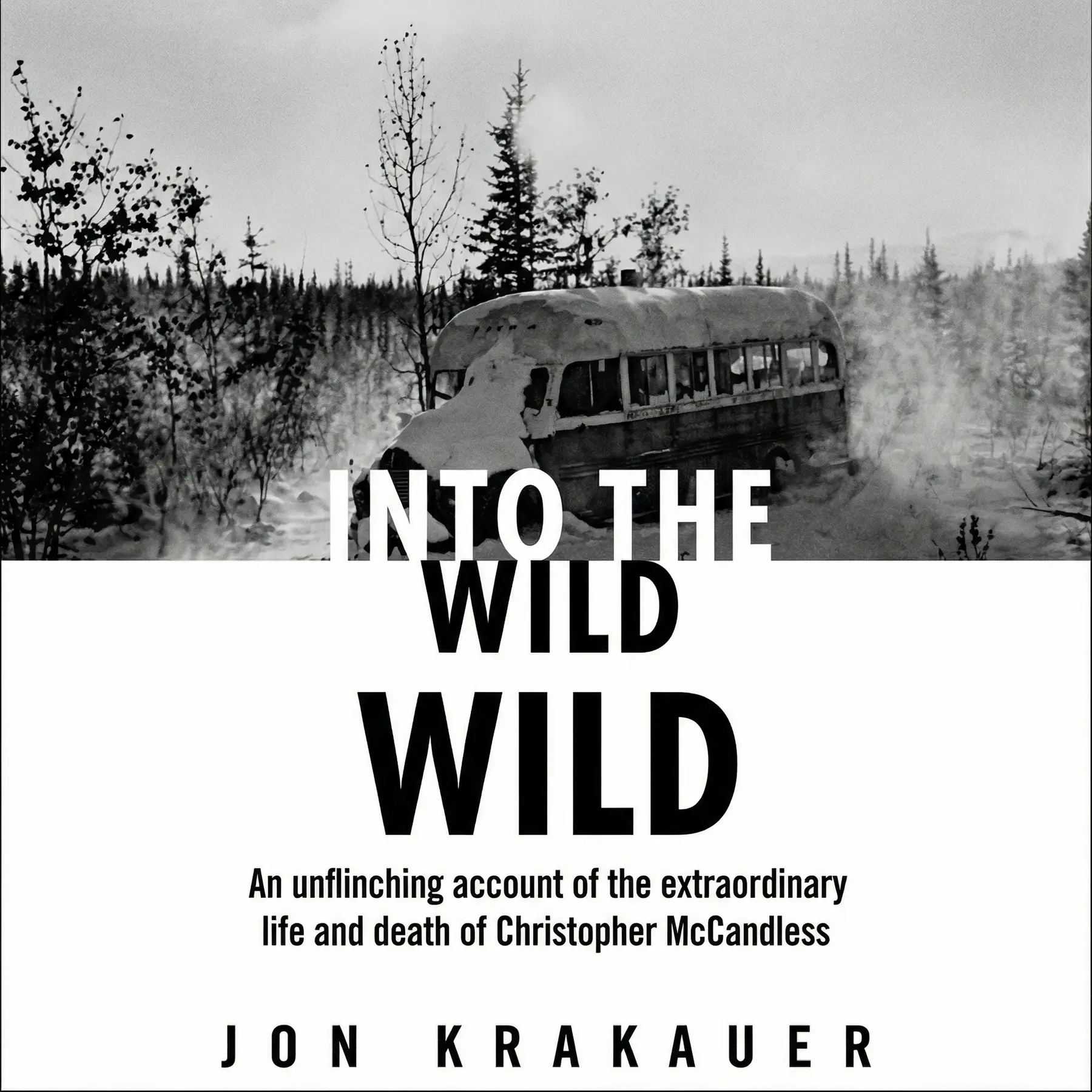
By Jon Krakauer
Krakauer retraces the two years Chris McCandless spent drifting across the American West before dying alone in Alaska. He shows that the young man's death was an accident born of two errors, not a wish to die.
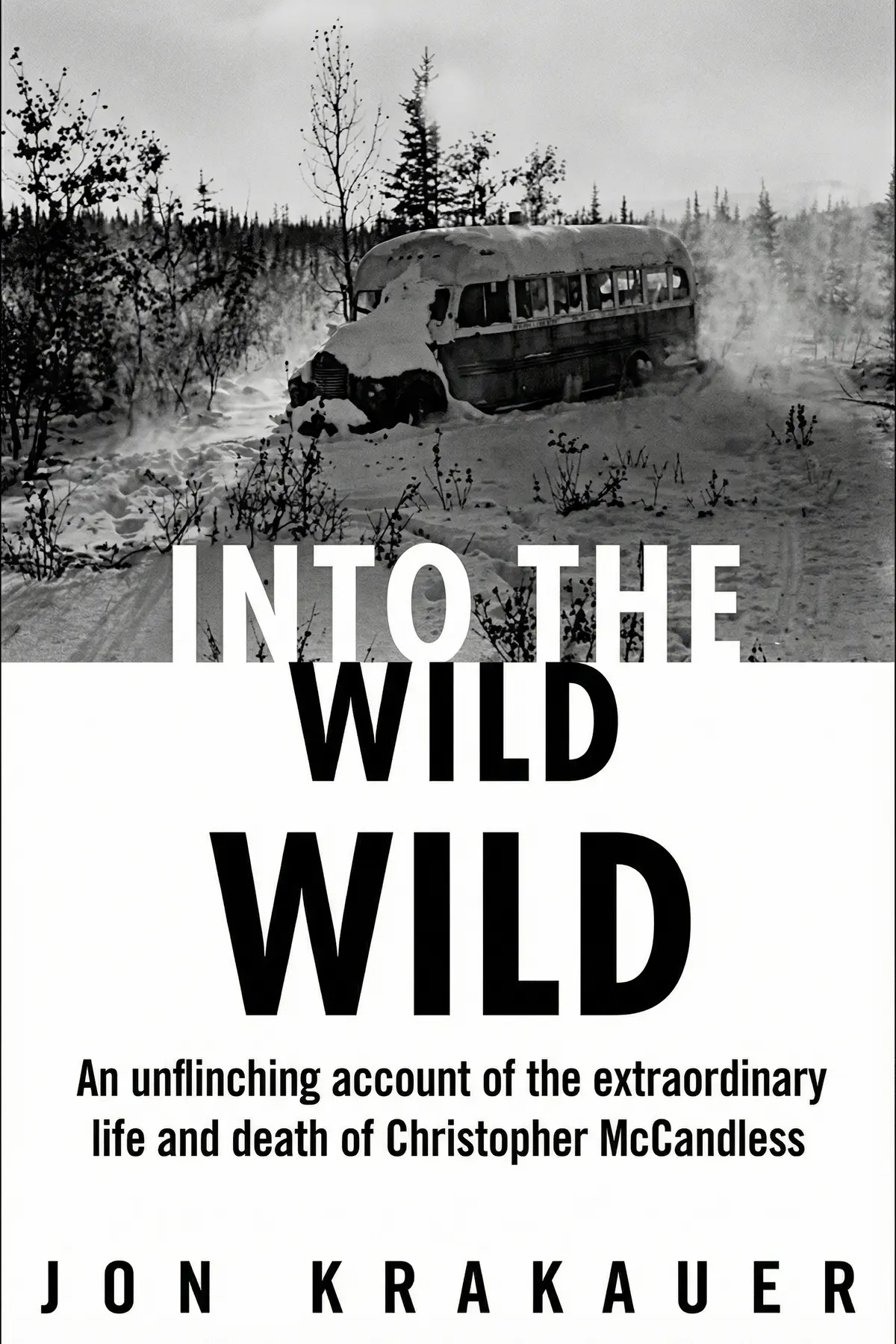
Table of Content
1. Introduction
1 min 03 sec
Most people who feel the urge to walk away from a comfortable life never act on it, and the few who do are often written off as fools. In Into the Wild, writer Jon Krakauer takes one such case, Christopher McCandless, and argues that the easy verdict is wrong. In April 1992, McCandless hiked alone into the Alaskan backcountry with a rifle, oversized rubber boots and a guide to edible plants. Moose hunters found his body in an abandoned bus about four months later. He had starved to death 19 days earlier.
Many Alaskans call him a reckless dreamer who wanted to die. Krakauer, who spent years with his letters, journals and the people he met, sees a fierce young man who nearly made it, undone by two mistakes in a place that forgives very little. Follow the story and you will be able to explain what drove him, why strangers loved him, and where the line falls between chasing life and wanting to lose it.
2. Learn to see the storm beneath a calm surface
1 min 36 sec
He looked like an obedient son on his way to a respectable career. Then a summer drive to his parents’ old neighborhood turned up a fact that made him rethink everything he owed his family.
3. Kindness from strangers can fill a family gap
1 min 33 sec
A middle-aged drifter spotted a hungry kid picking berries by the roadside and expected never to see him again. What followed says as much about her own loss as about him.
4. What a short friendship can mean to a grieving man
1 min 39 sec
An 80-year-old veteran set out to talk a young drifter into a steadier life. A few months later it was the old man whose life had changed, in a way nobody around him expected.
5. See why belonging was never enough to hold him
1 min 41 sec
A small town gave him hard work, good company and a place at the dinner table. Everyone wanted him to stay, and the reason he would not tells you most of what you need to know.
6. Plan your way out before you go in
1 min 45 sec
For four months the young man with almost no gear lived well in the Alaskan bush. Then he decided to go home, and the country he had walked through in April was no longer the same.
7. See a trusted plant turn into a slow poison
1 min 48 sec
He had survived months on foraged food, checking every plant against his guidebook. So why did he grow weaker no matter how much he ate, until walking out was no longer possible?
8. Tell a risk-taker from someone who wants to die
1 min 51 sec
Krakauer once did something as dangerous as McCandless’s walk into Alaska, alone and for reasons he could barely explain. His own story is the strongest evidence in the case he makes about the dead young man.
9. Conclusion
1 min 13 sec
Into the Wild works by refusing the simple story. A rich boy gives away his money, walks into Alaska unprepared and dies: that is the version many Alaskans tell. Krakauer’s version has more people in it. A van-dwelling woman who missed her son. An old soldier who moved into the desert after a hitchhiker left. A grain elevator owner who could not persuade his best worker to stay. Each saw a young man who insisted on living exactly as he believed, and each was changed by it.
The book also asks for honesty about risk. McCandless was strong enough to live four months alone, yet a river that rose with the melt and a seed his guide did not warn about outweighed all that strength. If you feel the same pull toward a clean break, take the hunger seriously and the details just as seriously. Learn how the ground changes with the season, keep a second way home, and stay in touch with the people who would worry, as Jan Burres begged him to.
He died having spent his full effort on living. He left behind the people he met along the way, and everyone his story has touched since.
About this book
What is this book about?
In April 1992, a young man from a comfortable Virginia suburb walked alone into the Alaskan backcountry. Four months later, moose hunters found his body in an abandoned bus. Many Alaskans decided Christopher McCandless was a foolish dreamer who wanted to die. Jon Krakauer spent years with his journals, letters and photographs, and with the people who met him on the road, to test that verdict. What he found is a story about a family secret, a fierce need to live by one's own beliefs, and the strangers who took a hitchhiker called Alex into their lives: a drifter who missed her son, a grieving old soldier, a South Dakota grain elevator owner. Krakauer then reconstructs the last months in Alaska, from a river that rose with the melt to the seeds of a plant his field guide called safe. Readers come to understand why some people walk away from everything, where the line falls between chasing intensity and courting death, and how small practical details decide whether a bold plan ends well.
Book Information
Who it's for
Restless young adults
Young adults restless in a comfortable life and drawn to a clean break from it.
Trying to understand risk-takers
Parents, friends and mentors trying to understand someone who takes extreme risks.
Planning a solo trip
Hikers and travelers planning solo trips who want a sober lesson in how wild places turn dangerous.
About the Author
Jon Krakauer
Jon Krakauer was born in 1954 in Brookline, Massachusetts. Into the Wild, his first book, began as a magazine article for Outside, spent two years on the New York Times best-seller list and became a film directed by Sean Penn. He was part of the disastrous 1996 Mount Everest expedition he described in Into Thin Air, and he has also written Under the Banner of Heaven and Where Men Win Glory. In 1999 the American Academy of Arts and Letters gave him its Academy Award in Literature.
Ratings & Reviews
Ratings at a glance
What people think
Listeners describe this book as a high-quality, brief listen featuring a motivating survival tale, written with a relatable tone and extensively researched with deep information. They value its contemplative substance, which provides a meaningful outlook on life and instances of philosophy. The work gets varied reactions regarding its speed, with some finding it highly emotional while others feel it moves slowly, and listeners voice conflicting sentiments about its somberness, calling it both agonizing and absorbing.
Top reviews
Sook
Picked this up after years of hearing the name, and I’m genuinely floored by Krakauer’s investigative prowess. He takes a story that could have been a simple tabloid headline and turns it into a deep, philosophical meditation on what it means to be alive. The way he retraces Chris’s steps—interviewing people like Ron Franz whose lives were changed by this brief encounter—makes the tragedy feel so much more personal. I appreciated the conversational tone, though the chapters about Krakauer’s own climbing experiences felt a little self-indulgent at first. Eventually, you realize they serve to humanize McCandless, showing that his 'recklessness' wasn't just a solo phenomenon but a drive many young men feel. It’s heart-wrenching to read the final pages knowing the outcome, but the research into the potato seeds provides a bit of closure to the mystery of his passing. This isn't just a survival guide; it's a mirror held up to our own materialist society.
Show moreSaovapa
Wow. I finished this in two sittings and I’m still processing the sheer tragedy of it all. Jon Krakauer has a way of writing non-fiction that feels as gripping as a high-stakes thriller, yet he never loses sight of the human element. The letters Chris wrote to his friends and the impact he had on strangers along the road are what really gutted me. It’s easy to call him stupid from the comfort of a couch, but the book captures that youthful, burning desire to find something 'real' that many of us suppress. The descriptions of the Alaskan landscape are vivid and haunting, serving as a reminder that nature doesn't care about your philosophy. I loved the conversational style and the way it felt like I was piecing together the puzzle alongside the author. It’s a beautiful, heart-wrenching tribute to a complicated soul.
Show moreElla
After hearing so many debates about McCandless, I wanted to see what all the fuss was about for myself. What I found was a masterfully researched piece of literature that transcends the simple survival genre. Krakauer doesn't just tell you what happened; he explores the why with incredible nuance and empathy. The detailed information about the toxic alkaloids in the seeds changed my entire perspective on his death. It shifted the narrative from 'stupid kid starves' to a much more tragic 'talented explorer makes one fatal mistake.' Look, the book is incredibly sad, but it’s also strangely inspiring in its depiction of a life lived without compromise. The conversational style makes it an easy read, yet the themes of family trauma and societal rejection are heavy enough to linger. This is mandatory reading for anyone who has ever felt the pull of the wild.
Show moreManop
Rarely does a non-fiction book manage to be this evocative and haunting. Into the Wild isn't just about a boy who died in Alaska; it’s a meditation on the human spirit and our complicated relationship with nature. Krakauer manages to weave together a narrative that is both a rigorous investigation and a deeply emotional journey. I found myself highlighting so many passages about the 'basic core of a man’s living spirit' and the need for new horizons. Whether you think Chris was a hero or a fool, you can’t deny that his story forces you to look at your own life and ask what truly matters. The ending is devastating, yet there’s a strange beauty in the way Chris seemed to find peace at the very end. It’s a masterclass in narrative journalism that everyone should experience at least once.
Show moreChloe
Ever wonder why some people are so desperate to escape the modern world? This book tries to answer that through the lens of Chris McCandless, a brilliant but arguably arrogant young man. To be fair, I went into this expecting a hero's journey, but I came out seeing it as a somber cautionary tale about the limits of self-reliance. Krakauer’s writing is masterfully detailed, though the pacing drags slightly in the middle when he explores other historical figures who disappeared into the bush. Still, the emotional weight of Chris’s sister’s grief and the confusion of his parents adds a layer of reality that the movie misses. You can’t help but judge his lack of preparation, yet you also envy his absolute commitment to his ideals. It’s a polarizing read that will stay in your head for weeks. Definitely worth it for the perspective shift alone.
Show moreTong
As someone who loves the outdoors, I found this to be a profoundly moving look at the thin line between passion and hubris. Krakauer does a fantastic job of remaining objective, refusing to either canonize McCandless or completely demonize him as a fool. The book is structured like a true crime investigation, piece by piece uncovering the 'Alexander Supertramp' persona until we see the vulnerable boy underneath. I particularly enjoyed the sections on the botanical research regarding the wild potato seeds, as it refutes the idea that he simply starved out of pure ignorance. However, the jumping timeline can be a bit confusing if you aren't paying close attention to the dates. It’s a fascinating character study that makes you question your own attachment to material goods. A great short read, even if it leaves you feeling deeply unsettled.
Show moreSirichai
Finally got around to reading this classic, and it’s much more complex than the 'kid dies in the woods' summary suggests. Krakauer’s journalistic background shines through in the way he cross-references diaries, interviews, and even autopsy reports. You get a real sense of Alexander Supertramp’s charisma and why so many people were drawn to him during his travels. Personally, I found the chapters about his time in South Dakota and his relationship with Wayne Westerberg to be the most engaging parts of the book. It highlights the dichotomy of a man who loved humanity but couldn't stand being around people. The ending is obviously miserable, but the way Krakauer reconstructs those final days is masterfully done. It offers a great perspective on the internal conflicts that drive us toward solitude. A solid four stars for the quality of the prose alone.
Show moreClara
The truth is, I’m torn on how I feel about this one. On one hand, the research is top-notch and Krakauer is clearly passionate about the subject matter. On the other hand, the pacing is very hit-or-miss. There are long stretches where the narrative wanders away from Chris to talk about other hikers or the author's own father, which felt like filler. I struggled to empathize with Chris because his actions toward his family seemed unnecessarily cruel, especially considering he had no real plan for his adventure. He had every advantage in life and threw it away, which is hard to reconcile with the 'hero' image some people project onto him. It’s a thought-provoking read, but I wouldn't call it inspiring. More like a tragic example of what happens when intellectualism isn't tempered with common sense.
Show moreSoontorn
This book is undeniably well-written, but I found the structure a bit frustrating. Krakauer frequently interrupts the main story of McCandless to talk about himself or other obscure historical figures. While I understand he was trying to provide context for Chris’s mindset, it often felt like the book was losing its focus. I was most interested in the Alaskan journey, but that part is actually quite small compared to the buildup. To be fair, the research into his final days is fascinating, and the author does a great job of recreating the atmosphere of the 'Magic Bus.' I just wish it had been a bit tighter and stayed closer to the central mystery. It’s a decent read if you like philosophical outdoor literature, but be prepared for some slow going in the middle chapters.
Show moreTom
Not what I expected at all, and frankly, I found the protagonist incredibly difficult to root for. While Krakauer is a talented journalist, there simply wasn't enough material here to fill a 200-page book. It felt like a bloated magazine article padded with irrelevant tangents about the author’s own life and other random explorers. Chris McCandless struck me as a privileged, entitled kid who caused his family immense suffering for a romanticized whim he wasn't prepared for. He walked into the Alaskan wild without a map or basic gear, which isn't courageous; it's just poor judgment. I found the pacing incredibly slow, often skimming through the sections that didn't directly involve the Stampede Trail. If you want a story about survival, there are much better options where the person actually respects the environment they are entering. Total disappointment.
Show moreQuestions about this book
What is Into the Wild by Jon Krakauer about?
It tells the story of Christopher McCandless, a young man from a wealthy Virginia suburb who gave away his savings, renamed himself Alexander Supertramp and spent two years drifting across the American West. In April 1992 he walked alone into the Alaskan backcountry and was found dead in an abandoned bus four months later. Krakauer reconstructs his life, his friendships and his final months to explain what really happened.
How did Chris McCandless die?
He starved. In July he tried to hike out, but the Teklanika River had swollen with snowmelt, so he returned to the bus. Krakauer’s research points to the seeds of wild potato plants McCandless had been eating, which contain an amino acid called ODAP that stops the body from turning food into energy. By the time he understood the danger, he was too weak to walk out.
Did Chris McCandless have a death wish?
Krakauer argues he did not. He sees McCandless as tough and resourceful, a man who lived four months in the bush and came close to surviving, whose death was an accident caused by careless mistakes. Krakauer compares him to John Muir and to his own solo climb of Devils Thumb at 23, insisting that flirting with death is not the same as wanting to die.
What lessons does Into the Wild offer?
The story shows how a hidden family wound can shape a whole way of life, and how deeply one open, intense person can affect strangers like Jan Burres and Ron Franz. On the practical side, it warns that wild places change with the seasons. A safe river crossing in April can be impassable in July, and a plant marked edible can turn dangerous when it goes to seed.
Readers also enjoyed


Ali: A Life
Jonathan Eig

A Life Decoded: My Genome: My Life
J. Craig Venter


A Long Way Gone: Memoirs of a Boy Soldier
Ishmael Beah

All Creatures Great and Small
James Herriot


A Promised Land
Barack Obama


A River in Darkness: One Man’s Escape from North Korea
Masaji Ishikawa
AUDIO SUMMARY AVAILABLE
Listen to Into the Wild in 15 minutes
Get the key ideas from Into the Wild by Jon Krakauer, plus 5,000+ more nonfiction titles.
- 5,000+ titles
- Listen as much as you want
- 7-day free trial
- Cancel anytime









