

A Theory of Justice
John Rawls
 English
A clear tour of India's great schools of thought, from ritual priests and the Buddha to logic, Yoga and Vedanta, showing how each treated understanding reality as a practical path to freedom.
1 min 02 sec
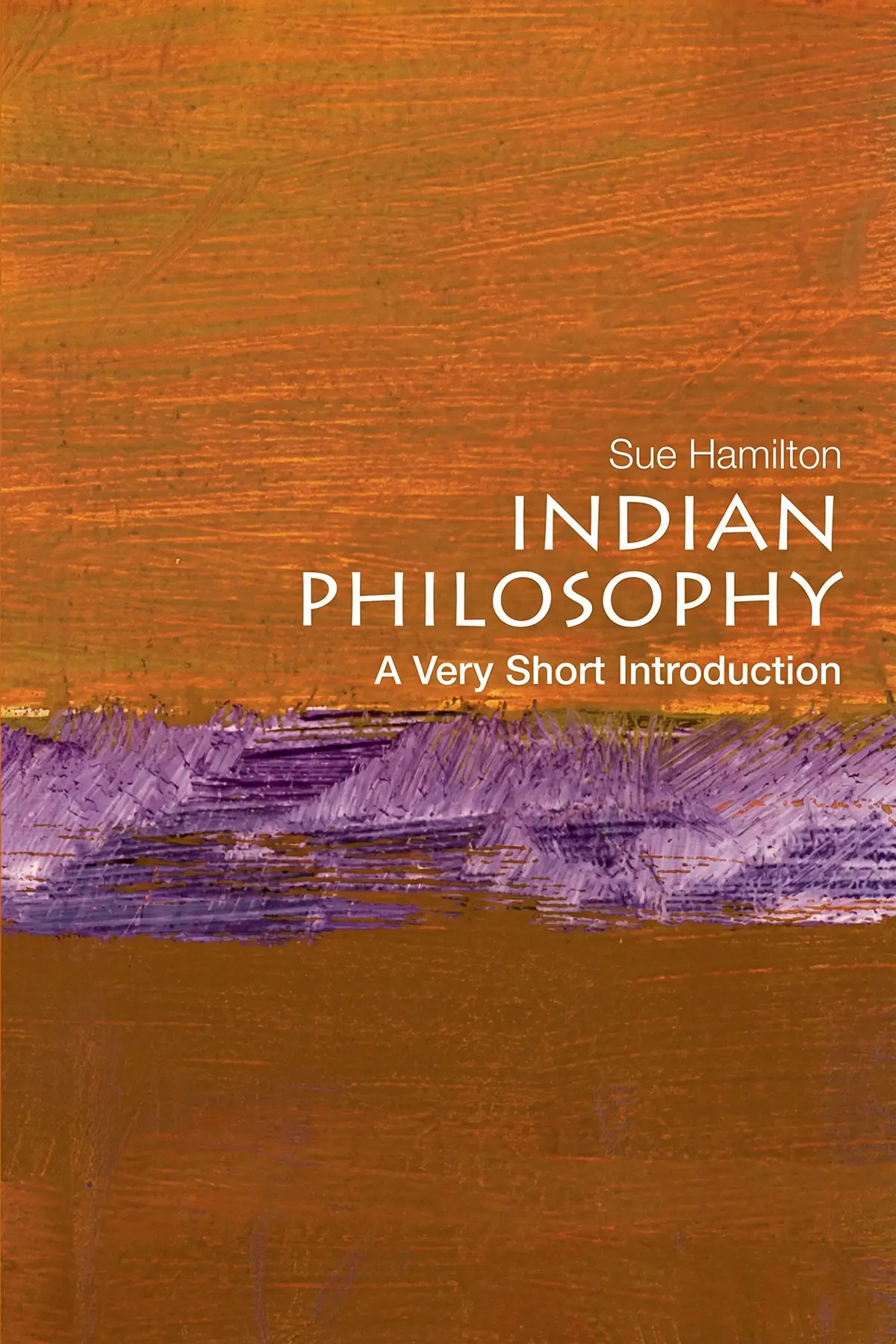
If Eastern philosophy sounds to you like incense and vague mysticism, Indian thought has a surprise for you: its sharpest minds saw rigorous logical argument and the quest for spiritual liberation as a single undertaking. In Indian Philosophy: A Very Short Introduction, scholar Sue Hamilton shows how that fusion runs through India’s great schools. Western philosophers since Kant have usually kept faith and argument in separate rooms. In India, the reason to understand how reality works was to change your fate and break out of the cycle of rebirth.
That is the thread to follow here. Every school, from the ritual priests to the Buddha, the logicians, Yoga and Vedanta, drew a different map of the mind and the world, and each map was made to be used. Follow them in order and you will be able to tell karma from cliché, explain why a rope can look like a snake, and catch the part of you that watches your own thoughts.
1 min 42 sec
Most people use the word karma as a loose idea of things coming back around. Its real history began inside priestly ceremonies, and it changed meaning twice in ways that still shape how a whole tradition thinks.
1 min 46 sec
A group of thinkers stepped away from the fire altar and made a bold claim about who you really are. Their idea set a standard for philosophy that most Western thinkers would later abandon.
1 min 49 sec
A prince walked away from his palace, his wife and his newborn son to answer one question. What he found turned attention away from cosmic ritual and toward the everyday feeling that something is missing.
1 min 52 sec
Smoke on a distant hill, a sentence about wet grain and a single red rose became the raw material for some of the most exact thinking ever done about language, knowledge and what exists.
1 min 51 sec
Thoughts, memories and plans can fill every waking minute. Two old traditions claim there is something in you that none of that noise ever touches, and they drew a precise map of where to find it.
1 min 38 sec
A frightened walker at dusk sees a snake, then looks again. One of India’s most influential thinkers built an entire picture of reality on that moment, and a rival answered him with a woven cloth.
1 min 58 sec
A young monk’s first five words in Chicago drew a standing ovation and changed how the West saw an entire tradition. Yet that success opened a split the original thinkers would never have accepted.
1 min 09 sec
What this short book adds up to is a different idea of what philosophy is for. In India, an argument about grammar, a proof about smoke on a hill or a list of the kinds of things that exist was never just an exercise. Each was a tool for seeing reality truly and, through that seeing, getting free. The schools disagreed sharply about whether the self is permanent, whether reality is one or two, and whether the world is fully real. They agreed that understanding should change the person who understands.
That standard travels well beyond its origins. When restlessness arrives, you can borrow the Buddha’s habit of asking which passing thing you are clinging to. In the middle of a crowded day, you can borrow Yoga’s practice of noticing the watcher behind your busiest thoughts. And before you trust a conclusion, you can borrow the Nyaya habit of naming the sign, the rule and the familiar case that supports it.
Somewhere on a path at dusk, a rope still lies where a snake seemed to be. The tradition’s oldest promise is that freedom begins with looking closer.
Many people picture Eastern thought as vague mysticism, far from the careful arguments of Plato or Kant. Sue Hamilton shows something different. In India, rigorous reasoning and the search for spiritual freedom were never separate projects. Thinkers argued about grammar, logic and the structure of reality because they wanted to escape the cycle of rebirth. Hamilton traces the tradition from the brahmin priests, whose rituals gave birth to the idea of karma, through the inward turn of the Upanishads and the Buddha's challenge to the whole system. She follows the brahmins' answer in Panini's grammar, the Nyaya method of proof and the Vaisheshika map of everything that exists. Then she turns to Yoga and Samkhya, with their pure watching awareness, and to the rival visions of Shankara and Ramanuja. The story ends in Chicago in 1893, when Swami Vivekananda brought these ideas to a Western audience. Readers get a compact map of how the schools fit together and why they disagree. They also get a handful of tools still worth using: a test for sound reasoning, a way to look at restlessness, and a habit of noticing the part of the mind that watches thoughts go by.
Curious readers who find Eastern thought vague and want a clear map of its schools.
Yoga and meditation practitioners who want to know the philosophy behind their practice.
Philosophy students who know Plato and Kant and want India's side of the conversation.
Sue Hamilton worked in theology and religious studies at King's College London before leaving academia in 2003. From 1994 to 2000 she served as honorary secretary of the Pali Text Society. She is the author of Early Buddhism: A New Approach, published in 2000, and co-edited Indian Insights: Buddhism, Brahmanism and Bhakti in 1997 with Peter Connolly. Indian Philosophy appeared from Oxford University Press in 2001 in its Very Short Introductions series.

Listeners find this philosophical overview to be an outstanding primer on an intricate field, portraying it as both scholarly and highly accessible.
This book stands out as a masterclass in condensation. Hamilton manages to convey the full richness and subtlety of the Indian philosophical tradition without falling into the trap of oversimplification. I particularly appreciated how she dismantles the lazy Western assumption that Indian thought is merely 'mystical' or 'spiritual' rather than rigorously logical. To be fair, the text is quite dense, acting almost like a neutron star of information that requires slow, deliberate reading. It would be of great interest to anyone who wants to see how schools like Nyaya and Vaisheshika handled epistemology and logic. The historical approach helps ground these abstract concepts in a clear timeline. I highly recommend this to anyone seeking a serious academic starting point.
Show moreFinally got around to reading Hamilton's overview, and it is a 35,000-word neutron star of information. She does a fantastic job of explaining the concept of 'Darshan' as a way of seeing that transcends simple cognitive perception. The way she links the development of the Upanishads to the later Buddhist schools like Madhyamaka is brilliantly handled. I particularly approved of her decision to keep terms like 'svabhāva' in the original Sanskrit; it forces the reader to engage with the concepts on their own terms. Even though it is a tiny book, it feels incredibly comprehensive. It has totally changed my perspective on the intellectual history of the subcontinent. This is easily one of the best titles in the entire Very Short Introduction series.
Show moreEver wonder why Indian thought is so often labeled as purely spiritual? Hamilton tackles this myth head-on, showing that Indian thinkers were just as concerned with 'rational' and 'logical' proofs as their Western counterparts. I loved the way she explained that the distinction between religion and philosophy is actually a post-Kantian Western invention. Most of these systems are soteriological, meaning they aim for moksha, yet they use incredibly sophisticated metaphysical arguments to get there. The writing is clear and well-ordered, though you have to be prepared for some very heavy lifting regarding epistemology. It is a very short introduction that feels very long because of the sheer volume of ideas packed into 35,000 words. A great, scholarly entry point for the patient reader.
Show moreThe chapter on linguistics and language was, surprisingly, the highlight for me. Hamilton explores how Bhartrhari connects the sound of the universe to the knowledge of Brahman in a way that feels totally unique. I also appreciated the deep dive into the 'pluralistic realism' of the Vaisheshika school. It is refreshing to see Indian philosophy treated as a serious field of logical inquiry rather than just a collection of yoga poses and vague mantras. My only gripe is that the book can be repetitive, especially when rephrasing an author right before providing a near-identical quote. Still, it provides an impressively clear outline of a massive field. If you are willing to read slowly, you will get a lot out of this scholarly work.
Show moreTo be fair, trying to condense thousands of years of intellectual development into a tiny pocketbook is an impossible task. Hamilton succeeds by focusing on the most novel points of debate between the six orthodox schools. I found the discussion on 'dependent origination' in Buddhism to be particularly insightful and well-phrased. The book avoids the common mistake of treating Indian philosophy as a monolith, instead highlighting the fierce polemics and disagreements between schools. While it gets a bit bogged down in the intricacies of Sanskrit grammar toward the end, the overall narrative is strong. It makes you realize how much of 'common human interest' these ancient philosophers were actually debating. It is a clear, scholarly, and very readable guide to a complex subject.
Show morePicked this up at a bookstore hoping for a quick overview, but it turned out to be a bit of a slog. Hamilton makes a bold decision to leave most key Sanskrit terminology untranslated. While I respect the accuracy, it makes sentences about 'prakṛti being qualitatively inferior to puruṣa' very difficult for a total novice to parse. I found myself constantly flipping back to remember what each term meant. The chapters on Buddhist thought and Shankara’s Advaita Vedanta were definitely the highlights and saved the book for me. However, the lack of diagrams to explain the complex relationship between schools was a missed opportunity. It is a solid academic resource, but perhaps too dry for the casual reader looking for wisdom.
Show moreAfter hearing many good things about the VSI series, I decided to tackle this one. It is a decent guide, but it feels like the 35,000-word limit really constrained the author's ability to dive deep. The book is organized chronologically, starting with the Brahmanical beginnings and ending abruptly at the end of classical antiquity. While this helps you see the 'growth' of ideas, it also means some fascinating later developments are ignored. I felt the chapter on language was a bit too long and didn't offer much for the non-specialist. On the plus side, the further reading section is excellent for addressing the gaps left by the text. It’s a helpful map of the territory, even if it feels a bit cramped at times.
Show moreAs someone who prefers a thematic approach to history, this chronological deep dive was a bit of a mixed bag. Hamilton does give justice to figures like Nagarjuna and Shankara, and those chapters are absolutely worth the price of admission. However, the earlier sections on Vedic ritual felt like they dragged on for too long without enough payoff. The book really should have been divided by topics like metaphysics and ethics rather than this overarching timeline that sometimes muddies the waters. I also found some of the explanations of the Nyaya school's logic to be a bit convoluted. It’s a useful list of literature to revisit, but I wouldn't call it an easy read. Good for students, maybe too dense for a casual afternoon.
Show moreNot what I expected from an introduction. The author seems obsessed with proving that Indian philosophy isn't mystical, which honestly feels like she is overcompensating for Western biases. In doing so, she leaves out the most interesting 'spiritual' parts like the Noble Eightfold Path or the actual experience of Samadhi. Instead, we get endless, repetitive chapters on grammar and linguistic theory that feel totally disconnected from the human experience. Frankly, the chronological structure makes the whole thing feel like a muddy list of names and schools rather than a coherent exploration of ideas. I found the sections on 'sacrifices maintaining the universe' to be incredibly tedious after the third mention. If you want a book that actually explains the heart of these traditions, look elsewhere.
Show moreLook, I appreciate the scholarly effort here, but I found the structure quite tedious and the tone somewhat patronizing. The author spends so much time apologizing for Indian philosophy being 'rational' that she forgets to make it engaging. Much of the book is spent on conventional, ritualistic philosophies that resemble Western ones, while the truly radical and different ideas are pushed to the margins. Why include a repetitive timeline every few pages? It breaks the flow and adds nothing. I also found the lack of focus on ethics and lifestyle a bit jarring for a book on Indian thought. It feels like a text written by an academic for other academics, rather than a true introduction for the curious public. It left me wanting more substance and less justification.
Show moreSue Hamilton shows that Indian philosophers never separated careful reasoning from the search for spiritual freedom. From the Upanishads to the Buddha, the logicians of Nyaya and Vaisheshika, Yoga, Samkhya and Vedanta, each school built an account of reality aimed at a practical result: liberation from the cycle of rebirth. That sets the tradition apart from Western thought since Kant, which usually keeps faith and philosophy apart.
Hamilton explains that karma originally meant the ritual acts of brahmin priests, whose exact ceremonies were thought to keep the cosmos in order. By the 5th century BCE it covered all actions, with effects that could stretch across lifetimes. The Buddha later emphasized that the intention behind an action is what matters. Together with rebirth, karma is one of the cornerstones of Indian thought.
Samkhya divides reality into two sides: pure awareness, called purusha, and everything else, called prakriti, including thoughts, feelings and physical objects. Liberation means seeing that difference clearly. Shankara’s Advaita Vedanta says reality is one, pure consciousness-existence called Brahman. He illustrates this with a rope mistaken for a snake at dusk: the world is real, though not in the manner we typically suppose.
It suits readers who want a short, organized map of India’s main schools of thought and how they relate. Yoga and meditation practitioners will find the ideas behind their practice, from Patanjali’s Yoga Sutras to the watching awareness of Samkhya. Students of Western philosophy will see how Indian thinkers handled questions of knowledge, reality and the self.
The book points to a few habits. When dissatisfaction appears, look, as the Buddha did, for what you are clinging to that cannot last. When thoughts race, notice the awareness that watches them, as Yoga teaches. Before trusting a conclusion, use the Nyaya pattern from the smoke and fire example: the sign you see, the rule linking it to your claim, and a familiar case.
John Rawls
Eckhart Tolle
Marianne Williamson


Deepak Chopra
Pico Iyer

Alcoholics Anonymous World Services


William B. Irvine
AUDIO SUMMARY AVAILABLE
Get the key ideas from Indian Philosophy by Sue Hamilton, plus 5,000+ more nonfiction titles.









