

Alcoholics Anonymous
Alcoholics Anonymous World Services
 English
 ไทย
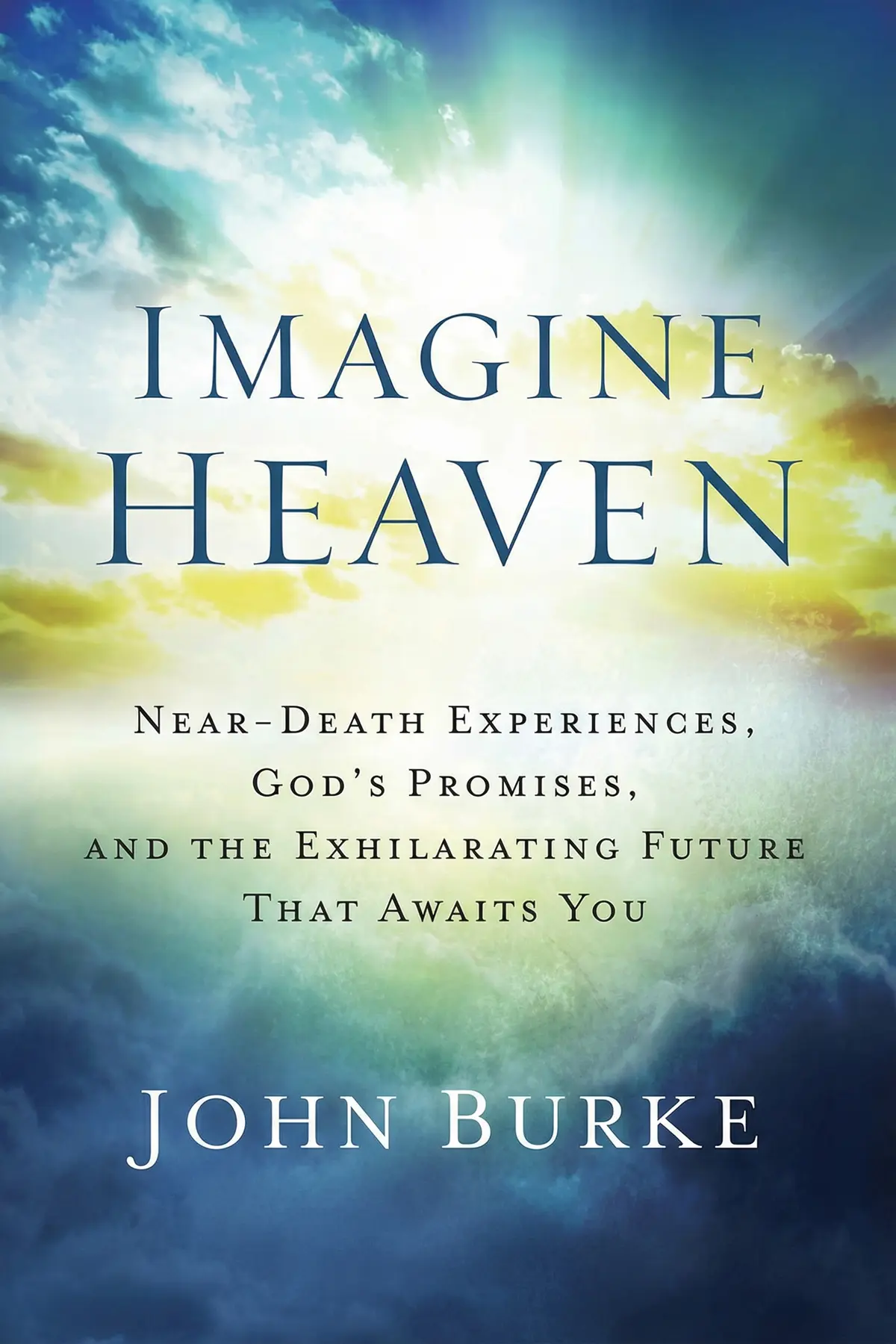
Burke gathers accounts from people revived after clinical death, sets them beside the Bible, and argues they reveal a real heaven, and a real hell, vivid enough to change how you live.
1 min 11 sec
Most of us carry a picture of heaven borrowed from paintings: clouds, harps and endless singing. In Imagine Heaven, engineer turned pastor John Burke argues that people who were clinically dead and then revived describe something far more vivid: grass greener than any on Earth, colors without names and a love they did not want to leave. Such near-death experiences, he writes, happen to one in every 25 people, a rate linked to better medical care that brings more patients back.
Sheila is a typical case. A severe allergic reaction stopped her heart during surgery, and while doctors fought to revive her, she reported floating calmly near the ceiling. A tunnel then opened onto a bright land where departed relatives waited, and she sensed she was already home. She woke in intensive care a day later.
Burke’s throughline is that these accounts, set against each other and against the Bible, point to a real afterlife worth living toward. Expect his most checkable cases, the patterns researchers counted and the darker reports he refuses to leave out.
2 min 14 sec
A neurosurgeon, a retired banker and a man blind from birth all came back describing the same surprising thing. It looks nothing like the heaven of church paintings, and it may be easier to long for.
2 min 07 sec
A child in a coma described what her family was doing at home, down to the dinner being cooked. A heart patient who went outdoors in her experience spotted a shoe on a third-floor windowsill. Burke asks how a dying brain could invent details that proved correct.
2 min 00 sec
Children and adults, people of very different backgrounds, keep describing the same few moments. One researcher counted them across 1,300 cases, and the numbers are higher than most people would guess.
2 min 03 sec
A hospital sent a nun to tell one survivor her vision came from the devil. Burke disagrees, and he points to rivers, light and a face brighter than the sun to make his case.
1 min 52 sec
Not everyone who comes back saw a garden. Some describe endless falling, some being stuck on Earth, and some something worse, and in two of the three, calling out to God is what got them out.
1 min 16 sec
Burke wrote the book to give hope a shape. His wager is simple: the more clearly you can picture heaven, the more it will pull on how you live today. A vague afterlife of clouds motivates no one. A field of impossible green, a river lit from within and a light full of love are things a person can actually look forward to.
That is why he stacks the evidence the way he does. The tennis shoe on the windowsill and Katie’s report of rice and roast chicken speak to the doubter. Jeffrey Long’s 1,300 cases speak to the person who suspects coincidence. The parallels with Revelation speak to the believer who fears these visions come from the wrong source. And the accounts of the void and the pit remind every reader that the outcome is not automatic.
If the book reaches you, its use is practical. Read a few of these accounts slowly and let them replace whatever tired picture of heaven you carry. Then ask what you would change this week if you truly expected to see that place. Burke hopes the answer brings you closer to God.
Sheila, floating near the ceiling, felt she was already home. Burke wants his readers to live as if home is waiting.
Many people have been taught to picture heaven as a place of clouds, blinding light, trumpeting angels and crowds singing church songs forever. John Burke, an engineer who became a pastor, argues that people who were clinically dead and then revived describe something far richer: green countryside, a shining city, a crystal river and a light full of love. Burke builds his case in layers. He starts with survivors who reported details they had no ordinary way to know, such as a shoe on a hospital windowsill. He adds researchers like Jeffrey Long and Pim van Lommel, who found the same elements recurring across hundreds of accounts. Then he lines these reports up against passages from Revelation and Daniel. He also includes the rarer, frightening accounts of darkness and torment, which he reads as evidence that hell exists too. Readers get a concrete, hopeful picture of what may come after death and Burke's reasons for believing it is real, along with his invitation to let that picture shape how they live today.
Christians whose picture of heaven feels vague and who want something concrete to hope for.
People grieving a loved one or facing their own mortality who want to hear what survivors of clinical death report.
Curious skeptics who want to see the strongest near-death cases a believer can offer.
John Burke began his career as an engineer before becoming a lead pastor. Together with his wife, he cofounded Gateway Church in Austin, Texas. He has written several books on Christian living, including No Perfect People Allowed and Unshockable Love, and in Imagine Heaven he turns his attention to near-death experiences and what they suggest about the afterlife.
Listeners describe this work as accessible and absorbing, featuring powerful accounts of near-death encounters from individuals globally. Rooted in scripture, the book includes excellent references that make biblical teachings feel vibrant, and listeners value the insightful content that addresses numerous inquiries. Listeners express a sense of peace from the material, with one listener noting it offered solace after losing a loved one.
This book arrived right when I needed it most after the sudden loss of my father last year. The stories of light and joyful reunions provided a profound sense of peace that I hadn't found in traditional grief counseling. Burke manages to weave these modern testimonies with ancient biblical text in a way that feels grounding rather than just wishful thinking. You can tell he has spent years researching the commonalities between thousands of accounts. Frankly, the sheer volume of corroborating evidence regarding the 'being of light' is hard to ignore. It is a comforting read that makes the idea of the afterlife feel less like a mystery and more like a homecoming. I’ve already recommended it to several members of my church who are struggling with their own losses.
Show moreAs someone who has spent years studying theology, I was pleasantly surprised by how well this bridged the gap between personal experience and scripture. Burke doesn't just list sensational stories; he provides a framework that respects the biblical text while acknowledging the profound impact of these modern-day glimpses. The descriptions of 'spiritual bodies' that feel more real than our current earthly ones really resonated with me. I found the sections on the 'life review' to be particularly moving and convicting. It changes how you look at your daily interactions with others. This isn't just a book about dying; it's a guide on how to live with an eternal perspective. It is easily the most comprehensive work on NDEs from a Christian perspective that I have ever encountered.
Show moreWow, the accounts of children describing their experiences at the doors of heaven were absolutely the highlight of this book for me. There is something so pure and unforced about a child’s perspective that seems to bypass the religious baggage we pick up as adults. Burke’s collection of stories is vast, spanning different cultures and backgrounds, yet the core message of unconditional love remains remarkably consistent. It really makes you rethink what truly matters in this life. The book provides a lot of comfort to those who fear the unknown. I found myself highlighting so many passages to share with my prayer group. It’s a transformative read that challenges you to live more fully in the present while keeping one eye on the future.
Show moreThe truth is, we all wonder what happens after that final breath, and this book offers a beautiful glimpse into that great mystery. It’s not just about the pearly gates; it’s about the overwhelming sense of 'being known' and valued by a Creator. The stories of people who felt an incredible peace, free from earthly aches and pains, were incredibly moving. One account of a woman meeting a brother she never knew existed on earth particularly stuck with me. This book should be required reading for anyone in hospice care or ministry. It turns a subject that is usually shrouded in fear into something full of hope and light. I felt a weight lift off my shoulders by the time I reached the final chapter.
Show moreEver wonder if the biblical descriptions of heaven are just metaphorical? This book argues they are much more literal and vibrant than we often dare to imagine. By the time I finished, my fear of death had significantly decreased, replaced by a genuine excitement for the reunion to come. The stories of people from different religions meeting the same 'Man of Light' were fascinating and challenged some of my preconceived notions. Burke’s writing is easy to follow, making it a great gift for people who aren't necessarily 'big readers.' It provides answers to many questions about our future identity and what we will actually look like. This is a powerful, life-changing read that provides a much-needed dose of hope in a dark world.
Show moreDoes Burke provide definitive, scientific proof of the afterlife? Probably not, but the consistency of the accounts he presents is certainly thought-provoking for any reader. I appreciated how he addressed the specific experiences of those blind from birth, as their visual descriptions of heaven provide a unique layer of validity that is hard to dismiss as mere brain chemistry. My only real gripe is the repetitive 'imagine heaven' prompts scattered throughout the chapters. To be fair, the title warned me, but it felt a bit like being coached on how to feel. However, the cross-referencing with scripture is outstanding and brings biblical messages to life in a vivid way. It’s a solid 4-star read for anyone interested in the intersection of faith and NDE research.
Show morePicked this up on a whim after a friend recommended it for its unique take on the 'light at the end of the tunnel' trope. The writing style is very accessible, making complex spiritual concepts feel like a casual conversation over coffee. I especially liked the sections about meeting long-lost relatives and the inclusion of animals in the afterlife. Some might find the tone a bit too 'happy-clappy' or Americanized, but I found the optimism refreshing in a world that is often so cynical. The author does a great job of answering those nagging questions we all have about what we will actually do in heaven. It’s a thick book, but the pacing kept me engaged from start to finish. Definitely worth a read for the curious.
Show moreAfter hearing John Burke on a podcast, I had to see if the book lived up to the hype and the high ratings. It mostly does, although the structure can be a bit disjointed when he jumps between fragments of different stories. To be fair, the way he cross-references specific NDE details with Bible verses from Revelation and the Gospels is quite impressive. It answered several of my lingering questions about the nature of time and space in the dimensions beyond our own. The book feels well-researched, even if it relies heavily on a few very famous accounts. It’s an engaging read that manages to be both intellectually stimulating and emotionally resonant. I’d suggest it to anyone who enjoyed Randy Alcorn’s work but wants more first-hand testimony.
Show moreNot what I expected from a Christian book on NDEs, as it actually acknowledges the 'dark' or hellish experiences too. Most books in this genre focus only on the beautiful parts, but Burke includes sobering accounts of those who saw the other side of the coin. It adds a level of weight and realism to the message that I appreciated. The author's excitement is contagious, though his tendency to quote only snippets of stories before jumping into interpretation can be frustrating. I wanted to hear more from the people themselves without the constant interruptions. Still, the scriptural support is robust and will likely satisfy those looking for a bible-based exploration of the afterlife. It’s a thought-provoking look at our eternal destination.
Show moreFrankly, I struggled with the author’s tendency to cherry-pick specific accounts to fit a very narrow theological narrative. While the stories themselves are undeniably captivating, the interpretation feels forced at times to ensure everything aligns perfectly with his worldview. Burke admits early on that he cannot verify every source, which makes the 'evidence' feel more like an emotional appeal than a rigorous study. The writing is easy to understand, but the middle sections drag with repetitive scriptural analysis that sometimes interrupts the flow of the personal testimonies. It’s a nice enough read for those who already believe, but skeptics will likely find plenty of holes in the methodology. It offers hope, but maybe at the cost of objective investigation.
Show moreBurke argues that near-death experiences, from people who were clinically dead and then revived, point to a real afterlife. He backs this with accounts containing verifiable details, with research showing common patterns across many cases, and with close similarities to passages in Revelation and Daniel. His aim is to give readers a vivid picture of heaven that motivates them to live closer to God.
Burke points to cases with checkable details. Seven-year-old Katie, in a coma, described her family’s dinner at home, which her parents confirmed. Maria reported a tennis shoe on a third-floor hospital windowsill that researcher Kimberly Clark Sharp later found. He also cites Dr. Jeffrey Long, who notes the clarity of these experiences during a flat EEG, and Dr. Pim van Lommel, who says drug experiences differ from them.
Survivors describe lush countryside, grass greener than on Earth, unnamed colors, a shining city and a crystal-clear river. In Jeffrey Long’s study of 1,300 cases, more than 75 percent left their bodies, 74 percent had heightened senses, 76 percent felt intensely pleasant emotions and 64 percent met a bright light. Some reports describe darker places too: a void, being stuck on Earth, or a pit.
Yes. Burke includes rarer accounts in which people experienced something terrifying. Researchers group them into three types: falling through darkness in a void, staying trapped on Earth by unfinished business, and a pit full of foul smells and tormentors. In the void and the pit, survivors say they escaped by calling on God. Burke argues these reports show hell is as real as heaven.
Alcoholics Anonymous World Services


Daniel Goleman

Eckhart Tolle
Marianne Williamson

Deepak Chopra
Pico Iyer
Beth Moore
Paramahansa Yogananda
AUDIO SUMMARY AVAILABLE
Get the key ideas from Imagine Heaven by John Burke, plus 5,000+ more nonfiction titles.









