

60 Seconds & You’re Hired!
Robin Ryan
 English
A practical method for turning interview dread into steady performance. It covers how to budget preparation, build stories that prove your skills, structure answers to any question and negotiate the offer once it arrives.
1 min 01 sec
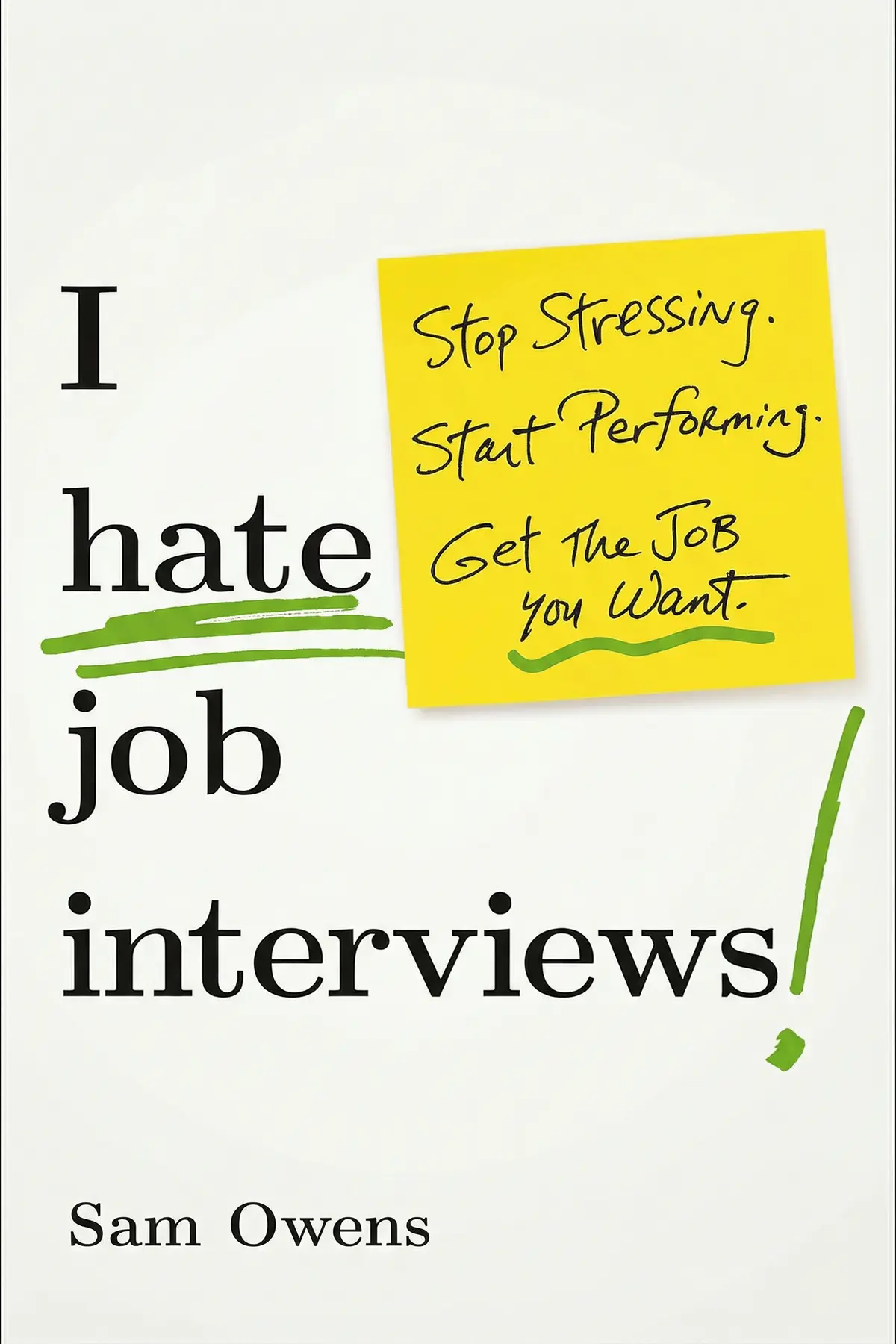
If job interviews leave you tense and underprepared, the fix may be more ordinary than you expect. The confidence that convinces an interviewer comes from preparation you can schedule, and a pep talk will not supply it. That is the central claim of I Hate Job Interviews by career coach Sam Owens, who once hated them himself. In 2007, as a new business school student, he collected rejections from companies including Target and Walmart, and the internship he finally got came by luck.
He then spent years studying interviews until he could teach them, and he has since coached hundreds of people. His argument is that an interview is a performance you can train for, one step at a time. Prepare the right stories, say them aloud, and carry a simple structure for each kind of question, and the nerves lose much of their grip. What follows is his playbook, from the first hour of research to the moment you discuss salary.
1 min 38 sec
Most candidates wait to feel confident before they walk in, and the feeling never arrives. Owens learned why after a run of rejections, and his first fix starts before you open a single company website.
1 min 37 sec
Most people prepare for an interview by skimming a website and hoping. Owens sets a fixed budget of hours and splits it in a way that surprises first-time candidates, with the biggest share going somewhere unexpected.
1 min 50 sec
A job description looks like a dry checklist, but Owens reads it as a coded message from the employer. Decoding it changes which stories you prepare and how you rehearse them before the real conversation.
1 min 58 sec
The opening question sounds like small talk, and many candidates treat it that way. Owens explains what it is really testing, and gives a simple four-part structure for the stories interviewers ask for next.
2 min 02 sec
Some questions are built to knock you off balance, and a few should never have been asked at all. Owens shows that each odd category has its own logic, and that the interviewer is often watching something besides your answer.
1 min 55 sec
The last five minutes of an interview and the first conversation about money are where many good candidates lose ground. Owens explains what to ask, what to clear up before leaving, and when to start bargaining.
1 min 08 sec
Heather had spent a decade at her company when she was being pushed out, and the idea of starting over filled her with fear. Working with Owens, she rebuilt her confidence and learned to walk into interviews expecting to compete. Within two months she had a new job she was thrilled with, and she cried from relief and joy.
Her turnaround carries the book’s central conviction: in Owens’s experience, the people who interview well are mostly the people who practiced. Nerves do not disappear. They matter less when you have a story ready for each key skill, a structure for the odd questions and a plan for the final minutes.
Start where it hurts most. Name the question you dread, block ten hours before your next interview, and spend the largest share speaking your answers aloud, ideally ending with a mock interview run like the real thing. When an offer comes, wait until it is in writing, then talk about the value you bring.
Owens once got his internship by luck. Everything he learned afterward was about making sure he would never need luck again.
Plenty of qualified people lose job offers because they interview badly. The problem is rarely their experience. It is how they present it under pressure. Sam Owens knows this firsthand: as a business school student he was rejected by one company after another and landed his internship only by luck. Owens argues that interviewing is a skill you can train like any other. Confidence, in his view, is the visible result of preparation, and he gives that preparation a shape. Spend ten hours, split between researching the company, building concrete examples of your strengths and practicing your answers aloud. Read the job description for what the employer values most. Tell your stories with a clear structure, and use a separate framework when a question asks you to think on the spot. The book also covers the moments that unsettle most candidates: trap questions, illegal questions, strange questions about spirit animals and desert islands, the last few minutes of the interview and the salary negotiation. Readers get a step-by-step plan they can start on the evening an interview is booked.
Job seekers who freeze, ramble or second-guess themselves in interviews despite strong qualifications.
Career switchers whose experience does not neatly match the job posting.
Mid-career professionals returning to the job market after years in one role, and anyone facing a first salary negotiation.
Sam Owens is the founder of Sam's Career Talk, where he coaches people through job searches and career decisions. He also works as a chief marketing officer and has held roles at three multibillion-dollar consumer packaged goods companies. He is the author of The 8 Career Skills You Didn't Learn in College, a book on building professional skills, as well as I Hate Job Interviews.

Listeners find this book beneficial for interview readiness, and one listener specifically mentions the comprehensive examples for answering introductory questions. Additionally, the writing is accessible and features many interesting stories, with one listener noting the effective balance of actionable advice and personal anecdotes. Listeners also value the book's narrative voice, its humor, and its well-organized structure.
Finally, a guide that doesn't make my skin crawl. Job hunting is a nightmare, but Owens breaks down the anxiety into manageable pieces. I particularly appreciated the SPAR model for storytelling; it changed how I viewed my past achievements. Instead of just listing duties, I learned how to frame results like a narrative arc. Frankly, the advice on building confidence was the most impactful part for me. It’s definitely aimed at office roles, but the logic applies everywhere. I wish there was more about negotiating salary, but for the interview phase itself, it’s golden. The writing is snappy and the advice feels actionable from page one.
Show moreI picked this up after a decade-long stint at my previous company left me totally unprepared for the modern job market. I hadn't interviewed since 2012, and everything has changed. This book was my roadmap. It helped me translate my 'old school' experience into the behavioral language recruiters want now. I followed the 10-hour prep rule religiously and used the Disney-style storytelling techniques during my second round. It worked! I got the offer yesterday. If you’re feeling rusty and terrified, start here. It’s structured, encouraging, and most importantly, it actually gets results. Worth every penny for the confidence boost alone.
Show moreSam Owens manages to turn a boring subject into something genuinely readable by weaving in personal anecdotes. It’s rare to find a career book that you don't want to put down. The SEE model for answering 'knowing yourself' questions was a lightbulb moment for me. It forces you to be introspective in a way that feels productive rather than self-indulgent. To be fair, I was skeptical about another 'how to get a job' book, but the blend of psychology and practical strategy is top-tier. It really helps build the confidence needed to walk into a room and own your narrative. Highly recommended.
Show moreWow, I didn't expect to actually enjoy reading a career manual. Most of these books are a chore, but Owens uses humor and engaging stories to keep the reader's attention throughout. I've been struggling with performance anxiety during interviews for years, and the mindset shift he proposes was life-changing. He treats interviewing as a learned skill rather than an innate talent, which is exactly what I needed to hear. The 10-hour preparation framework gave me a concrete plan instead of just vague goals. Honestly, I feel so much more equipped to handle the high-pressure environment of modern hiring now.
Show moreAs someone who dreads the corporate shuffle, I found Owens' approach surprisingly refreshing. He injects a much-needed sense of humor into a topic that is usually dry as toast. The personal anecdotes about his own failures made the advice feel more grounded and less like a lecture from a recruiter. I've read plenty of these guides, but this one sticks because of the structure. It’s easy to navigate when you’re in a time crunch. Not gonna lie, some of the 'believe in yourself' stuff is a bit cheesy, but the practical examples for answering strengths and weaknesses make up for it. Great for office professionals.
Show moreIs ten hours of prep really necessary? Before reading this, I would have said no, but Owens makes a compelling case for the investment. The book is incredibly well-organized, moving from mindset shifts to the nitty-gritty of SPAR stories. I liked the focus on the 'shy candidate' and how to project enthusiasm without feeling fake. My only gripe is that it feels very geared toward Big Tech or consulting-style roles. If you're in a creative field, you might have to adapt the advice quite a bit. Still, the core principles of preparation are universal and the writing style is very engaging.
Show moreThe chapter on introductory questions alone paid for the book. We all know the 'tell me about yourself' prompt is a trap, but the detailed examples provided here help you navigate it with grace. Owens has a way of making the process feel less like an interrogation and more like a performance. The writing style is breezy and fast-paced, which I appreciated since I was reading it on my commute. It’s a great tool for anyone in an office setting who needs to sharpen their pitch. I just wish it touched more on remote interviewing specifically, but the foundational advice is excellent.
Show moreAfter hearing about the SPAR method on a podcast, I decided to dive into the full text. The book expands on those concepts beautifully, offering a clear structure for behavioral interviews. It’s packed with examples that show you exactly how to tailor your answers for different styles of interviewers. I liked that it didn't just give me 'canned' answers but taught me how to think on my feet. The section on weaknesses was particularly enlightening. My only minor complaint is that the layout is a bit dense in the middle sections. Overall, a very solid and helpful resource for any job seeker.
Show moreLook, the advice here is solid, but if you spend any significant time on career blogs, you've likely seen these tips before. It reads a bit like a curated LinkedIn feed—polished, professional, but occasionally repetitive. I was hoping for more deep dives into navigating illegal questions or complex technical rounds. That said, the SEE model is a helpful framework for staying truthful without oversharing. It’s a decent enough resource for a beginner, but seasoned professionals might find it a bit basic. Truth is, it’s a good refresher, just don’t expect a total revelation. It's an okay read for research purposes.
Show moreTo be fair, the organization is top-notch, yet I couldn't help but feel some sections were a bit surface-level. It’s a fantastic primer for someone just starting their career or transitioning back into the workforce after a long break. However, I was looking for more advanced tactics on handling high-pressure executive rounds or dealing with tricky legalities. The anecdotes are charming, but they take up a lot of space that could have been used for more technical advice. It’s a good book—just maybe not the definitive guide if you’re already an experienced interviewer. Useful, but keep your expectations realistic.
Show moreSam Owens argues that interviewing is a skill you can train. Confidence, in his view, is the result of preparation and cannot be summoned on the day. He lays out a method: clear negative thoughts, face the parts that scare you, spend ten hours preparing, build concrete examples for each key skill, practice aloud, and use simple structures for behavioral and scenario questions, tough questions and the salary negotiation.
Owens recommends ten hours. Devote three of those hours to studying what the company has done over time, what it stands for and what it sells, and to speaking with people familiar with it. Spend three building specific examples of your strengths that match the job. Spend the last four practicing your answers out loud, first reading them, then from memory, and ideally finishing with two mock interviews run like the real thing, with feedback saved for the end.
SPAR stands for situation, problem, action and result. Give brief context, describe the problem so the listener wants to hear more, explain the actions you personally took, and finish with a measurable result. Owens suggests grouping questions by skill, so two or three strong stories for leadership or teamwork can be adjusted to fit many different questions.
Owens offers the Home Base model. First, state a broad principle that will guide your answer. Then explore a few possible paths, discussing the pros and cons of each. Finally, choose the best option or summarize your thinking. He stresses that the ambiguity is intentional, because the interviewer wants to see how you reason through a challenge without a clear answer.
Owens advises negotiating once you have the offer in writing, which is when your position is strongest. Focus on the value you bring to the employer rather than your needs, and remember that bonuses, vacation time and remote work can be negotiated too. Show you want the role, stay likable, justify your requests and avoid dragging the process out.
Robin Ryan




Marianne Cantwell
William Vanderbloemen
AUDIO SUMMARY AVAILABLE
Get the key ideas from I Hate Job Interviews by Sam Owens, plus 5,000+ more nonfiction titles.









