

A Long Way Gone: Memoirs of a Boy Soldier
Ishmael Beah
 English
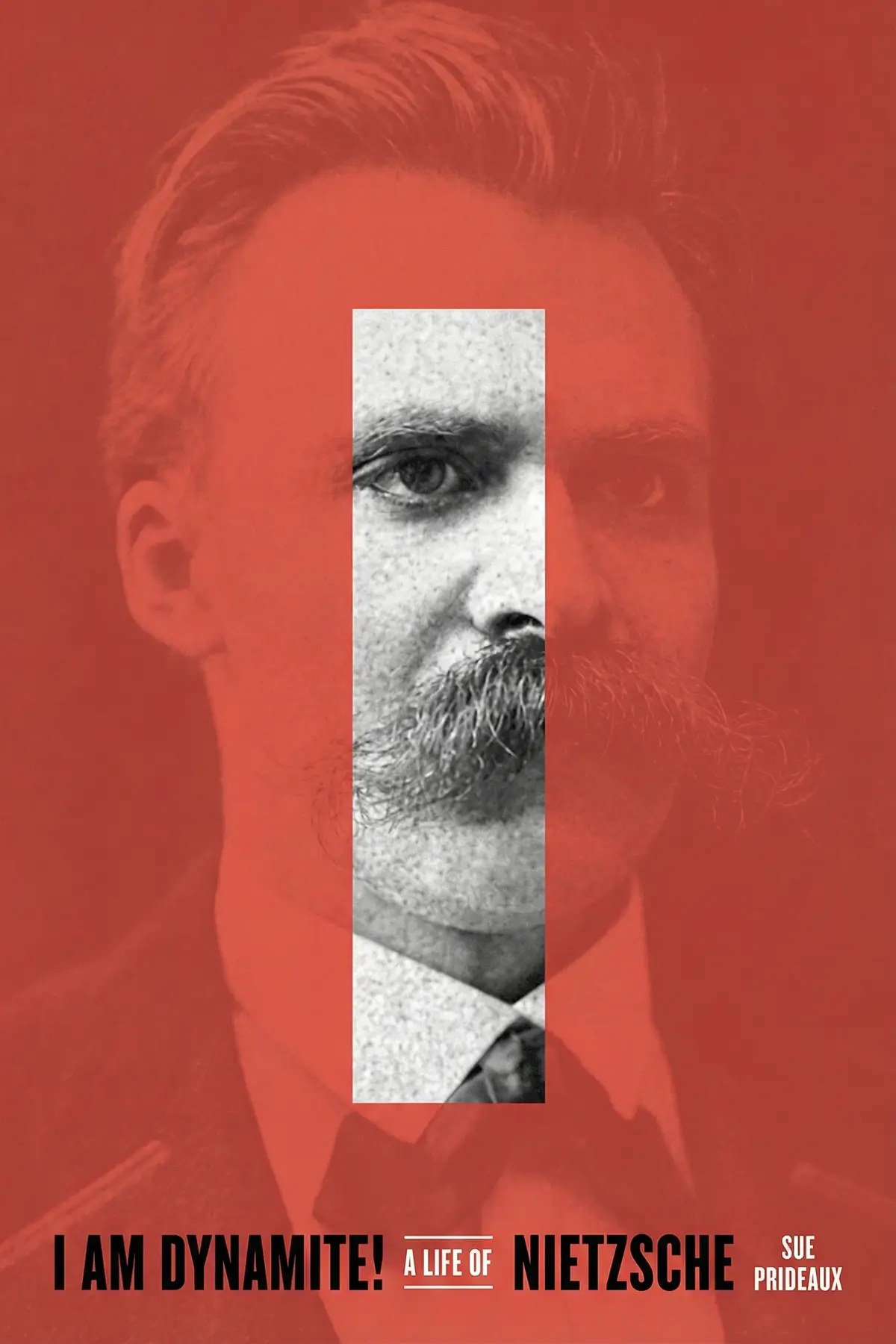
A vivid biography showing how Nietzsche wrote his most daring ideas while ill, broke and unread, and how his sister turned his late fame into a legacy he would not have recognized.
1 min 04 sec
If you know Friedrich Nietzsche only from a few lines quoted online, you have the slogans without the man, and you miss why his ideas were so easy to twist. In I Am Dynamite!, biographer Sue Prideaux shows that the thinker who would shape existentialism sold fewer than a hundred copies of most of his books and became famous only after his mind had failed. That timing is the heart of her story.
Nietzsche wrote his boldest work while sick, half blind, short of money and ignored. Because recognition came when he could no longer speak for himself, his sister Elisabeth was free to remake his legacy into the very thing he had feared. Prideaux follows him from a minister’s home in Saxony to Wagner’s lakeside villa, a doomed love triangle, a street in Turin and an upstairs room in Weimar. Afterward, the death of God and the superman stop being slogans, and you can explain how a man who rejected nationalism ended up honored by Hitler.
1 min 40 sec
A boy who lost his father to a brain condition grew up with the same blinding headaches. He also grew up brilliant, and one wet night in Leipzig set the course of his whole career.
1 min 43 sec
A lakeside villa, a famous composer and his formidable wife gave a young professor a second home. The book he wrote there introduced a pairing he never let go of, and almost nobody wanted it.
1 min 51 sec
A rising star found his course nearly empty and his body failing. What he did next cost him his job, his home and his oldest friendships, and gave him a way of writing that was entirely his own.
1 min 42 sec
The most famous sentence in modern philosophy was written in the same months as a strange three-way romance, a scandal at Wagner’s festival and a painful betrayal. The timing changes how the line sounds.
1 min 55 sec
The book that preached a stronger kind of human was begun by a man taking opium in a seaside town. The works that followed sold almost nothing, yet they hold the ideas people still argue about.
1 min 58 sec
A famous critic finally praised him, and the books came faster than ever. Then the letters began arriving, signed by Caesar and by the Crucified, and his friends realized something had gone badly wrong.
1 min 47 sec
While the world began reading him, the philosopher sat in an upstairs room, unaware. Downstairs, his sister hosted parties, guarded every page and courted powerful admirers whose politics he had never shared.
1 min 03 sec
Prideaux leaves two figures standing side by side. One is a polite, half-blind lodger in cheap hotels, paying to print books almost nobody bought. The other is the prophet of the superman, quoted across Europe while the real man sat upstairs in Weimar, unaware of his own fame. Between them lies the space where his legacy was bent. He wrote in loud, provocative bursts, then fell silent at the very moment people started listening, and the person who filled that silence chose what he meant.
That gives you a better way to meet him now. Set any famous line beside the year that produced it: the death of God came from a man asking what humanity would do without its old morality, and the superman from someone who could hardly bear daylight. When anyone recruits Nietzsche for a cause, ask whose edition they are reading, because for decades his texts passed through a sister whose nationalism he did not share.
He called himself dynamite. His sister chose where it would go off.
Friedrich Nietzsche is now one of the most quoted names in philosophy, but for most of his life almost nobody read him. He became a professor at 24 and a close friend of Richard Wagner. After that, his books failed and his health gave way, and he was famous only once his mind had gone. Sue Prideaux tells that life as one connected story. She moves from a sickly boyhood in Saxony to Wagner's villa in Lucerne, the failure of his first book, a tangled love affair with Lou Salomé and Paul Rée, and the wandering years when he paid to print his own work. Then come the breakdown in Turin and the long silence in Weimar, where his sister Elisabeth took control of his papers. Readers find out how the ideas of the superman, the will to power and God's death arose, along with what Nietzsche intended by each. They also see how Elisabeth's edited editions let nationalists and later the Nazis claim a thinker who had rejected nationalism.
Curious readers who quote Nietzsche but have never heard the story of his life.
Students of philosophy who want the human context behind the death of God and the superman.
Anyone wondering how a thinker's words get captured and misused after he can no longer speak.
Sue Prideaux, born in 1946, is a novelist and biographer with British and Norwegian roots who grew up in Norway. She studied art history in Florence, Paris and London before turning to writing. Her godmother was painted by Edvard Munch, whose life she later told in Edvard Munch: Behind the Scream. She has also written a biography of the playwright August Strindberg, and all three of her biographies, including this life of Nietzsche, have won awards.
Listeners find this biography to be a superb resource for grasping Nietzsche’s life, with one person highlighting how it dispels common misconceptions about the philosopher. Additionally, the work is celebrated for its spirited writing and rich level of detail. Nonetheless, views on its clarity are split; while some describe it as eminently readable, others report that it is not easy to follow.
Sue Prideaux has a remarkable gift for transforming dense historical figures into breathing humans. This biography completely dismantles the common fallacies portraying Nietzsche as a proto-Nazi or a raving, incoherent monster. Instead, we see a lonely man struggling with "softening of the brain" and a family that largely betrayed his legacy for their own gain. I was particularly struck by the descriptions of his physical agony; it's horrifying to read about the nitrate of silver and corrosive clismas he endured. Prideaux writes with a vibrant prose that prevents the tragedy from feeling purely oppressive. If you’ve only ever seen the fierce stare in those famous photographs, this book provides the necessary context to understand the vulnerability behind the philosopher's mask. It is an essential tool for grasping the genuine Zarathustra.
Show moreWow, this was a punch to the gut. I was familiar with the philosophy, but I had no idea how much his sister, Elisabeth, actively poisoned his reputation while he was incapacitated. Prideaux doesn’t hold back when describing how Elisabeth turned her brother into a "ghostly exhibit" for her own social climbing. To be fair, I expected a dry academic text, but this reads more like a tragic novel with a very dark ending. The meticulous research into his final years in the asylum at Jena is both haunting and necessary. It’s infuriating to see how his work was twisted by the very nationalism he despised. Every student of philosophy needs to read this to understand the human cost of being misunderstood by posterity.
Show moreAs someone who has always been intimidated by Nietzsche, I found this biography to be a perfect entry point. Prideaux writes with a dry, often openly comic style that makes the philosopher feel approachable and even relatable. She captures the "Amor fati" spirit perfectly—the idea of finding joy in the face of inevitable suffering. The book excels at showing the disconnect between his "master morality" and his actual, gentle demeanor in real life. He wasn't a monster; he was a man who loved intelligent women and suffered from crushing migraines. The chapter on his mental collapse in Turin is written with such grace that it’s impossible not to feel for him. Truly a phenomenal piece of biographical writing that balances the intellectual and the personal with ease.
Show moreThe chapter on Nietzsche's time as a young professor in Basel is worth the price of admission alone. Imagine being a genius at 24 but already sensing the "softening of the brain" that claimed your father. This dread permeates the entire narrative, giving his quest for "emancipatory insanity" a tragic urgency. Prideaux’s ability to link his physical symptoms to his creative outbursts is impressive and makes his writing feel more grounded. I also appreciated the deep dive into his relationship with Cosima Wagner, which adds a layer of erotic tension rarely discussed in philosophy classes. This is a big, ambitious book that somehow manages to stay intimate. It’s easily one of the best biographies I’ve read in years. I couldn't put it down.
Show moreFinally, a biography that treats Nietzsche as a human being rather than a saint or a martyred symbol. Prideaux captures the tragic irony of his life: a man who preached the "Übermensch" but was often too sick to leave his bed. The way she handles the "Raskolnikov effect" among the younger generation of his time was fascinating context for his sudden fame. It’s a devastating read in many ways, especially once Elisabeth takes control of the archive. You see the slow-motion train wreck of his legacy being hijacked by the very people he would have hated most. The prose is sharp, the research is exhaustive, and the emotional impact is lasting. This is how all biographies should be written—with a mix of skepticism and deep empathy.
Show moreEver wonder what was going on in the head of the man who declared God dead? This book dives deep into the intellectual firestorm of Friedrich’s life, particularly his intense and ultimately doomed friendship with Richard Wagner. The granular level of detail regarding their fallout—including those nasty rumors Wagner spread about his health—was incredibly eye-opening. While the writing is undeniably energetic, I must admit the pacing felt a bit uneven in the middle sections. Sometimes the sheer volume of names and obscure German intellectuals made it a challenging chronology to follow. Nevertheless, the way Prideaux handles his relationship with Lou Salomé is masterful and deeply empathetic. It paints a portrait of a man who was desperately seeking connection but was perhaps too "dynamite" for his own social circles. It’s a strong 4-star read for me.
Show morePicked this up on a whim after hearing it was the definitive life of Nietzsche, and it mostly lives up to the hype. The author does a fantastic job explaining why he chose Zarathustra as his prophet, linking it back to the Persian idea of the conflict between light and dark. It really helped clarify the origins of his post-Basel independent thinking. My only gripe is that the book assumes a bit too much prior knowledge of 19th-century German politics at times. Personally, I found some of the sections on the Franco-Prussian war a bit dense to wade through. However, the anecdotes about his statelessness and his love for Italy bring a lighter, much-needed dimension to his character. It’s a meticulously crafted biography that rewards patient readers.
Show moreAfter hearing so many misconceptions about the "will to power," I’m glad I finally read this. It clears up the mess his sister made and puts his work back into its proper, anti-nationalist context. The book is quite long and the print is small, so it’s not exactly a light beach read. However, the vivid descriptions of Sils-Maria and the Engadine mountains make you want to go there yourself. Frankly, the medical history alone is worth it for the insight into how primitive 19th-century medicine actually was. The fact that he could write anything at all while being treated with mercury and opium is a testament to his sheer willpower. It’s a 4-star book because while it’s dense, it’s also undeniably rewarding.
Show moreLook, I really wanted to love this given the rave reviews, but I struggled with the structure. The author is clearly an expert, and the book is an excellent source for understanding the man's daily life, yet the readability is hit-or-miss. One moment you're reading a lively account of his travels in Switzerland, and the next you're lost in a dense historical thicket of minor characters. I felt like the philosophical analysis was sometimes sacrificed for the sake of biographical trivia. That said, the way she debunks the Nazi associations is brilliant and long overdue. It’s a decent enough reference, but maybe not the best choice if you're looking for a quick or easy-to-follow introduction to his actual ideas.
Show moreIn my experience, biographies of this length often struggle to maintain momentum, and this one is no exception. While the content is undeniably detailed and the research is top-notch, it occasionally feels like a slog through every single letter he ever wrote. I appreciate the effort to break down myths about his supposed antisemitism—which he clearly loathed—but the middle chapters on his various Alpine hikes became repetitive. It’s a very scholarly work, which is great for specialists, but the average reader might find it hard to follow the threads of his shifting relationships. If you want a deep dive into the 19th-century European zeitgeist, you'll love it. If you want a concise summary of Nietzsche, you might find yourself skimming.
Show moreIt is a biography of Friedrich Nietzsche, from his sickly childhood in Saxony and his early professorship in Basel to his friendship with Richard Wagner, his failed books, his wandering years and his collapse in Turin in 1889. Prideaux also follows what happened after: fame during his decade of madness and his sister Elisabeth’s control of his archive, which let nationalists and later the Nazis claim him.
The line appears in The Gay Science, written in 1882, where a madman shouts it in a marketplace. Prideaux stresses that the book’s real concern is what comes next. Nietzsche saw Christian authority fading and asked what would guide humanity once the old morality lost its hold. He feared the result could be tragic, and his later superman was his answer: someone who finds that loss freeing.
According to Prideaux, no. Nietzsche was no nationalist, was glad to be rid of his anti-Semitic publisher once Schmeitzner dropped him, and did not support his sister’s settlement in Paraguay. He even insisted the blond beast belonged to every race. After his breakdown, though, Elisabeth controlled his papers and promoted a nationalist reading, and the Nazis used her selectively edited editions. Hitler visited her archive in 1933 and 1934.
In January 1889 he broke down in Turin after seeing a horse beaten, and his friend Overbeck took him to a clinic in Basel. Syphilis was often blamed, but tests at the time were inconclusive. He lived with his mother in Naumburg, then with Elisabeth in Weimar, kept upstairs while she hosted salons. He died in 1900, unaware of his growing fame.
It suits readers who know Nietzsche’s famous phrases and want the life behind them, students who need context for books like Thus Spoke Zarathustra or Beyond Good and Evil, and anyone interested in how reputations are made and distorted. It reads as a story, with Wagner, Lou Salomé and Elisabeth as vivid characters, so no background in philosophy is needed.
Ishmael Beah

James Herriot


Barack Obama


Masaji Ishikawa

Ben Macintyre

William B. Irvine

AUDIO SUMMARY AVAILABLE
Get the key ideas from I Am Dynamite! by Sue Prideaux, plus 5,000+ more nonfiction titles.









