
14 min 41 sec
Available in: English
Humans are Underrated: What High Achievers Know that Brilliant Machines Never Will
By Geoff Colvin
Shows why, as computers outpace people at knowledge and even at reading faces, the skills that matter most are human ones: empathy, team chemistry, storytelling and in-person creativity, and how to protect and train them.
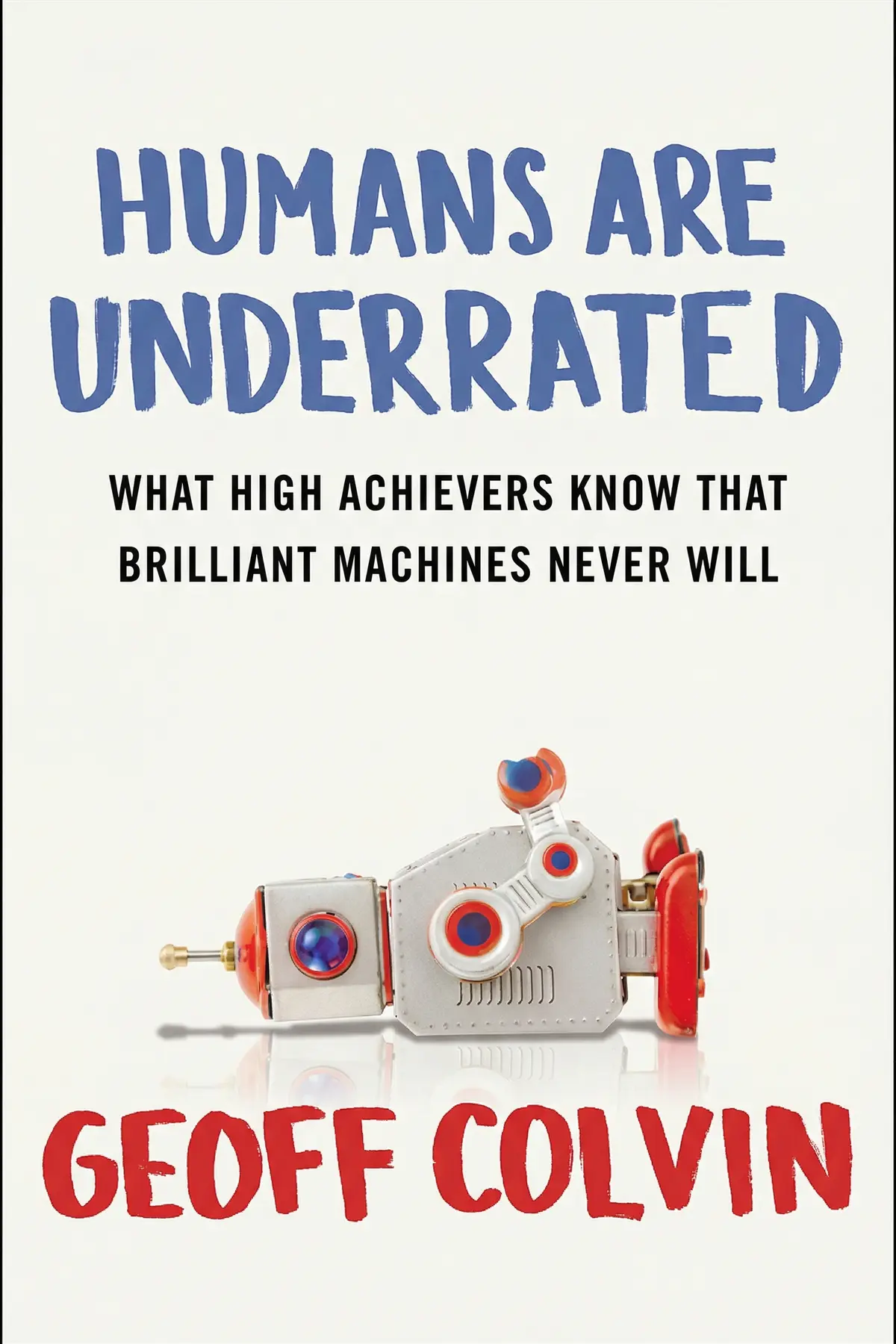
Table of Content
1. Introduction
59 sec
If your worth at work rests on what you know, a machine is already closing in, and in one test it read human faces better than trained people did. In Humans are Underrated, business writer Geoff Colvin starts from that uncomfortable fact. Computing power keeps doubling every two years, so racing machines on knowledge or speed is a contest you will lose.
His argument runs the other way. As computers take over storing and sorting information, the skills people bring to each other grow in value: empathy, the knack of building a team that clicks, a story that moves a room, the spark of an unplanned conversation. Those same skills, Colvin warns, are being worn down by the screens we stare at.
Follow his case and you get a clear sense of where to put your own effort, plus practical ways to make technology train your human side.
2. Stop racing machines on raw brainpower
1 min 29 sec
Computers keep doubling their power, and one of them now reads the emotions on a human face more accurately than trained observers. If that skill is gone, which of yours is safe?
3. Protect your people skills from endless screen time
1 min 31 sec
A group of children spent five days at a camp with one simple rule, and researchers measured a clear change in them. The finding raises hard questions about the apps that promise to connect us.
4. Reading people now beats simply knowing facts
1 min 37 sec
Software can already outguess legal experts on the rulings of the highest US court. A tense standoff with an angry crowd in Iraq shows what kind of skill still decides the outcome.
5. Win loyalty with empathy no script can copy
1 min 47 sec
One manager at American Express threw away the rule book his call center staff relied on. Customers began recommending the company more often, profit margins climbed, and the number of employees quitting fell by half.
6. Build stronger teams by choosing for chemistry
1 min 32 sec
The US golf team kept losing the Ryder Cup despite its star players. A captain who changed how he picked them points to the factor that matters more than talent, size or rewards.
7. Tell a story when charts fail to persuade
1 min 33 sec
A World Bank director made his case with data and slides, and nobody listened. Then he described one health worker sitting at a computer, and the whole institution changed direction.
8. Spark better ideas by bringing people together
1 min 37 sec
A supercomputer invented a burrito that festival crowds loved, so machines can clearly be creative. Yet the most inventive companies still bet on something as ordinary as a good lunch line.
9. Use computers to train your human edge
1 min 30 sec
When Stanford opened a free online course to the world, the best results came from somewhere nobody expected. A simple thank-you tool shows software can build people skills as well as knowledge.
10. Conclusion
1 min 06 sec
Colvin’s book adds up to a change in where to place your bets. Machines will keep getting faster, and on knowledge they will keep winning, whether the task is sorting legal cases or reading a face. What they cannot earn is the trust people give only to other people: the call center agent who actually listens, the captain who makes each player feel understood, the colleague whose small story about a health worker in Zambia turns a whole bank around.
That makes the practical work fairly plain. Guard your social skills by spending real time away from screens and with people in person. Practice empathy as a skill, since Colvin holds that anyone can learn it, by finding out what someone feels before you answer. And let technology carry the knowledge load through the many free online courses in subjects like leadership, decision-making and project management, some of which end with a university certificate.
The faster computers get, the more a person who understands other people is worth.
About this book
What is this book about?
Computers double their power every two years, and they now beat trained people at tasks once thought to be human, such as spotting emotions in a face. For anyone whose career rests on knowing things, that is an unsettling trend. Geoff Colvin argues it is also a pointer to where human value is moving. His case is that the work machines cannot take over is the work of relating to other people. He follows that idea through call centers at American Express, a US Ryder Cup golf team picked for personality fit, a World Bank director who changed strategy with one small story, and the cafeterias and hallways where Google, Pixar and Apple spark new ideas. He also warns that heavy screen use and social media are wearing down the very social skills we will need. Readers get a clear sense of which skills to build as automation spreads, evidence for why empathy, teamwork and storytelling outlast technical knowledge, and practical ways to use online courses and software to grow both their knowledge and their people skills.
Book Information
Who it's for
Professionals wary of automation
Professionals worried that automation will shrink the value of their knowledge-based work.
Leaders wanting stronger teams
Managers and team leads who want stronger teams, warmer customer service and more knowledge sharing.
Curious about screen time
Students, parents and heavy phone users curious how screens and social media shape social skills.
About the Author
Geoff Colvin
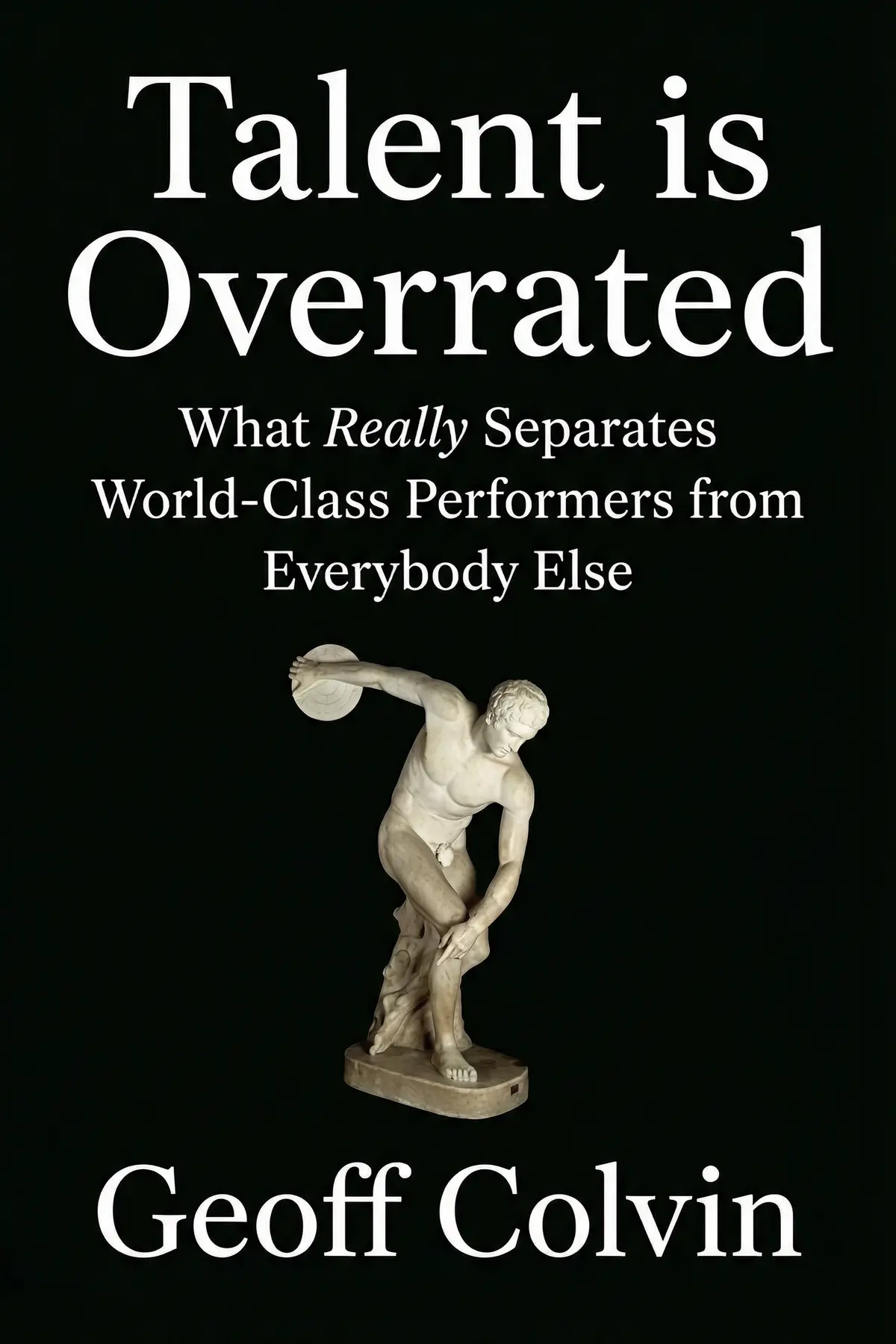
Geoff Colvin studied economics at Harvard and earned an MBA from New York University. He has written many magazine articles, including contributions to the column Value Driven. He lectures widely and regularly serves as lead moderator at the Fortune Global Forum. His first book, Talent is Overrated, became a bestseller, and Humans are Underrated is another of the books he has written.
Ratings & Reviews
Ratings at a glance
What people think
Listeners find the work highly informative and thoroughly researched, with one listener pointing to its exceptional advice on remaining relevant. They are drawn to the narrative-driven approach, including one note that stories prove more persuasive than raw data, alongside its focus on nurturing relationships and group dynamics. The prose earns positive marks for being accessible; one listener highlights that it’s tailored for a non-techie audience. Additionally, listeners value the exploration of empathy, particularly the capacity for sensing the thoughts and feelings of others.
Top reviews
Aroha
Picked this up after feeling the creeping dread of AI automation in my own industry. Colvin makes a compelling case that our future doesn't lie in out-crunching the computers, but in leaning into what makes us biological beings. The focus on empathy as a 'high-value skill' changed how I view my daily interactions at the office. Personally, I found the chapter on social sensitivity and the way women-led teams often outperform their peers to be eye-opening. While some might say it’s a bit idealistic, the research into how we process storytelling suggests otherwise. It's a refreshing take on career longevity that doesn't involve learning another coding language. This is more than just a business book; it is a guide for human survival.
Show morePierre
Wow. Colvin really hits the nail on the head regarding the shift from 'knowledge workers' to 'relationship workers' in the modern economy. After hearing so much doom and gloom about robots taking over, this book provides a much-needed roadmap for staying relevant. The stories are more than just anecdotes; they are persuasive tools that illustrate how empathy and social connection are the last bastions of human superiority. I particularly loved the section on how the military is rethinking leadership based on these principles. Even if you aren't a techie, the writing is incredibly accessible and keeps you moving through the pages. This is an outstanding guide for anyone looking to future-proof their career and their character.
Show moreSau
Ever wonder why certain teams just 'click' while others fall apart despite having the best talent on paper? This book explains the science behind that magic through the lens of social sensitivity and human connection. Colvin argues that the traits we used to dismiss as 'soft' are actually the hardest to replicate and therefore the most valuable. As a parent, I found his thoughts on education and how we should be teaching kids to interact rather than just memorize facts to be incredibly timely. The future belongs to the storytellers and the empaths. It’s an empowering message that reminds us that our deepest nature is our greatest competitive advantage. Truly a fascinating read from start to finish.
Show moreDavid
As someone who works in tech, I found the descriptions of what computers can already do—like legal discovery and medical diagnoses—to be both fascinating and slightly terrifying. Colvin doesn't just list facts; he weaves them into a narrative about our changing world. To be fair, some of the conclusions about storytelling feel a bit overblown, but the overall argument for group dynamics and empathy holds up. The book is written for a general audience, making complex economic shifts feel personal and manageable. I did feel like some chapters dragged a bit, but the insights into how we connect as humans made it worth the read. It’s a solid effort that makes you think twice about what skills you should be honing.
Show moreGung
Finally got around to reading this and I must say the examples of group dynamics were the highlight for me. The story about the elite golf team being organized by personality rather than raw skill was a total 'aha' moment. It makes you realize how much we’ve been overvaluing individual technical prowess at the expense of team cohesion. Gotta say, the way Colvin discusses the biological differences in empathy—specifically the roles of Oxytocin and Testosterone—was handled with more nuance than I expected. My only gripe is that the book leans heavily on speculation regarding how fast these changes will occur. Still, it’s a thought-provoking look at why we shouldn't fear the machines just yet.
Show moreWipawan
Colvin’s writing style is remarkably fluid, making what could be a dry subject feel like an urgent conversation. He manages to explain why computers are better at math and logic without making the reader feel obsolete. In my experience, most business books fail to bridge the gap between data and human emotion, but this one succeeds by practicing what it preaches. The focus on sensing the thoughts and feelings of others as a professional necessity is a powerful concept. I also appreciated how the book wasn't just for 'techies' but for anyone trying to navigate a changing workplace. It’s informative, slightly scary at times, but ultimately very hopeful about our collective future.
Show morePichaya
Look, if you're worried about AI taking your job, you need to read the chapters on 'relationship workers' in this book. Colvin does a great job of illustrating how our value shifts when information becomes a commodity. Knowledge is everywhere now, so the new premium is on how we use that knowledge to collaborate and lead. I found the section on the military's use of 'social sensitivity' to be particularly convincing. It’s not a perfect book—some of the transitions between topics are a bit clunky—but the central thesis is something every professional should consider. It’s a solid guide for anyone who wants to stay relevant in a world dominated by brilliant machines.
Show moreManee
Truth is, I found the first half of this book much more engaging than the second. The initial deep dive into the rapid advancement of AI and automation is genuinely gripping and well-researched. However, once Colvin starts harping on storytelling as the ultimate human savior, I felt the momentum start to stall. Not gonna lie, I’ve heard the 'empathy is key' argument a dozen times before, and this version didn't offer a particularly unique spin. It’s a decent summary of current trends, but it lacks the depth of his earlier work. If you're new to the topic, you'll probably get a lot out of it, but seasoned readers might find it a bit repetitive.
Show moreNarumon
The premise sounded promising, but the execution felt like a collection of Gladwellian tropes without the same narrative punch. Frankly, the author relies too heavily on a handful of isolated studies to make massive predictions about the global economy. I was expecting a rigorous deep dive into technological trends and instead got a lot of fluff about 'being a people person.' It’s frustrating because the core message—that empathy matters—is valid, but the way it’s presented feels like a middle school term paper stretched into a full-length book. If you’ve already read a few books on the 'soft skills' revolution, there really isn’t much new information here to justify the time. I'd stick with his previous book, Talent is Overrated.
Show moreTanawan
Not what I expected based on the author's previous work, which I absolutely loved. This book feels like a rambling jumble of speculation that would have worked better as a short article for Forbes. The author makes these broad, sweeping economic predictions based on very little hard evidence. Frankly, the idea that we can just 'empathy our way' out of massive job displacement feels naive and lacks a credible discussion on economic scale. It’s a bit too much 'Gladwell-lite' for my taste, focusing on catchy anecdotes rather than rigorous analysis. While it’s an easy read, it left me with more questions than answers about the actual feasibility of his proposed solutions.
Show moreQuestions about this book
What is the main idea of Humans are Underrated?
Geoff Colvin argues that computers will keep outperforming people at knowledge tasks, and even at detecting emotions in faces, so competing with them on brainpower is a losing game. The skills that grow in value are human ones: empathy, building teams with good chemistry, telling persuasive stories and generating ideas through face-to-face contact. He also warns that heavy screen use weakens those skills and urges readers to use technology to strengthen them.
Why does Geoff Colvin think empathy cannot be replaced by computers?
Colvin defines empathy as understanding what another person thinks and feels, then responding appropriately. He argues that people are built to accept empathy in its deepest form only from other humans, so even a sophisticated machine response will not convince us. He points to American Express, where dropping call center scripts and trusting agents led to better customer recommendations, higher profit margins and half as many staff leaving.
Does screen time really hurt social skills?
Colvin cites a study in which sixth-graders spent five days at a screen-free camp and showed a substantial gain in understanding emotions, a result confirmed in two follow-up tests. He also describes a study linking heavy social media use among US teenagers to worse relationships with parents and peers and frequent unhappiness, possibly because online bonding is weaker and users become less trusting.
How can I apply the ideas in Humans are Underrated?
Spend regular time away from screens and with people in person. When someone brings you a problem, first find out what they feel, then respond to that. If you build teams, weigh personality fit alongside skill, as golf captain Paul Azinger did. Make a case with one concrete story rather than only charts. And use free online courses to build knowledge, saving your energy for the human side of work.
Who should read Humans are Underrated?
It suits professionals wondering which of their skills will stay valuable as automation spreads, managers who want better teams and customer service, and anyone concerned about how phones and social media affect relationships. Its examples range from a World Bank strategy change and a Ryder Cup win to Google’s cafeteria and a Stanford online course that drew 160,000 students.
Readers also enjoyed




21 Lessons for the 21st Century
Yuval Noah Harari



60 Seconds & You’re Hired!
Robin Ryan



AI 2041: Ten Visions for Our Future
Kai-Fu Lee
AUDIO SUMMARY AVAILABLE
Listen to Humans are Underrated in 15 minutes
Get the key ideas from Humans are Underrated by Geoff Colvin, plus 5,000+ more nonfiction titles.
- 5,000+ titles
- Listen as much as you want
- 7-day free trial
- Cancel anytime









