

A Liberated Mind: How to Pivot Toward What Matters
Steven C. Hayes
 English
A gentle, practical guide to healing from old hurts. It shows you how to forgive yourself, face fear without judgment, care for your younger self and make room for joy, with one journaling exercise for each step.
59 sec
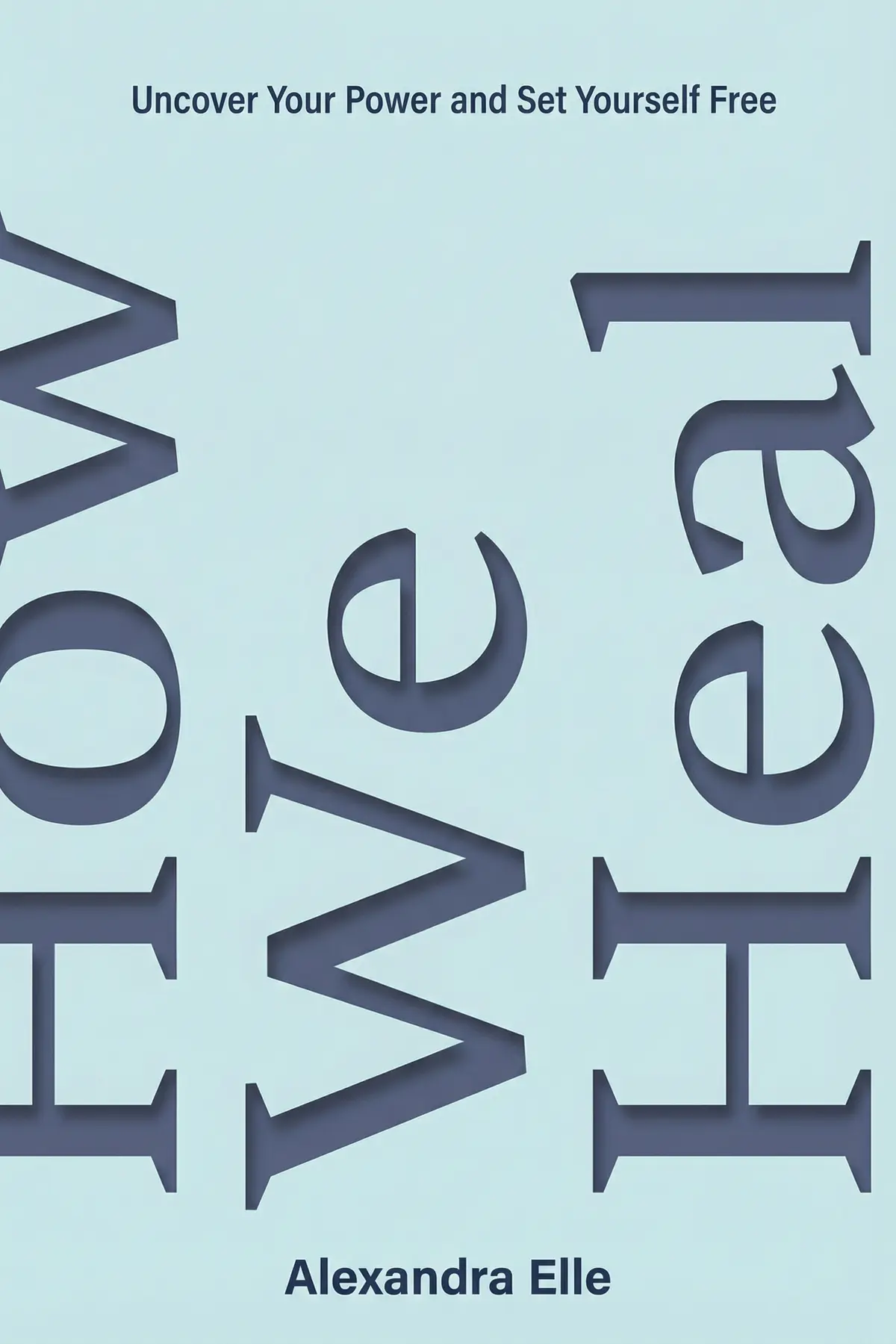
Teaching thousands of people how to heal does not protect you from self-doubt. Alexandra Elle found this out when she sat down to write How We Heal. Her heart raced, her palms grew damp, and despite years of workshops and clients she felt like an imposter. In that moment she saw how much power our private stories have over who we believe we are.
Elle, a bestselling author and certified Breathwork coach, builds the book on that discovery. She argues that healing is an ongoing practice you lead yourself, not a finish line. You forgive your past, make peace with fear, rewrite the story you carried from childhood, and allow yourself rest and joy along the way. Each stage comes with a journaling exercise, from a letter of forgiveness to a page of joyful memories. By the end you will have four pages to write, and a gentler way to talk to yourself on the days when progress seems to slip backward.
1 min 56 sec
You thought you were past it, and then one moment brought it all back. Elle argues that this familiar setback means something very different from what most people fear it means.
2 min 02 sec
Blaming yourself can feel like taking responsibility. Elle argues that it does the opposite, and she offers one evening of writing that lets you stay accountable without carrying the weight forever.
2 min 09 sec
Most advice says to beat your fears or push past them. Elle suggests a stranger and gentler move, and she adds a warning about kind words that never turn into anything you actually do.
2 min 11 sec
Therapy, faith and meditation can all help, yet Elle believes they leave out the most important source of answers. Finding it starts with a two-minute exercise about the child you used to be.
2 min 01 sec
Many people believe healing has to look like suffering until it is finished. Elle disagrees, and her alternative begins with things so ordinary that most people never think to count them.
1 min 13 sec
Go back to where the book began: an experienced teacher at her desk, palms sweating, sure she did not belong there. Elle did not get through that moment by becoming someone new. She noticed the story she was telling herself and chose not to believe it. That is what How We Heal comes down to. Healing is less a cure than a habit of catching false stories and replacing them, over and over, for as long as you live.
The book’s tools are small enough to start this week. When an old wound reopens, treat it as a return visit and write down what you learned last time. When guilt weighs on you, write the letter that forgives it. When a feeling makes no sense, ask what is hurting, why, and how you want it to change, and listen for the younger self who may be answering. And when the work feels heavy, rest first, then open the page of three joyful memories.
Elle’s closing reminder is that no one is finished and no one is alone. Everyone is a work in progress, and taking it one day at a time, patiently and kindly, is enough to become whole again.
Many people treat healing as a finish line. Find the cause of the pain, deal with it, and you are done. Then one trigger sends them back to the start, and they decide they have failed. Alexandra Elle, a Restorative Writing teacher and Breathwork coach, argues that this picture is wrong. Healing never really ends, starting over is normal, and the stories we tell ourselves have more power over who we become than we realize. How We Heal sets out four stages. First, conquer self-doubt and forgive yourself. Second, name your fears, make friends with them and back kind self-talk with action. Third, take back your power by rewriting your story and caring for the child you once were. Fourth, rest, practice gratitude and let joy back in while the work goes on. Each stage ends with a journaling exercise you can do in one sitting: a letter of forgiveness, a circle of self-love steps, a chart of what your younger self wanted and needed, and a page of joyful memories to come back to on hard days.
People who keep returning to the same old hurt and feel they have failed at healing.
Anyone who is hard on themselves and wants a kinder, written way to forgive and move on.
Journal keepers looking for clear, one-page exercises on fear, childhood wounds and joy.
Alexandra Elle started writing before she was a teenager, when it came into her life through therapy and her own healing. That personal practice became a career built on journaling, self-study and mindfulness. She is a New York Times bestselling author, a Restorative Writing teacher and a certified Breathwork coach. Her other books include Neon Soul and After the Rain, and her work has appeared on Good Morning America, ABC News and NPR.

Listeners consider this work a helpful guide for their personal recovery, appreciating the integrated meditations and actionable strategies. The content is both accessible and moving, with one listener mentioning that it promotes a perspective of patience and self-kindness. They also value the inclusion of narrative elements and writing prompts, as one review emphasizes how the book offers concrete methods for implementing real change.
Alexandra Elle has a way of speaking directly to the soul that feels like a warm embrace during a heavy storm. The four-step framework she outlines isn’t just abstract theory; it’s a practical roadmap for anyone feeling stuck in a cycle of self-doubt and past trauma. I particularly resonated with the section on befriending fear because it transformed my perspective from avoidance to genuine curiosity. Truth is, I’ve spent years running from my triggers, but these pages gave me the courage to stand still and listen. The journaling exercises are strategically placed, allowing for immediate reflection that feels both intense and necessary. Some might find the advice simple, but there is profound power in the basics when they are delivered with this much heart. It’s the kind of book you don’t just read once and put on a shelf; you live with it. I feel more equipped to nurture my inner child than ever before.
Show moreEver wonder why it’s so hard to let go of stories that no longer serve you? Alexandra Elle tackles this head-on by teaching us how to rewrite our personal narratives and reclaim the power we’ve outsourced to our past. The chapter on the inner child was particularly moving, forcing me to confront what my younger self actually needed versus what I was told I wanted. These exercises aren't just filler; they are deep, often uncomfortable dives into the psyche. Look, healing isn’t pretty, and this book doesn’t pretend it is. It demands action through its journaling components. I found myself crying through several of the letters I had to write to myself, but the release was worth the temporary pain. It’s a beautiful, essential guide for anyone ready to do the heavy lifting of emotional recovery. Highly recommended for those who want actual tools, not just quotes.
Show moreThis book found me at exactly the right time. As I was navigating the aftermath of a difficult transition, the 'four-step framework' provided the structure I didn't know I was missing. I loved the emphasis on how healing isn’t a destination but a constant ebbing and flowing journey. The prose is lyrical yet accessible, which made the difficult topics of trauma and grief feel less daunting to face. Personally, the journaling exercises were the highlight for me because they turned passive reading into an active experience. I did find that a few of the interviews felt a bit like filler, pulling me away from the author's primary voice. Still, the core message of finding joy amidst the struggle is one I will carry with me for a long time. It’s a light in the dark for those feeling lost and alone in their pain.
Show moreWow. This book is a literal breath of fresh air. Short, punchy chapters make it easy to digest even when the subject matter gets heavy. I loved the focus on 'manifesting' through action rather than just wishful thinking. The journaling exercises helped me uncover narratives I’ve been telling myself since I was a child. Frankly, I didn't realize how much weight I was carrying until this book gave me permission to put it down. It’s practical, emotional, and deeply empowering. If you’re looking for a sign to start your healing journey, this is it. It’s a five-star read for me, specifically because it made me feel seen in a way most self-help books don't. Pure magic on every page. I am keeping this on my nightstand to revisit every single morning.
Show morePicked this up after seeing it all over my feed, and I’m glad I gave into the hype. The 'Self-Love Stepping Stones' exercise was a major standout for me, providing a tangible way to track emotional growth without the crushing pressure of perfection. Not gonna lie, I went into this thinking it might be a bit 'fluffy,' but the focus on the non-linear nature of healing was refreshing and honest. Elle acknowledges that you might hit square one again, and that's okay. The inclusion of interviews with other wellness practitioners added a nice layer of diversity to the perspectives shared throughout. My only minor gripe is that some of the prompts felt a bit repetitive toward the end of the chapters, but the overall message of self-forgiveness is vital. This is a solid resource for anyone starting their journey who needs a gentle, guiding hand through the messiness of self-discovery.
Show moreFinally got around to finishing this, and I’ve gotta say, the focus on rest as a part of healing was a total game-changer for me. We are so often told to 'push through' and 'grind' toward wellness, but Elle reminds us that the body needs space to integrate change. The strategies for cultivating patience were especially helpful during a week where I felt like I was backtracking. I appreciated the mix of personal anecdotes and practical meditations, though I wish there was a bit more depth in the 'Step Three' section. The T-chart exercise for my younger self helped me identify some recurring patterns I hadn't noticed before. It’s a very accessible read, making it a great gift for a friend going through a tough transition. Overall, it's a grounded and deeply touching piece of work that fosters a genuine mindset of self-compassion.
Show moreAfter hearing an interview with Alexandra Elle, I was eager to see if her written word carried the same soothing energy as her voice. It does. The book is essentially a masterclass in self-forgiveness. I struggled initially with the idea of 'befriending fear,' but the way she frames it as an ally rather than an enemy changed my morning routine entirely. The journaling prompts are the heart of the experience; they aren't just basic 'how do you feel?' questions, but specific interrogations of your history. Got to say, the section on gratitude felt a little cliché at first, yet the way she links it to resilience makes it feel fresh again. It’s not a quick read if you’re doing the work, and that’s a good thing. Take your time with this one. It’s a valuable resource for anyone trying to build a more compassionate relationship with themselves.
Show moreAs someone who struggles with chronic self-doubt, reading about the author’s own 'sweaty palms' moment while writing this was incredibly validating. It’s rare to find a wellness book that admits the expert is also still figuring it out. The four steps are easy to follow, but don't let the simplicity fool you; the work is intense. I found the 'Wanted vs. Needed' T-chart exercise particularly enlightening for my inner child work. Truth is, I realized I’ve been providing for my 'wants' while completely starving my emotional 'needs.' The writing style is gentle and non-judgmental, which is crucial when you're digging into old wounds. While some of the transitions between sections were a bit clunky, the overall impact was profound. It’s a beautiful tool for anyone looking to reclaim their inner power and stop the cycle of negativity. Worth every penny for the prompts alone.
Show moreTo be fair, the aesthetic of this book is gorgeous, but the content felt like a bit of a retread for me personally. If you’ve spent any significant time in therapy or reading modern wellness blogs, most of the concepts here—like inner child work and boundary setting—will feel very familiar. Frankly, it felt more like an expanded Instagram feed than a deep-dive into psychological healing. The writing is undeniably beautiful and Elle is clearly a compassionate guide, but I was looking for something more groundbreaking. It’s definitely more of a workbook than a traditional narrative, which might frustrate those looking for a straight read without homework. However, if you are brand new to the world of self-care and need a structured place to start, this is a perfect entry point. Just don't expect it to reinvent the wheel if you’ve already done the work.
Show moreWhile the visual design of the book is stunning, I found the actual content to be a bit thin compared to other titles in the genre. It functions much more as a guided journal than a comprehensive guide on 'how we heal.' If you aren't someone who enjoys writing things down, you will likely lose about 60% of the book's value. In my experience, the advice given was a bit too general, often echoing popular quotes you might find on social media. I also felt it occasionally assumed a certain level of privilege regarding the time and space available for reflection. That being said, the author's vulnerability about her own imposter syndrome was relatable and gave the book a human touch. It’s a decent 'beginner's guide' to self-love, but seasoned readers of the genre might find it a bit repetitive. It's okay, just not the revolutionary text I was expecting.
Show moreElle argues that healing is an ongoing practice you lead yourself, not a destination you reach once. The stories we tell ourselves shape who we believe we are, so healing means letting go of false stories. She sets out four stages: overcoming self-doubt through self-forgiveness, befriending fear, rewriting your story by caring for your inner child, and making space for rest, gratitude and joy.
There is one for each stage. You write a forgiveness letter to yourself about moments of shame or inadequacy. You draw a circle of Self-Love Stepping Stones, the small actions that build self-understanding. You make a Wanted and Needed chart for your younger self, followed by two minutes of free writing. Finally, you describe three joyful memories in detail and come back to them on hard days.
No. Elle says triggers can send anyone back to the beginning, and that this is normal and human. Starting again takes courage, and you keep the lessons from earlier rounds if you pay attention to them. She points to her own anxiety and imposter feelings while writing the book, even after teaching thousands of people, as proof that setbacks happen to everyone.
Elle suggests creating a safe space to talk with your younger self, because many adult patterns were learned in childhood. Act as that child’s mentor or guardian, give them what they needed, and help them work through the feelings they still carry. Many people find it easier to be kind to their younger self than to their adult self, and that kindness helps them find their voice again.
Steven C. Hayes




Leanne Maskell




AUDIO SUMMARY AVAILABLE
Get the key ideas from How We Heal by Alexandra Elle, plus 5,000+ more nonfiction titles.









