

12 min 48 sec
Available in: English
 ไทย
EnglishไทยHow to Manage Your Home Without Losing Your Mind: Dealing with Your House's Dirty Little Secrets
Shows why waiting for the perfect cleaning system keeps a house messy, and how daily dishes, weekly chore days and a personal clutter limit make any home calmer and easier to run.
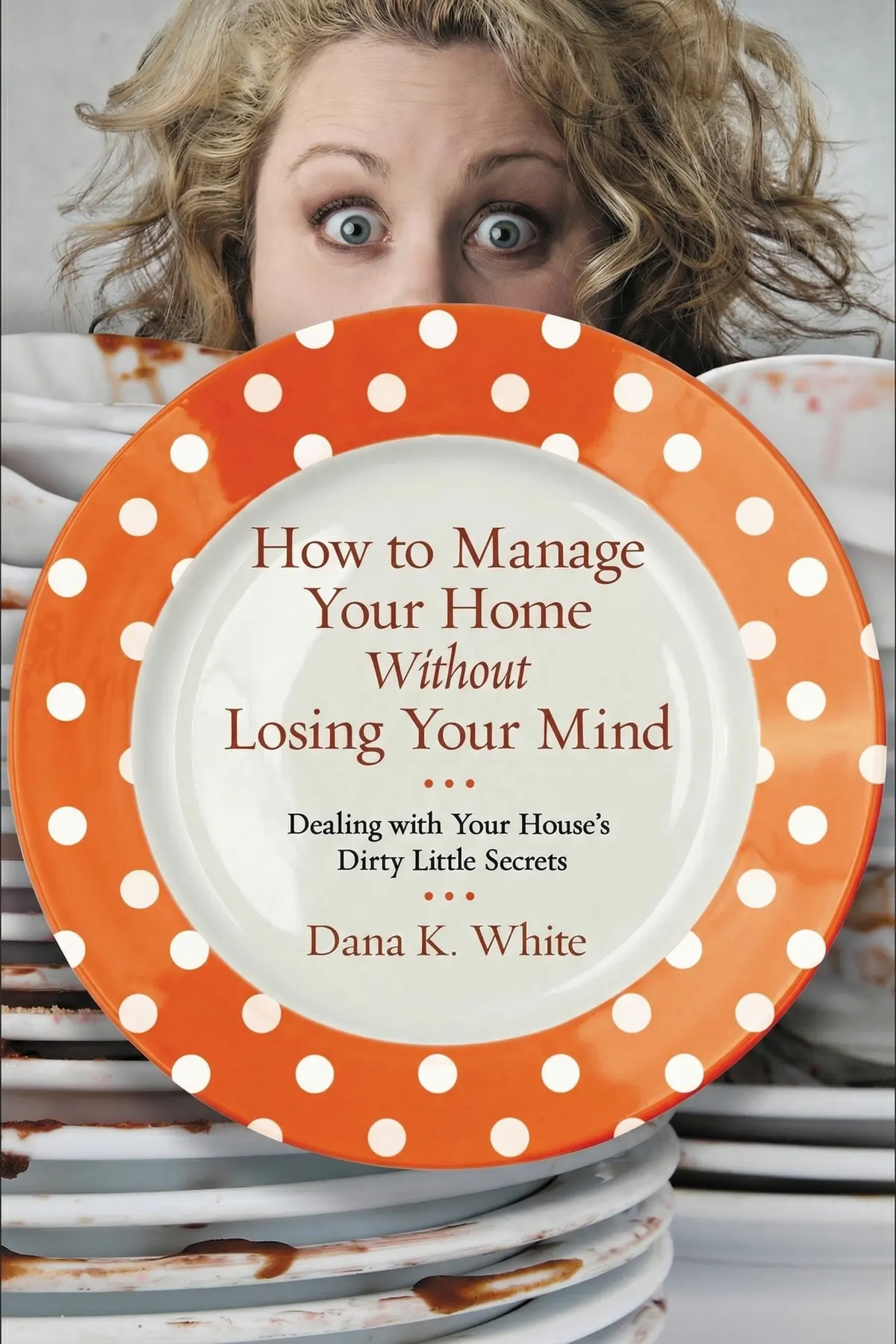
Table of Content
1. Introduction
55 sec
If your home always seems one bad week away from chaos, the cause may be a missing habit rather than a missing system. In How to Manage Your Home Without Losing Your Mind, Dana K. White, a former teacher who chronicled her own household mess on her blog A Slob Comes Clean, argues that waiting for the perfect method is exactly what keeps the mess in place.
Her alternative is humbler and more reliable: a few dull tasks, repeated on a schedule, whether or not you feel motivated. Once those routines run, they also start showing you which belongings you can live without. White moves from the kitchen sink to a weekly cleaning rhythm, then to dinner at five o’clock, and finally to the question of how much stuff one person can really handle. Expect a rule for when to stop agonizing over an object, and a single question that settles where almost anything belongs.
2. Admit the mess your eyes have learned to skip
1 min 39 sec
Some people only notice their home when it is spotless or a disaster, and miss everything in between. White names this blind spot and explains why chasing the best method feeds it.
3. Start with the dishes and repeat them daily
1 min 31 sec
Cleaning a whole house feels like climbing a mountain, so most people never start. White picks one modest chore and shows what happens to it on the second and third day.
4. Give each chore its own day of the week
1 min 36 sec
Doing a load of laundry every day sounds sensible, yet it leaves many homes buried in sour-smelling clothes. White makes the case for a schedule that sounds like more work and turns out to be less.
5. Dinner on the table at five without panic
1 min 35 sec
Tired adults, hungry children and a freezer full of nothing thawed: the evening scramble feels unavoidable. White’s fixes are so modest they are easy to dismiss, and that is why they work.
6. Let clean routines point out your clutter
1 min 33 sec
An empty spray can stood on a kitchen counter for weeks before anyone saw it. White explains why order has to come before decluttering, and how laundry day reveals which clothes you truly wear.
7. Find the amount of stuff you can actually manage
1 min 24 sec
Your neighbor keeps a large collection spotless, while your smaller one overwhelms you. White’s idea of a personal limit explains the gap, and a single question settles where most objects belong.
8. Let things go without guilt or fear of regret
1 min 33 sec
A torn favorite book, a lamp you never use, a box of family keepsakes: some objects freeze you in place. White offers a blunt rule for these moments and an honest answer to the fear of regret.
9. Conclusion
1 min 02 sec
White’s book adds up to a gentle argument against the dream of a house that one day stays clean on its own. That house does not exist. What exists is a sink emptied tonight, a bathroom scrubbed because it is Tuesday, and a spare lasagna waiting in the freezer. Those small acts are the whole system, and once they run they do a second job: they show you what you own but never use, until your home settles at a level of stuff you can actually manage.
Begin wherever the mess bothers you most, most likely the dishes, and repeat it every day until it stops feeling like work. When that habit runs on its own, give one chore a fixed day of the week. And when an object makes you agonize, ask where you would look for it first, or let the head explosion rule decide.
The home you live in now does not need better circumstances to become comfortable. It needs the next plate washed.
About this book
What is this book about?
Many people live in homes that feel permanently out of control. They wait for the right moment, the right motivation or the ideal organizing method, and meanwhile the dishes pile up and the clutter spreads. Dana K. White, who documented her own household chaos on her blog A Slob Comes Clean, argues that this waiting is the real problem. Her approach is deliberately unglamorous. Do the dishes every day. Give the bathroom and the mopping their own days of the week. Take all the laundry through in one day. Plan four or five dinners and keep the freezer stocked. These small routines keep messes from growing, and they also make hidden clutter visible, so decisions about what to keep get easier. White adds tools for the hard part: the clutter threshold, which explains why some homes refill after every cleanup, a one-question test for where things belong, and the head explosion rule for objects you cannot decide about. Readers get a realistic, guilt-free method for a home that works as it is.
Book Information
Who it's for
Parents and professionals
Busy parents and professionals whose homes slide into chaos despite repeated big cleanups.
Perfectionists yet to start
Perfectionists who keep searching for the ideal organizing system instead of starting.
Wondering why clutter returns
Anyone who declutters, then watches the house fill up again, and wants to know why.
About the Author
Dana K. White
Dana K. White is a former English and Theatre Arts teacher who started her blog A Slob Comes Clean to document her own struggle to bring order to a chaotic household. She also teaches through a podcast and videos, and developed the Container Concept. Her books include Organizing for the Rest of Us and Decluttering at the Speed of Life, a Wall Street Journal bestseller.
Ratings & Reviews
Ratings at a glance
What people think
Listeners find the material simple to follow and comprehend, noting its abundance of actionable tips and witty tone. Furthermore, they value the way it shifts perspectives and establishes productive routines, all while offering solid strategies for dealing with paralyzing messes. The guide also provides a sequential framework for running a home, ensuring the process remains straightforward and achievable.
Top reviews
Nongnuch
Finally got around to finishing this after hearing so much about the 'slob' who figured out how to clean. I decided to listen to the audiobook while actually tackling my own mountain of laundry, and it was a game-changer. Dana doesn't speak like a professional organizer who has never seen a dirty sink; she speaks like a friend who has been in the trenches of domestic failure. Her advice about doing the dishes every single day seems so simple, yet the way she frames it as a non-negotiable habit rather than a project is what finally made it stick for me. The humor throughout kept me engaged during the parts of the house I usually avoid. Honestly, her 'container concept' shifted my entire perspective on how much stuff I can actually own. It’s practical, hilarious, and genuinely helpful for anyone who feels overwhelmed by their own four walls.
Show moreArm
Wow, talk about a mindset shift! I’ve spent my whole adult life treating cleaning like a massive weekend project that I never quite finish. Dana explains why that doesn't work for people like us. She emphasizes that keeping a home is an ongoing cycle of daily maintenance rather than a one-time mountain to climb. The '5-minute bedtime cleanup' has become a staple in our house. Not gonna lie, I was skeptical that such basic tips could make a difference, but seeing the floor for three days straight is all the proof I need. Her voice is charming, self-deprecating, and highly relatable. If Marie Kondo made you want to cry, read this instead. It’s practical advice for the real world where kids, pets, and busy schedules exist.
Show moreMatteo
Ever feel like your house is a giant project that you are failing at every single day? That was me before I picked up this book. Dana White’s approach is different because she acknowledges that some people just don't have the 'tidy' gene. She doesn't ask you to overhaul your life in a weekend; she asks you to do the dishes. Every day. No matter what. This simple, actionable advice has transformed my kitchen. I love that she doesn't set unrealistic expectations. She knows we will mess up again, and she gives us a plan for when that happens. The humor is top-notch and the advice is actually doable for someone with a job and a family. This isn't just a book about cleaning; it’s a manual for reclaiming your sanity.
Show moreJob
I've read my fair share of organization manuals, but this one actually felt realistic. Most authors assume you just need a better filing system, but Dana knows that some of us just need to learn how to keep the floor clear. She calls herself a 'slob' and it’s that lack of judgment that makes her advice so easy to follow. I’ve started implementing her 'laundry day' and it has completely removed the 'clean clothes mountain' from my couch. The truth is, the methods are simple, but the psychology behind them is what makes the book worth it. It’s about changing your habits until 'normal' feels like a clean counter instead of a pile of mail. I’ve already recommended this to three friends who also struggle with house management.
Show moreTariq
Not gonna lie, I was skeptical about a book written by a self-proclaimed 'slob,' but her methods actually work. The way she breaks down tasks into 'visibility' versus 'hidden' clutter changed how I prioritize my cleaning time. Instead of spending two hours on a junk drawer that no one sees, I spend ten minutes on the living room floor, and the impact is immediate. It's a very entertaining read, which is rare for this genre. She manages to be funny while delivering hard truths about why our houses get out of control in the first place. This book spells out exactly what needs to happen to move from chaos to a calm oasis. It’s straightforward, achievable, and honestly, it’s been a life-saver for my family's daily routine.
Show moreCamila
As someone who has struggled with chronic disorganization for years, I found this to be a breath of fresh air compared to typical home manuals. Dana White is refreshingly honest about her own messy tendencies, which made me feel less like a failure and more like a work in progress. I specifically appreciated her take on the 'laundry day'—having a set day to process everything from start to finish has saved my sanity. To be fair, if you are already a naturally tidy person, this book will probably seem beneath you or even confusing. It is written for those of us who find empty dental floss containers and old batteries in our silverware drawers. The steps are manageable and the tone is incredibly encouraging without being preachy. It’s a solid four stars for the psychological shift alone.
Show moreSuthida
The section regarding the 'container concept' was a total lightbulb moment for me. I always thought I just needed more bins and better shelves, but Dana explains that the shelf *is* the container, and if it's full, something has to go. It is such a simple, logical rule. The book is written in a very conversational, easy-to-digest style that makes you feel like you're chatting over coffee. My only gripe is that it overlaps quite a bit with her other book, 'Decluttering at the Speed of Life.' If you've read that one, you might find this a bit redundant. Still, the focus on daily routines and house management habits is excellent. It’s about building a sustainable life, not just a clean house for one afternoon. Definitely a valuable resource for the overwhelmed.
Show moreYongyut
Personally, I found the author’s voice to be the highlight of the entire experience. She is funny, down-to-earth, and doesn't take herself too seriously. While some of the tips are basic—like the 5-minute pickup—they are presented in a way that addresses the underlying executive dysfunction many of us feel. I did find it a bit repetitive toward the middle, but maybe I needed to hear the message five times for it to sink in! It’s much more accessible than other minimalist books that feel too clinical or demanding. I’d recommend this to anyone who feels paralyzed by their clutter. It’s a great guide for making slow, steady progress without the typical 'organization' burnout. Four stars for being the first cleaning book I actually finished.
Show moreSai
Truth be told, I have a bit of a love-hate relationship with this book. On one hand, the core concepts like the 'container concept' and the reality of 'decision fatigue' are brilliant and have already helped me clear out some shelf space. On the other hand, it is incredibly repetitive. It felt like the author was trying to reach a certain word count by restating the same three or four main points in every single chapter. I also found the 'proof it’s not just me' blog comments to be a bit much; I bought the book for her expertise, not to read a highlights reel from her website. If you can get past the filler and the anecdotal fluff, there is some real 'meat' here that can change your habits. I’d suggest skim-reading or borrowing it from the library rather than buying a permanent copy.
Show moreAnchalee
Look, if you already have a basic handle on your chores, you might want to skip this one entirely. I found it extremely frustrating to sit through six hours of an audiobook just to be told to do my dishes and pick up visible clutter first. While the author is certainly pleasant and clearly has a following, the book suffers from the classic 'blogger-to-author' syndrome where a few good posts are stretched into a 200-page book. There is so much repetition that it becomes tedious. Frankly, I’m not at the stage where I’m keeping high school baby clothes or letting the sink stay full for weeks, so a lot of the 'slob' content just didn't apply to my life. I gave it two stars because I like her 'container' analogy, but the rest felt like a lot of common sense wrapped in too many stories.
Show moreQuestions about this book
What is the main idea of How to Manage Your Home Without Losing Your Mind?
Dana K. White argues that homes stay manageable through small, consistent routines, not perfect systems or bursts of motivation. Washing the dishes every day, giving chores fixed days of the week and planning simple meals keep messes from growing. Once those habits run, they also reveal hidden clutter, which makes it easier to decide what to let go.
What is slob vision according to Dana K. White?
Slob vision is White’s name for a blindness to everyday mess. A person with it notices only two states, spotless or disaster, and misses the small clutter in between, such as dishes left to air-dry on the counter. Because small messes do not register, they grow until the whole room feels hopeless and daily tasks seem pointless.
What is the clutter threshold?
The clutter threshold is the point at which you own more than you can realistically keep in order. It differs for everyone: some people manage large collections easily, while others are overwhelmed by much less. White treats anything that keeps getting out of hand as clutter, and advises finding your own level instead of copying other people.
How do I decide whether to keep something?
White offers two quick tests. First, ask where you would look for the item, and take it there immediately; if you would never think to search for it, let it go. Second, the head explosion rule: if deciding about an object makes you feel your head might explode, it goes. For sentimental items, keep one meaningful piece or use a single container.
Should I do laundry every day or once a week?
White favors a single laundry day. She finds that daily loads often fail: people forget to switch them, rewash sour clothes and still feel buried. Instead, gather all dirty clothes, sort them, and take each load through washing, drying, folding and putting away before starting the next. It takes a day but frees the rest of the week.
Readers also enjoyed

A High-Performing Mind: Strengthen Your Mind and Live Your Best Life
Andrew D. Thompson


Abundance: The Inner Path to Wealth
Deepak Chopra


59 Seconds: Change Your Life in Under a Minute
Richard Wiseman




AUDIO SUMMARY AVAILABLE
Listen to How to Manage Your Home Without Losing Your Mind in 15 minutes
Get the key ideas from How to Manage Your Home Without Losing Your Mind by Dana K. White, plus 5,000+ more nonfiction titles.
- 5,000+ titles
- Listen as much as you want
- 7-day free trial
- Cancel anytime









