

11 min 53 sec
Available in: English
How to Make Your Brain Your Best Friend: A Neuroscientist's Guide to a Healthier, Happier Life
By Rachel Barr
A neuroscientist explains how your brain shapes your identity, moods and energy, and how self-compassion, small delights, enjoyable movement and better screen habits can make it work with you.
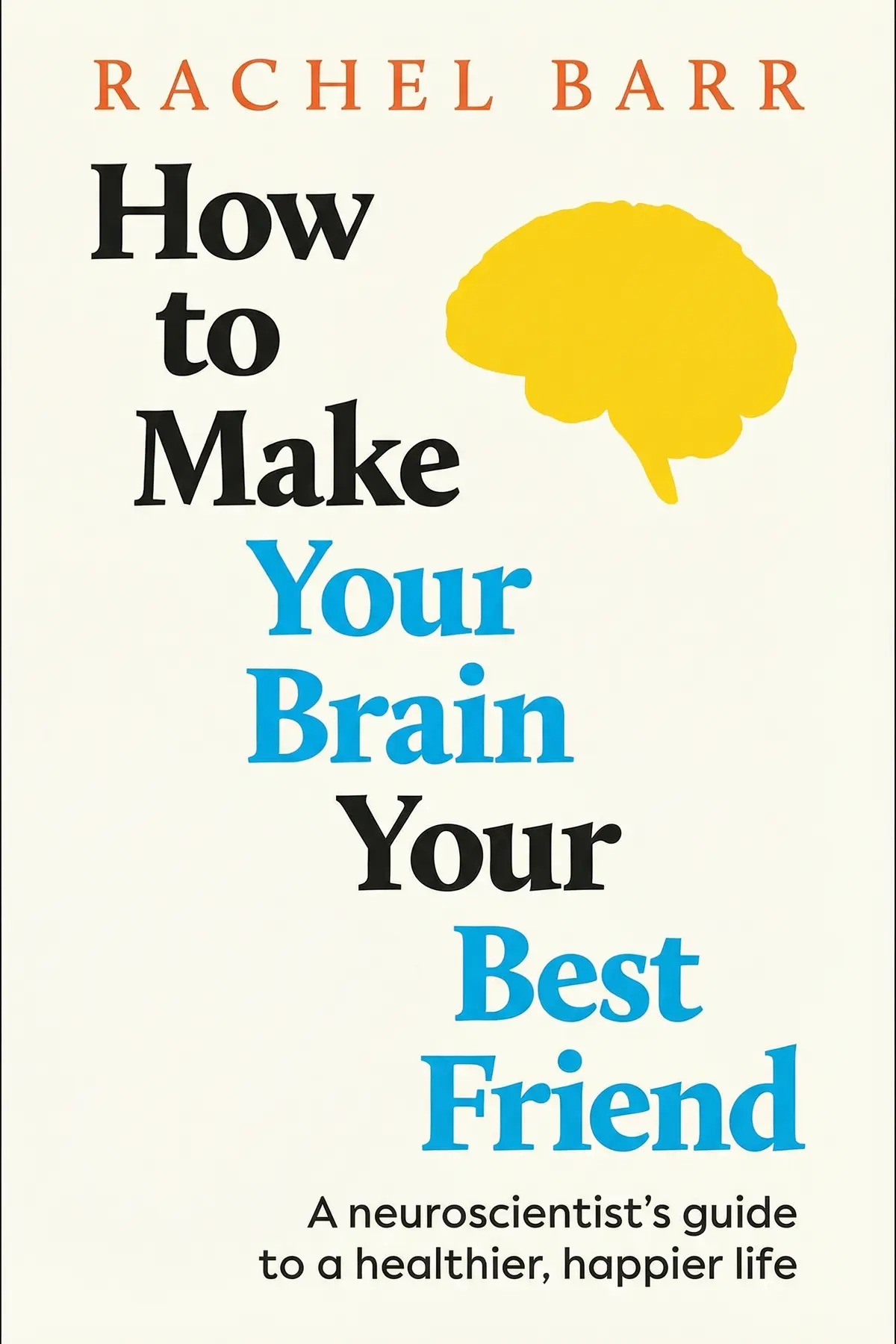
Table of Content
1. Introduction
1 min 01 sec
If your evenings end drained by your phone and unsure of who you are, the cause may be closer than you think. In How to Make Your Brain Your Best Friend, neuroscientist Rachel Barr argues that much of what we call choice and identity comes from brain processes we barely notice, and that the brain soaks up almost everything we expose it to. A brain that easy to influence is also one you can learn to treat well.
Her case is that well-being improves when you live the way your brain actually works: an identity built on real experience, a kind inner voice, small daily pleasures, regular movement and a gentler relationship with screens. Each habit rests on a piece of biology she explains in plain words, from the region that keeps your sense of self coherent to a protein that a single workout can boost. What you get is a handful of small, specific changes to try this week, and a new way of seeing the organ behind your moods.
2. Build your sense of self from things you've lived
2 min 04 sec
An ancient hunter’s necklace and a modern luxury watch both announce who their owner is. Only one of them gives the brain what it needs to build a steady identity, and the difference explains a very modern kind of confusion.
3. Talk to yourself the way you'd comfort a friend
1 min 54 sec
A joke that falls flat can sting for days, and chasing higher self-esteem rarely helps. Barr points to a steadier alternative that research suggests can change how the brain reacts to rejection itself.
4. Collect small delights to calm an anxious brain
1 min 56 sec
During one of the hardest stretches of her life, Barr found that happiness felt out of reach. Something smaller kept her going, and it turns out to be one of the best tools against the brain’s built-in pessimism.
5. Move in ways you enjoy, for your brain's sake
1 min 58 sec
People who feel low are often told to just exercise more, advice that can sound impossible on a bad day. Barr explains what movement does inside the brain, and why the kind you choose matters more than the intensity.
6. Give your screen-tired brain breaks that actually work
1 min 56 sec
Glancing at your phone feels like a rest, yet your brain may count it as more work. Barr explains why hours online wear us out, and why a little boredom might be the most useful thing you allow yourself.
7. Conclusion
1 min 04 sec
Barr’s book asks for a new relationship with the organ you carry everywhere. She pictures the brain as a sensitive companion that takes in almost everything around it, which means the inputs you choose shape how you feel and who you think you are.
That is encouraging, because the inputs are mostly small. An identity grows sturdier when it rests on things you have actually done, the way the hunter’s necklace stood for real hunts. A harsh inner voice loses force when you answer it as you would answer a friend. A day tilted toward the negative can be balanced by a cat café, a warm bath or a bike ride you truly pay attention to.
Pick one change for this week. Get up from the screen every hour or so and step outside without your phone. Or choose a form of movement you look forward to at least some of the time and do a little of it, knowing that even one session can raise BDNF. Or sit through a bored minute and see what your mind comes up with.
Treat your brain the way you would treat a good friend, and over time it starts returning the favor.
About this book
What is this book about?
Many people end the day drained by their phones, stung by small rejections and unsure of who they really are. Neuroscientist Rachel Barr argues that much of this comes from brain processes we hardly notice. The brain steers our thoughts and behavior, and it also absorbs nearly everything we expose it to, which makes it both powerful and easy to influence. Barr connects everyday struggles to specific brain biology. She explains why an identity built on lived experience feels sturdier than one bought or posted, why self-esteem is fragile while self-compassion is steady, how negativity bias keeps us replaying old mistakes, and how a protein called BDNF links exercise to mood. She also shows why endless scrolling and multitasking leave the brain so tired. Readers get small, practical habits grounded in that biology: talking to themselves the way they would talk to a friend, savoring ordinary moments, choosing movement they enjoy, taking real breaks from the computer and letting themselves be bored. The goal is a brain that feels less like an opponent and more like a partner.
Book Information
Who it's for
Professionals drained by screens
Professionals who end most days mentally drained by screens and multitasking.
Wanting gentler, steadier coping
People with a harsh inner critic or a sharp sensitivity to rejection who want a kinder, steadier way of coping.
Tired of exercise advice
Anyone who finds exercise advice exhausting and wants a gentler, brain-based reason to move.
About the Author
Rachel Barr
Dr. Rachel Barr is a neuroscientist whose PhD research focused on the electrophysiology of memory formation during sleep. She has built a large following on Instagram and TikTok, where she explains brain science to a general audience, and she brings that same plain-spoken approach to her book on living in step with the brain.
Ratings & Reviews
Ratings at a glance

What people think
Listeners find the work to be thorough and well-documented, utilizing straightforward language that makes it reachable for any audience. They value the author’s wit and compassionate perspective, with one listener pointing out its honest view of the human mind. Listeners also speak highly of the prose, as one review emphasizes its unique storytelling approach.
Top reviews
Chatri
Rachel Barr has a way of making complex neurobiology feel like a conversation over coffee. Instead of treating the mind like a broken machine that needs fixing, she invites us to view it as a companion that occasionally gets confused by the modern world. I was especially struck by her breakdown of the medial prefrontal cortex and how it anchors our identity. The idea that our brains crave coherence between our values and our actions made so much sense. Frankly, it explains why I feel so much 'existential vertigo' when I’m just performing for social media. The writing is witty, warm, and remarkably grounded for a science book. It doesn’t just tell you to be better; it explains why your brain is currently struggling and how to negotiate a better relationship with it. This is a must-read for anyone who feels like their own mind is an adversary.
Show moreGame
Finally, a science book that actually gives you permission to enjoy a cup of tea without calling it 'productivity optimization.' Barr’s concept of 'delight' as a neurological counterweight to our natural negativity bias is beautiful. We are literally wired to look for danger, so we have to intentionally train our brains to notice the good stuff. I started the 'savoring' practice she suggests, and it’s surprisingly effective for grounding yourself during high-stress weeks. The book’s structure is great, moving from the internal identity to external habits and digital threats. The way she describes the brain as a 'rebellious anomaly' in a cold universe is genuinely poetic. If you’re tired of the hustle-culture version of self-help, this is the intellectual and emotional balm you need. It’s science with a soul.
Show moreAna
As someone who struggles with 'anxious achiever' syndrome, this book felt like a permission slip to stop fighting myself. The truth is, my brain isn't trying to sabotage me; it's just using old evolutionary tactics in a world it wasn't designed for. Barr’s advice to 'swap self-critique for curiosity' is something I’m now using daily. Instead of getting mad at my anxiety, I ask what my brain is trying to protect. This shift from conqueror to partner is profound. I also loved the section on 'intentional boredom' and how it sparks creativity. We're so afraid of a quiet mind that we drown it in digital noise. I’ve started leaving my phone behind on walks, and the mental clarity is real. This book earns a permanent spot on my shelf for its compassionate, evidence-based approach to well-being.
Show moreKek
Wow. I didn't expect a neuroscientist to make me cry, but the section on meaning and 'job crafting' hit me hard. Barr shows that we don't find meaning; we build it through small, purposeful actions that align with our neural foundations. The idea that our kitchen-sponge-of-a-brain is secretly 'writing sonnets' while we sleep is such a charming image. This book is a rare blend of intellectual substance and emotional solace. It’s helped me view my mistakes with more empathy and my successes with more savoring. The science is rigorous but presented with such warmth that it feels deeply personal. It’s the perfect gift for that friend who is always overthinking everything. It turns out, your brain is actually on your side—you just have to learn how to listen to it.
Show morePensri
Ever wonder why you can't stop scrolling even when you feel like a total zombie? This book dives deep into that hypnotic pull and explains what’s happening in our neural circuits. I loved the distinction between 'wanting' and 'liking.' It turns out dopamine is a bit of a trickster, pushing us toward cravings that don’t actually satisfy us. To be fair, some of the advice on sleep and exercise felt a little familiar, but Barr’s evolutionary perspective gave it a fresh coat of paint. She describes movement as a 'birthright' rather than a chore, which actually motivated me more than any gym influencer ever has. The tone is empathetic and the science is accessible without being patronizing. I did feel like the digital detox section could have used more specific tools, but the overall message is incredibly empowering.
Show moreArjun
The distinction between self-esteem and self-compassion was a total game-changer for me. Barr explains how the anterior cingulate cortex registers social slights like physical wounds, which is why we dwell on small embarrassments for years. I’ve always been my own harshest critic, so hearing the neurological basis for why kindness works better than judgment was eye-opening. Personally, I found the chapter on identity and 'consumer-driven signaling' to be the strongest part of the book. We try to buy a sense of self, and then we wonder why we feel hollow. The writing is punchy and varies from deep scientific insights to funny anecdotes about lab rats. It's a solid 4-star read that offers practical ways to downshift internal conflict. My only gripe is that some chapters felt a bit repetitive toward the end.
Show moreMikael
Picked this up because I was tired of the 'no pain, no gain' fitness manuals, and I wasn't disappointed. Barr frames movement as emotional hygiene rather than a performance metric. I learned that even a single workout boosts BDNF, which is like fertilizer for the brain. That’s a much better motivator than fitting into a specific pair of jeans! The book also tackles the digital world in a way that feels realistic. She doesn't tell you to delete your accounts, but she does explain how task-switching exhausts our cognitive filters. My concentration has honestly improved just by following her 90-minute break rule. The sentence structure is varied and the narrative moves fast. It’s a very practical guide that makes you feel like you finally have the user manual for your own head.
Show moreEmma
Not gonna lie, the chapter on embracing boredom actually made me put my phone in the other room for an hour, which is a miracle. Barr argues that our brains need stimulus-free space to reset dopamine and incubate new ideas. We’ve been treating boredom like a bug when it’s actually a feature! The writing is humane and a little mischievous, which keeps the science from feeling dry. I especially appreciated the 'friction audit' concept—identifying where my actions don't match my values. It turns out that a lot of my stress comes from this 'identity short circuit' she describes. While I would have liked more illustrations or diagrams to explain the brain structures, the storytelling is vivid enough to make the concepts stick. Definitely a solid recommendation for anyone feeling burnt out by digital life.
Show moreSatit
To be fair, while Barr is an engaging writer, I found the science a bit thin in the middle chapters. If you’ve read books like 'Atomic Habits' or 'The Body Keeps the Score,' a lot of this will feel like a recap. She covers the basics—sleep, exercise, and mindfulness—but doesn't always offer a brand-new perspective. Look, the writing is lovely and the humor is a nice touch, but I was hoping for more deep-dive neuroscience and fewer general wellness tips. The section on the hippocampus and its role in tracking experiences was fascinating, but I wanted more of that rigor throughout. It’s a great 'entry-level' book for someone new to brain science, but seasoned readers of the genre might find it a bit light on new information.
Show morePraepimon
Frankly, I have mixed feelings about this one. On one hand, Barr is a brilliant communicator and her explanation of the 'negativity bias' is the best I've read. On the other hand, the book feels very focused on individual agency while ignoring the structural stressors that affect brain health. It’s easy to talk about 'choosing delight' or 'curating inputs' when you have a certain level of privilege. As a public health professional, I wanted to see more about how environmental factors like poverty or systemic stress impact these neural circuits. That being said, for an individual seeking self-help, the advice is actionable and the neuroscientific grounding is solid. It’s a well-written guide, just a bit narrow in its social scope. I’d pair it with 'The Body Keeps the Score' for a fuller picture.
Show moreQuestions about this book
What is How to Make Your Brain Your Best Friend about?
Neuroscientist Rachel Barr argues that the brain shapes our thoughts, identity and moods mostly without our noticing, and that it absorbs nearly everything we expose it to. She links well-being to five habits: building identity from lived experience, practicing self-compassion, savoring small delights, moving in ways you enjoy and giving your brain real breaks from screens, multitasking and constant stimulation.
Why does Rachel Barr recommend self-compassion instead of self-esteem?
Barr sees self-esteem as fragile because it shifts with many outside factors. Self-compassion is steadier. Studies she cites link it to greater emotional resilience and self-worth, and research suggests it changes how the brain responds to perceived threats such as failure and rejection. Her method is to speak to yourself the way you would reassure a friend, kindly and without judgment.
How does exercise help the brain, according to the book?
Barr explains that a larger hippocampus seems to help people dealing with anxiety, depression, stress or PTSD, and that this region thrives when levels of a protein called BDNF are high. Even a single exercise session can raise BDNF, often bringing a quick lift in mood and thinking. She advises starting slow, setting realistic targets and choosing activities you enjoy.
How can I apply the book's advice on screen time?
Barr recommends leaving your desk and computer every 30 to 90 minutes, either to stretch or step outside, and says time on your phone should not count as a break. Read online information slowly, pausing to absorb it, and focus on one task at a time so your attentional filter is not overloaded. She also recommends letting yourself feel bored now and then, since boredom can spark creativity.
What is negativity bias and how does Barr suggest countering it?
Negativity bias is the brain’s inherited tendency to weigh bad experiences more heavily than good ones, which is why you might fixate on a flaw or replay an old failed interview. Barr’s answer is to seek out small moments of delight, such as a bath, a good book or a contented cat, and to savor them by deliberately noticing what you are experiencing.
Readers also enjoyed


Acting with Power: Why We Are More Powerful Than We Believe
Deborah Gruenfeld




Age of Propaganda: The Everyday Use and Abuse of Persuasion
Anthony Pratkanis



Alcoholics Anonymous
Alcoholics Anonymous World Services
AUDIO SUMMARY AVAILABLE
Listen to How to Make Your Brain Your Best Friend in 15 minutes
Get the key ideas from How to Make Your Brain Your Best Friend by Rachel Barr, plus 5,000+ more nonfiction titles.
- 5,000+ titles
- Listen as much as you want
- 7-day free trial
- Cancel anytime









